

Surfers in Benin: an endangered species
Located between Togo and Nigeria, this small West African country has 121 kilometers of coastline overlooking the Gulf of Guinea. With a shorebreak that leaves no room for error and waves that close out quickly, few surfers continue to take the plunge...
Day breaks over Cotonou and already the roar of zems, or motorcycle taxis, fills the cobbled and sandy streets of Benin's largest city. On the terrace of his apartment, a hundred meters from the sea, Martin Lozivit, a Breton geographer who has been living here since the summer of 2017, drinks his coffee without being able to observe the swell. It is 8 a.m. and already the harmattan, a northeast wind that blows in January in this part of the world, is blowing hot air and carrying its share of dust.
Martin knows he can't hang around. His last good session was in mid-December, in Grand-Popo, a town on the border with Togo. He heads for Coco Beach, the new hangout for surfers and bodyboarders. "The best season is from mid-November to the end of January; the rest of the year, it's rarer to get the chance to surf. The conditions are more suited to bodyboarding, with waves that break close to the shore without really rolling out.“ While chatting in the water with Abbas Jeradi, a Lebanese man who grew up in Benin, the two men decide to leave Coco Beach to try another spot, simply referred to as ”the one behind the soccer field." The session turns out to be better, with a few seconds of gliding in water close to 86°F. A group of Beninese watch them incredulously from the sand, clearly unaccustomed to this kind of spectacle. Few locals know how to swim in waves and currents, not to mention the fears associated with Mami Wata, the aquatic deity in the voodoo religion.


Resourcefulness and motivation
Finding surfers in Benin is no easy task. There are no surf schools, and finding boards or equipment is a real challenge. Everything suggests that surfing does not exist here, unless you go to Ghana or Ivory Coast. In 2006, with the creation of a surf collective, The Endless Harmattan, the local community tried to motivate itself and share tips for organizing sessions on the Beninese coast. Houssein Faouaz, originally from Guinea, took part in this adventure. He is now the last founder still living in Benin: "At first, I was quite apprehensive about the rough sea and the powerful currents, afraid of hurting myself or breaking a board. We decided to look for the best spots with a few friends. There's La Méduse, next to the port, but the water is really disgusting with all the cargo ships passing by... The Sheraton, near the airport, is not bad, or the Wado a little further along the fishing road, which has a real surfing vibe."

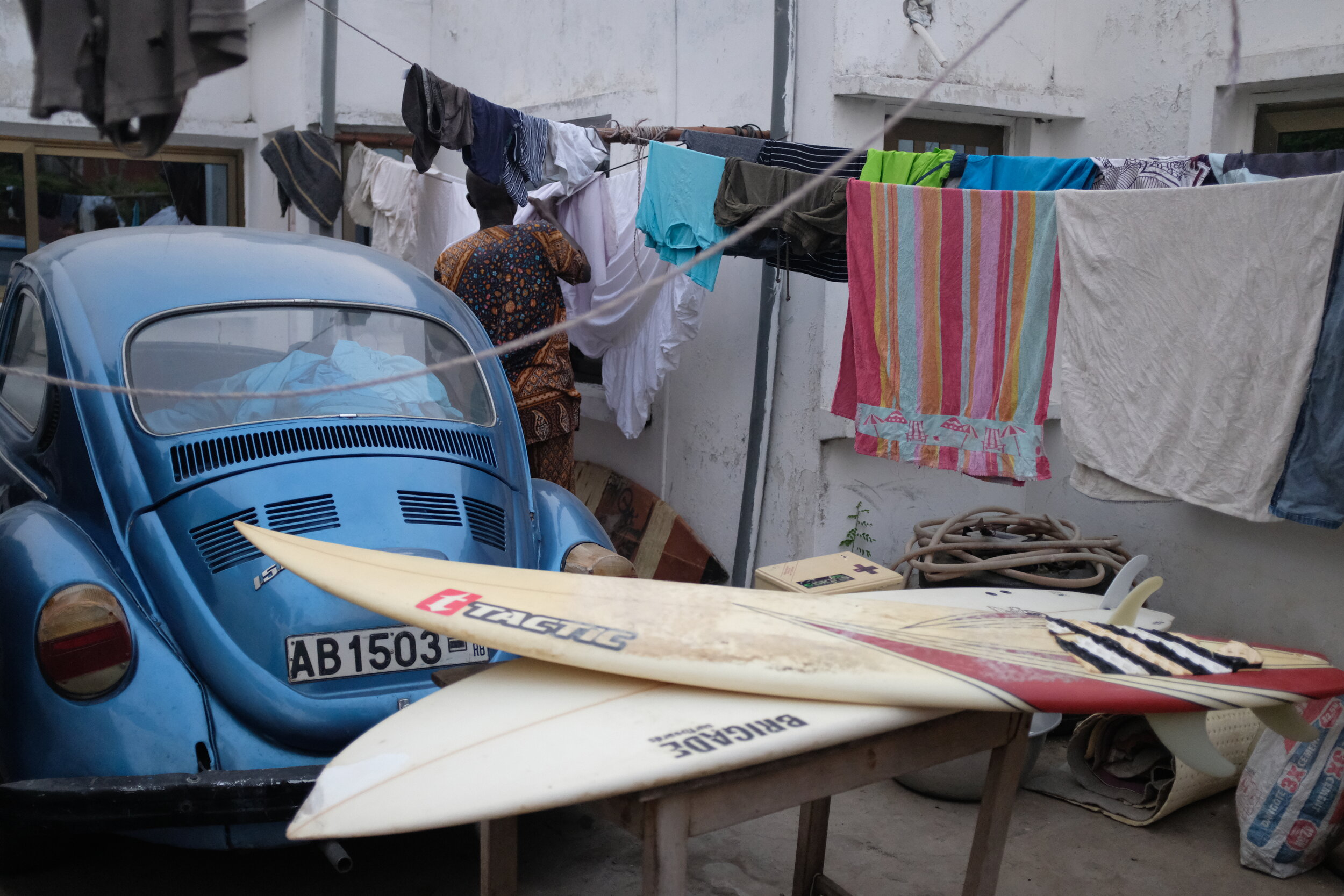


Taking inspiration from the iconic film The Endless Summer, the collective even organized a competition in 2010. But the years have passed and it is difficult to maintain ties within this community of enthusiasts, many of whom have moved away. When it comes to equipment, resourcefulness reigns supreme, as demonstrated by Martin and Houssein's attempt to repair boards with whatever they had to hand, which resulted in an unexpected chemical reaction. But that's not enough to discourage them. The two surfers remain realistic about their playground. Martin: “The conditions are the opposite of the spots in Plouharnel in Morbihan where I learned to surf, a beach break accessible to all levels. Here, I've improved my take-offs by being more responsive.” Houssein is looking to the future with a new project, the Red Phoenix, a combination of water sports and sand skidding, determined to revive the popularity of surfing in Benin.
Sébastien Roux
This article is available in the April/May 2019 issue of Surf Session magazine