
Back to summary
Ep 3 - Portuguese Waves & Saudade
From the Portuguese coast to the shores of Morocco, I continue my journey to the rhythm of the swell and the roads that run alongside the Atlantic. Still riding my Mash 400 Scrambler, I go from one surfing session to the next, enjoying unexpected encounters and impromptu stops, carried along by this unique way of traveling that involves following the sea rather than a set itinerary.
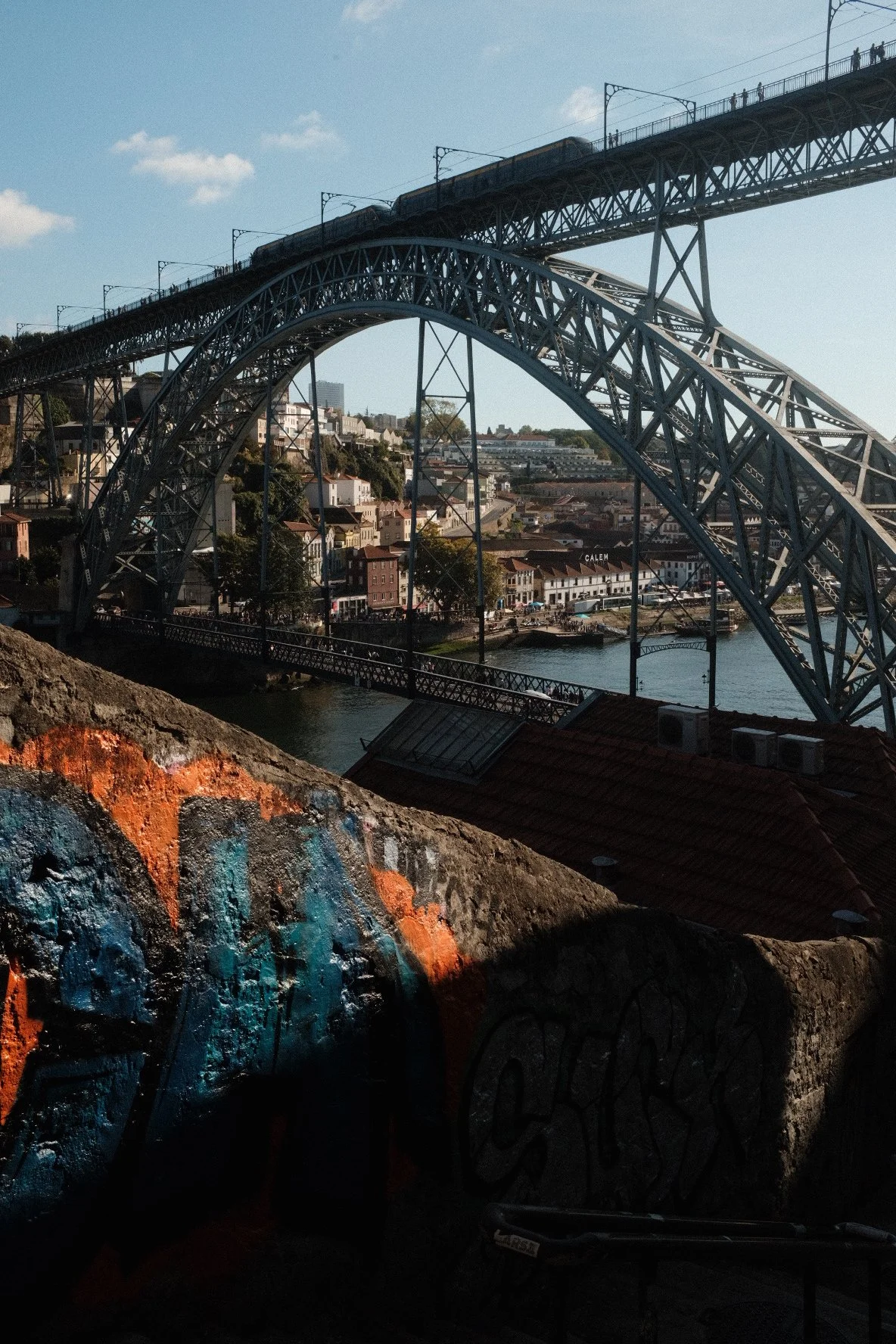
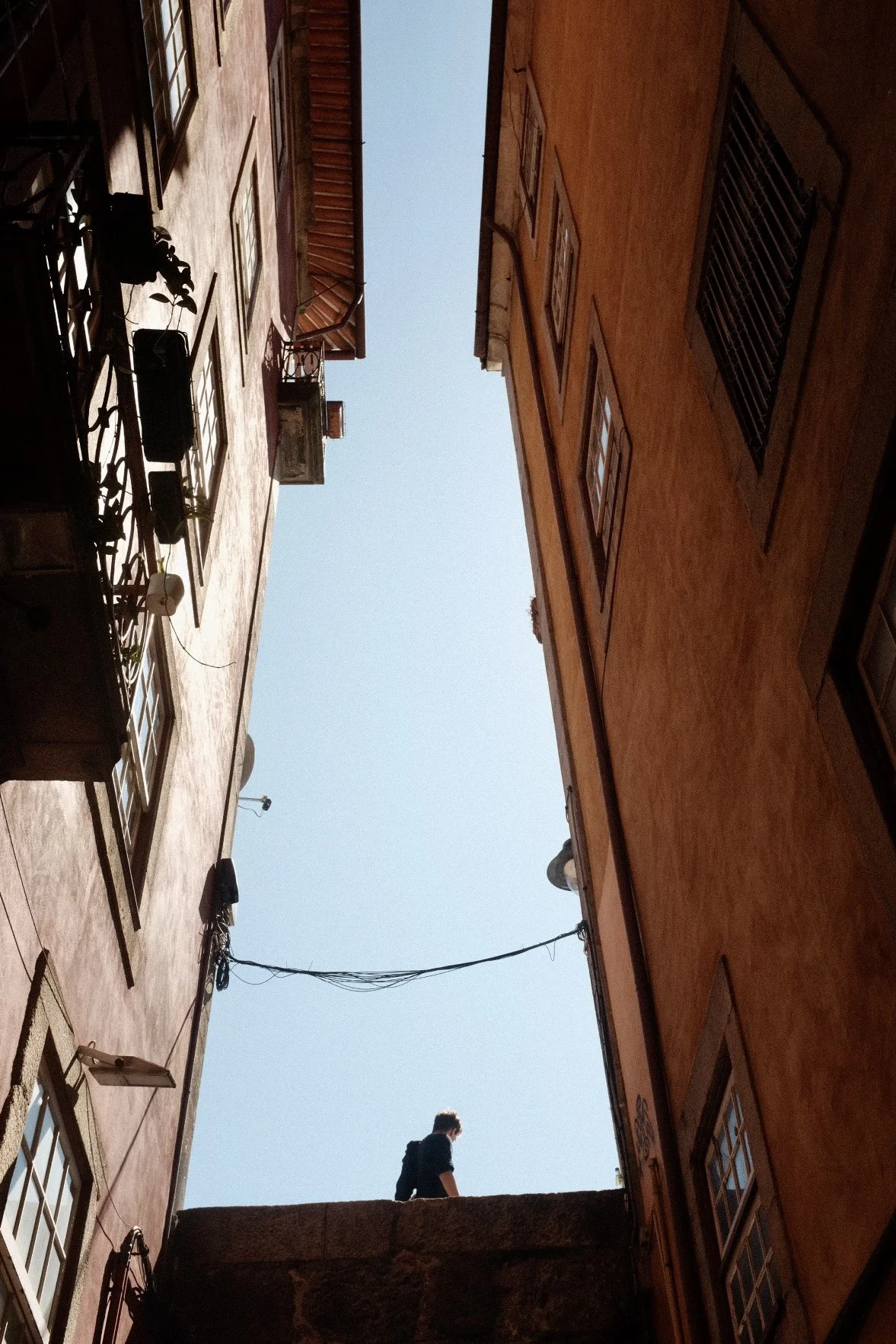
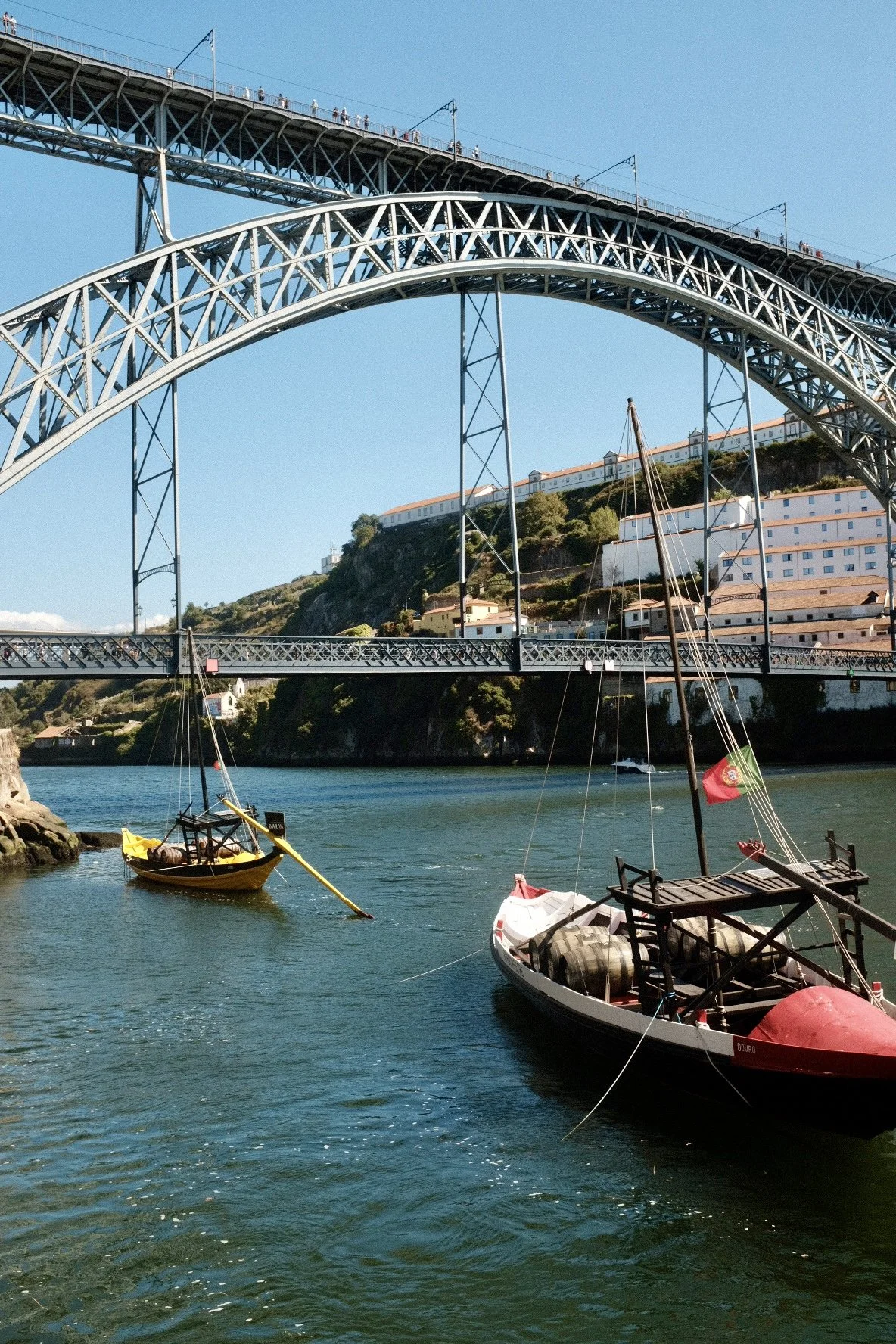
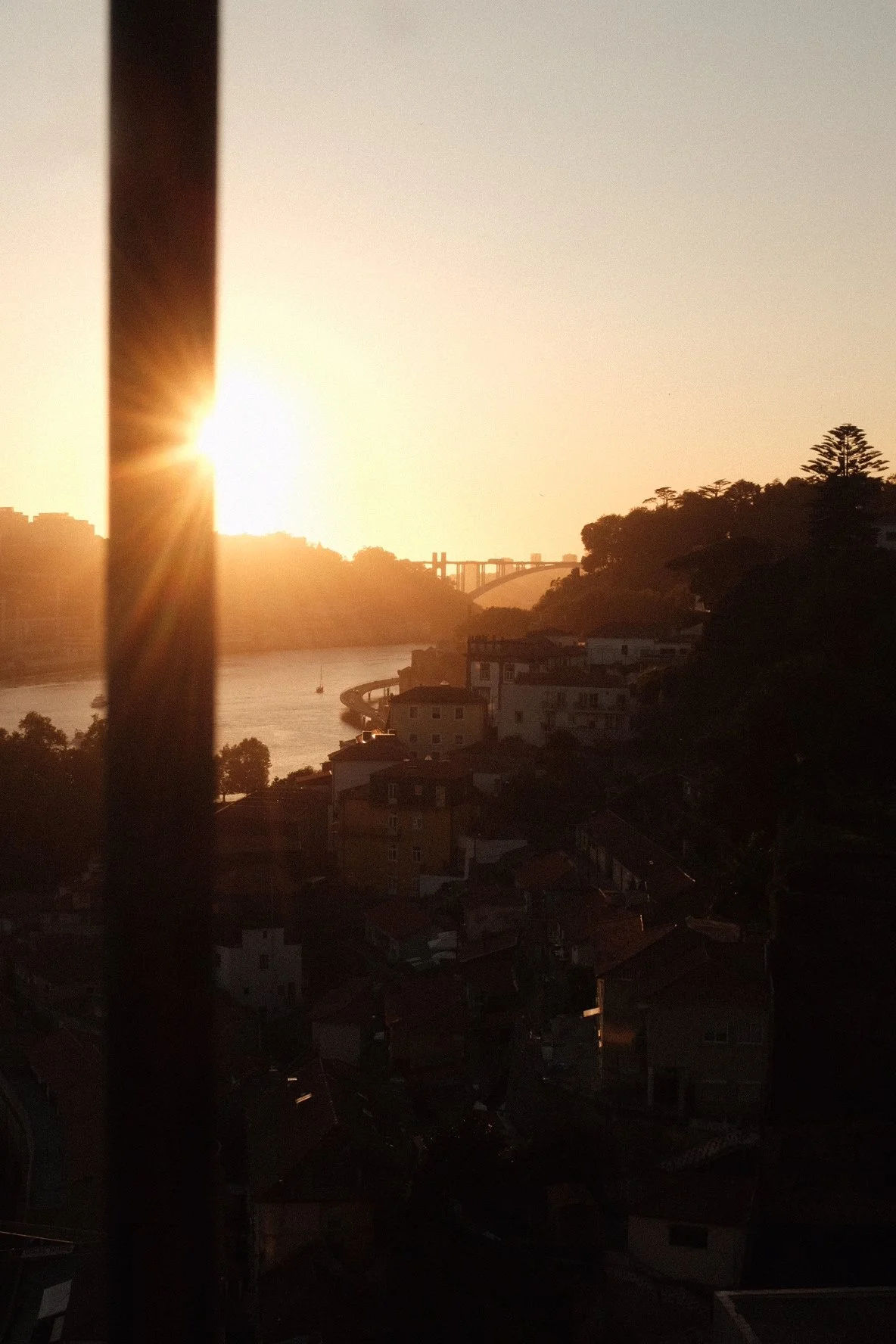
It’s a strange feeling to cross a border through thick fog. The weather gradually changed throughout the morning. It cleared up just in time for my lunch break in Braga, and by the time I arrived in Porto, the sky was a brilliant blue. I took the opportunity to explore some street art before enjoying a beer at the Miradouro do Passeio das Virtudes.
There, I’ll witness three magnificent sunsets, always in good company. As for accommodations, I’ve fallen in love with the Rivoli Cinema Hostel. This hostel features well-equipped dorms, a lounge where you can watch movies, as well as a restaurant and a rooftop pool. I’ll definitely try the francesinha. This “little French girl” is a sort of croque-monsieur covered in cheese and drizzled with a slightly spicy sauce made from tomatoes and beer. Tasty, but very heavy. As a nod to my own journey, I then watch The Motorcycle Diaries, which chronicles Che Guevara’s youth during his travels through Latin America on an old Norton nicknamed “The Mighty”.
On the roof of Portugal
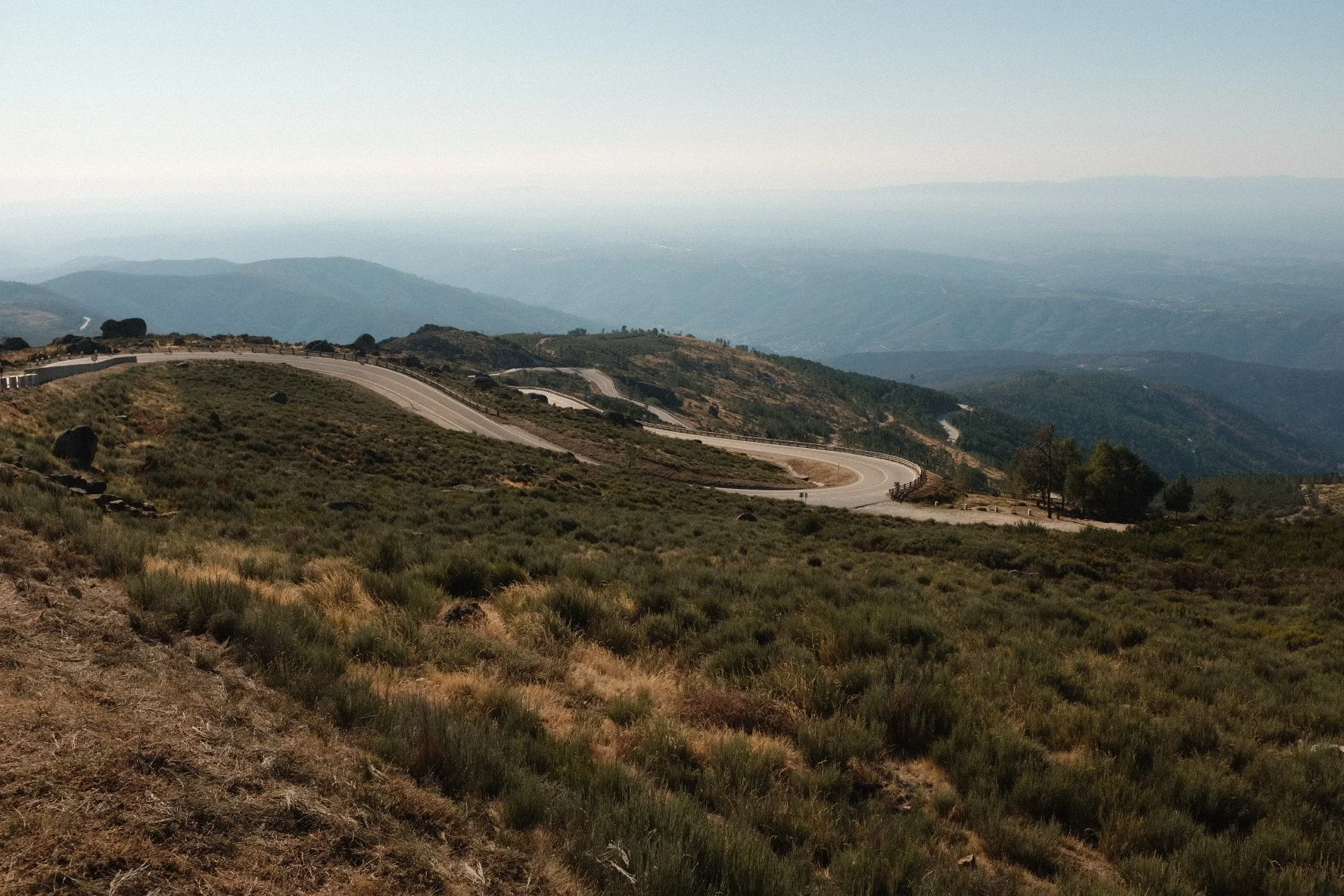
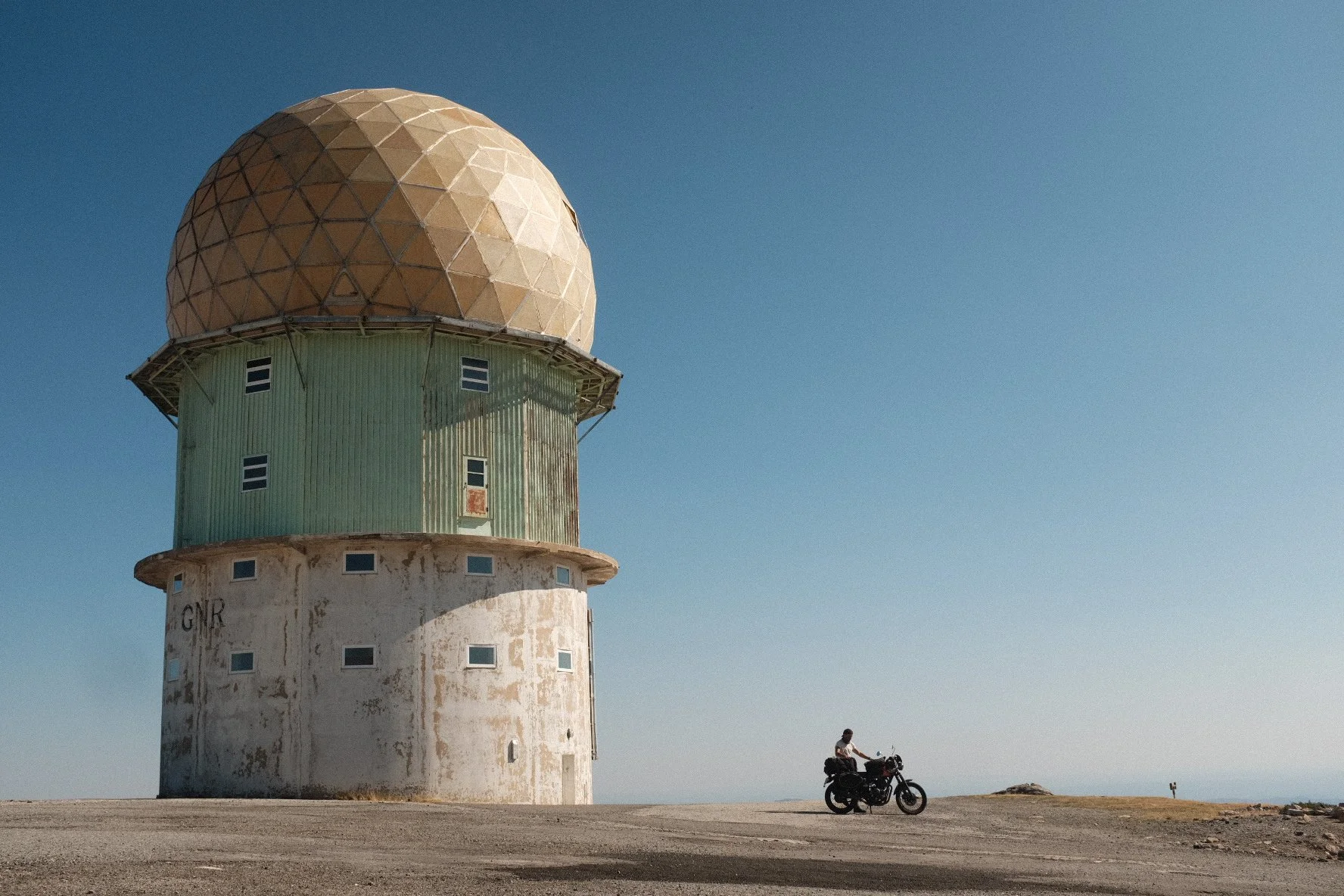
After exploring the city of Porto and meeting some wonderful people, it’s with a twinge of sadness that I hit the road again. A beautiful 300-kilometer day lies ahead! After starting out on mountain roads along the Serra da Freita, I arrive at the village of São Romão. A bumpy 26-kilometer mountain road takes me to the highest point in mainland Portugal, at an altitude of 1,993 meters.
Near two old domes built by the air force stands Torre, a 7-meter-high tower that symbolically marks the 2,000-meter mark. Riding through the heart of the Serra da Estrela, the endless hairpin turns complete an impressive panorama. There are roads you never want to see the end of.
It was bound to happen—a grain of sand throwing a wrench in the works. Or rather, a flat tire. After finishing my descent, I realize my front tire is practically flat. I still have 60 kilometers to go before reaching Coimbra. I use some of my tire repair spray, without much success. A stop at a gas station allows me to pump in enough air to deal with this slow leak.
© Sébastien Roux
About an hour late, Mariana and her husband João are waiting for me to treat me to a traditional Portuguese meal. Another gem I found thanks to Couchsurfing. The next morning, I head to the Bike Shop Lda garage first thing to get the inner tube replaced so I can ride again with peace of mind.
Flat tires are part of the hazards of a motorcycle adventure. When they happen, the biggest danger is the risk of the bike wobbling, especially on a highway. After a quick tour of this college town, home to the country’s oldest university, I hit the road again, heading toward the coast.
The “monsters” of Nazaré
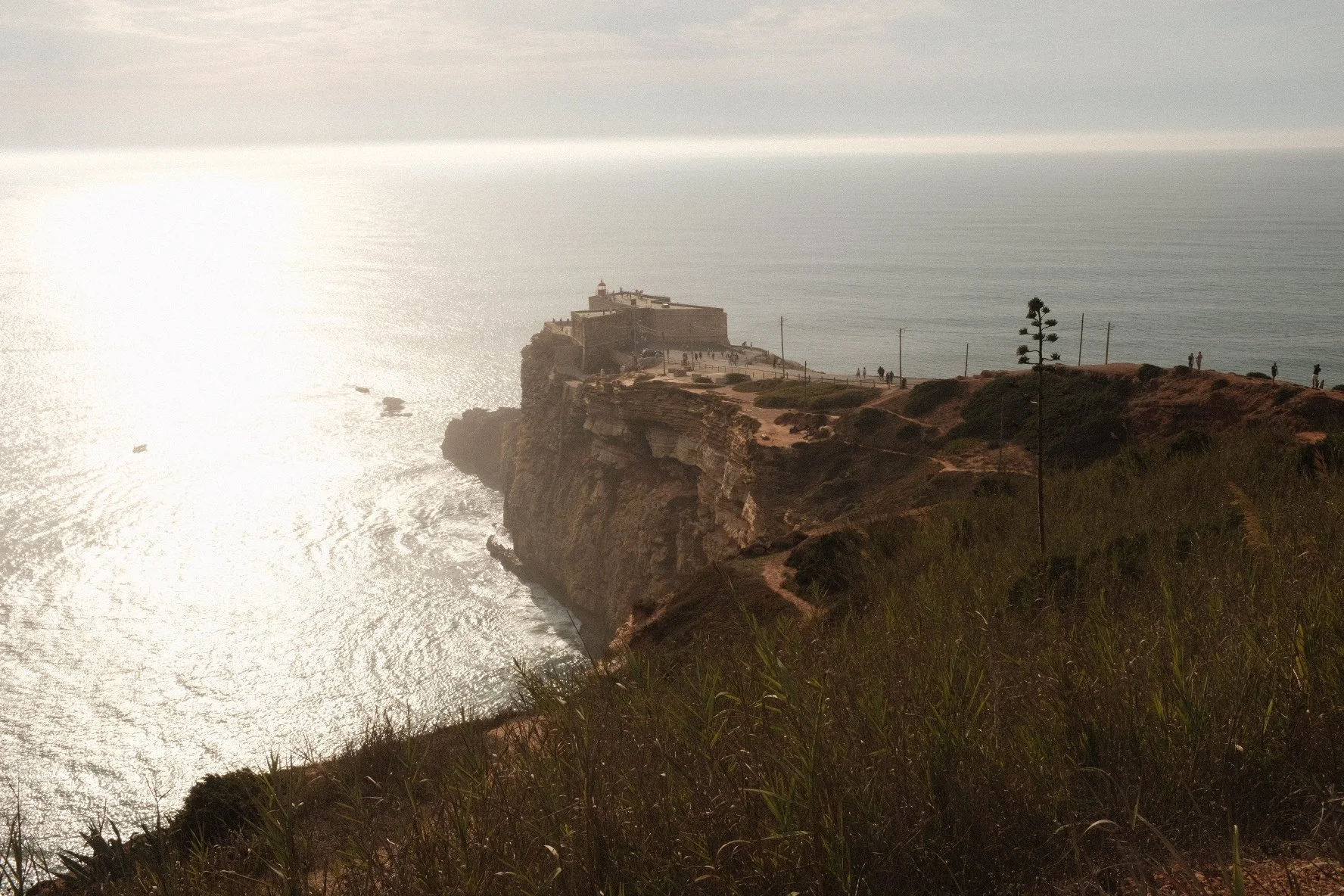
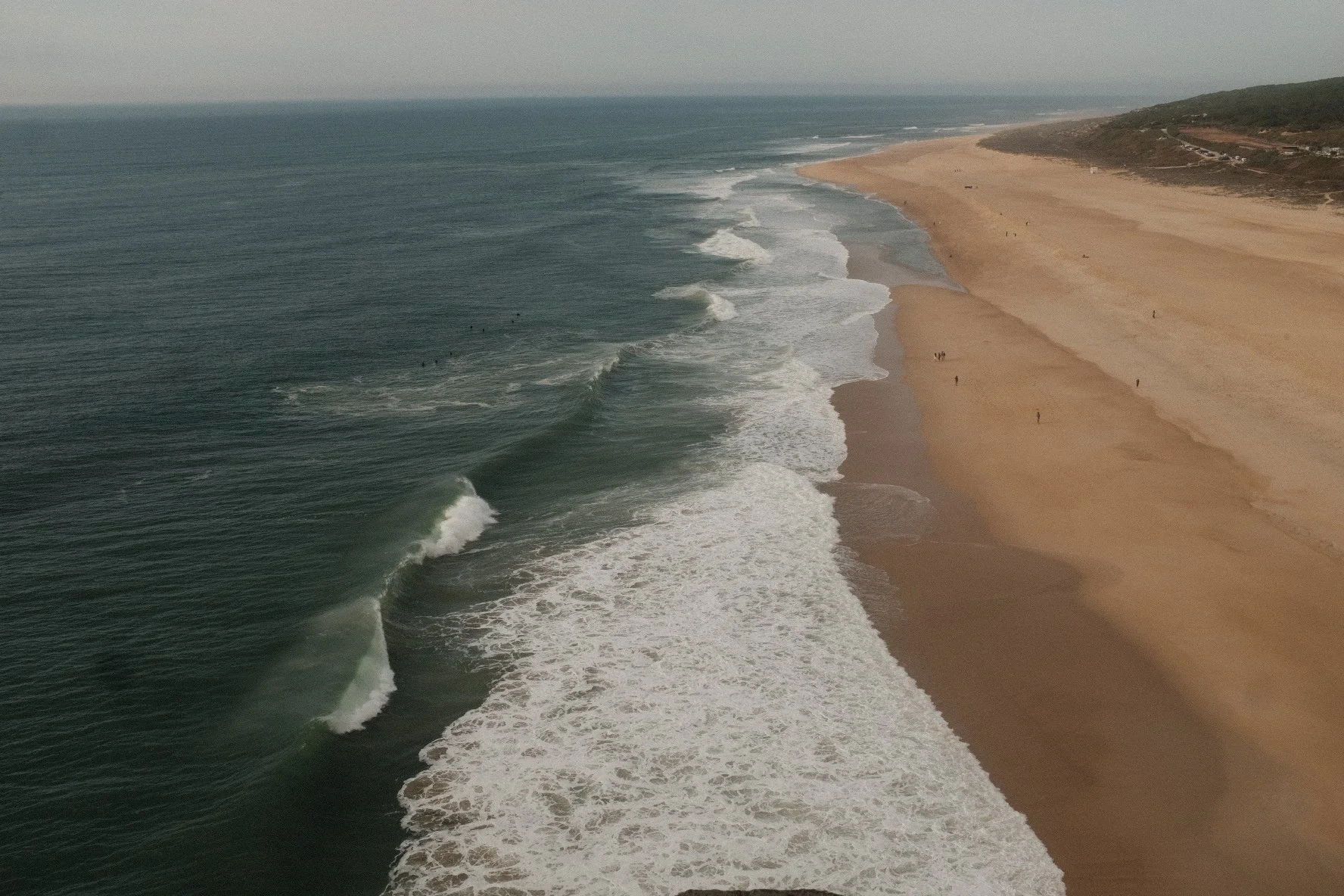
In the 2000s, the fishing village of Nazaré became legendary among big-wave surfers. What makes this place unique is an underwater canyon featuring steep cliffs that drop from 50 to 5,000 meters in depth. When some of the world’s strongest swells roll in from the northwest, a natural phenomenon creates waves that can reach up to 30 meters in height. Only the most daring surfers can be towed by a jet ski out to Praia do Norte in Nazaré to take on these “monsters.”
Officially, the world record is held by Sebastian Steudtner, set in October 2020 for a wave measuring 26.21 meters. Although during my visit the waves barely exceeded a meter, the São Miguel Arcanjo Fort displays spectacular photographs as well as surfboards that have braved the forces of nature under the guidance of local and international surfers.
My first surfing session in Portugal takes place a few kilometers north of Nazaré, at Praia de Paredes da Vitória. Ricardo and Bruna welcome me to their surf shop, Jacaré (meaning “alligator” in Portuguese, which is Ricardo’s nickname). This beach has the advantage of being less crowded than Nazaré.
In the water, I chat with a local surfer who advises me to watch out for the fishing nets set nearby. After catching about ten waves, I decide to head out to warm up. On this side of the Atlantic, the water is still chilly for someone used to surfing in the Caribbean.
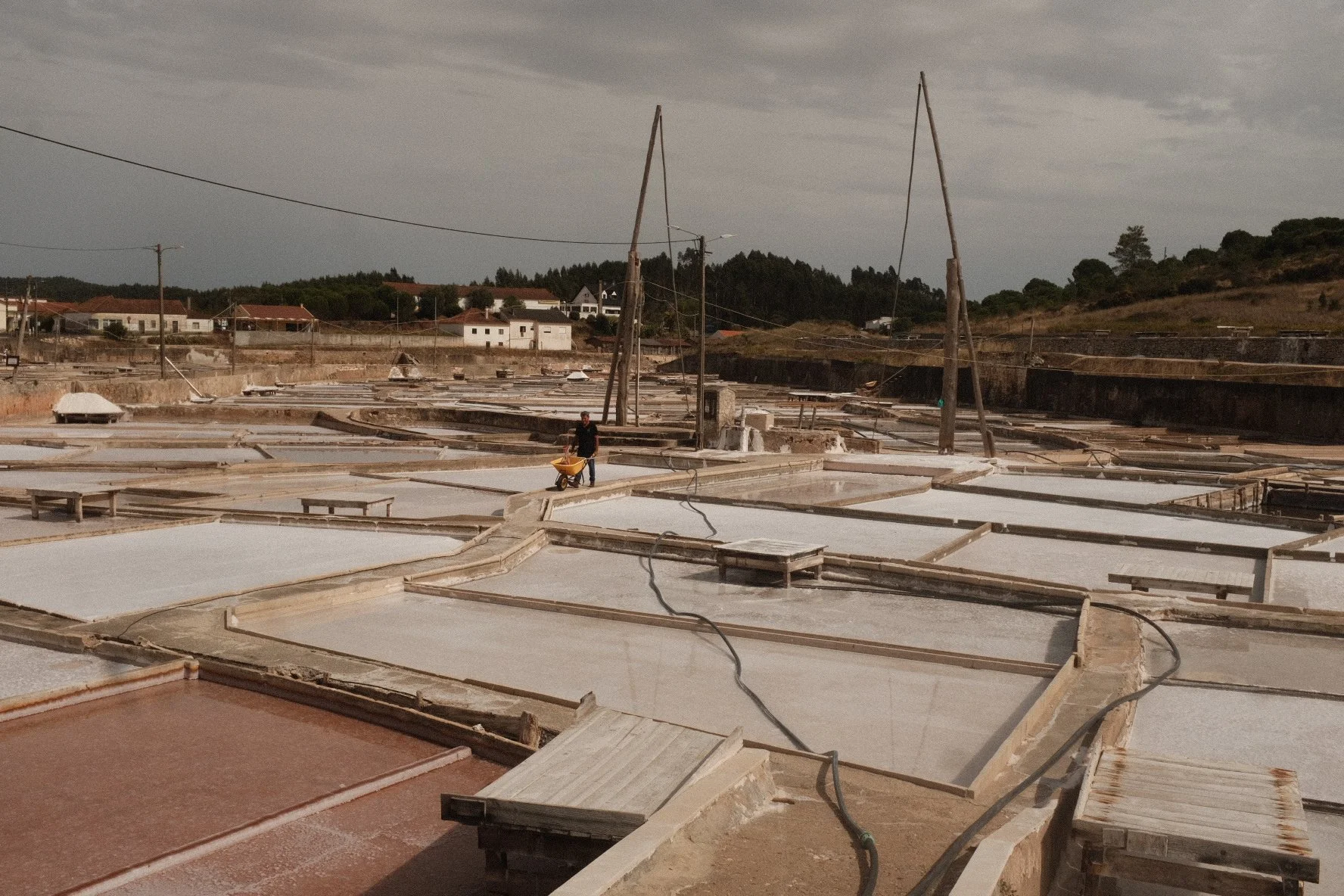
Before heading to Peniche, another renowned surfing spot, I treat myself to a few detours on my Mash. At the Rio Maior salt flats, I’m fascinated by the artisanal and traditional process of extracting salt from an underground rock salt mine. The water from the wells is said to be about seven times saltier than seawater. These are now the only inland salt flats still in operation in Portugal.
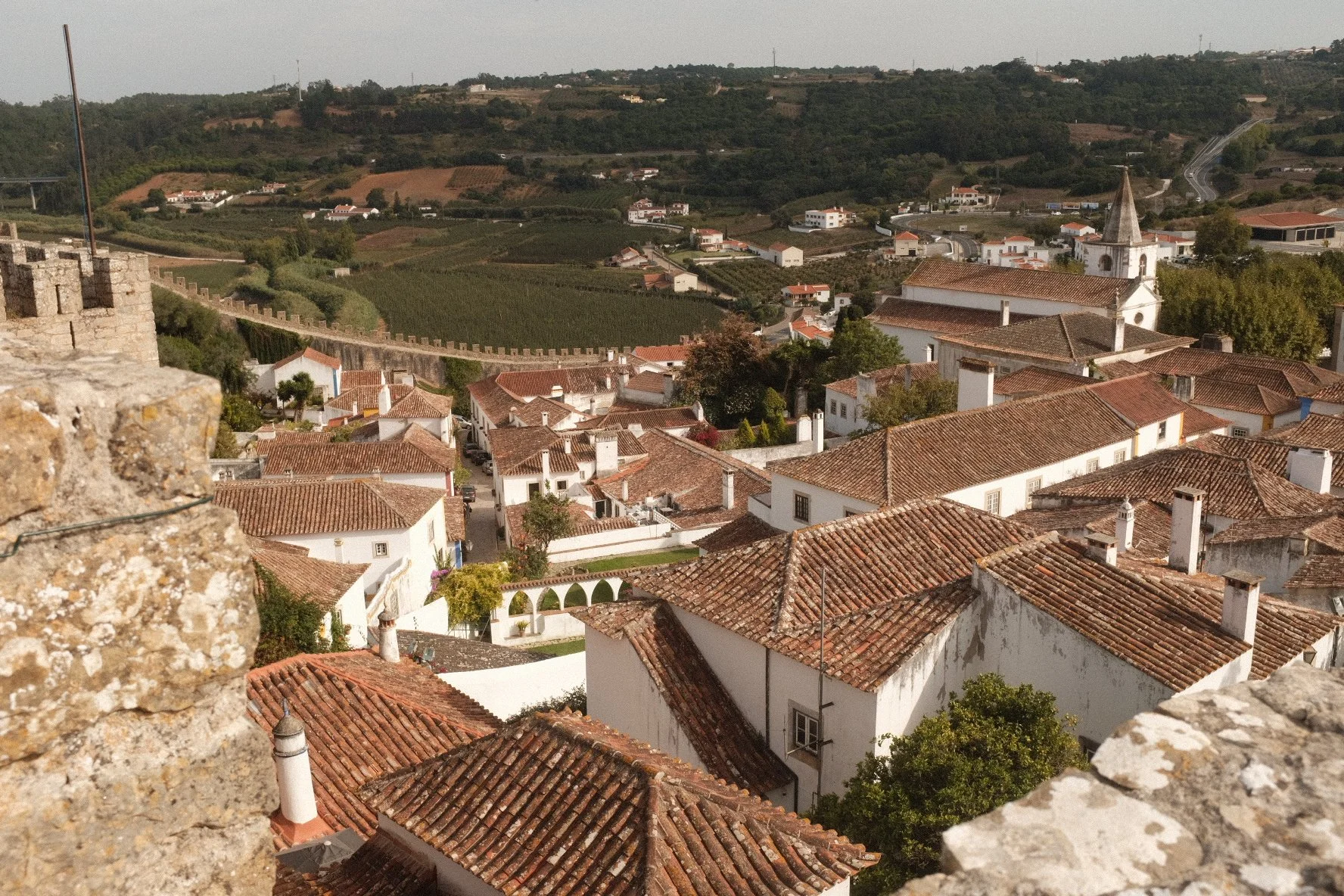
A little further on lies Óbidos, a small medieval town surrounded by well-preserved ramparts. As on any given day, a large crowd of tourists has gathered in its narrow cobblestone streets. Numerous stalls sell the local liqueur, Óbidos ginjinha, often served in a small chocolate cup. Drink or drive—I have to choose: I’m on my way.
A real motorcycle club
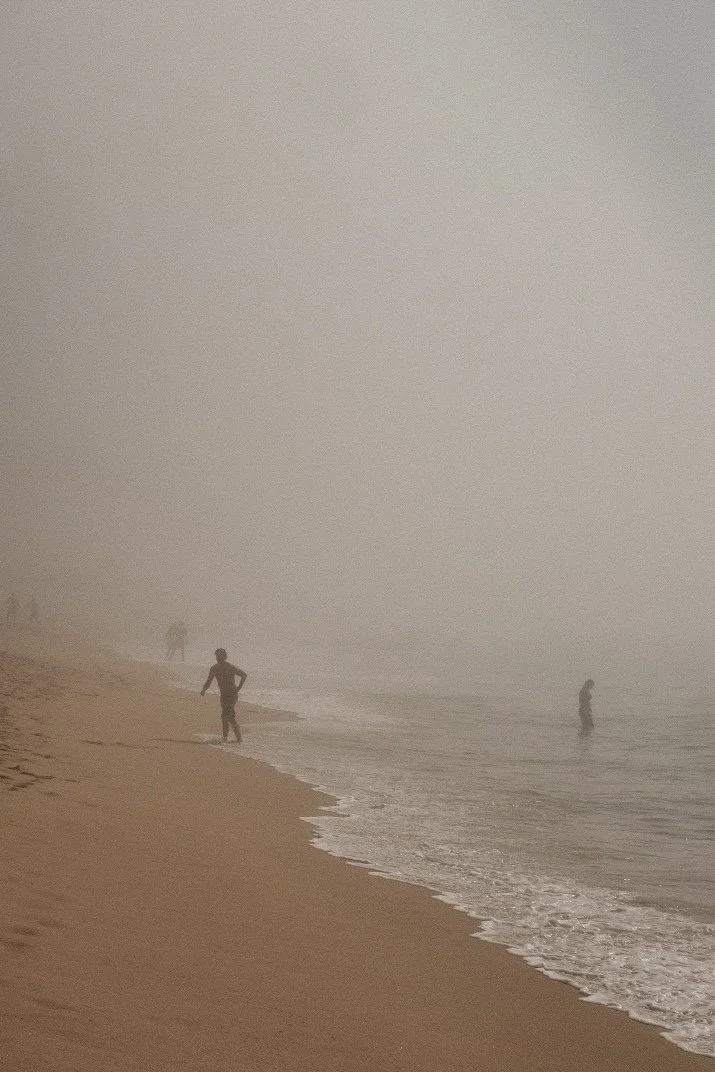
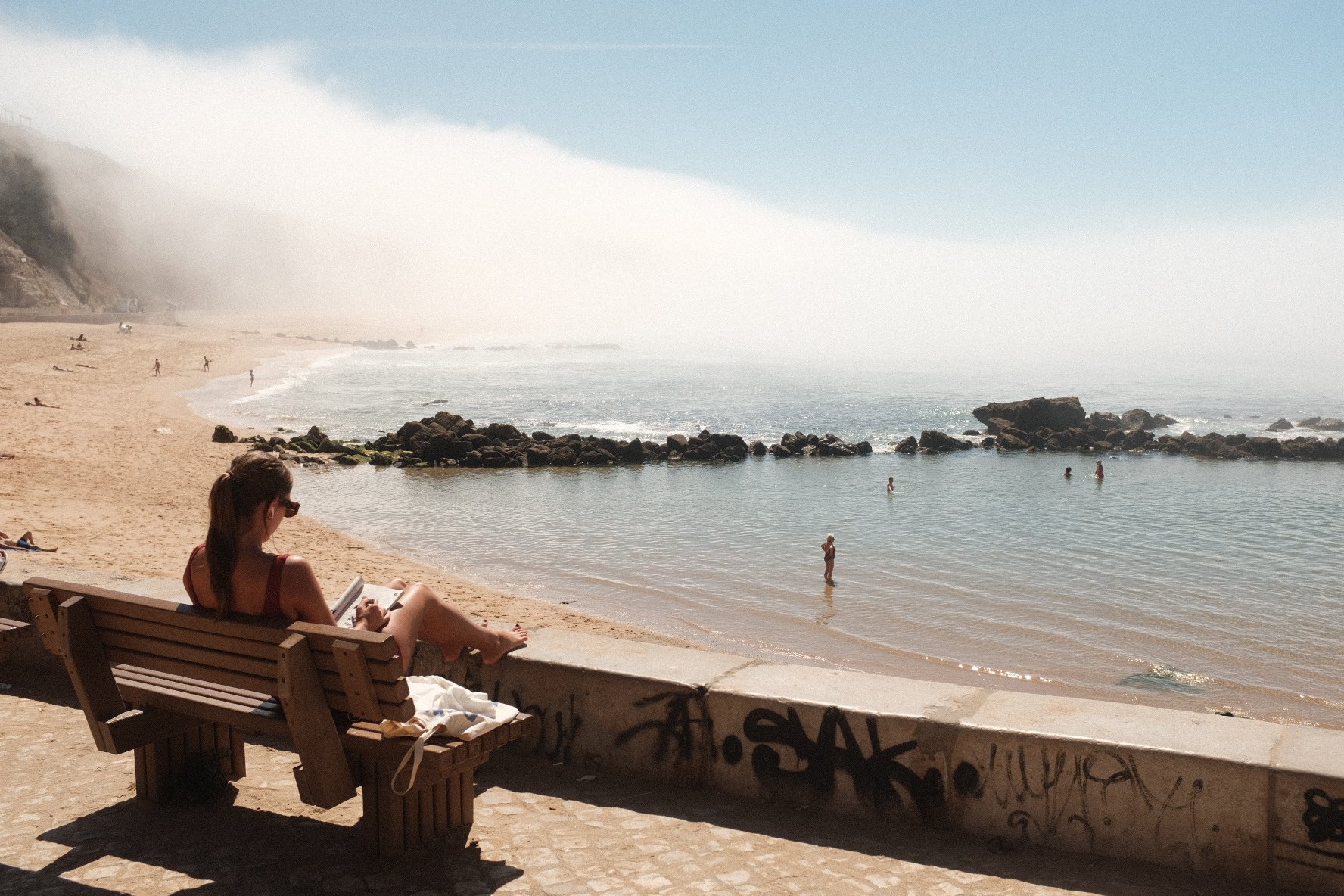
My stay in Peniche was marked by a lack of good waves. On the first morning, thick fog hung over the small waves crashing against the rocks at Cape Carvoeiro.
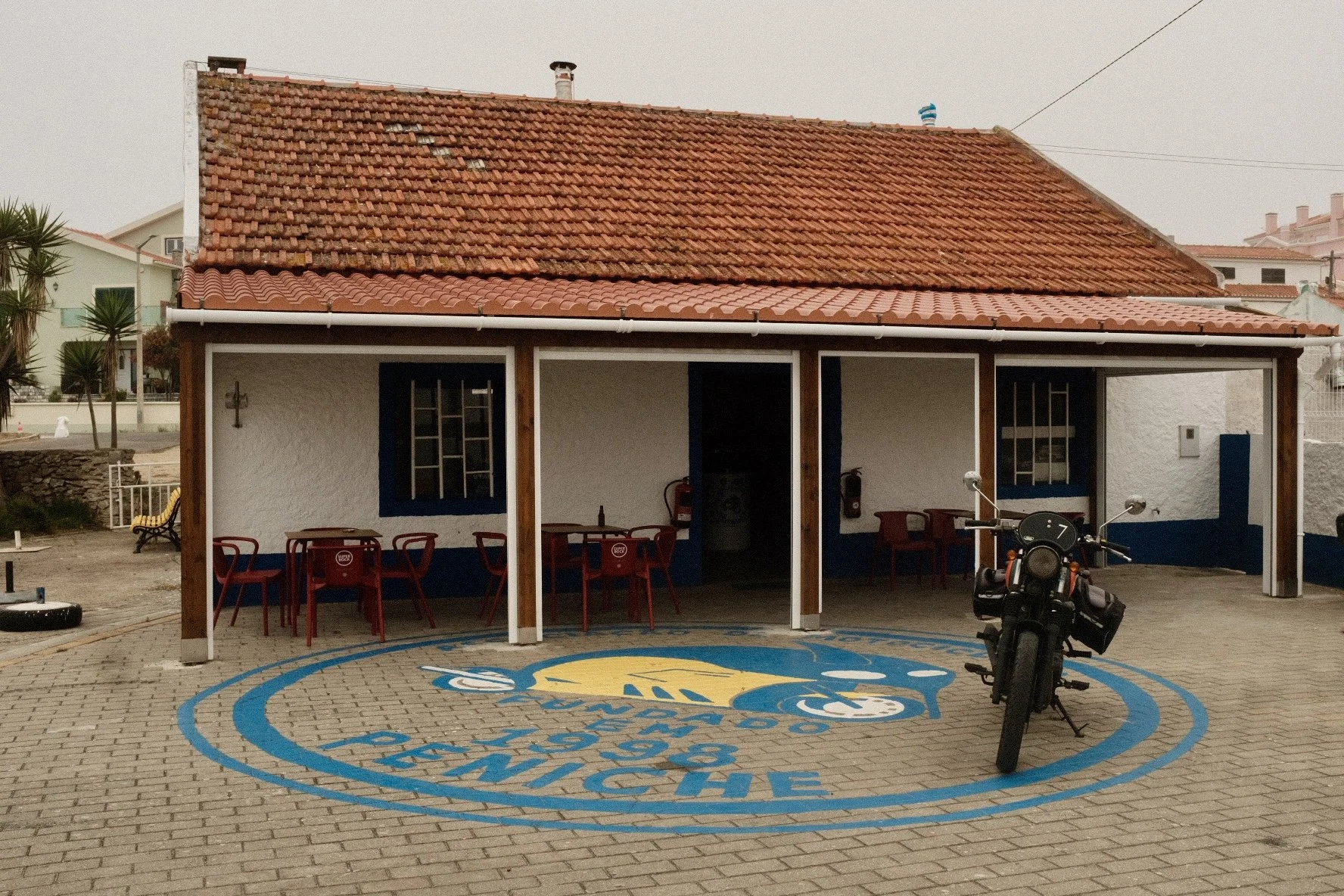
After checking out the most famous surf spots, I stumbled upon the Peniche Motorcycle Club’s clubhouse. It’s located on the peninsula and doubles as a bar. The vintage decor is tasteful, with an old motorcycle repurposed as a lamp. AC/DC’s “Highway to Hell” was blaring in the bar when I arrived.
I hit it off with Jorge, one of the members. He explains that their club has about 160 members and organizes monthly activities, mainly motorcycle rides. When I ask him if he recommends a particular road in Portugal, he immediately thinks of the Nacional 2 (N2). The 739 km of this road, which crosses the country from north to south, takes a little over eleven hours to drive. It is to Portugal what Route 66 is to the United States. Although I won’t be able to take it this time, I’ll keep it in the back of my mind for a future road trip.
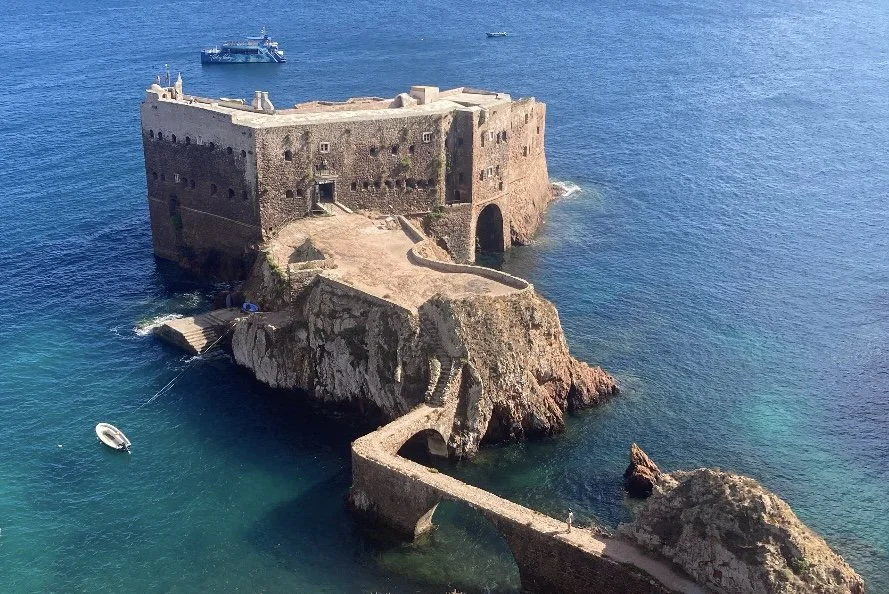
Since I couldn’t go surfing, I decided to head out to sea and visit Berlenga Island, which is accessible only by ferry. With its turquoise waters, this nature reserve is a haven for many species. In fact, visitor numbers are limited to 350 per day from May through October. A short walk takes you to the Fort of Saint John the Baptist, and a boat trip lets you explore the caves and discover the seabed.
All the way to the west
Heading to Lisbon. Despite strong gusts of wind, many tourists are lining up to take photos in front of the stone cross at Cabo da Roca. This cross marks the westernmost point of Europe. A quote from the Portuguese poet Luís de Camões is inscribed on a plaque: “Here the land ends and the sea begins.”
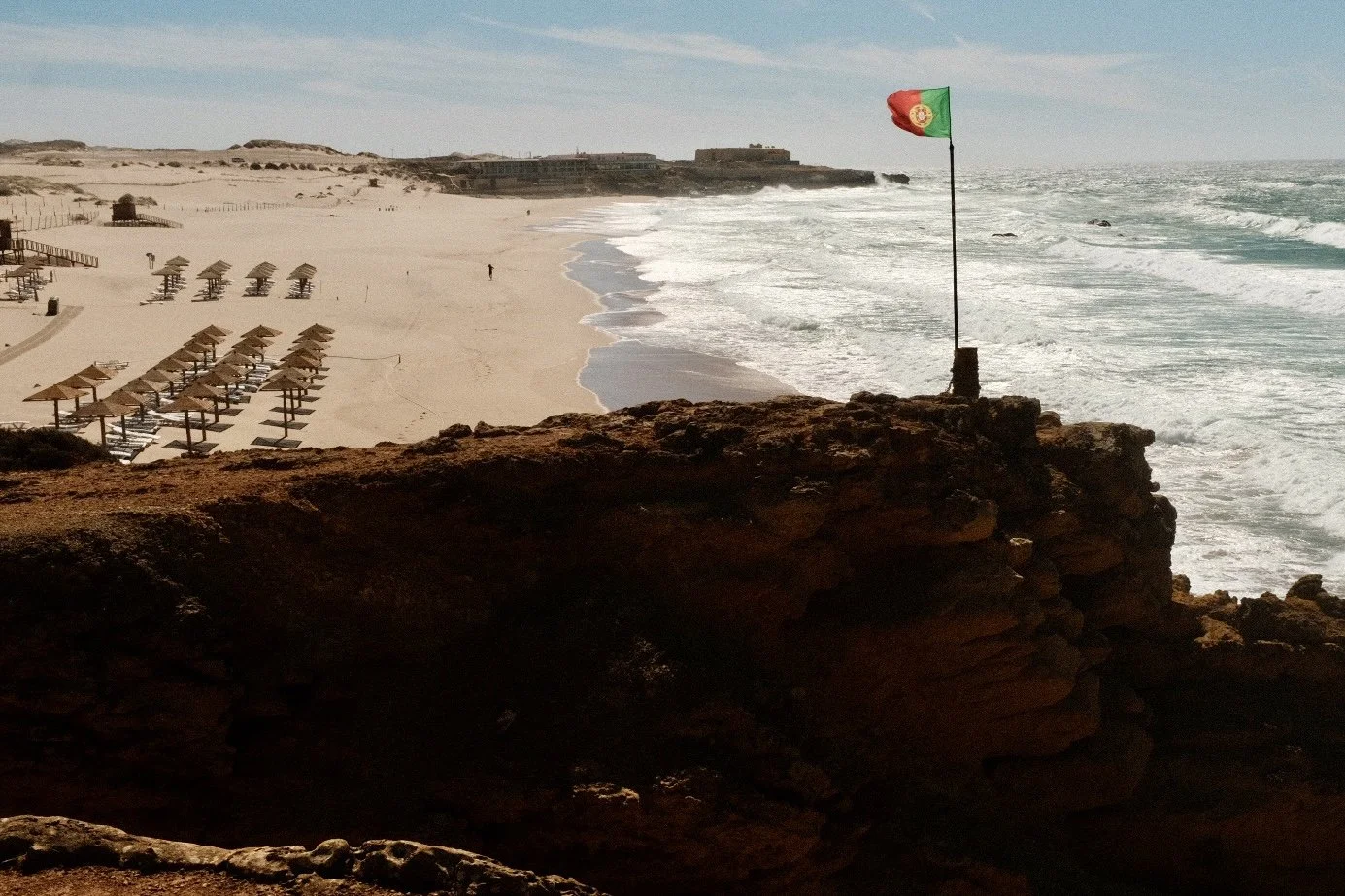
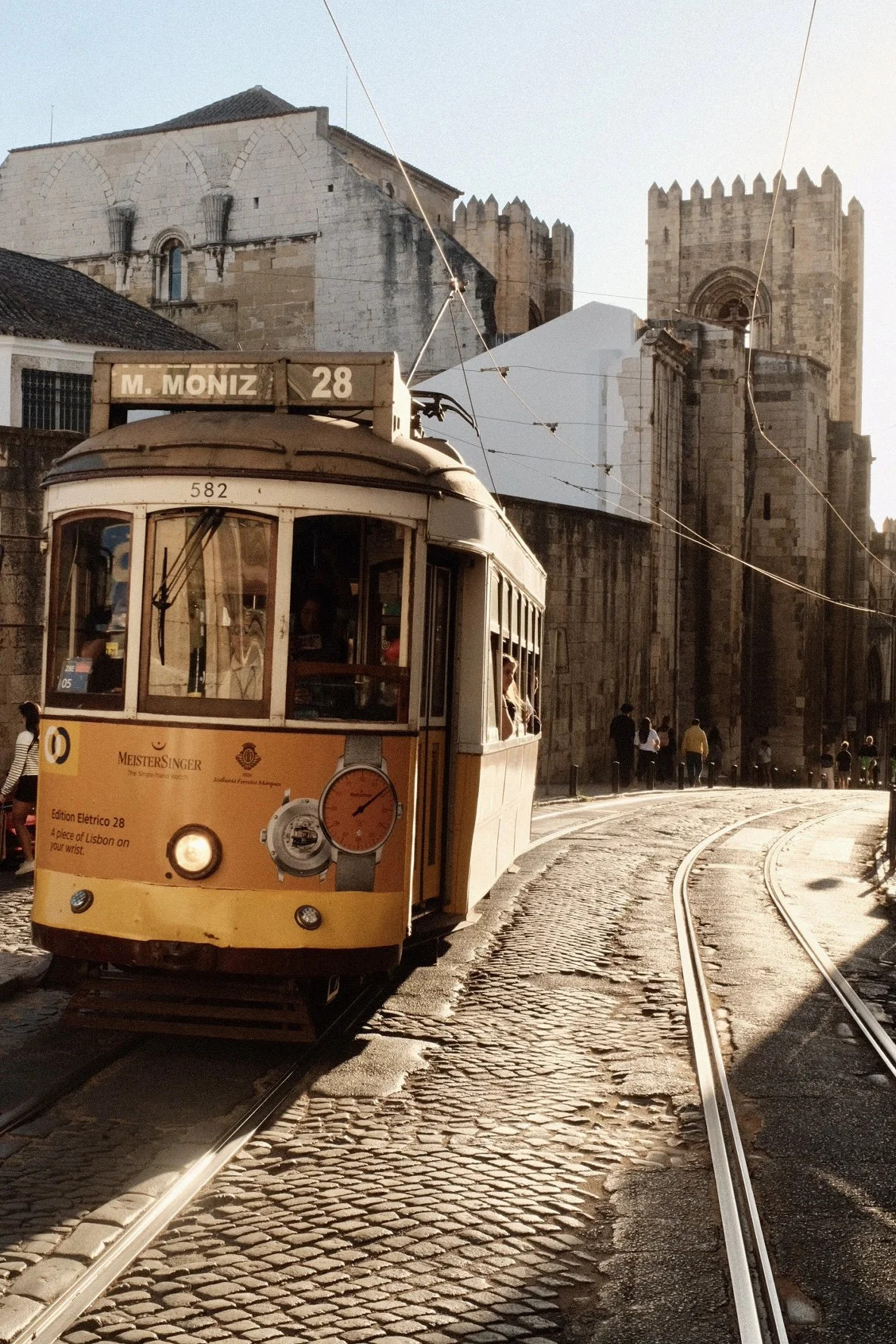
I make my way to Guincho Beach before crossing the Sintra-Cascais Natural Park to finally arrive in the Portuguese capital. In the collective imagination, Lisbon is often summed up by a yellow wooden tram. With 20 seats and fewer than 40 standing spots, the city’s symbol is a victim of its own success. But summer is over, so it’s now easier to get on the tram.
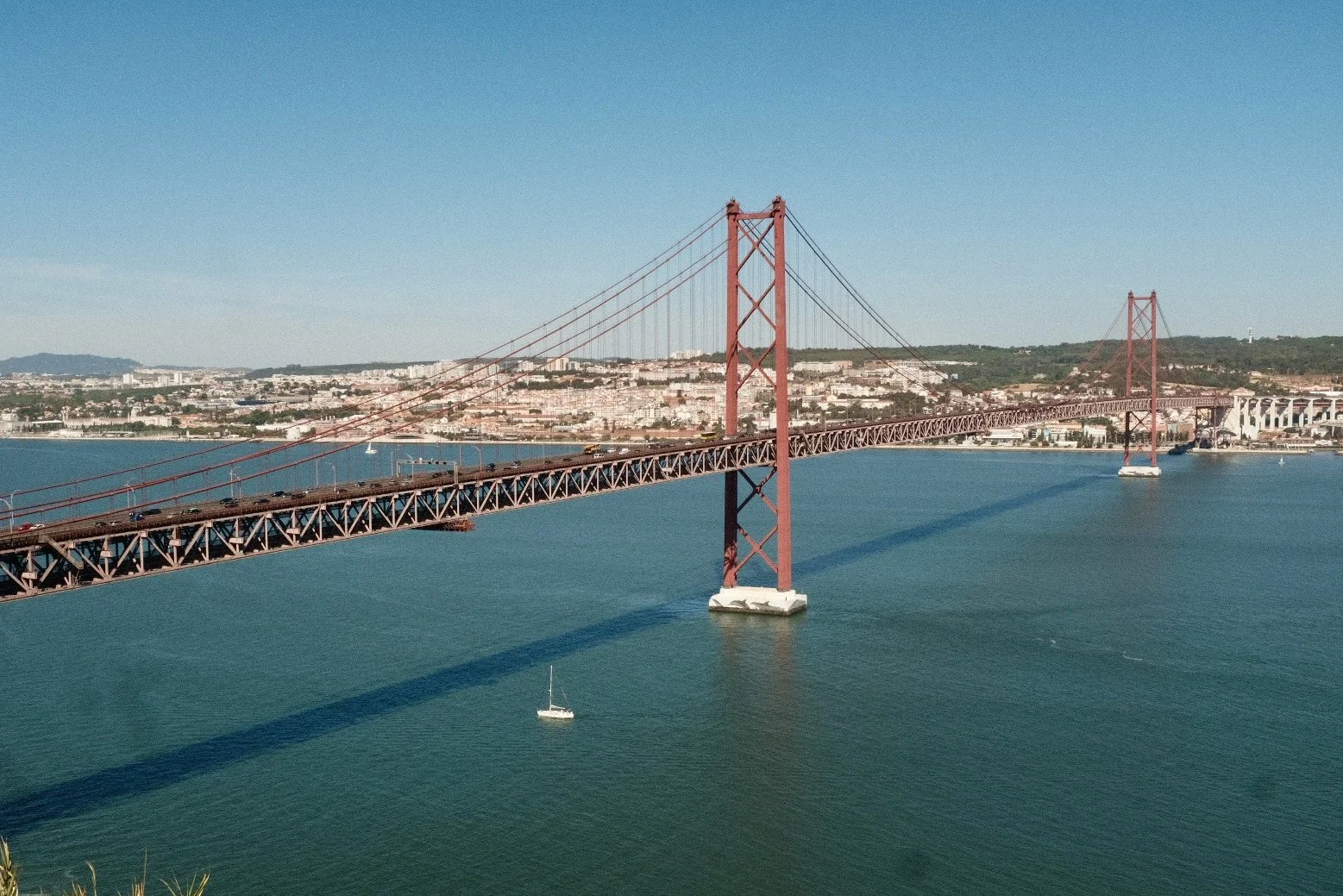
For three days, I’ll explore the city, both on foot and by motorcycle. In particular, I’ll cross the 2-kilometer-long ponte 25 de Abril. Built during the Salazar dictatorship (1933–1970), the bridge that bore his name became the ponte 25 de Abril, named for the day of the revolution. Connecting the two banks of the Tagus River, it’s free to cross on the way there, but you have to pay €2.15 on the way back (or take a 1.5-hour detour). My one and only toll of the trip.
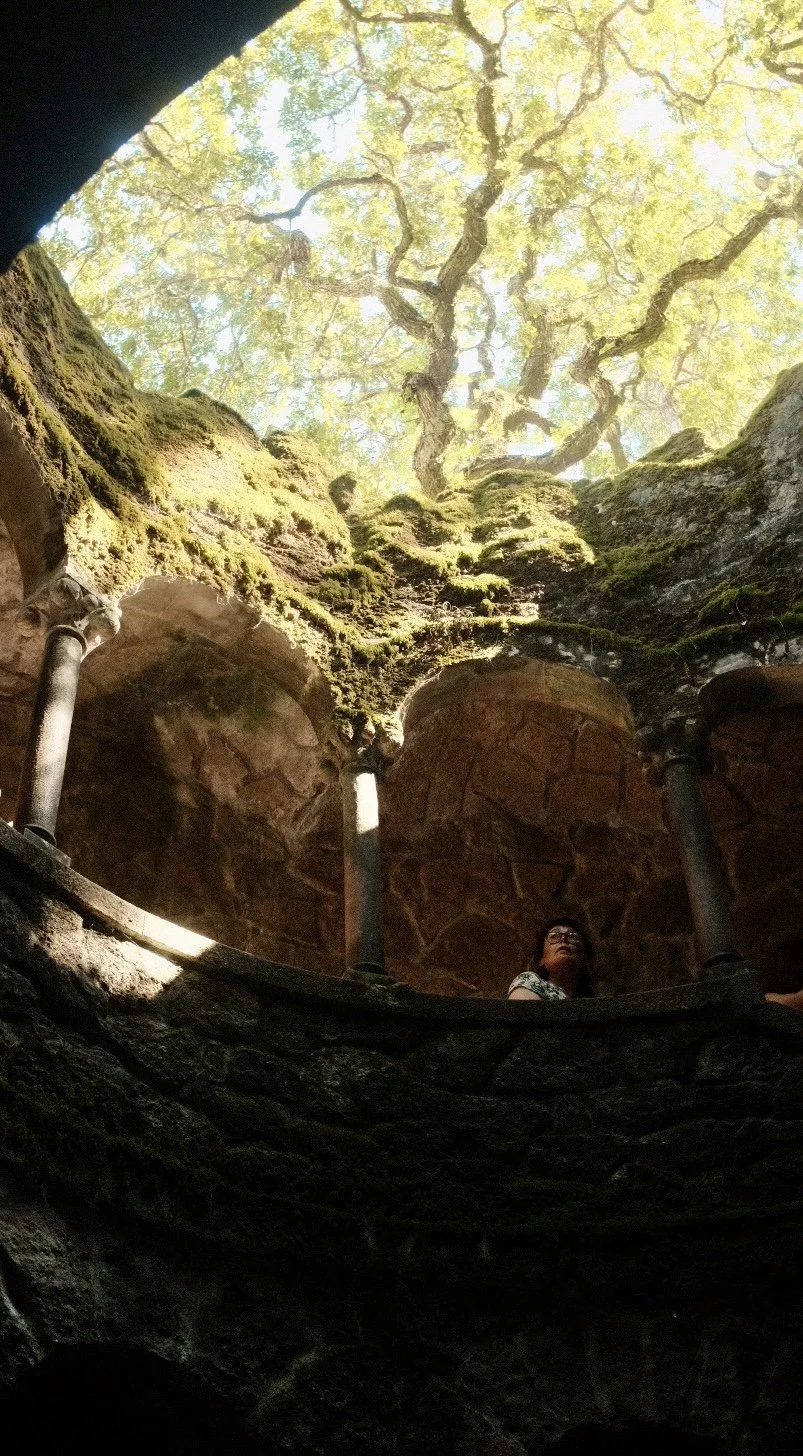
I’m heading back to the Sintra-Cascais Natural Park to visit Quinta da Regaleira. A UNESCO World Heritage Site, this mysterious and charming estate was built in the late 19th century. Famous for its Poço Iniciático (an underground spiral staircase linked to Masonic and alchemical rituals), it also features a palace, a chapel, caves, and mythological statues, all set in a lovely green setting.
The charm of Ericeira
My next stop is near Lisbon. More specifically, in Ericeira and its world-renowned surf spot. Stretching along about 5 kilometers of coastline, it features iconic surf spots that have greatly contributed to Portugal’s reputation among surfers worldwide.
I’m meeting up with Melissa, my former coworker from the Dominican Republic. She now works in Portugal and invited me to celebrate her 30th birthday in style with four of her friends. After a great first night in this gem of the Portuguese coast, I get up early to walk to the Tiago Pires Surf School. This Portuguese professional surfer has opened two schools in Ericeira and Lisbon. From beginners to experienced surfers, there’s something for everyone. Armed with a superb surfboard, I head to Ribera Beach, undoubtedly the most famous of them all.
In three days, the World Surf League (WSL) is hosting a professional event. The best surfers are arriving to compete. It’s hard to tell whether I’m surfing with pros or just really good surfers during my session, but one thing is certain: the level of competition is high. It’s not easy to find a spot in the lineup, where the waves start to break. You also have to follow the basic rules of right-of-way to avoid collisions. Despite that, the conditions are ideal. The waves keep rolling in, and I manage to catch about ten of them, including one that’s truly memorable. Gradually, the fog rolls in, creating a mystical atmosphere to wrap up the session.
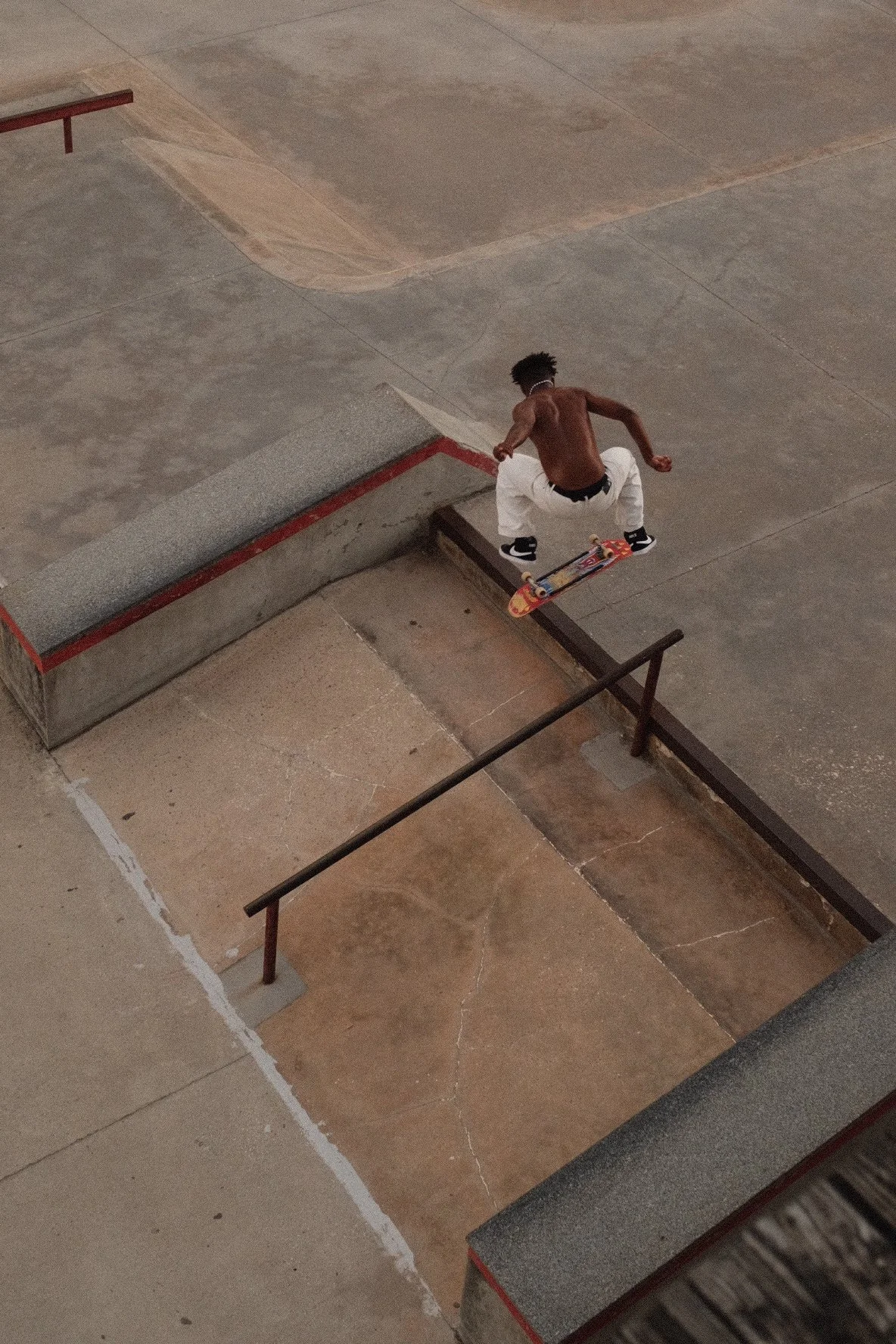
After an afternoon relaxing on the beach, we head back to the area near Tiago Pires’s surf school. The Quiksilver Boardriders of Ericeira host a concert every Friday at sunset. Skateboarders also put on a show, performing tricks at the skatepark below. All the ingredients are there for an unforgettable experience and to take home wonderful memories of Ericeira.
Heading south
To reach the Algarve region in southern Portugal, I decide, after riding 300 kilometers, to stop for the night in Vila Nova de Milfontes. There, too, other pilgrims gather before continuing on to Santiago de Compostela. To end the day on a high note, I head to Malhão Beach. A few kilometers of trail riding on my Mash allow me to admire yet another magnificent sunset.
All along this country’s coastline, it’s impossible not to be captivated by the mesmerizing light that accompanies the sun’s final rays. My third surfing session in Portugal takes place at Amado Beach. My friend Melissa lives nearby and has kindly let me stay at her apartment while she enjoys her vacation in the north of the country.
I message Amado Surf School on WhatsApp to rent a board and a wetsuit. The owner, Juan—who also runs a surf camp—calls me back right away because I mentioned in my message that I’m French. He loves speaking French!
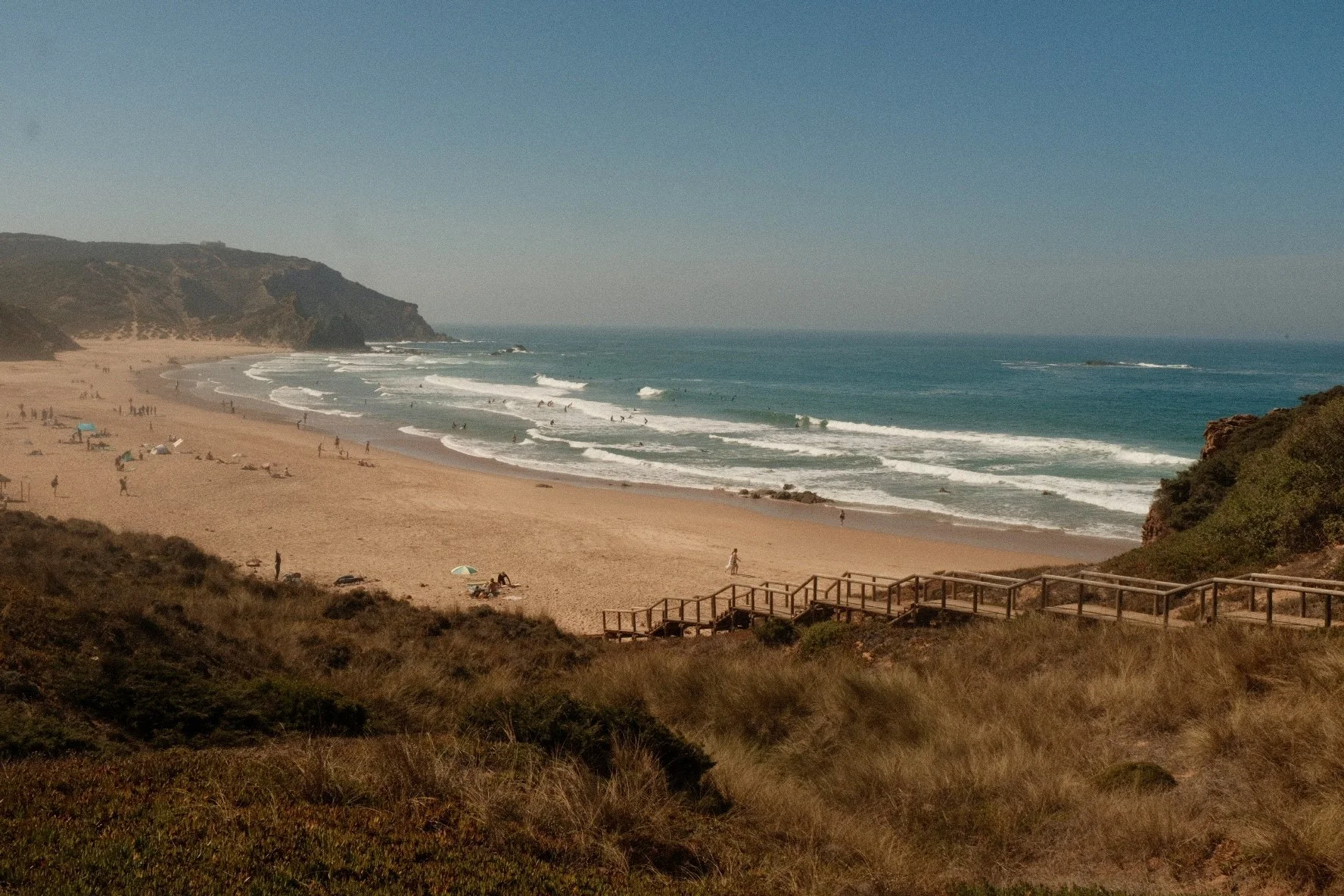
Amado Beach is a beach break, meaning a wave that breaks over a sandy bottom. It’s different from a reef break, where the wave breaks over a coral reef, or a point break, which is a break at the shoreline or a point along the coast. A beach break is unique in that it’s constantly changing, which can make surfing conditions unpredictable. During my two sessions at this beach, the actual conditions were worse than the forecast, but the joy of surfing—even just catching a few waves—outweighed everything else.
© Sébastien Roux
Seven Hanging Valleys Trail
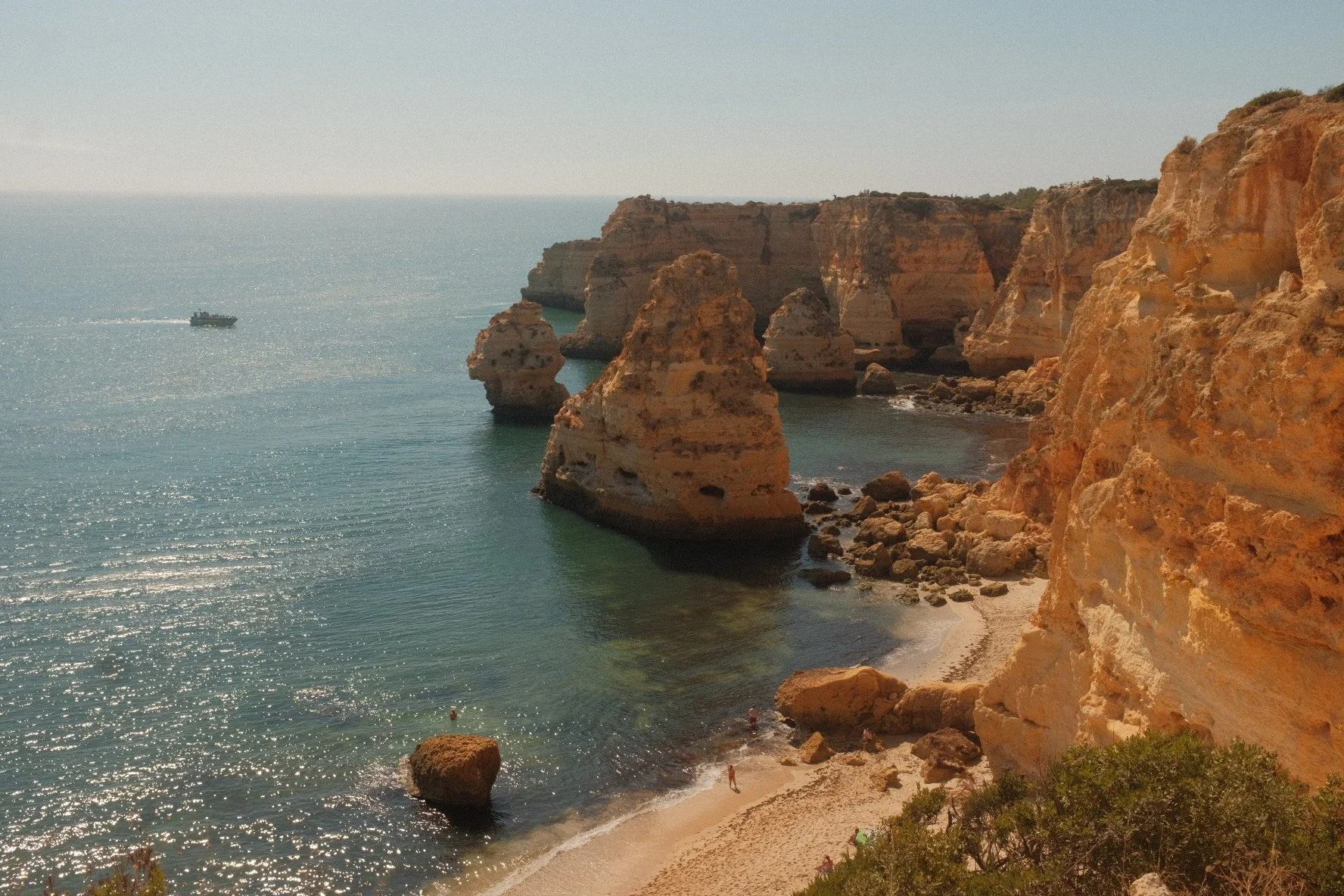
After surfing, I take a dirt road on my motorcycle, making my way to Marinha Beach, the starting point of a famous coastal hike. The parking spots have been full for hours, to the point that the Republican National Guard is blocking the road. The two officers wave me through; there’s a motorcycle parking spot available.
On a round trip to the Algar Seco rocks, I walk 12 kilometers along the cliffs under a blazing sun. I prefer the undulating waves and the curves of mountain bends to the stillness of a beach towel. After my second surfing session at Amado Beach, I feel like getting up high.
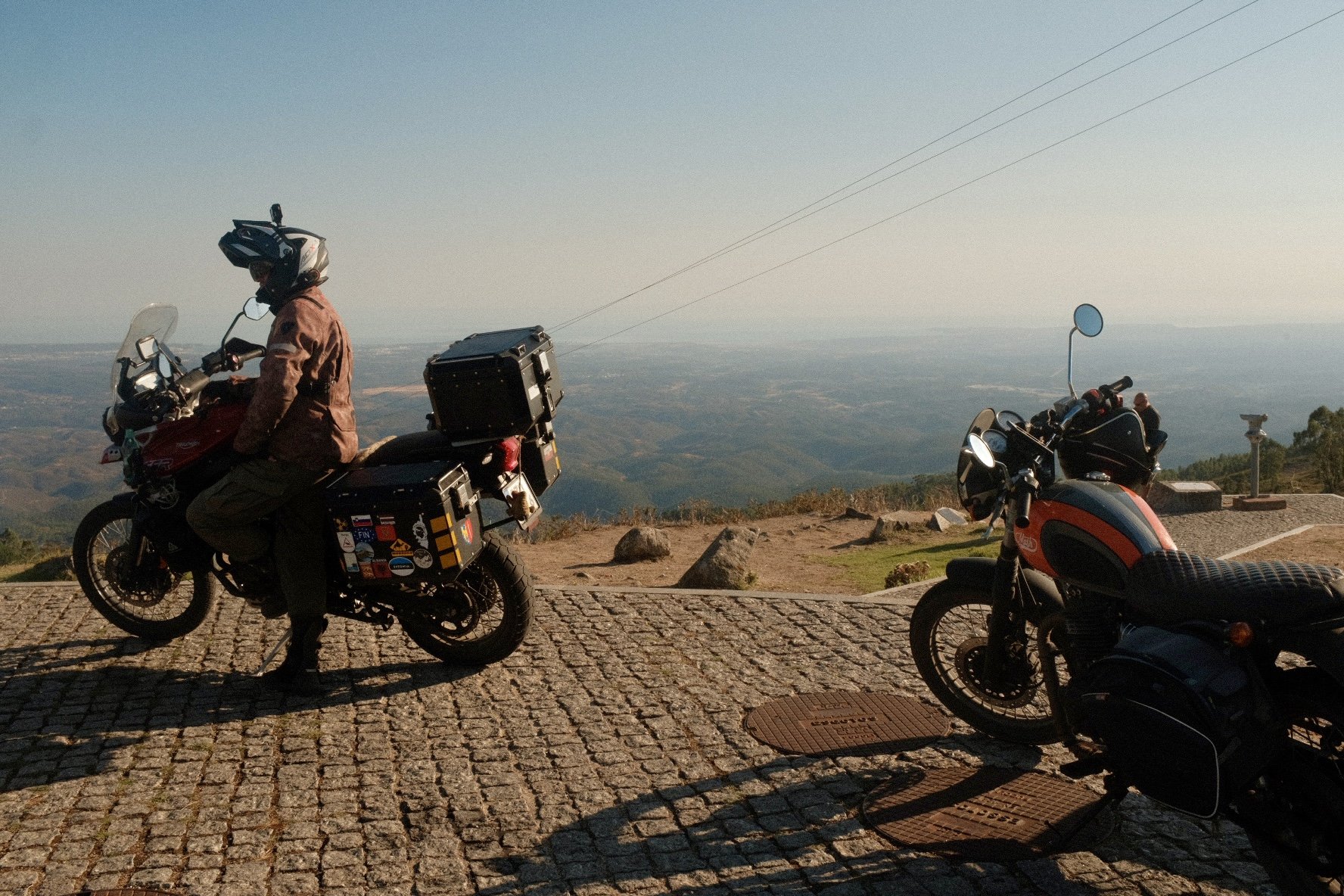
I head to Alta da Fóia, the highest point in the Algarve at 902 meters above sea level, to admire the view. 175 kilometers of accelerating, braking, passing, and leaning into the curves. The day ends with another sunset at the Miradouro do Cordoama. In the blink of an eye, the eighteen days spent traveling across Portugal have flown by.
My final stop is in Tavira, a whitewashed town near the Spanish border. I feel what the Portuguese call saudade—a mix of nostalgia, longing, and desire. It’s a profound emotion, both painful and comforting, thanks to all those precious encounters.
Pre-trip check-up for Morocco
To avoid taking the highway and as a warm-up before Morocco, I board a small ferry connecting Portugal to Spain. A few hours later, I have an appointment at the Motoauto Rangel garage in Seville to make sure my Mash is in good condition.
I’m lucky to have the professional help of Jorge and Camilo, who are going to take care of my motorcycle. Oil change, chain tension, brake adjustment—they explain every step while asking me all about my trip. The icing on the cake is that they decide not to charge me a thing, as a way of showing their support. It’s time to switch continents. Europe, see you in 21 days.
Sébastien Roux
Cover photo © Sébastien Roux
Episode 4 - Moroccan Waves & Djebel
Toubkal
Episode 2 - Spanish Waves & Picos de Europa
Episode 1 - From the Alps to the Basque Country
This travel journal was published in issues 90 and 91 of Road Trip