
Back to summary
Ep 4 - Moroccan Waves & Djebel Toubkal
Europe, see you in 21 days. Now it’s Africa’s turn. From the town of Tarifa, I board a ferry bound for the city of Tangier. Then, I head to the Rif region to reach Chefchaouen, Morocco’s blue pearl. Next up: the labyrinth of Fez, waves from Mohammedia to Imsounane, and the art of Essaouira, Agadir, and Marrakech, before reaching the summit of the Atlas Mountains.
The ferry ride from Tarifa to Tangier takes an hour. In this city in northern Morocco, Hugo, a young French journalist, welcomes me into his apartment. A chance encounter with Ianis, another French journalist based in Lisbon, led me to Mélanie, a Franco-Portuguese journalist based in Tangier, who then put me in touch with Hugo. You really have to trust in fate!
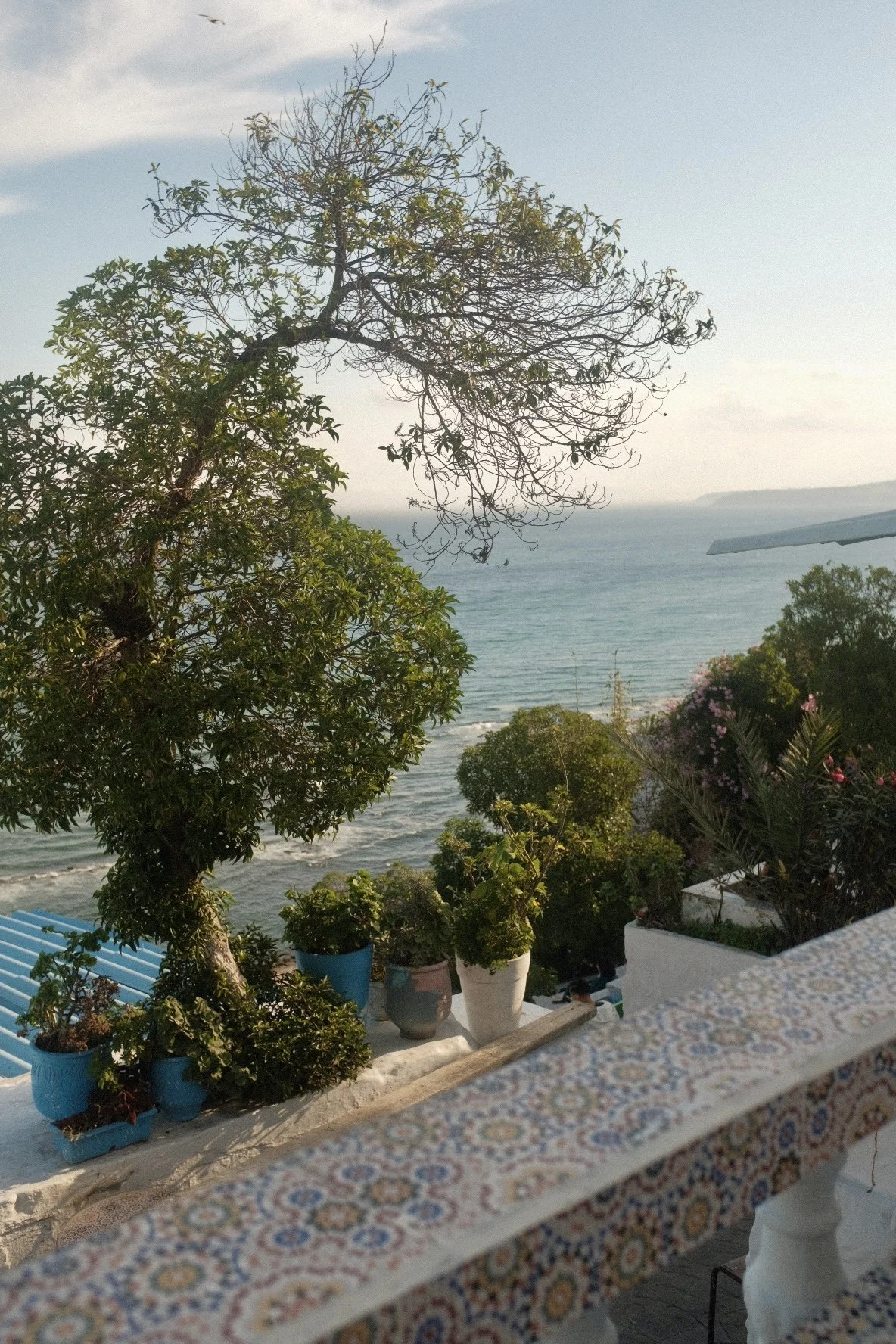
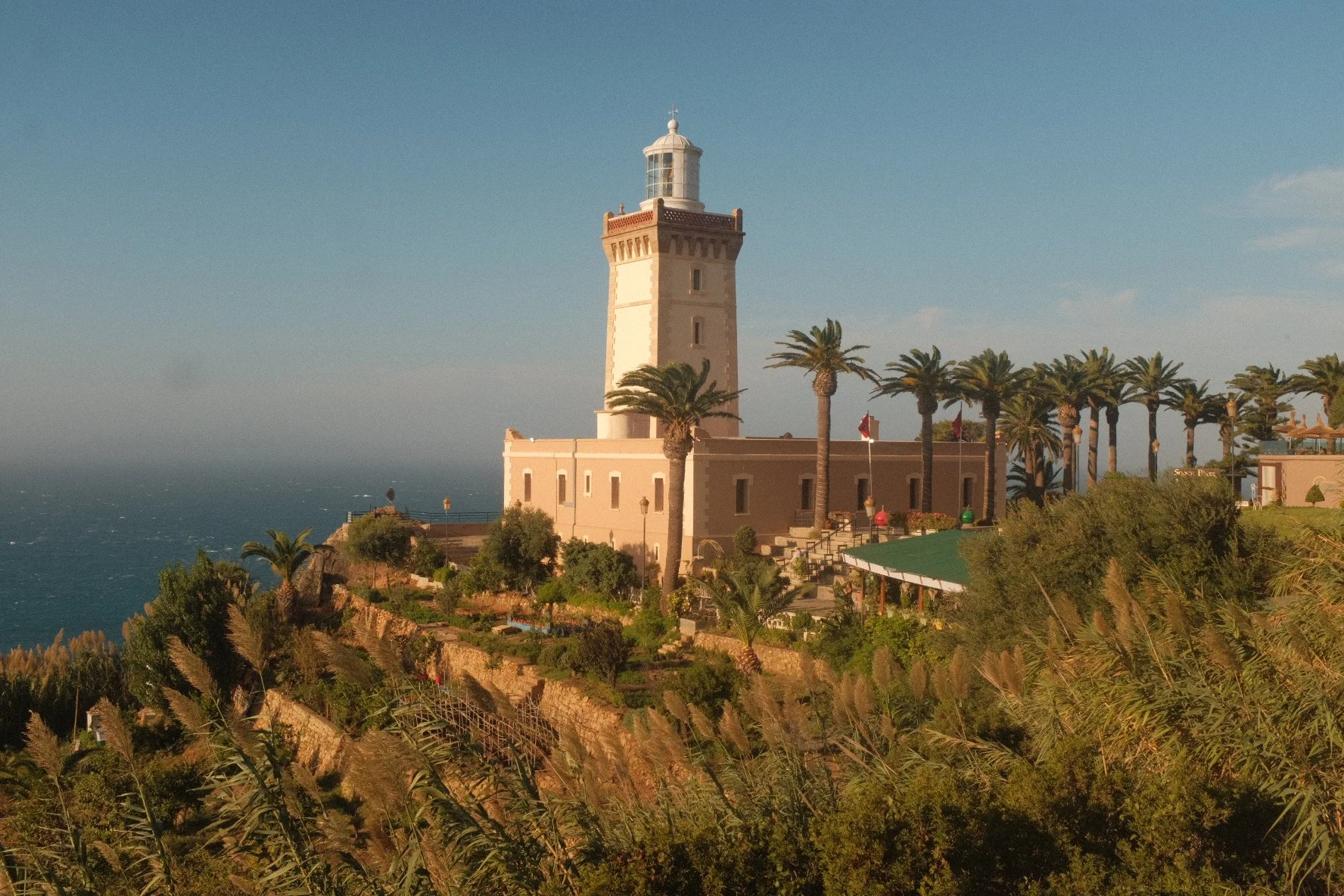
In Tangier, I explore the narrow streets of the medina as well as the kasbah, a citadel turned museum. After the first tagine of many to come, I head out of the city on a motorcycle to reach the Cape Spartel lighthouse. I realize that traffic will be chaotic during my trip, especially at roundabouts where the rules apparently don’t apply to everyone.
For the night, I find a secure covered parking lot. I’m surprised when it comes time to pay upon leaving, as the attendant asks me for double the price listed at the entrance. He explains that if you don’t pay the price in advance, you have to pay the full hourly rate, which is much less economical.
Winding through narrow streets
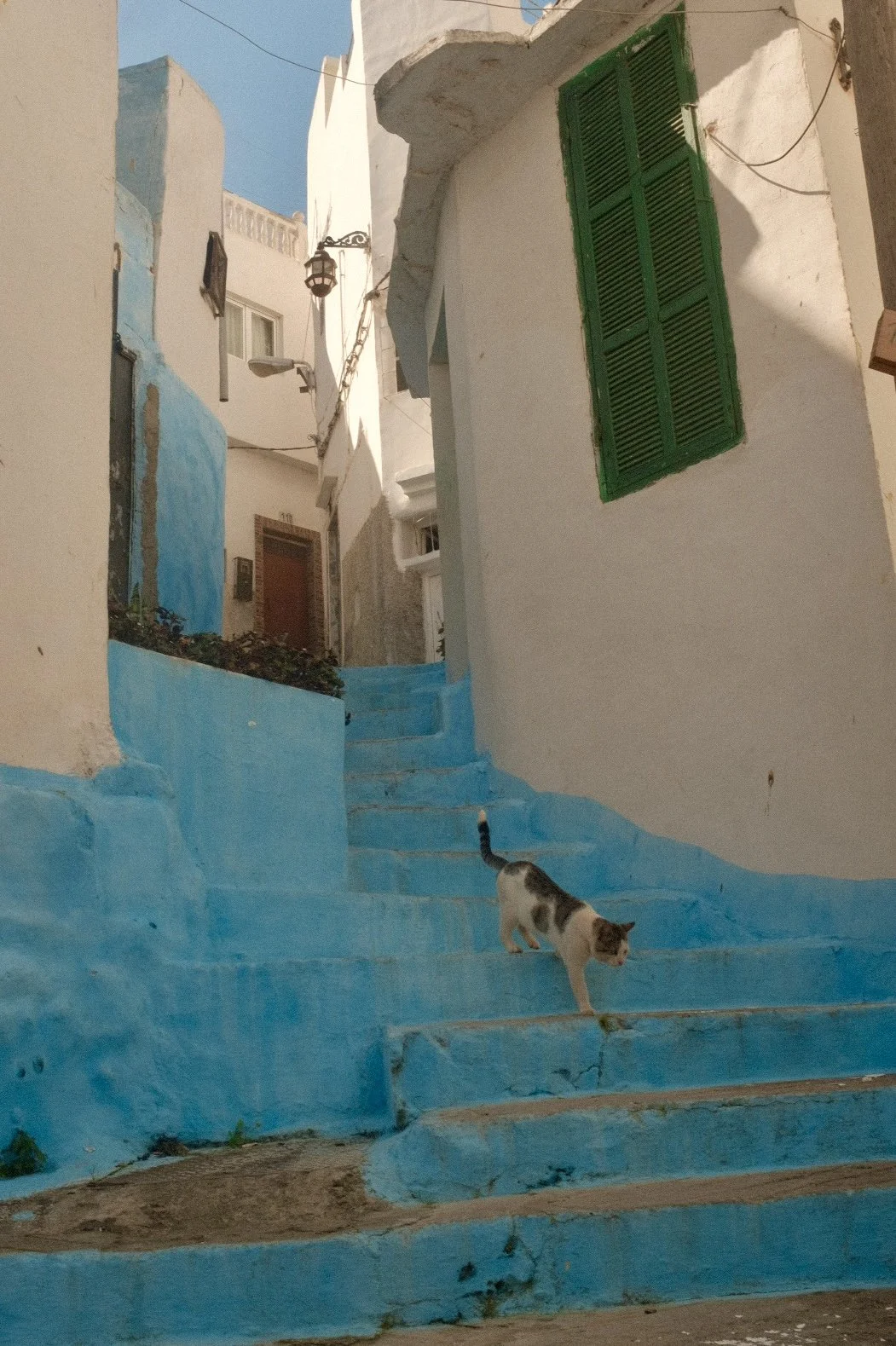
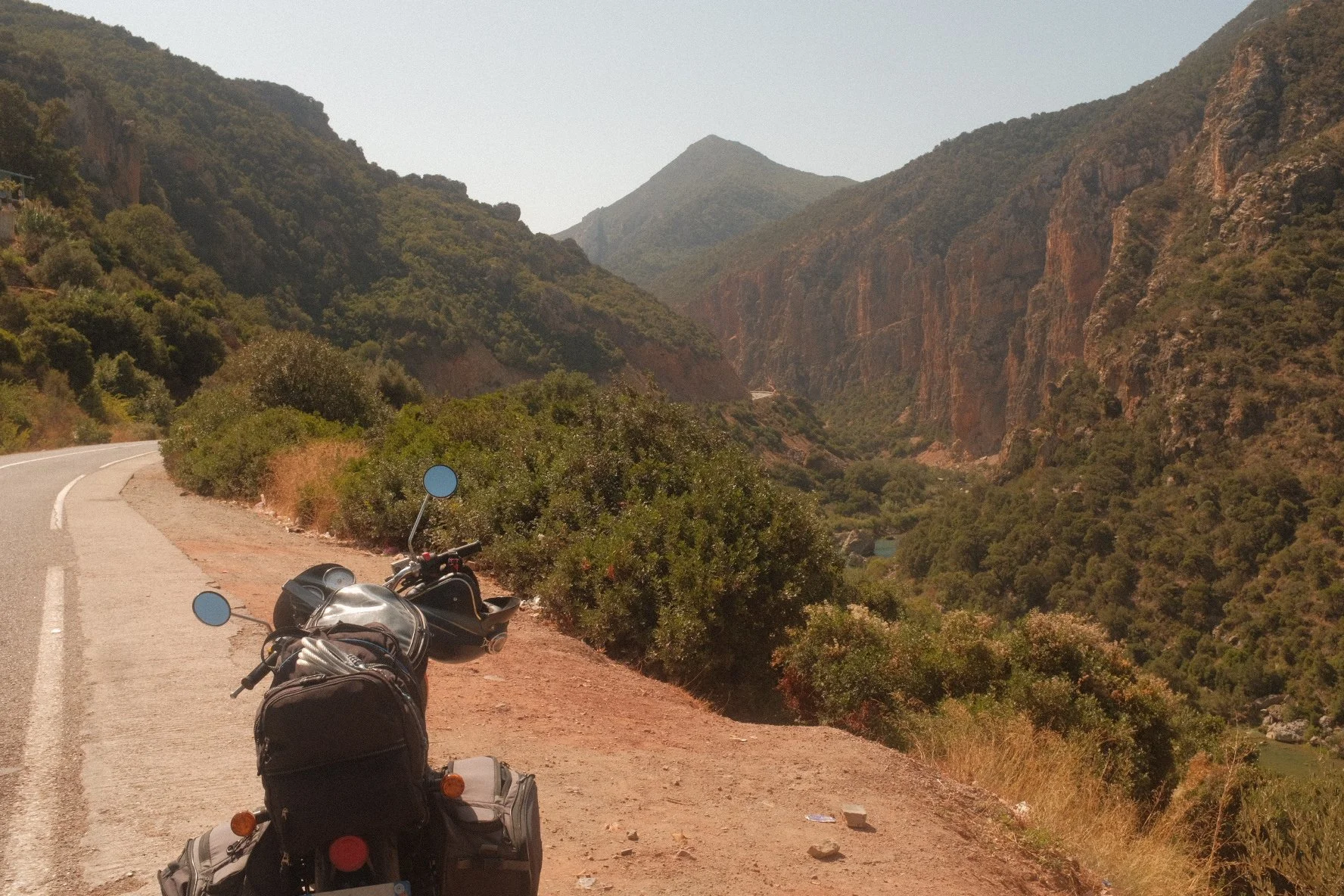
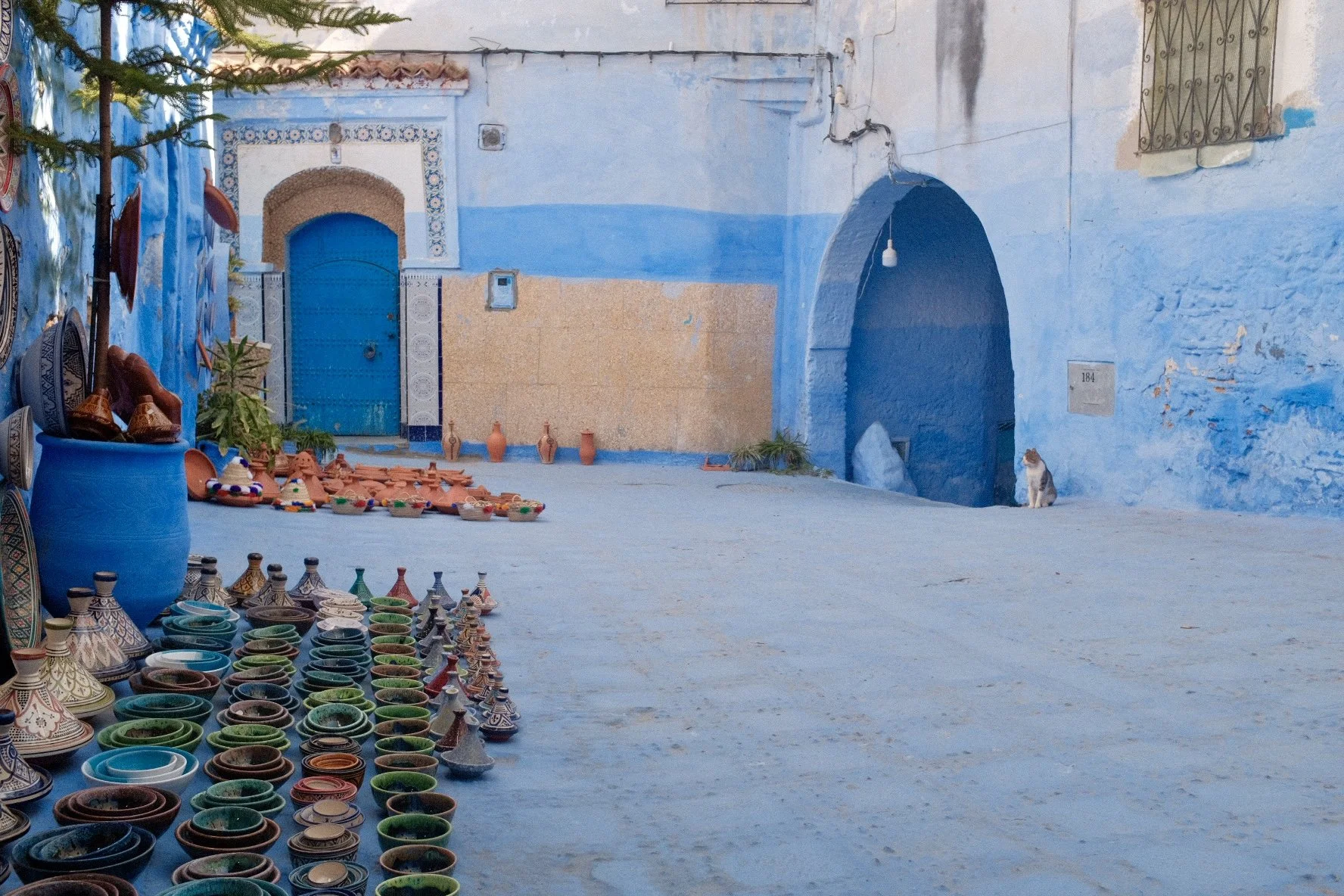
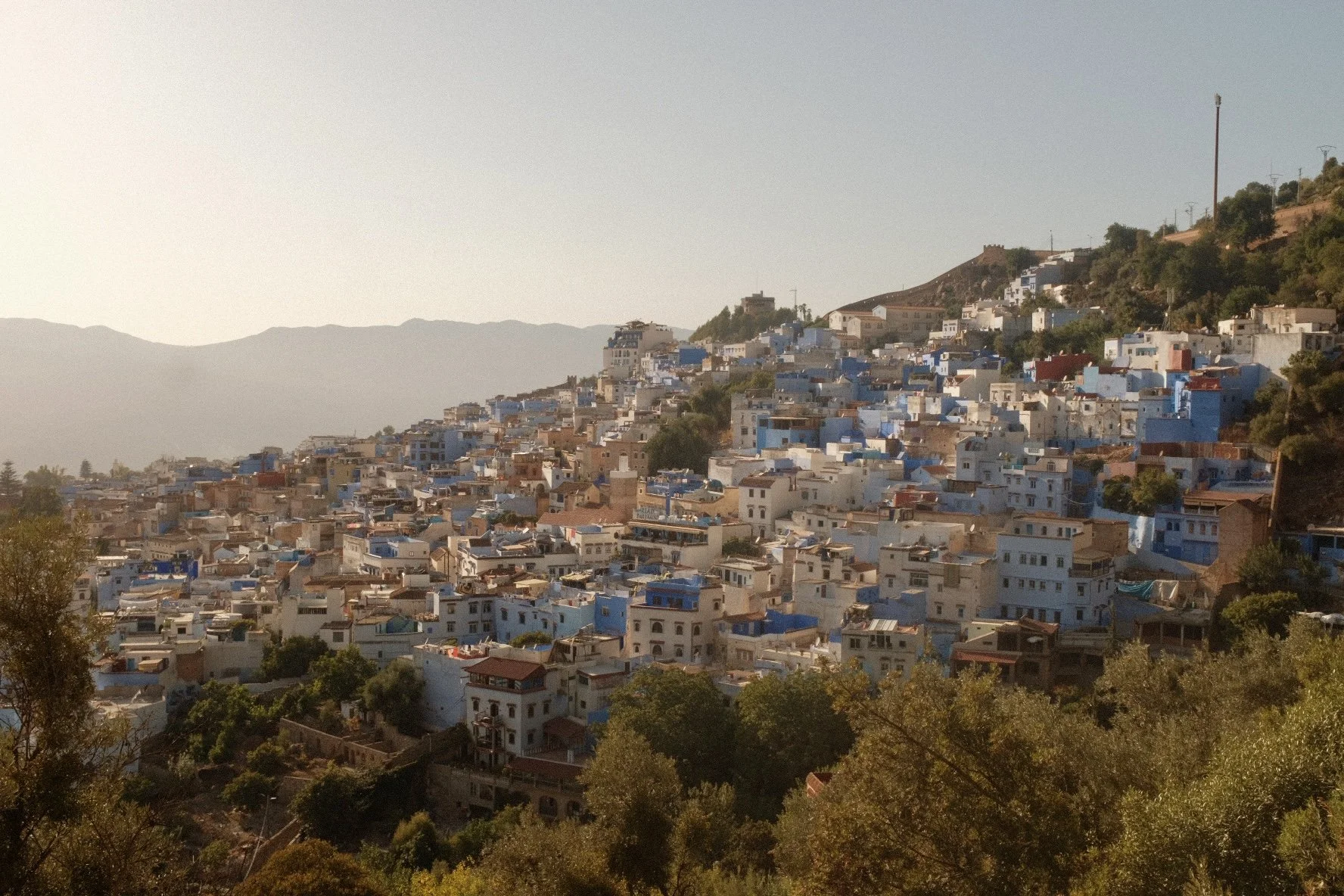
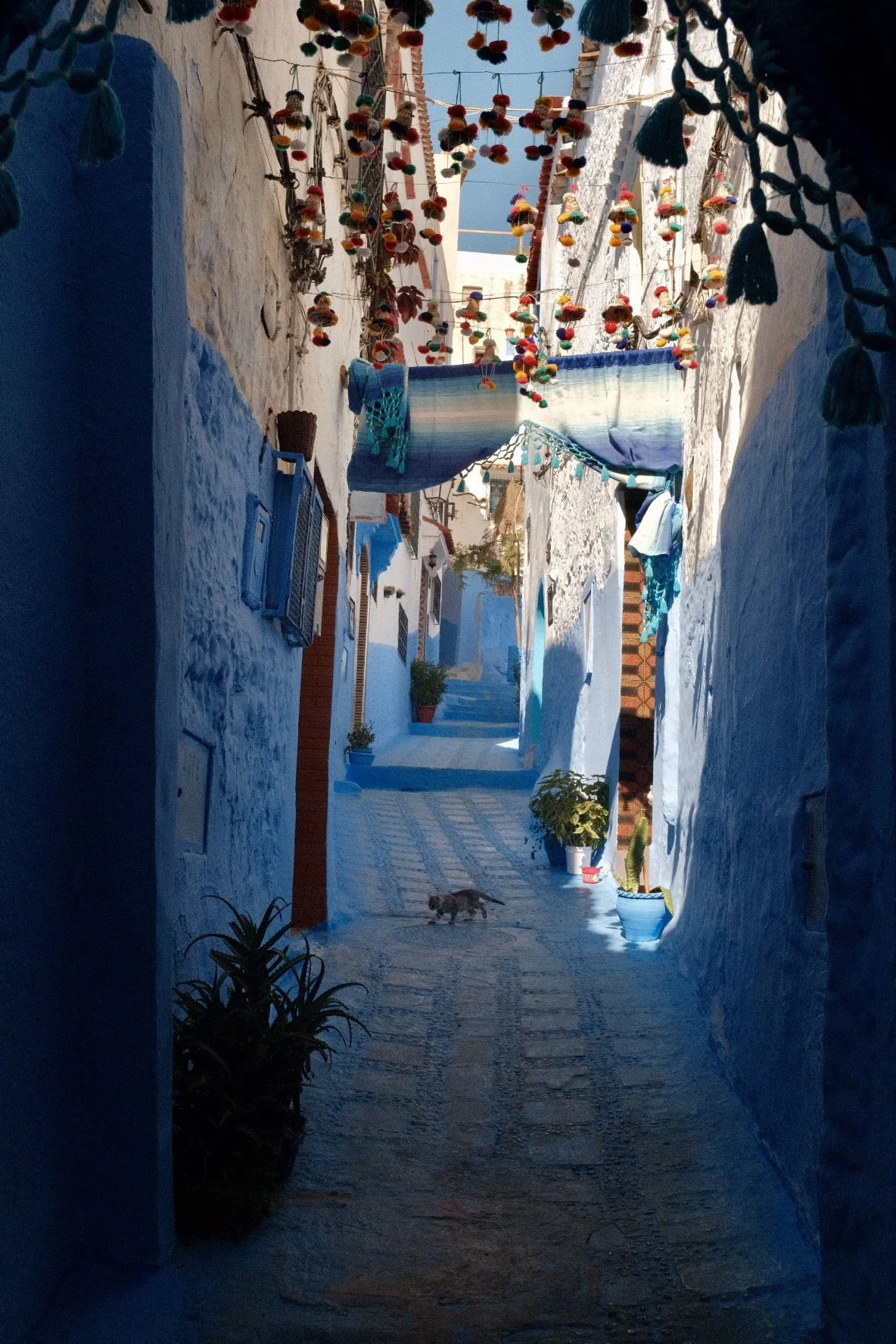
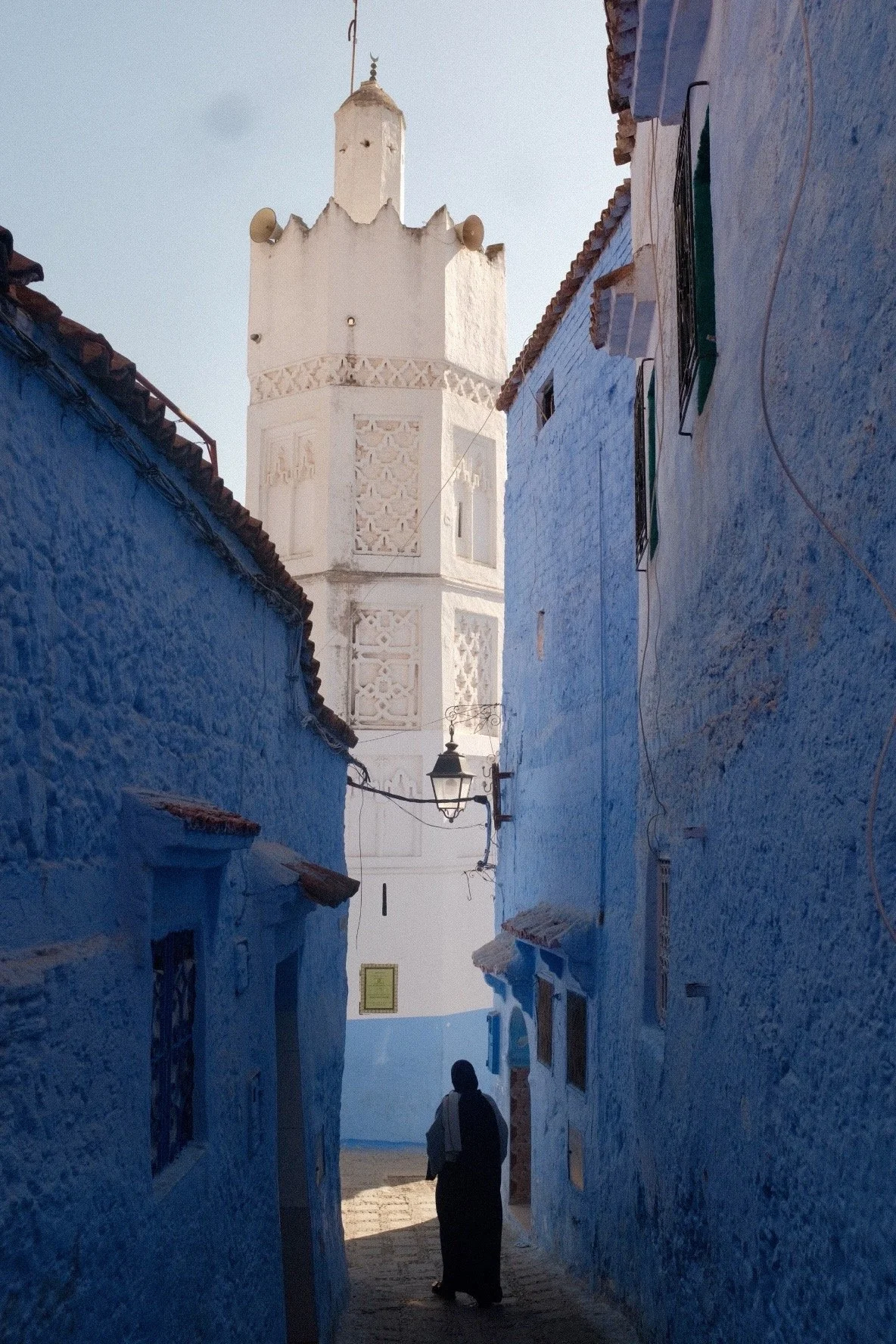
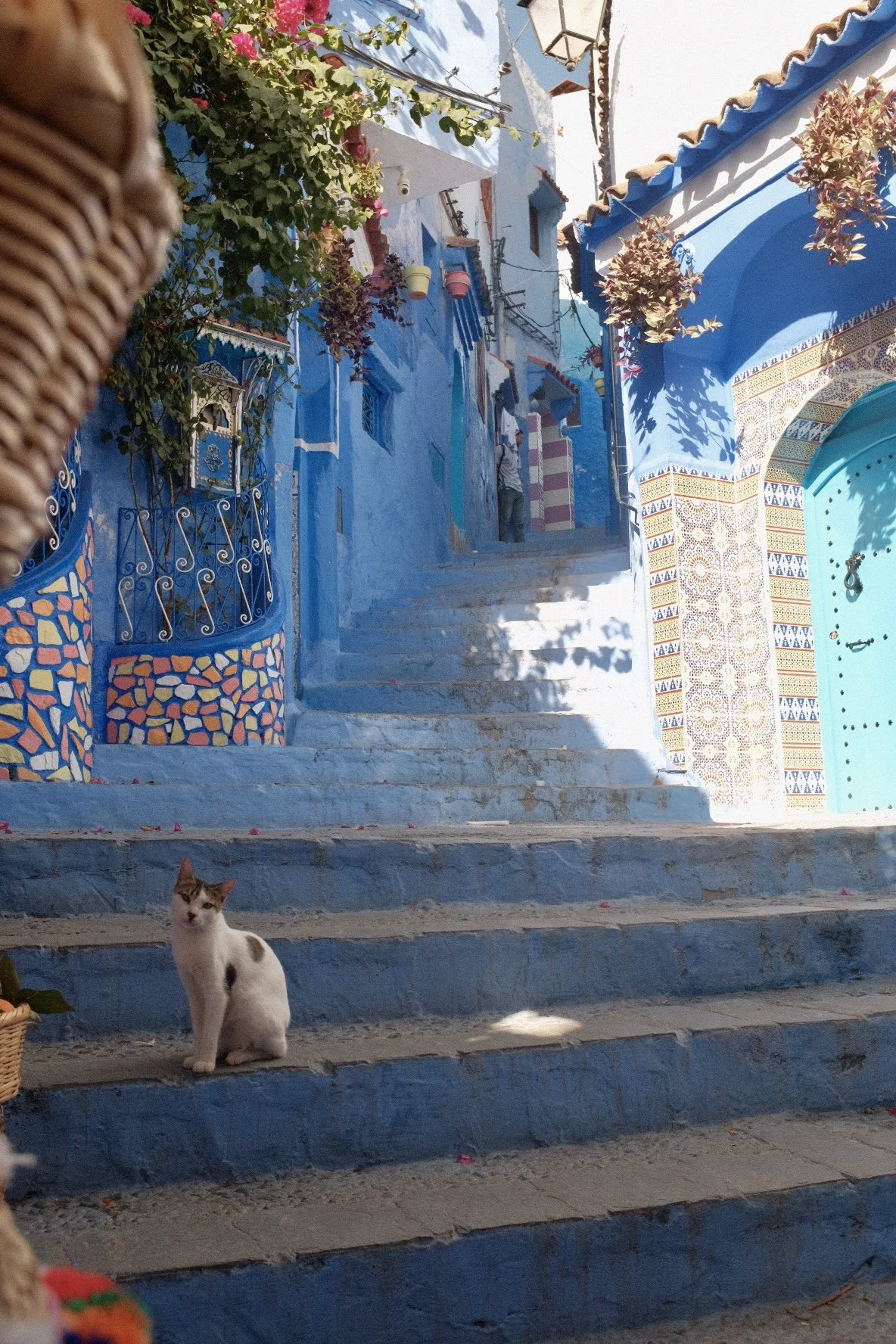
I decide to drive toward the Rif Mountains to reach Chefchaouen, Morocco’s blue pearl. First, I follow the coast eastward, then pass through Tetouan before heading uphill through some stunning gorges along Route 406. Upon my arrival, Chefchaouen reveals its many hues through its narrow alleyways. Was it originally to cool the streets? To keep mosquitoes away? For religious, spiritual, or simply aesthetic reasons? Various theories exist.
It’s impossible to enter the medina by motorcycle. Using Google Maps, I find a parking lot nearby. Getting to my hostel while carrying all my belongings is a physical challenge, much like an orienteering race. Navigating the old city is a series of uphill and downhill climbs.
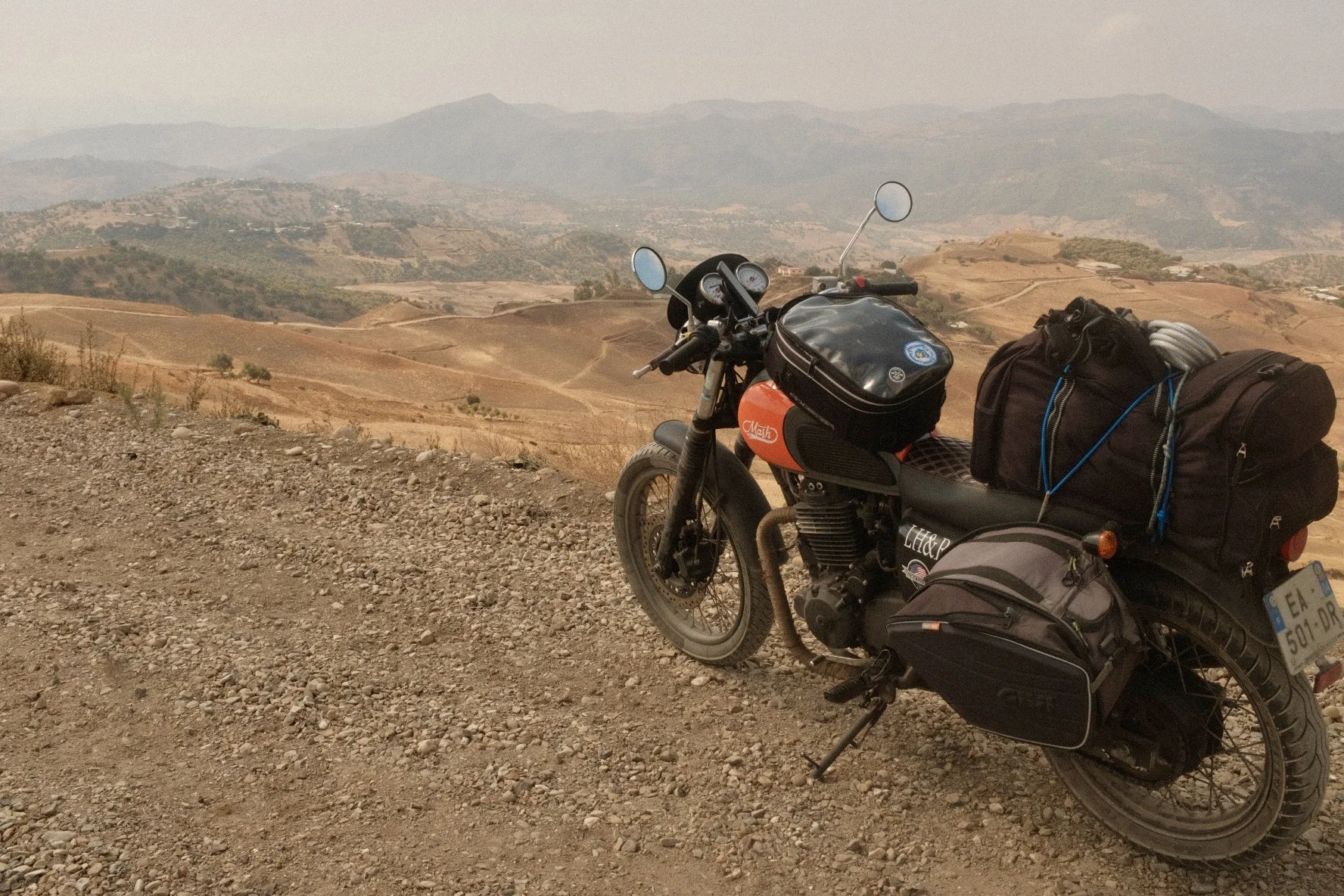
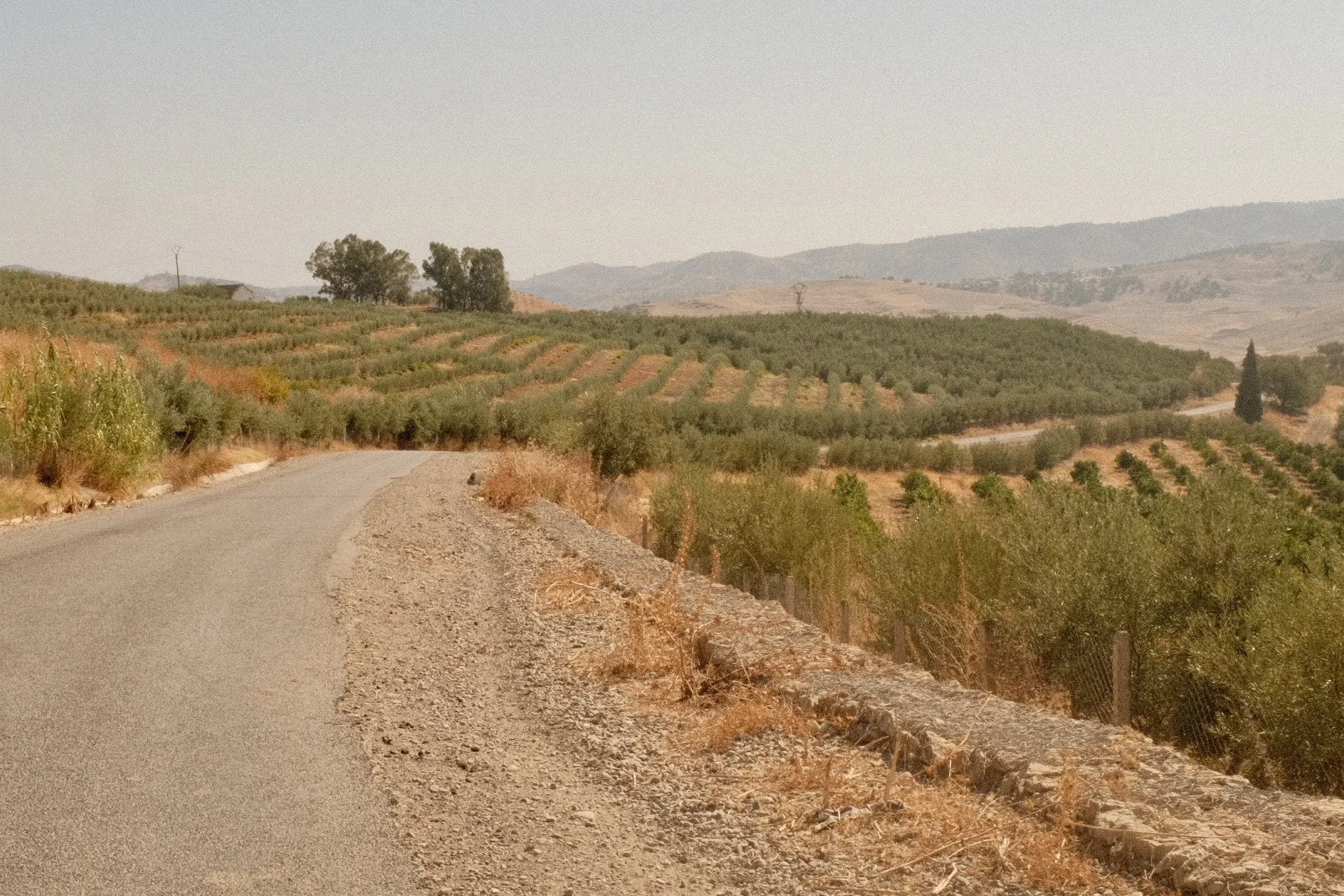
From Chefchaouen to Fes, the Mash covers 230 kilometers, passing from thick fog to a wide blue sky. Alternating between freshly paved asphalt, bumpy roads, and dirt tracks, the scenery unfolded across plains, valleys, and mountains.
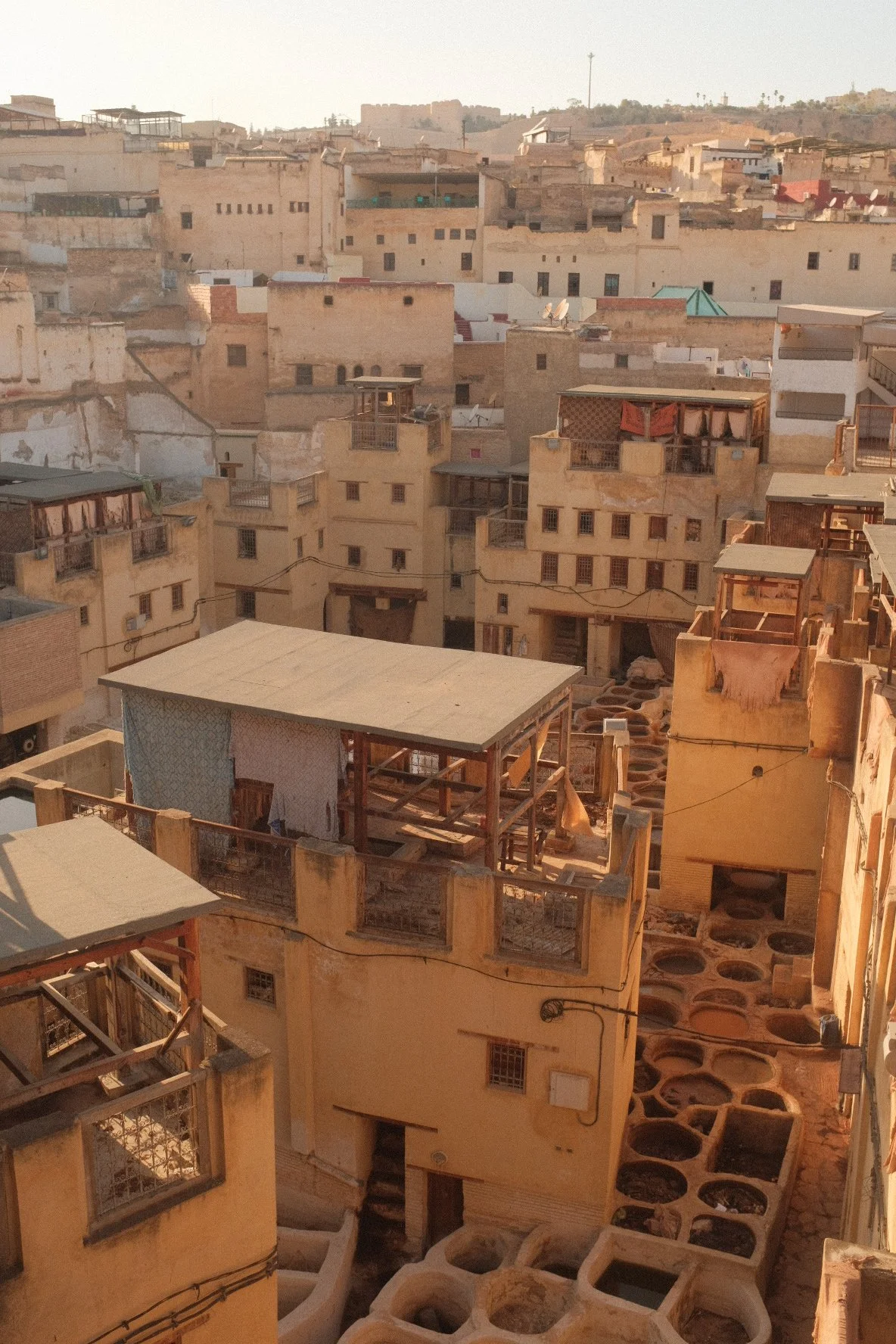
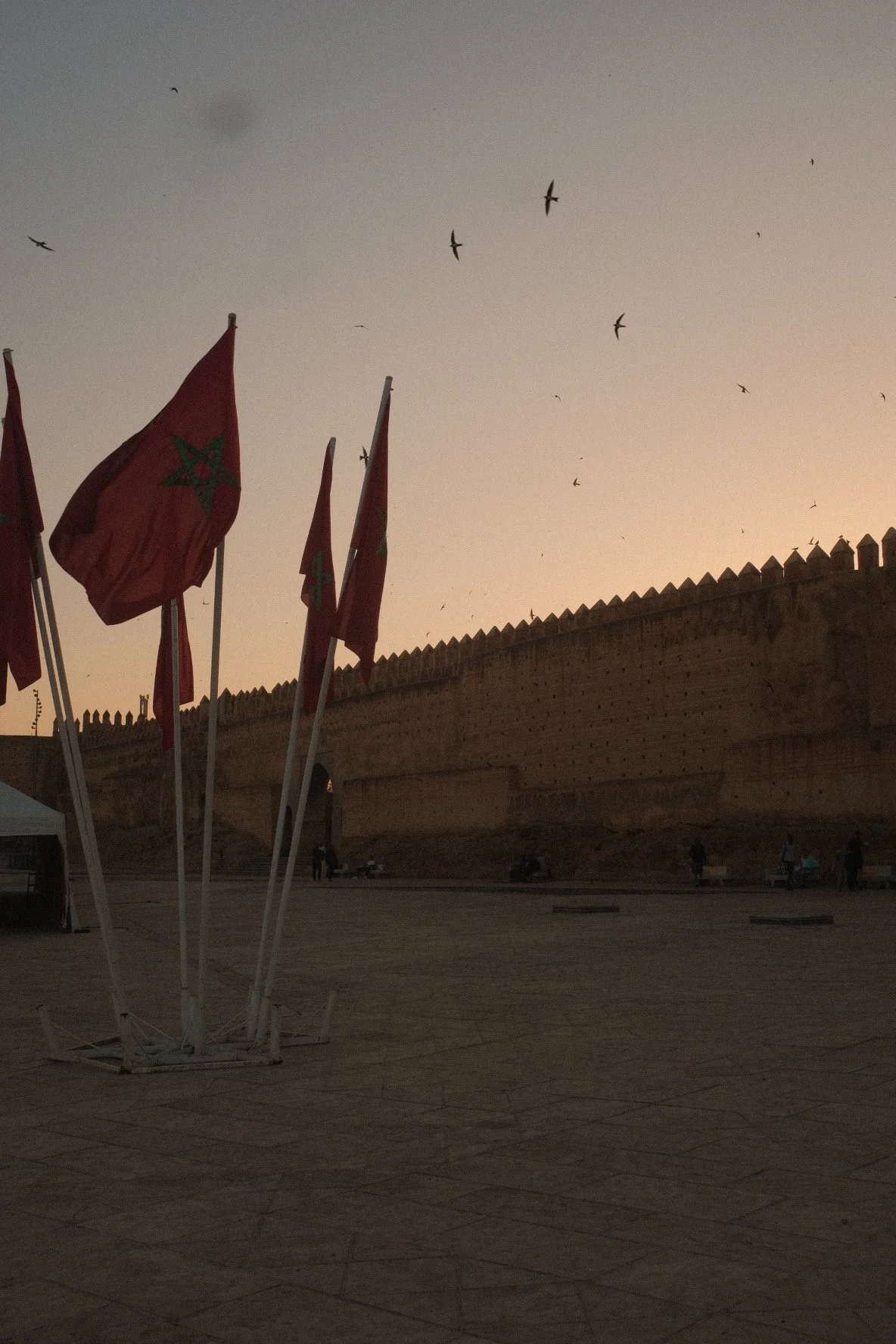
Once in Fes, we had to lug all our stuff from the parking lot to the hostel again, getting lost in this open-air labyrinth. Fez is a bustling hive of activity with narrow alleys and a multitude of smells that aren’t always very pleasant, especially when you reach the terraces overlooking the tanneries. These tanneries are what make the former capital of Morocco famous, and its Al-Qarawiyyin University, founded in 859, is said to be the oldest continuously operating university in the world.
Back on the coast
It’s a well-known fact: your friends’ friends are your friends. Baptiste, a surfer friend from Marseille, gave me Greg’s contact info—he lives in Mohammédia, between Casablanca and Rabat. Even though three of his friends are coming to visit him for the first time, he invites me to crash on his couch and stay as long as I like.
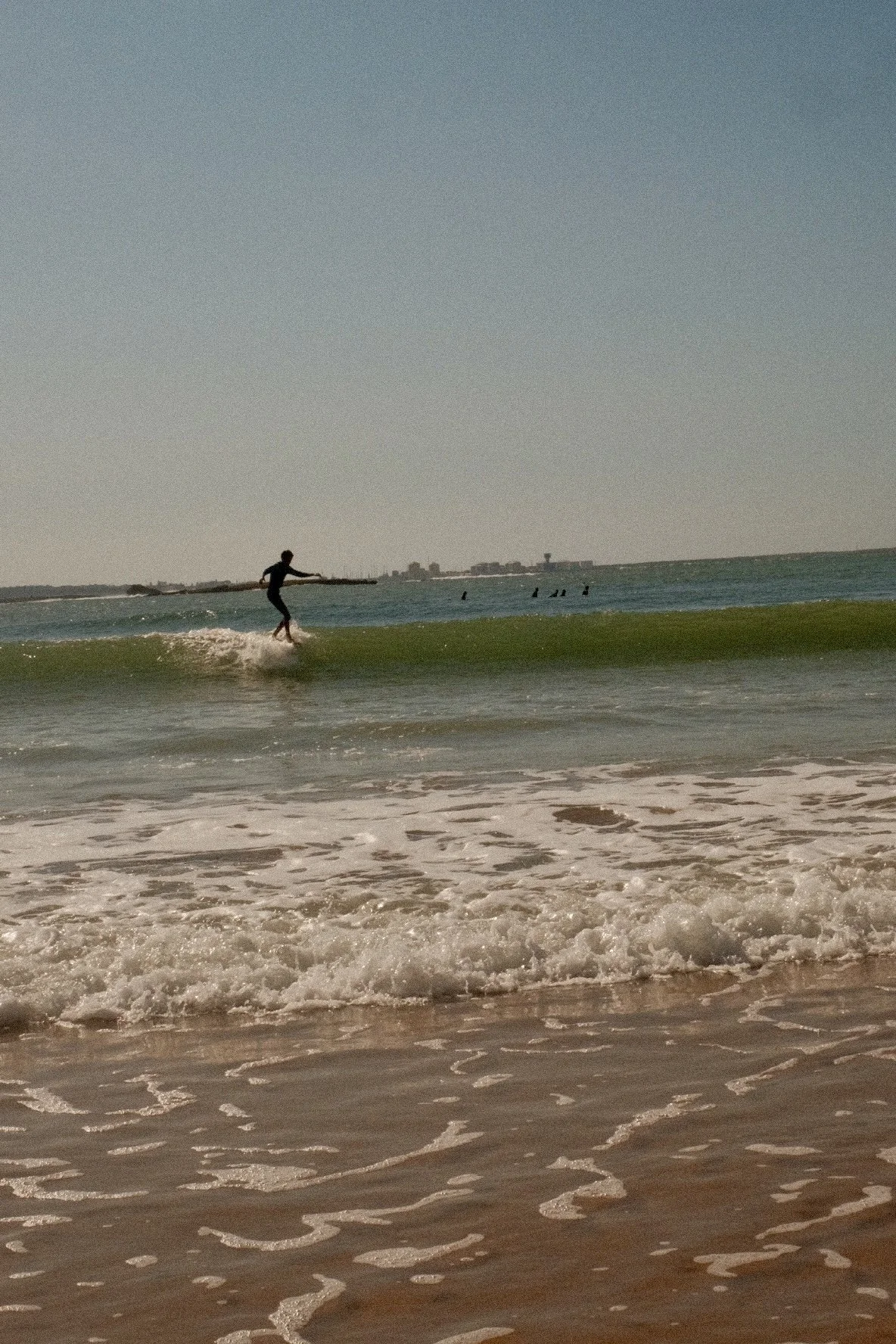
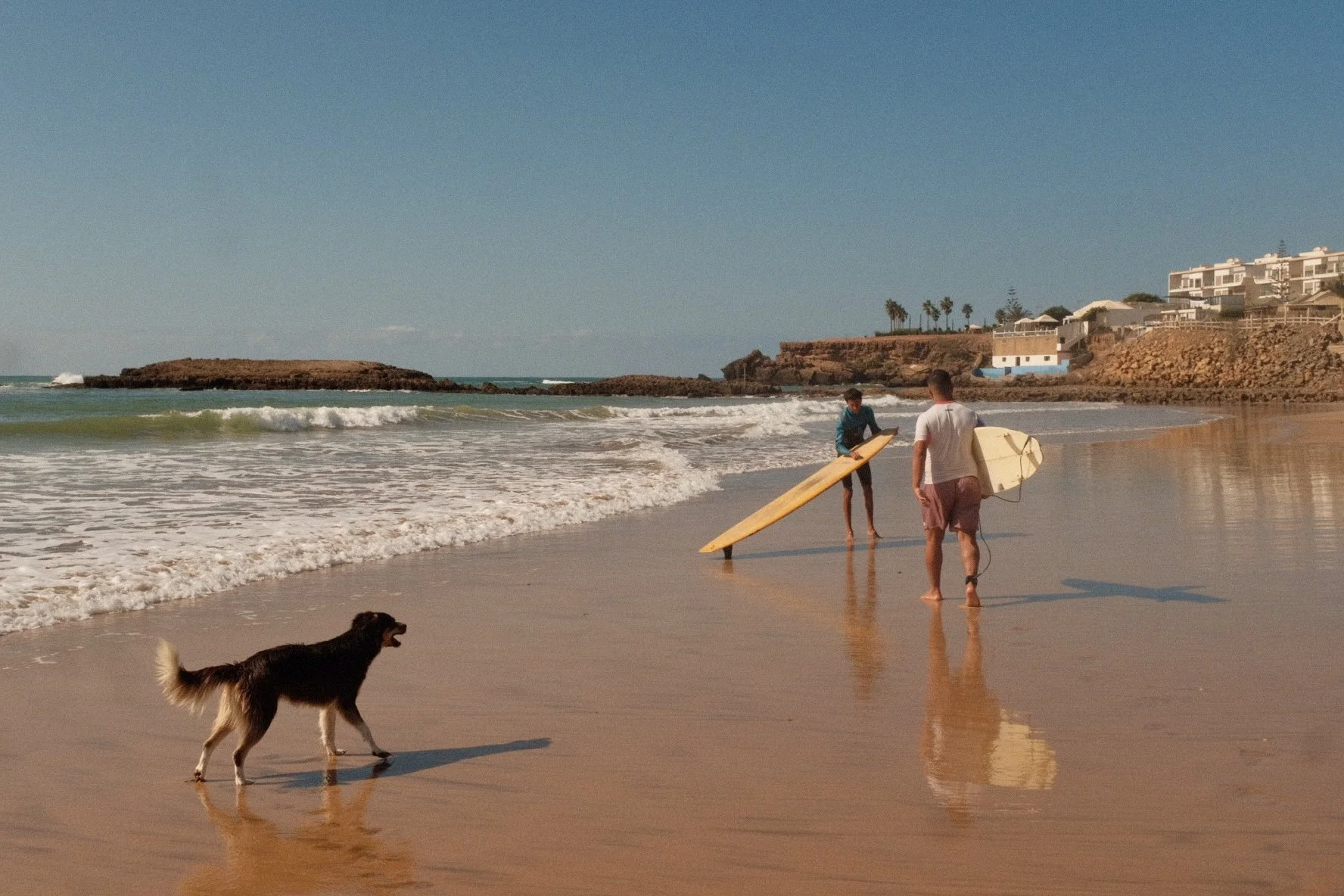
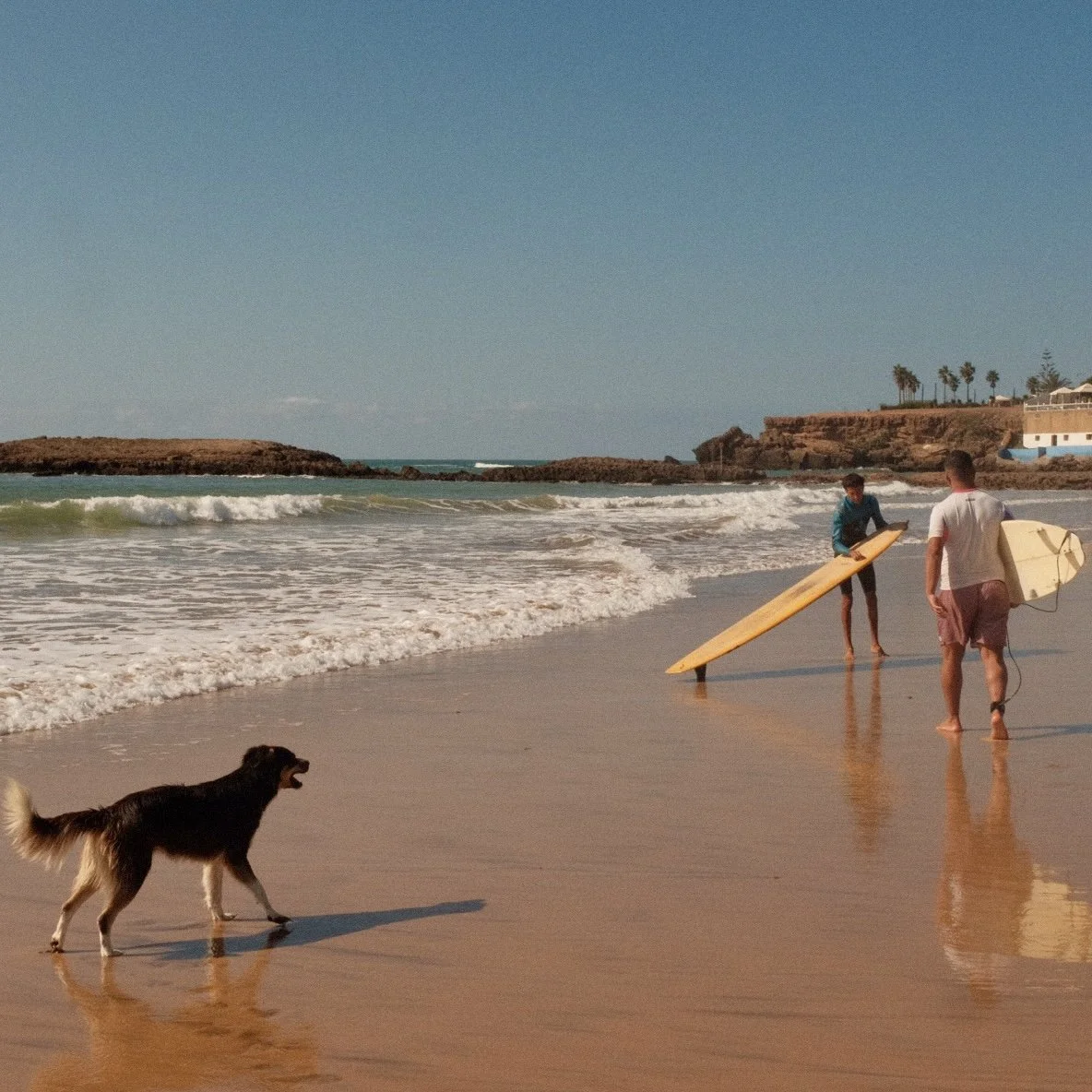
After an evening of downing a few pricey beers (a rarity in otherwise affordable Morocco), I have an appointment the next day with the CSNM surf school for my first surfing session in Morocco. The waves are smaller than expected. I opt for a longboard. I stay in the water for less than an hour because reading the waves is so difficult, despite the right-handers rolling in. Surfing requires humility. Some spots demand patience before you can fully enjoy them. I console myself by sharing a couscous with various members of this surf school.
A second session takes place the next morning, this time at Sidi Bouzid Beach, just outside El Jadida. Mahmoud, the local surfer, can’t surf with me because he has to go to work at a swimming pool. I jump into the water, alone. Surfing at an unfamiliar spot with no one around isn’t recommended. If something happens to me at this point break, I’ll be completely on my own. The waves are pretty big but still soft, so the danger is limited. With a longboard, I’ll manage to catch a few nice waves.
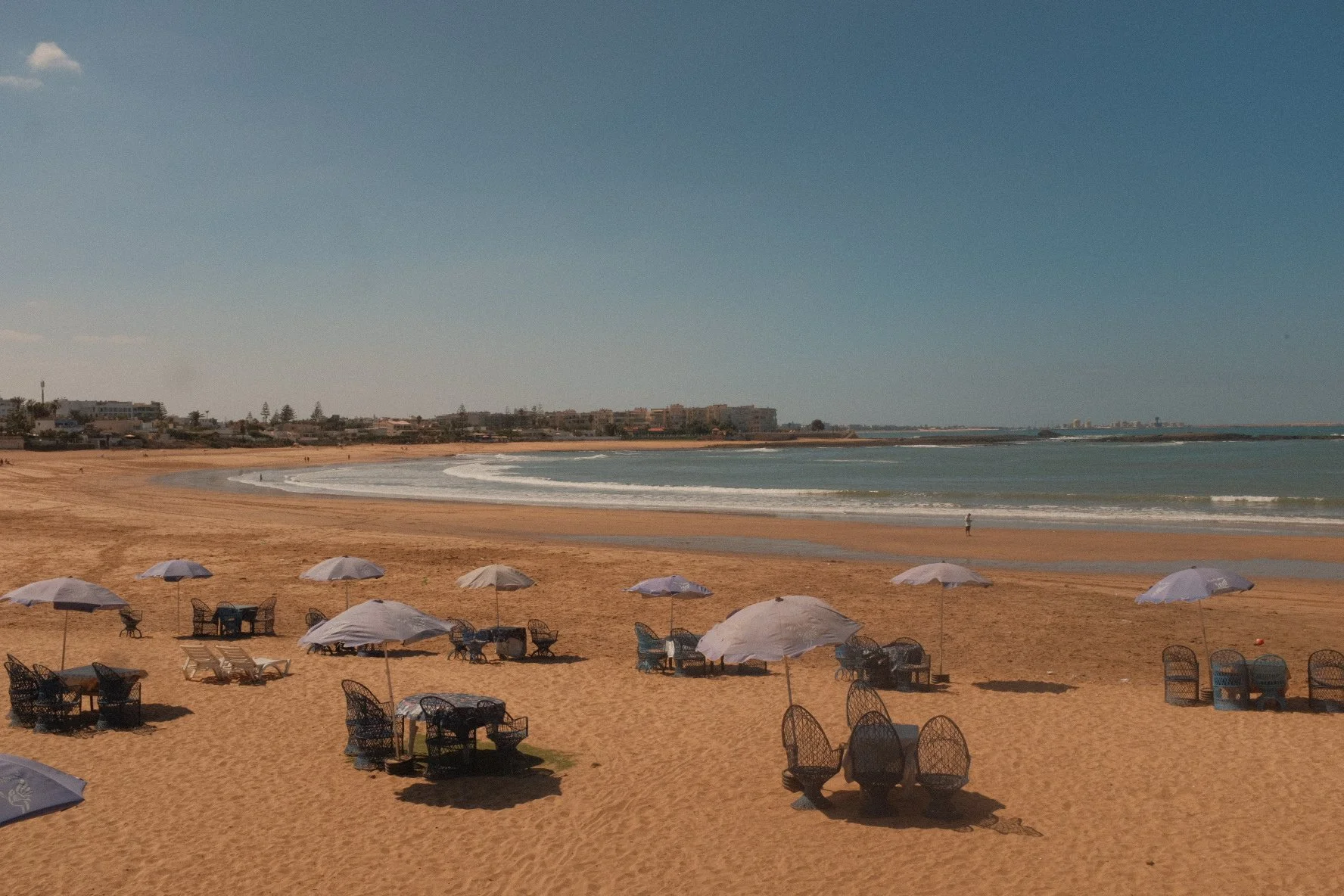
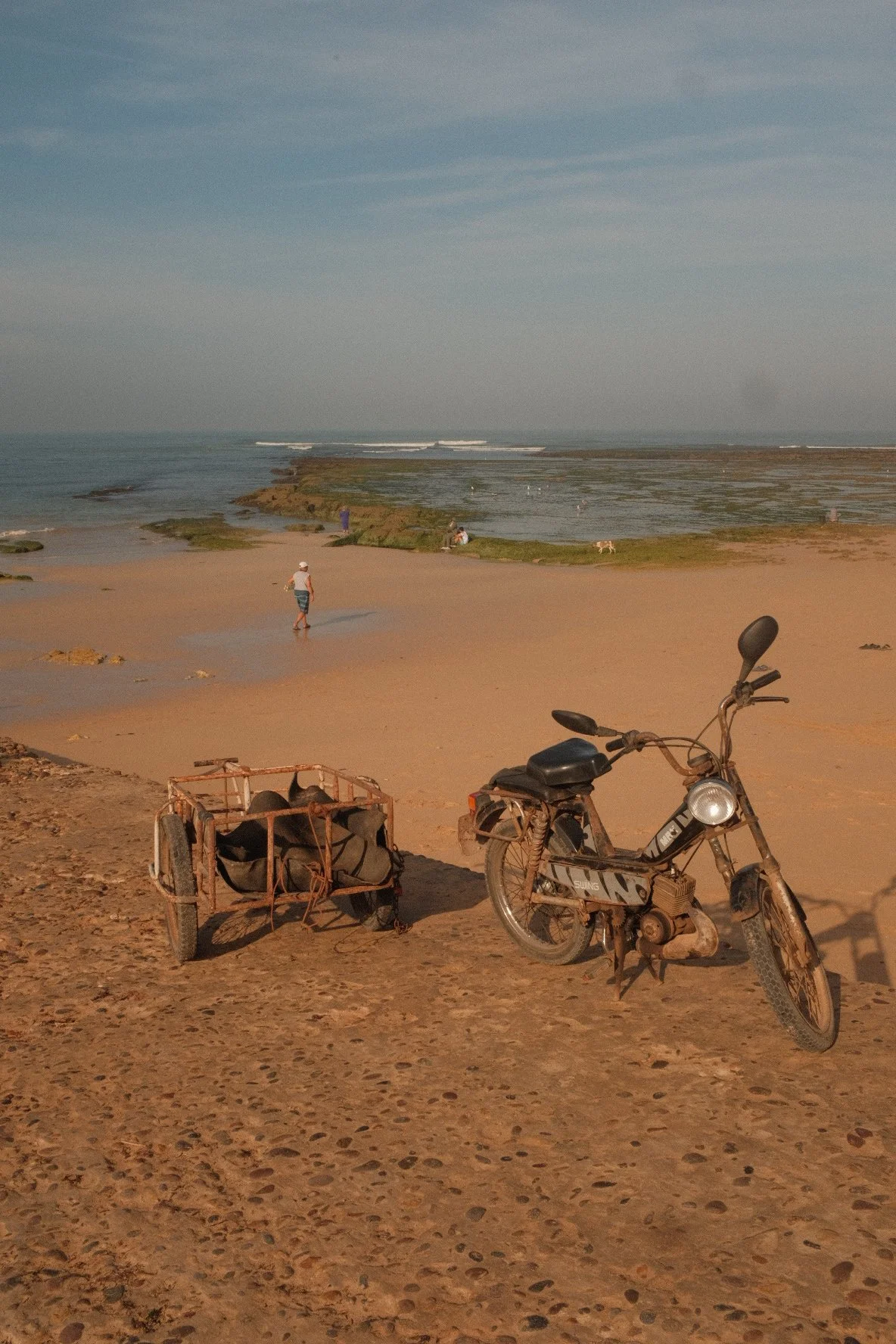
My next stop is the city of Essaouira. With its UNESCO-listed medina and ochre-colored ramparts, this coastal city became a favorite haunt of many artists in the late 1960s. Now a tourist destination, visitors will enjoy the handmade crafts on display in the streets. Many art galleries also showcase the work of local artists.
As for surfing, the city is unfortunately too exposed to the wind, making the sport uncommon here. Instead, it’s the kitesurfers who find their happy place, riding alongside the fishermen.
The Oasis Road
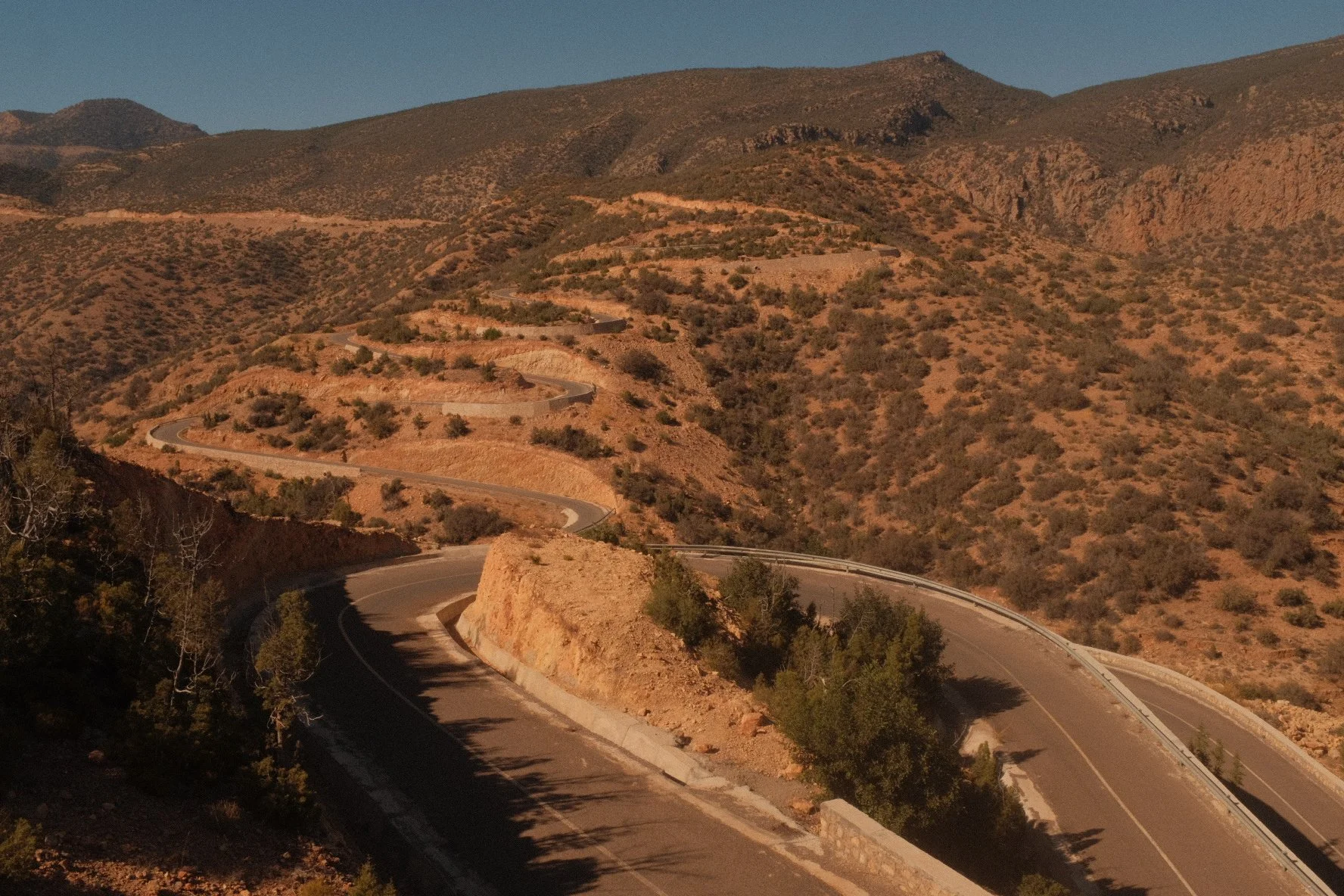
The Picos de Europa in Spain, the Torre Tower in Portugal, and now the oases of Morocco. I’m completely captivated by this mountain road. From the village of Sidi Mhand Ouchen, I drive to Imouzzer des Ida Ou Tanane before heading toward the Paradise Valley to finish my 250-kilometer leg in Aourir, on the outskirts of Agadir.
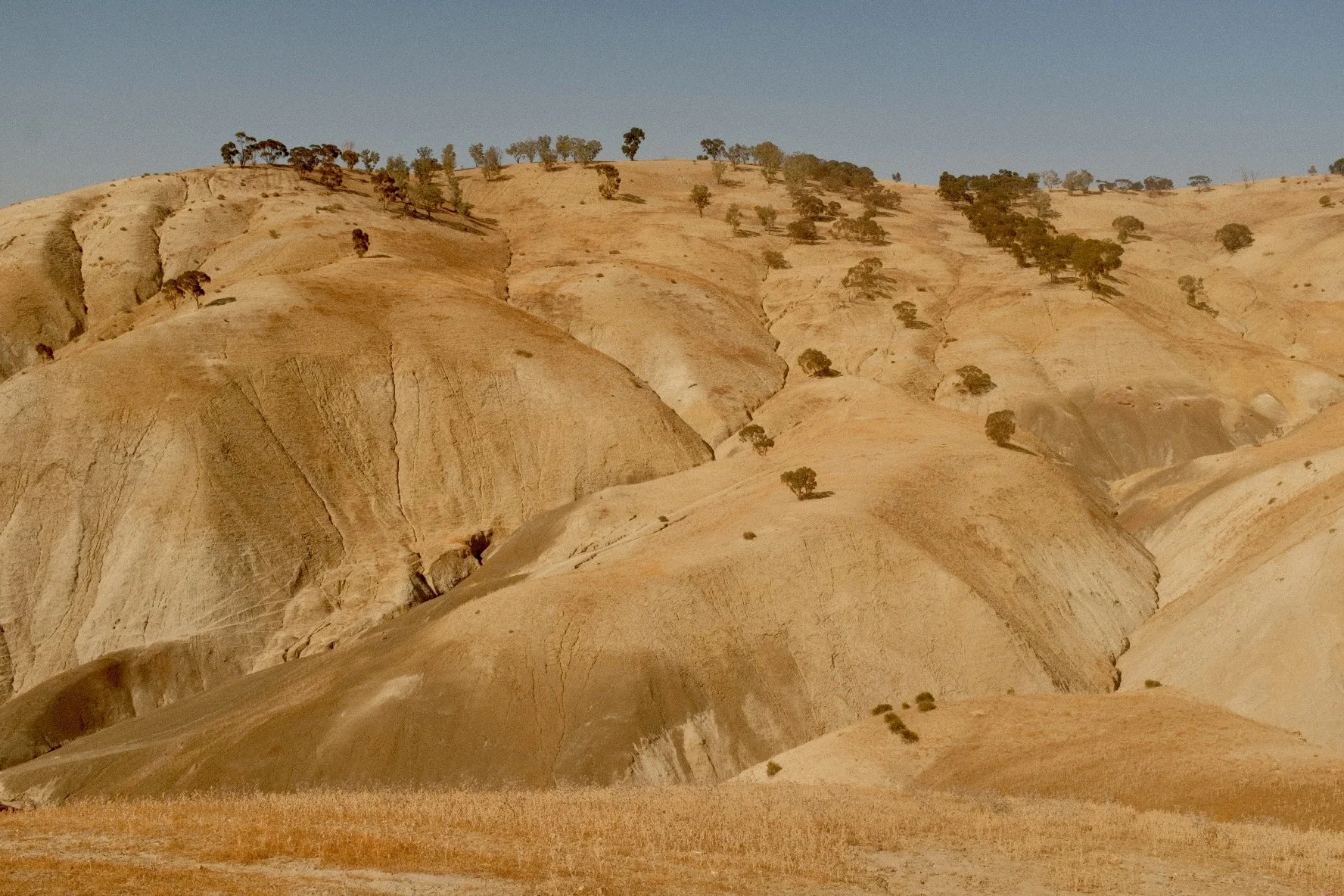
I chose to take a wide detour rather than follow the coast. I wasn’t disappointed by this choice. Mastering the art of navigating hairpin turns is essential to tackle the countless sharp bends. Ascents and descents across ochre-colored terrain offer breathtaking panoramic views.
© Sébastien Roux
In Aourir, I have a meeting with Hmidi, a Moroccan photographer whom I contacted on Couchsurfing. He suggests we go grocery shopping together so he can cook a meal of my choice with his wife. A fine example of Moroccan hospitality.
Couchsurfing also means accepting cultural differences and religious beliefs. Married for a year and the father of a 10-month-old boy, Hmidi does not allow his wife to socialize with other men; she must wear a full veil when she goes out in public with him. So I won’t have the pleasure of meeting her, even though I’m staying at his house for one night.
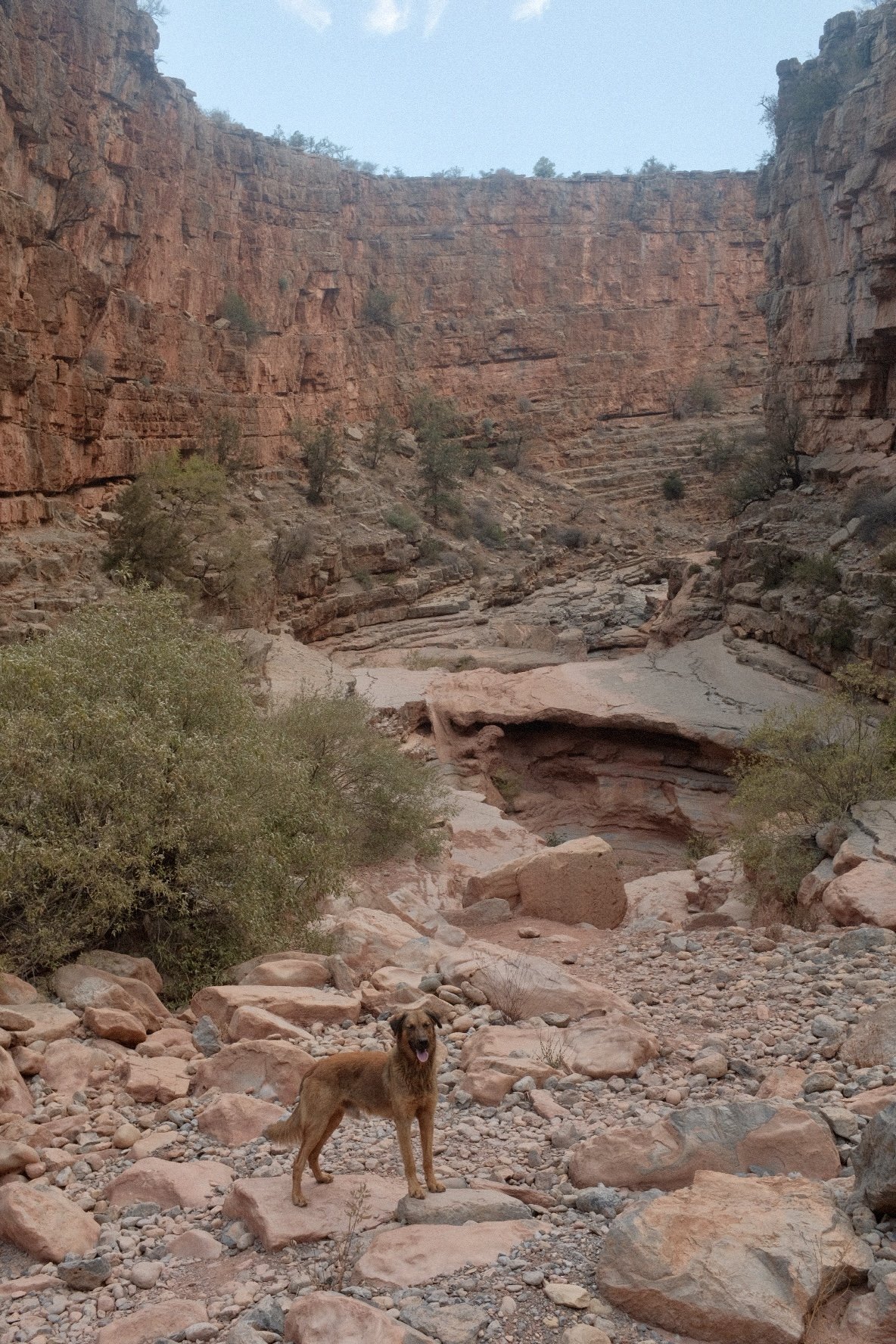
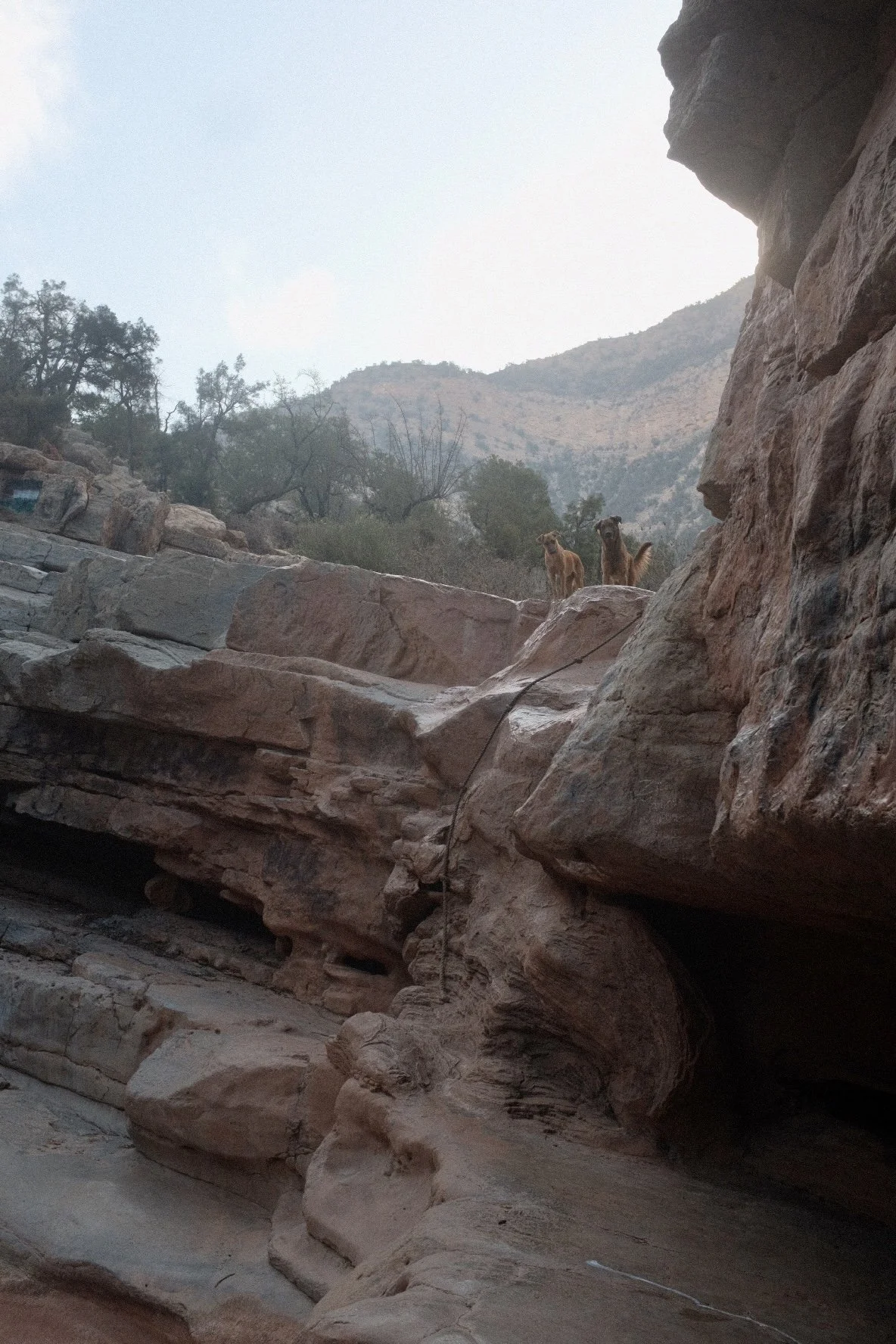
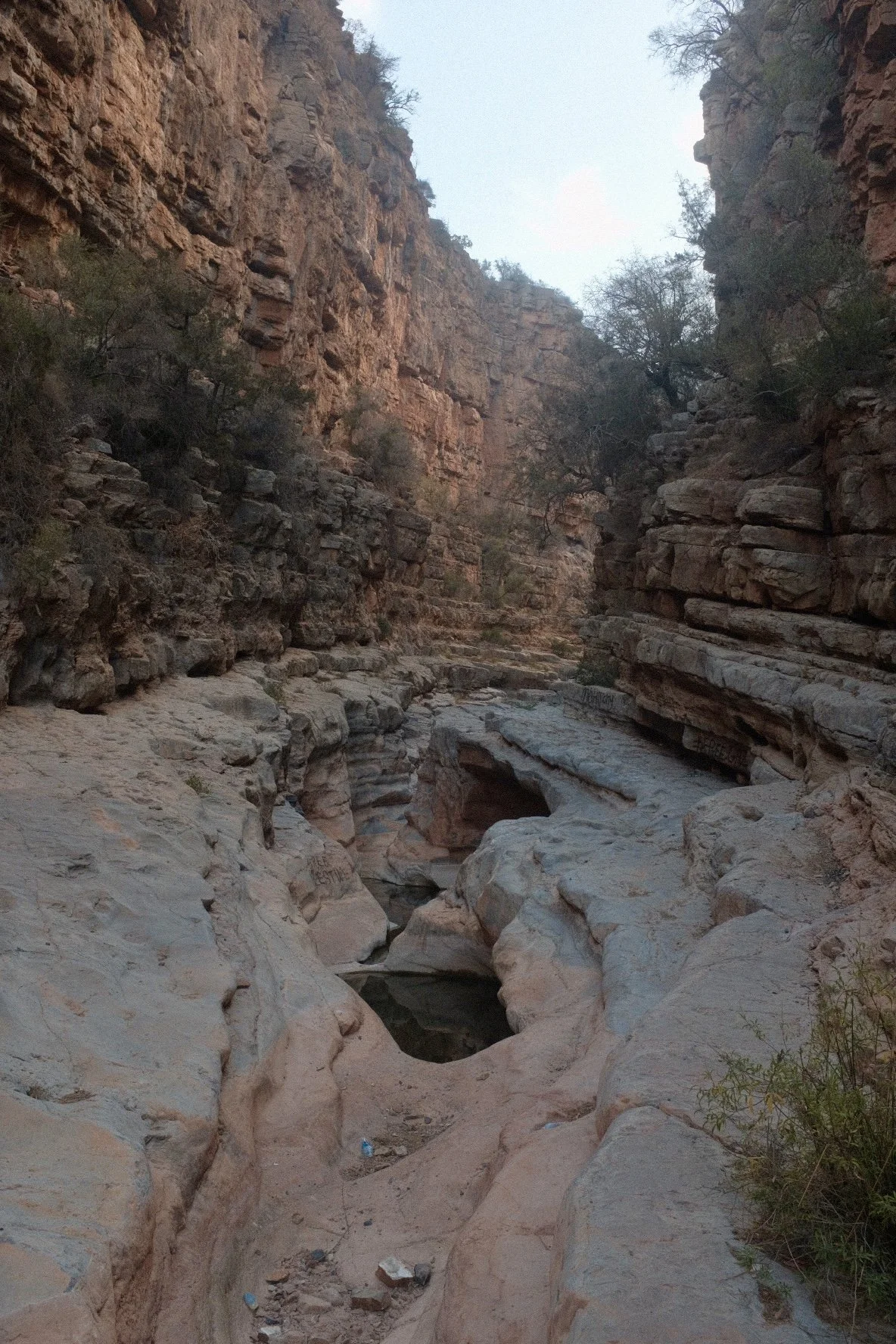
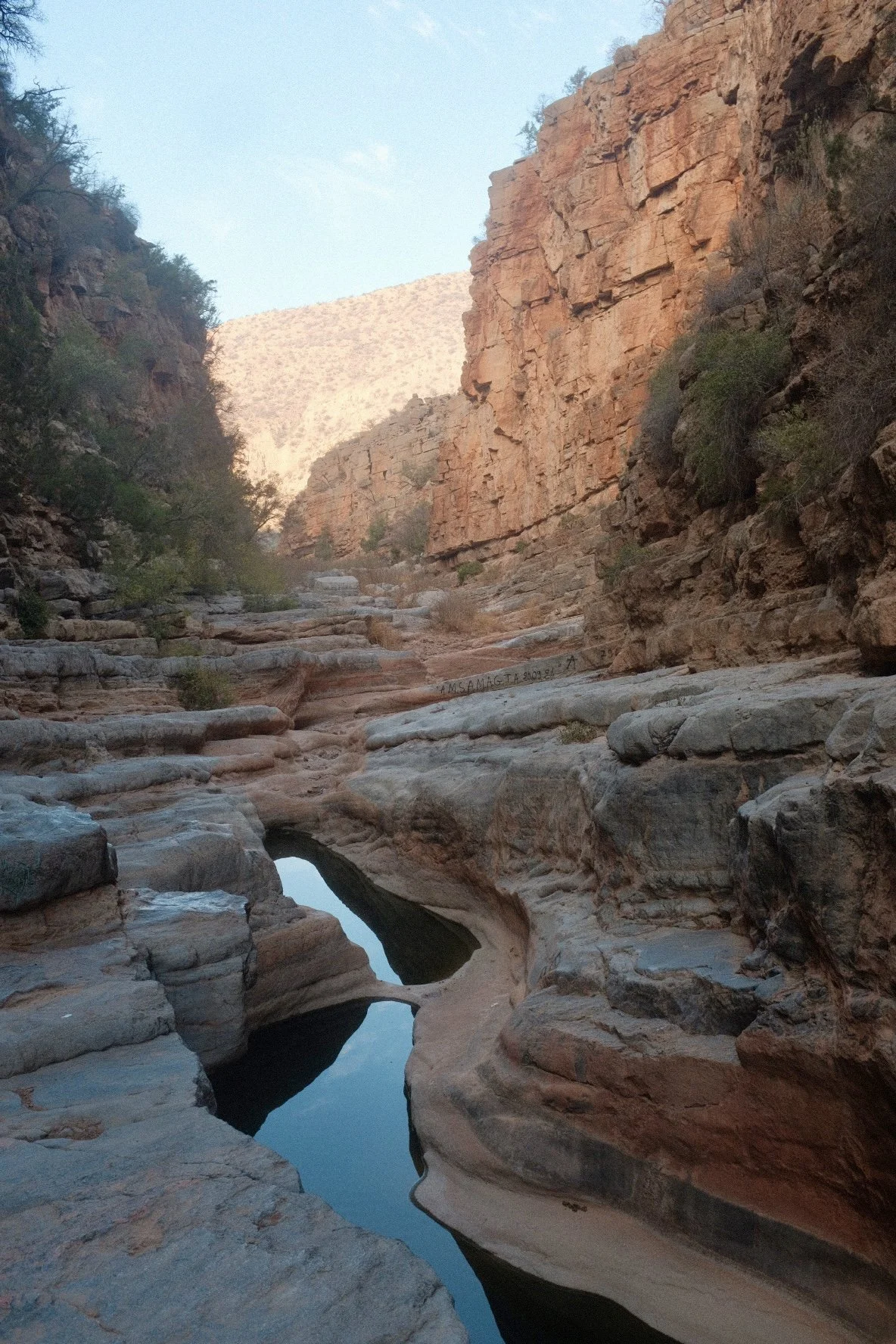
Early in the morning, I decide to return to the Valley of Paradise, as much as I loved that road. As a hiking enthusiast, I also saw that it was possible to walk in this place with such a promising name. Throughout my entire journey on foot, two stray dogs follow me closely. One in front, one behind. At first wary, I realize that I am ultimately being escorted all the way to my destination. The valley is practically deserted, just like the water sources, which are almost entirely dry. The last rain must have fallen several weeks ago, perhaps even several months.
2,000 kilometers from home
As the crow flies, Agadir is the destination furthest from my starting point, Digne-les-Bains. While I don’t plan to visit the city center, I’m curious about its new medina, an open-air museum. Built starting in 1992 by the artisan-decorator known as Coco Polizzi, it showcases the work of local artisans and artists. Agadir’s old medina was destroyed in an earthquake in 1960.
Now it’s time to gradually head back up toward the north of the country. Along the way, the town of Taghazout is famous for its spectacular waves. Unfortunately, the conditions aren’t ideal during my visit. No matter, another place draws me in: the village of Imsouane. My favorite spot on this trip, closely followed by Ericeira and Porto.
In Imsouane, I’ll spend three days out of time. A complete escape made possible by my unforgettable stay at Easy Going. John Jalal is originally from Morocco but lived in Austria for several years. He came here as a child to bodyboard and surf. In 2023, he seized the opportunity to buy this place and shape it in his own image.
For him, as for so many others I’ve met, Imsouane has a special energy that’s hard to put into words. Driving down this road through the mountains, you arrive in another world. A fishing village that has become a surfer’s paradise. People come here to surf as much as to escape the hustle and bustle of modern life.
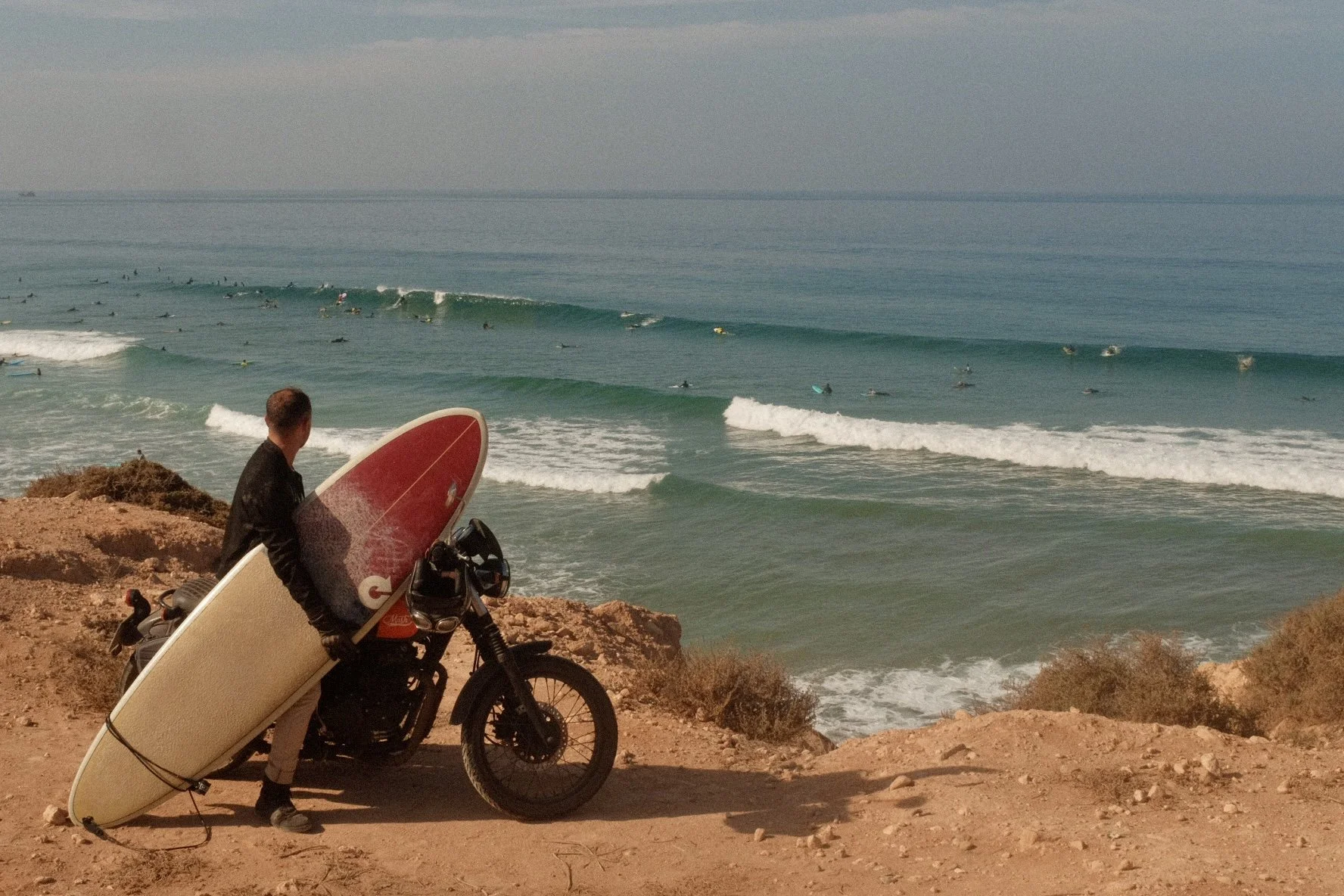
My days consist of surfing as much as possible, eating local dishes, and meeting wonderful people. Imsouane has two surf spots: Cathedral and The Bay. The first offers more challenging waves with sharp maneuvers on a shortboard, while the second offers perfect conditions for riding the swell on a longboard. At low tide, I go out to ride the longest waves of my life in the bay, starting from the fishing port and finishing several hundred meters further out near the beach. Deep down, I know that sooner or later I’ll be back in Imsouane!
© Sébastien Roux
At the Summit of the Atlas
Located at the foothills of the Atlas Mountains, Marrakech is a city steeped in history. I discover it by wandering through its many souks and exploring several riads over the course of the day. Whether it’s the former Quranic school of the Medersa Ben Youssef, the Secret Garden of the medina, the cultural works housed in the Dar el Bacha Museum, or the captivating images of the House of Photography, Marrakech truly deserves its status as an oasis.
But amid the chaos of cities, I prefer the calm of nature. On my Mash, I decide to cross part of the Agafay Desert, about thirty kilometers from the red city of Marrakech. I ride over rocky dunes rather than sandy ones, as is the case south of Ouarzazate. My motorcycle rattles under the jolts, but it eventually reaches the dam at Lake Lalla Takerkoust. It’s only after passing the dam that I hear a strange noise from the rear of my bike. The chain guard has come loose. Nothing serious, but I’ll need to be extra cautious to complete the remaining 234 kilometers of this stage, passing through Ouirgane, Asni, and the Ourika Valley.
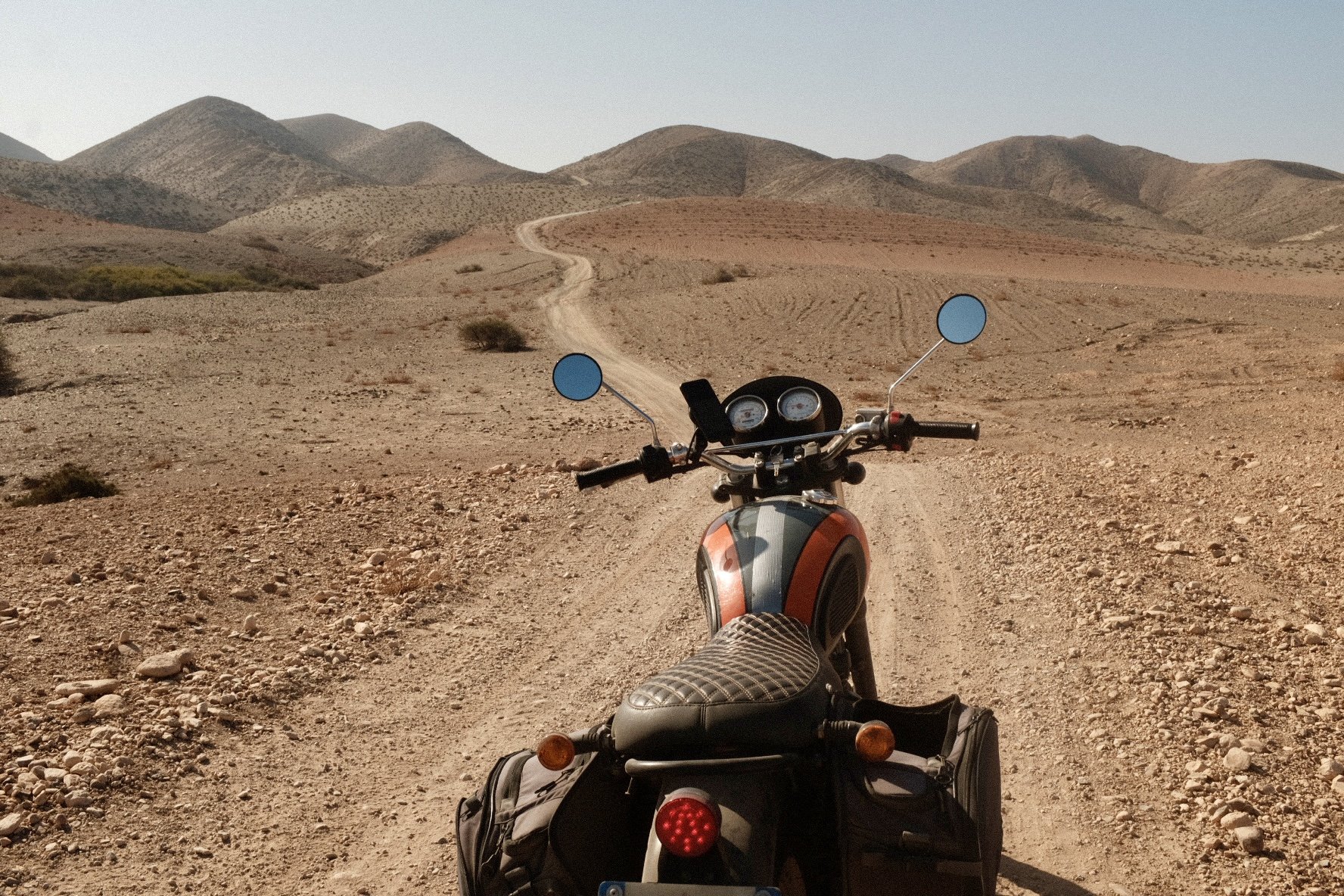
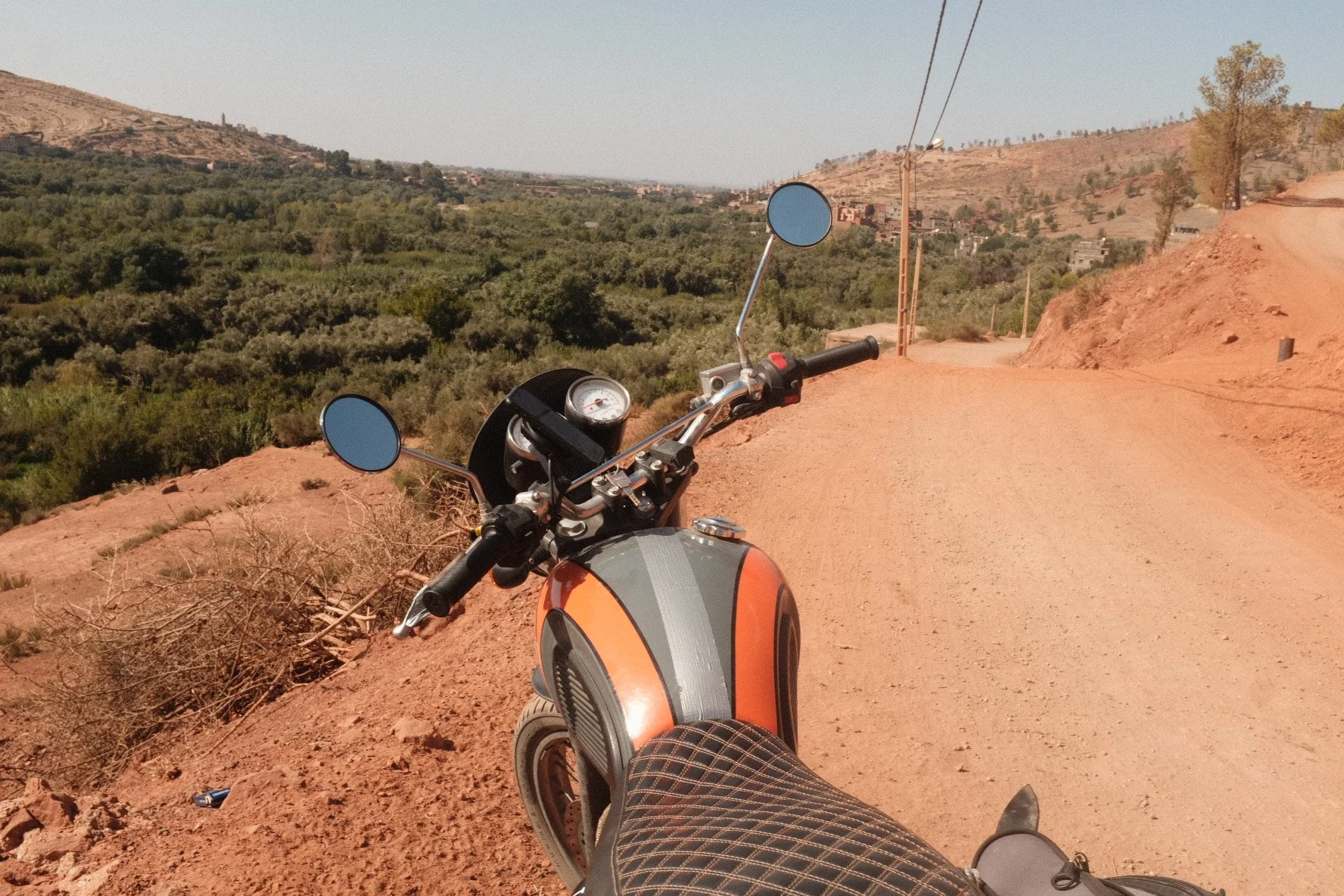
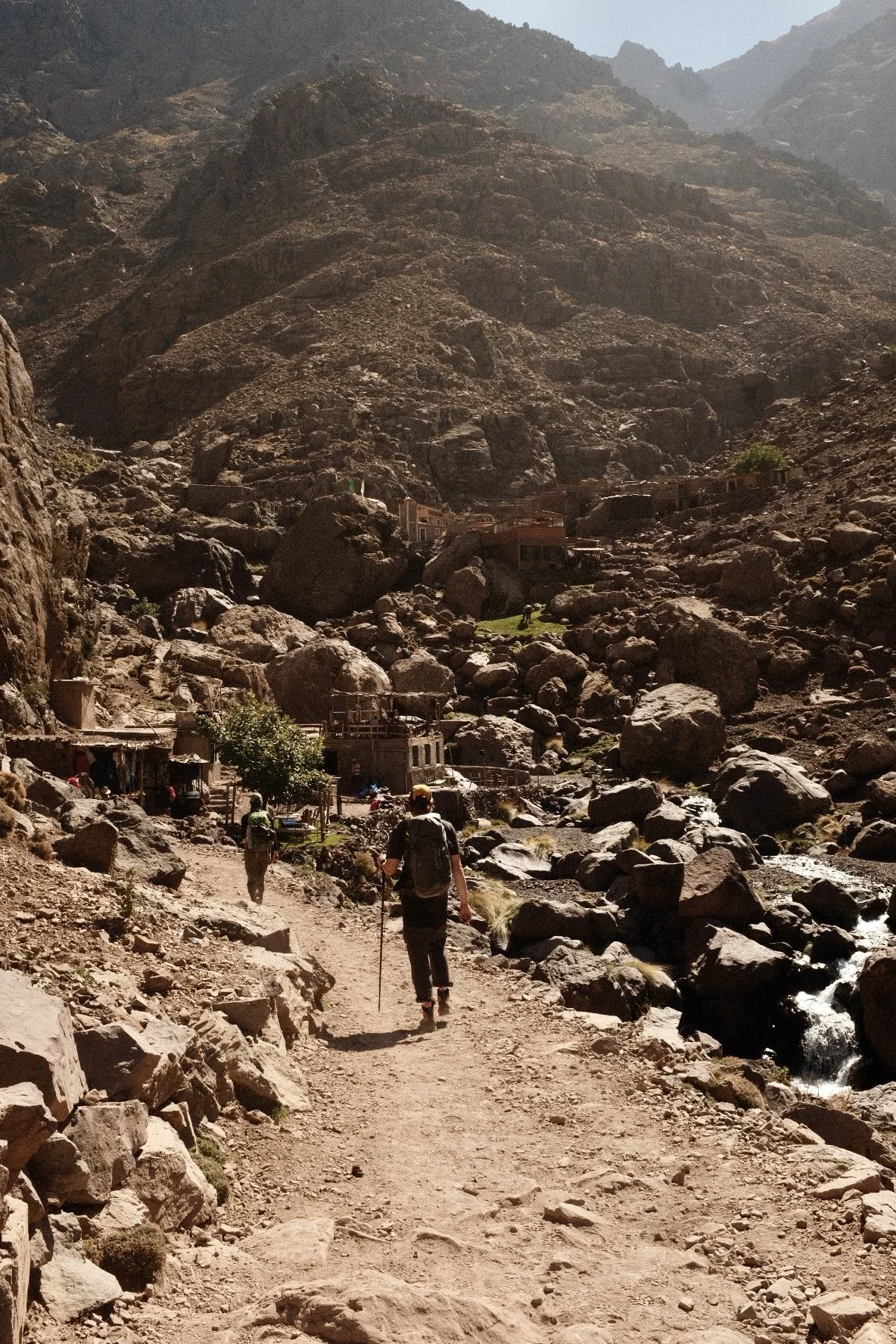
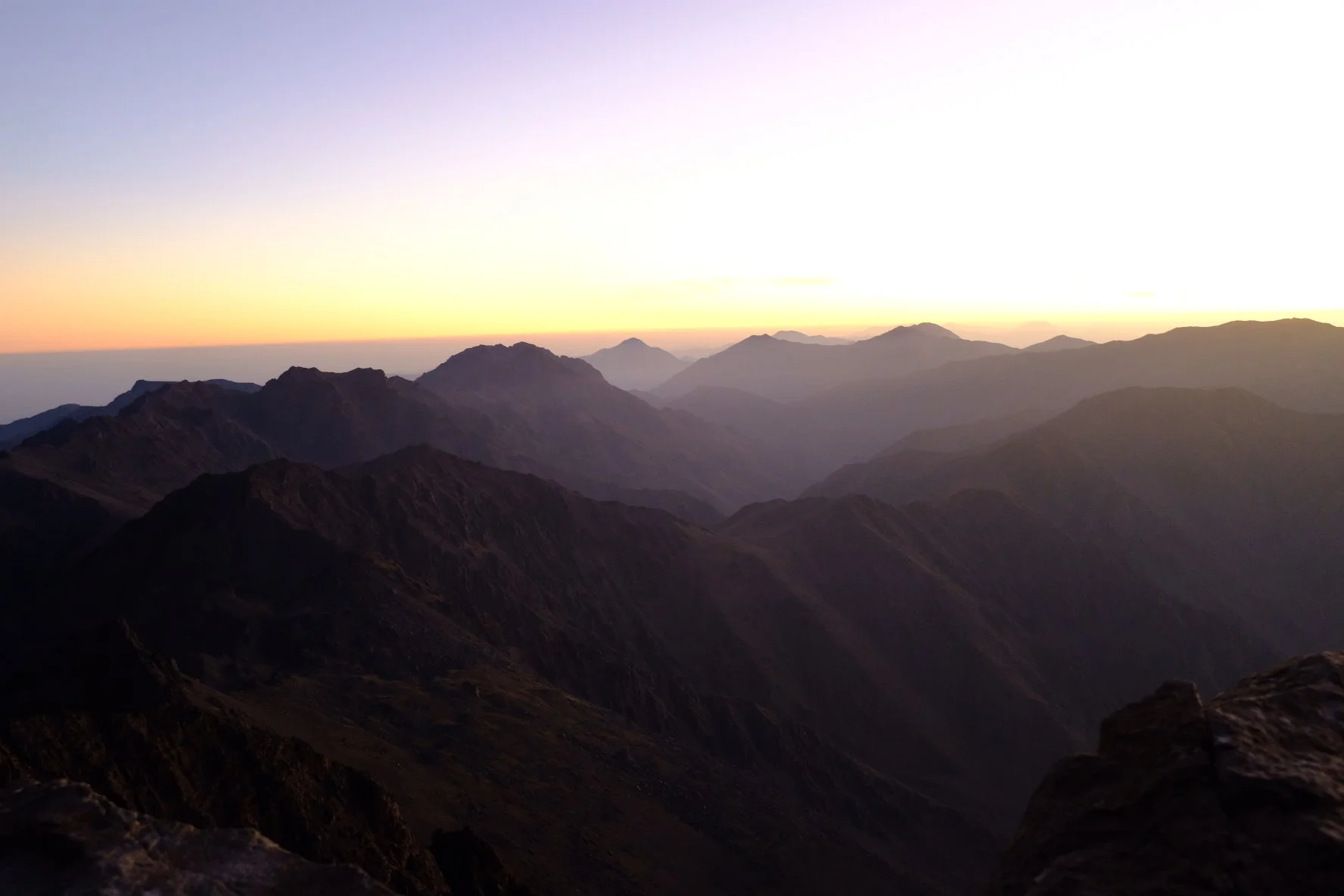
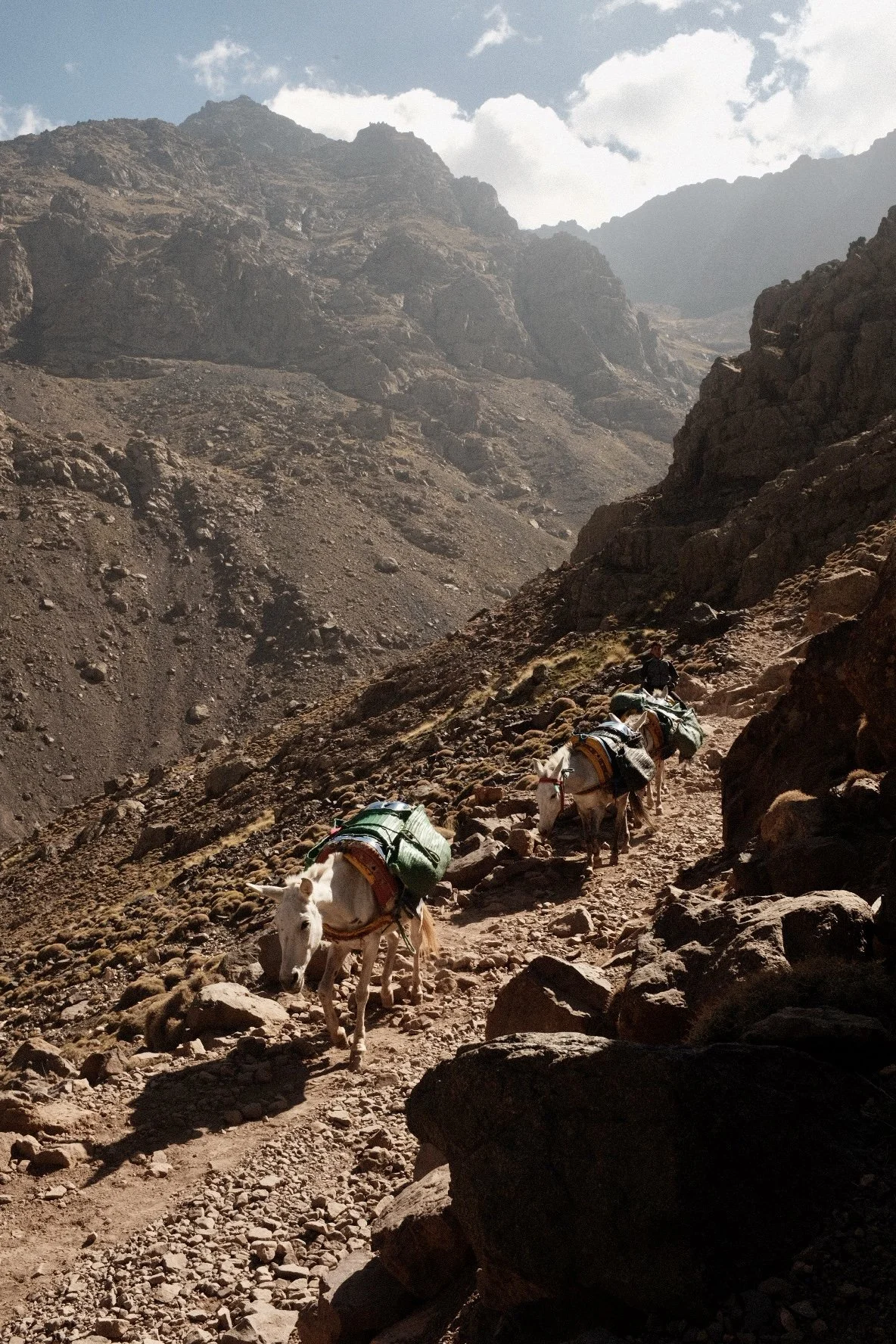
Another challenge awaits me after this motorcycle ride near Imlil. Having contacted the Bureau des Guides d’Imlil, I plan to reach Jebel Toubkal, the highest peak in North Africa, on foot, on a two-day trek. Rising to 4,167 meters, Toubkal must be earned. Accompanied by Abdul, a young local guide and founder of Morocco Desert Guide, I set off on this trek with five other hikers.
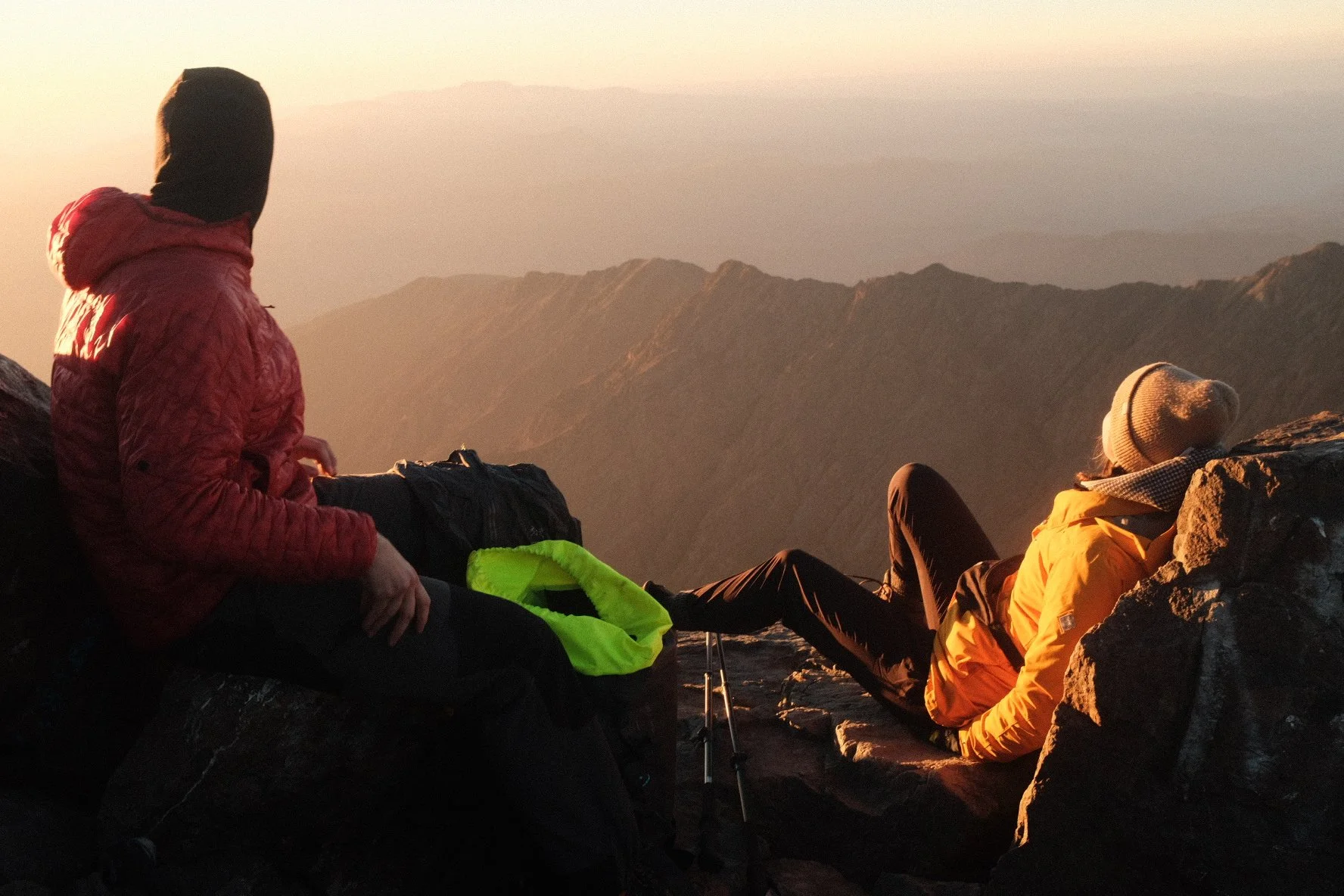
Under the blazing sun, we cross small Berber settlements while following a narrow valley. After a night in a refuge, we have to wake up at 4 AM. to begin the final ascent in the dark, with temperatures hovering around freezing. An incredible sight unfolds at first light, as if the horizon were burning in the distance, gradually revealing the many peaks of Morocco’s High Atlas.
Upon returning to Imlil, a night of rest at the Riad Toubkal Ecolodge is essential to regain my strength and continue my journey with peace of mind. I take the opportunity to meet Rachid, president of the Imlil Guides Office since 2016. He explains that their association is the first of its kind in the country, dating back to 1990. Certified guides offer hikes for all levels, from one-day trips to 21-day crossings of the Atlas Mountains. Rachid also owns the Toubkal Ecolodge, which has seven rooms and a superb view over the valley.
Papers, French? Infraction
During the ascent of Toubkal, I meet a French couple from Strasbourg. At our final meal, I mention, somewhat regretfully, that I still haven’t been stopped by the Moroccan police, even though they are always present at the entrances to towns. Officers regularly stop cars and use binoculars to check drivers’ speed. My wish is granted the next day, with two checks within fifteen minutes.
The first check is quick. My documents are inspected. I still have a few days before potentially exceeding the one-month visa limit, and my motorcycle is in order, I can continue. The second check starts the same way, with one difference. After seeing my French passport, the officer says in broken French: “Infraction, the motorcycle overtook a car on a solid line.”
I remain calm and reply that I had been behind the car for a while and didn’t do that. He repeats “infraction”; I repeat that I didn’t do it. He stares at me briefly before saying, “Go ahead.” A Spanish motorcyclist, himself a police officer back home, had warned me on the ferry: if an officer accuses you of an offense you didn’t commit, say that you have no cash and can only pay by card, it should be enough to get through. I didn’t get the chance to test that technique.
The Jungle Book
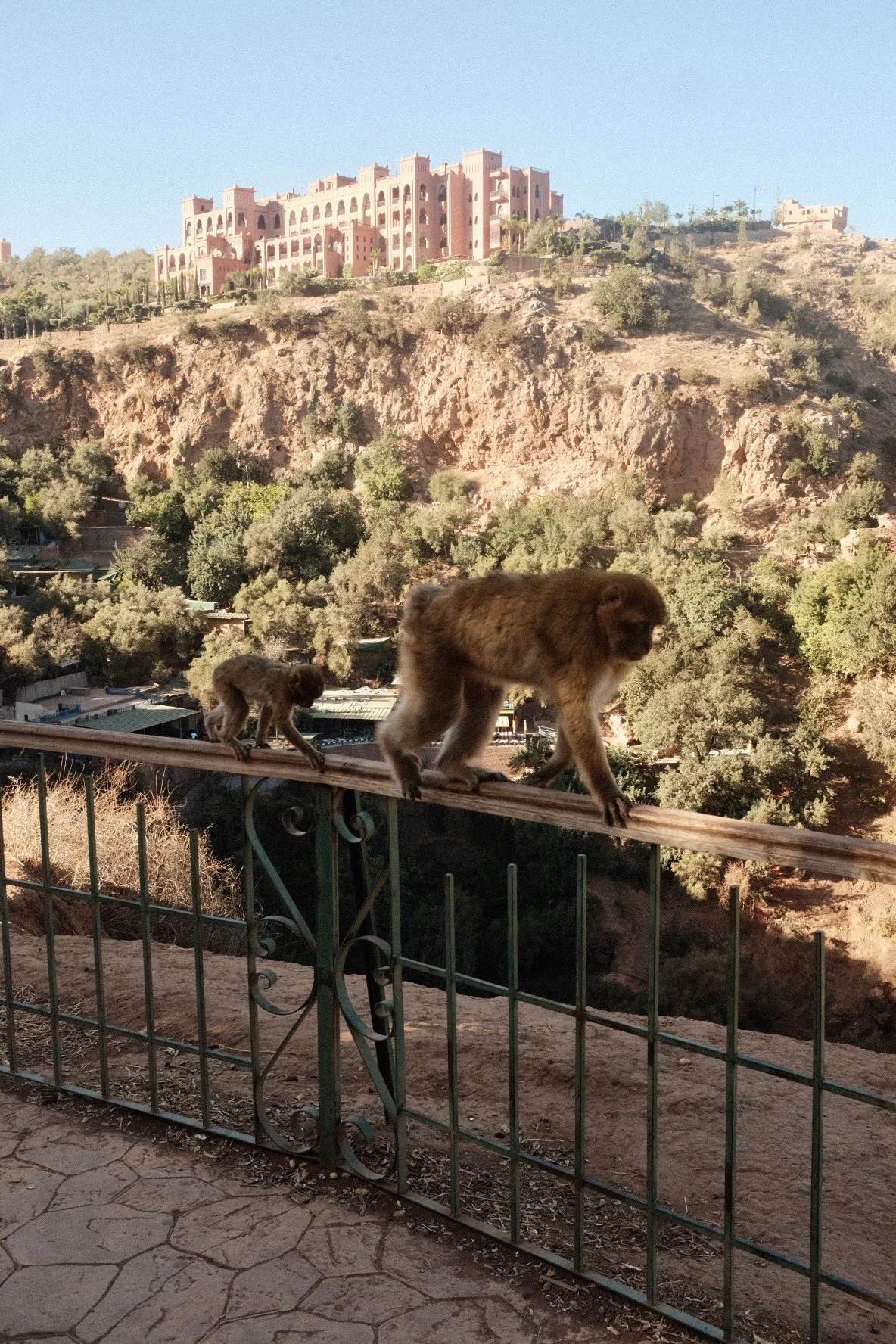
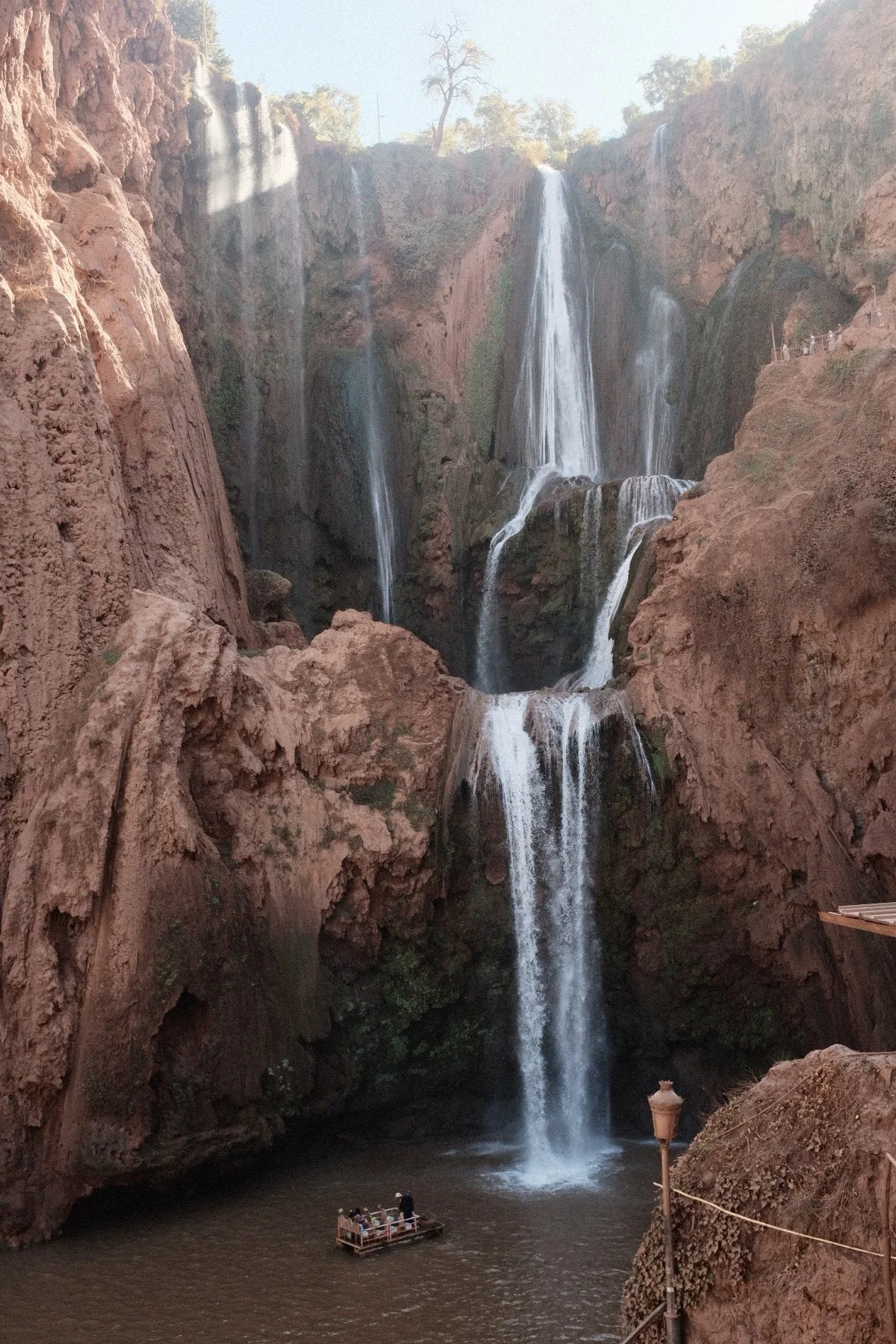
With waterfalls reaching up to 110 meters high, the Ouzoud Falls offer a breathtaking spectacle. By choosing to visit in the morning, I avoid the crowds and can take the time to watch the Barbary macaques roaming freely. It takes very little to be happy, truly very little. Many other animal species inhabit this place, where the vegetation is lush. Where there is water, there is life.
I then head back to the coast to conclude my stay in Morocco with a one-night stop in Rabat, the capital. It presents visitors with a modern face. Wide avenues lead to the medina. After walking along the bustling Souika street, I arrive just in time at the Oudayas viewpoint to watch the end of the sunset. Surfers play on the small waves along Rabat’s beach.
The next morning, I visit the National Museum of Photography, which showcases the work of talented local photographers. Then it’s on to Tangier for my final night before catching the ferry to Algeciras. Fortunately, Hugo warns me that my ferry likely departs from Tanger Med rather than the port of Tangier city. He’s right. I factor in the extra 45 minutes of driving so I don’t miss it and can return to Spain for the final leg of my journey.
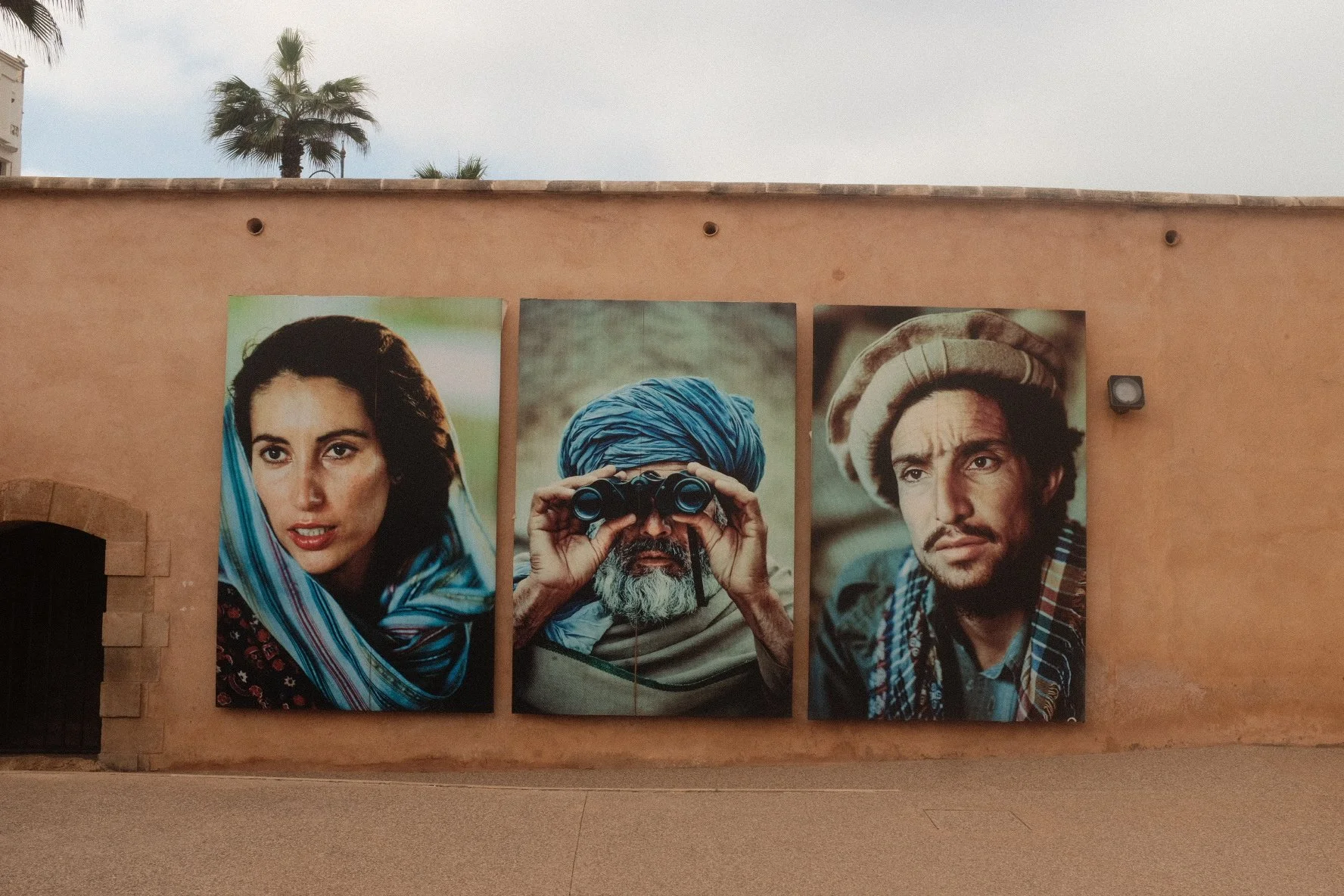
© Sébastien Roux
Heading Back Up the Coast
A strange feeling, returning to a European way of life after 21 days in Morocco. While the roads are better maintained, drivers move faster. On a late October Saturday night in Malaga, the streets are packed, bars and restaurants bursting at the seams. As in Seville, a religious procession makes its way through the main arteries of this Andalusian city. During the day, I visit the Alcazaba, a medieval Moorish fortress, before heading up to the Castillo de Gibralfaro for a higher vantage point.
Between carefree confidence and recklessness, the line can sometimes be thin. On my Malaga, Almería stage, I derailed, a first on my Mash. With my hands thoroughly dirtied, it only took a few seconds to put the chain back in place. After a night in Almería, I visit a mechanic. He advises me to replace the entire drive chain assembly as soon as possible. I get back on the road, but cancel my stop at Alto Velefique, a legendary Vuelta cycling stage, due to threatening weather and a fragile chain. Still, I pass through photogenic spots like the village of Cóbdar, set at the foot of a white marble mountain known as “La Piedra.”
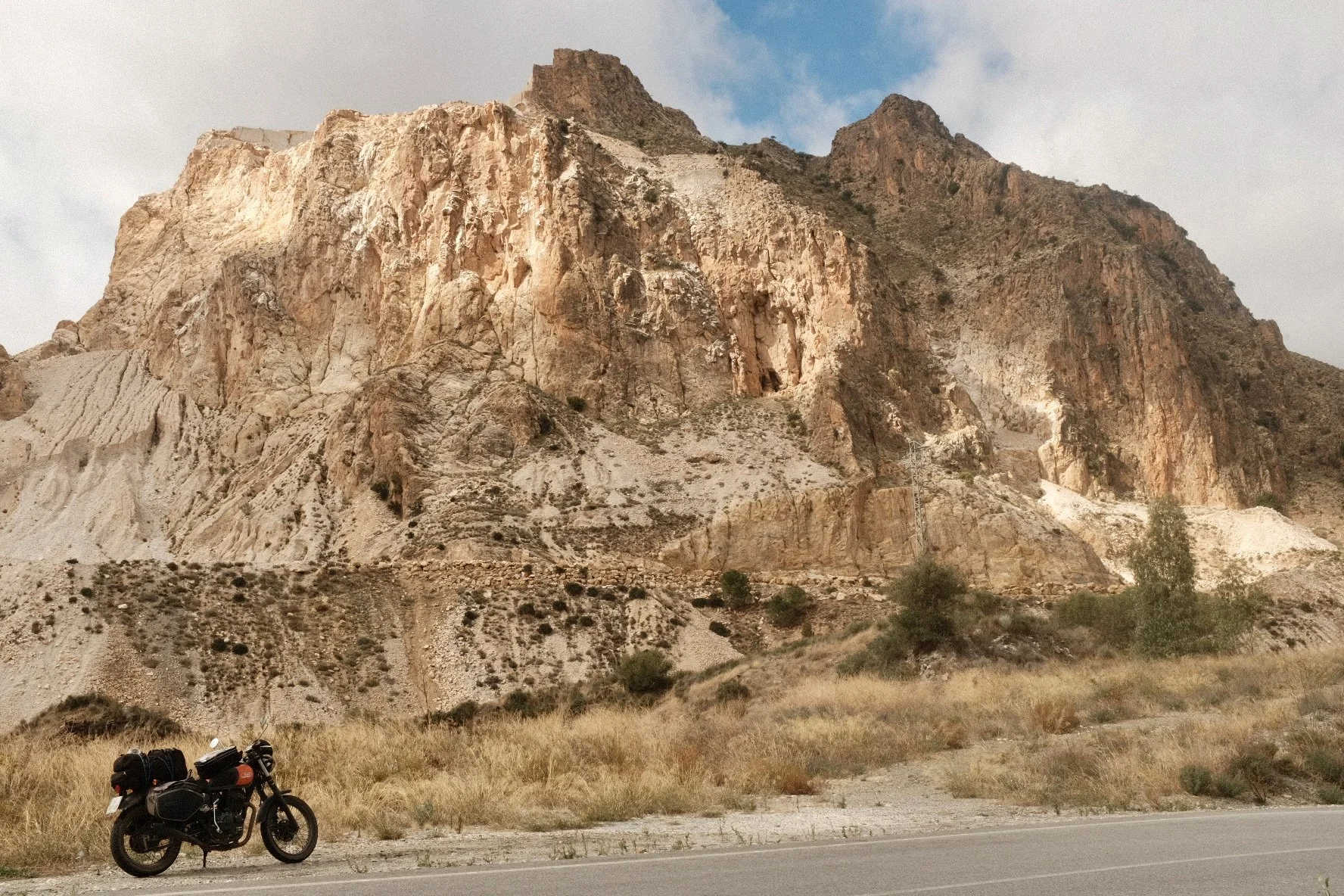
© Sébastien Roux
I try my luck at a garage in Murcia, but despite several follow-ups, they never get back to me. It’s ultimately GP Motos in Valencia that orders the necessary parts and replaces my transmission kit. It was truly in critical condition.
Reaching Digne-les-Bains would have been a risky bet. The mechanic also noticed that my mudguard was poorly secured and added two bolts to prevent any mishap along the way.
Traveling to Meet People
What a pleasure it is to ride along small roads rather than the highway! Twists and villages instead of toll booths. To reach Barcelona from Valencia, I cover around 600 kilometers, including a stop in Vinaròs to spend a night in what will be my final Couchsurfing stay of the trip. Once again, a wonderful encounter at Ivàn’s place. In Malaga, Almería, Murcia, and Valencia, I also had the chance to stay with other incredibly kind hosts. Thank you Luigi, Klaus, Jack, and Alex for your hospitality.
In Barcelona, I’m lucky to reunite with Cande and Jony, a couple from Argentina whom I met in Mexico several years ago. A photographer, Jony captures the end of my motorcycle journey with a few shots on his street before I set off toward Cadaqués, a coastal village nestled between the hills of Cap de Creus and the Mediterranean.
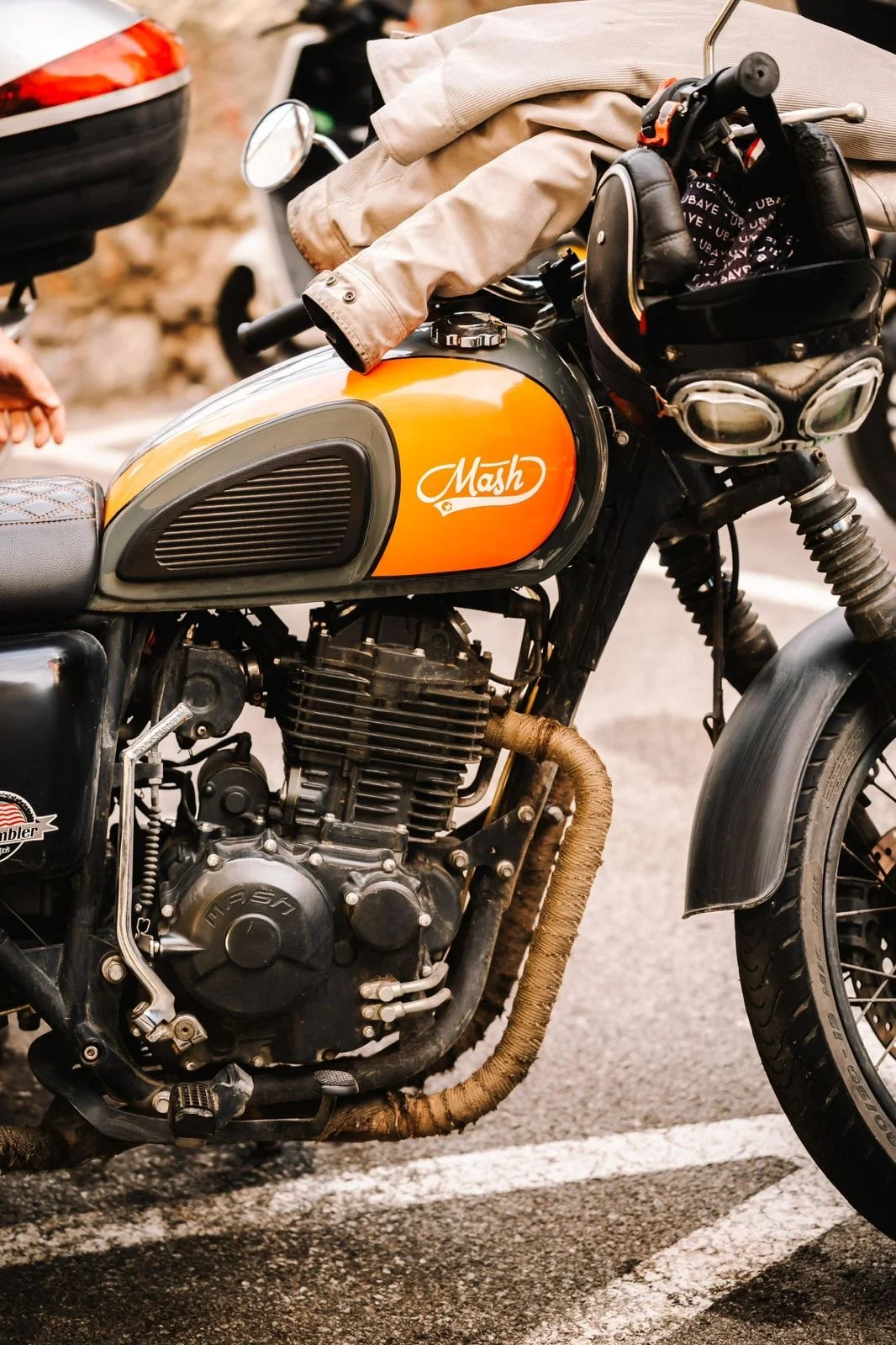
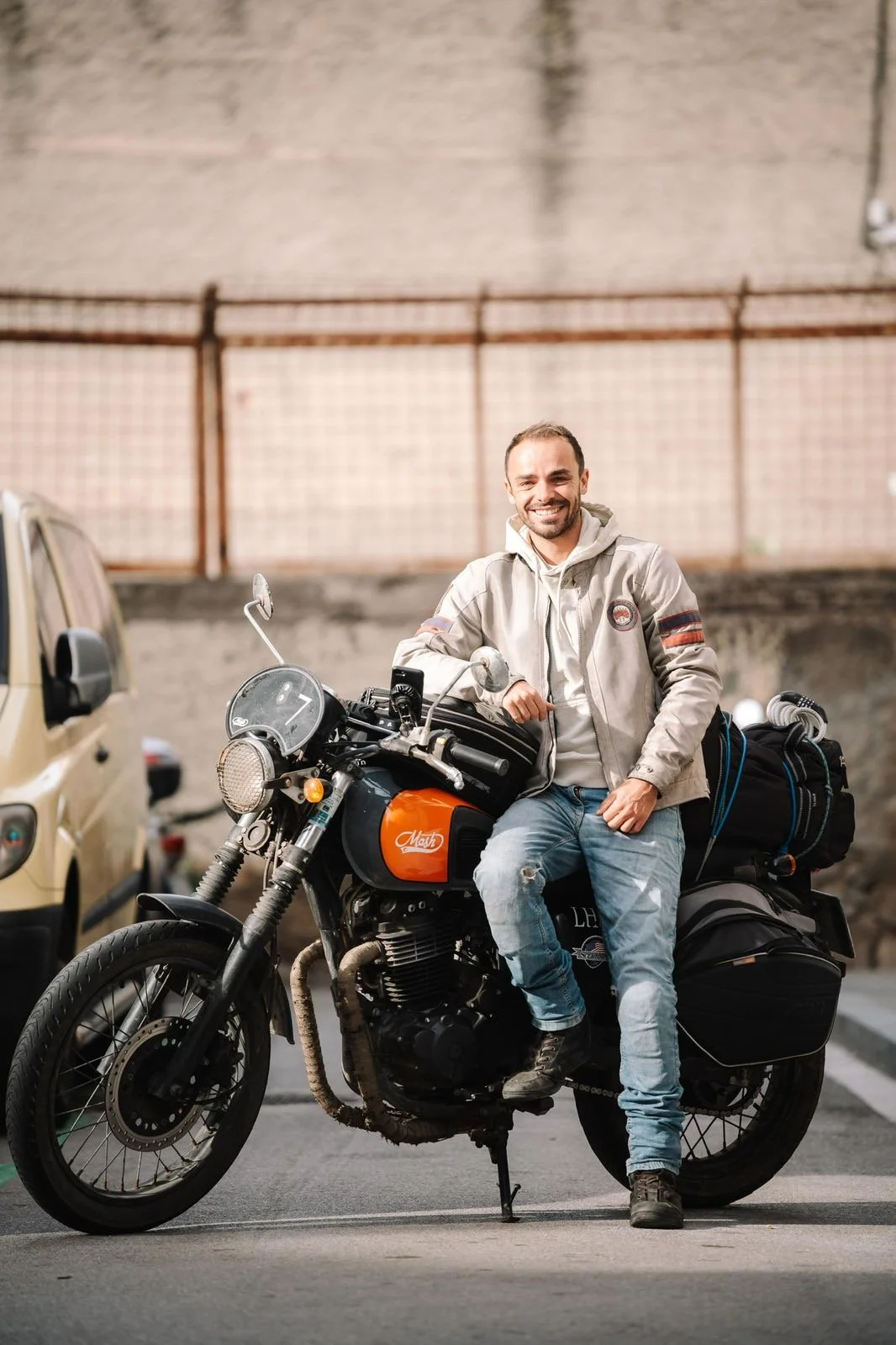
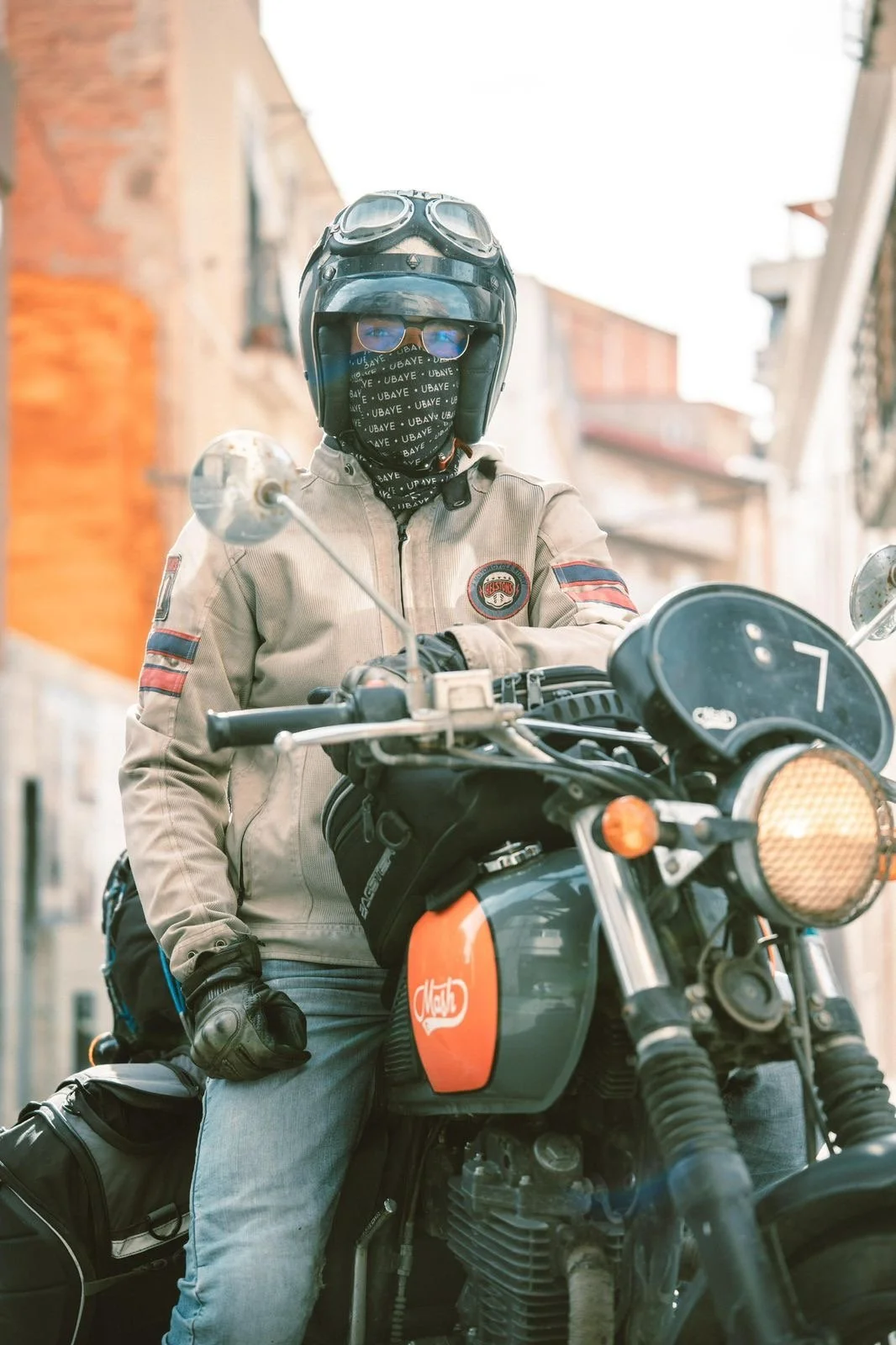
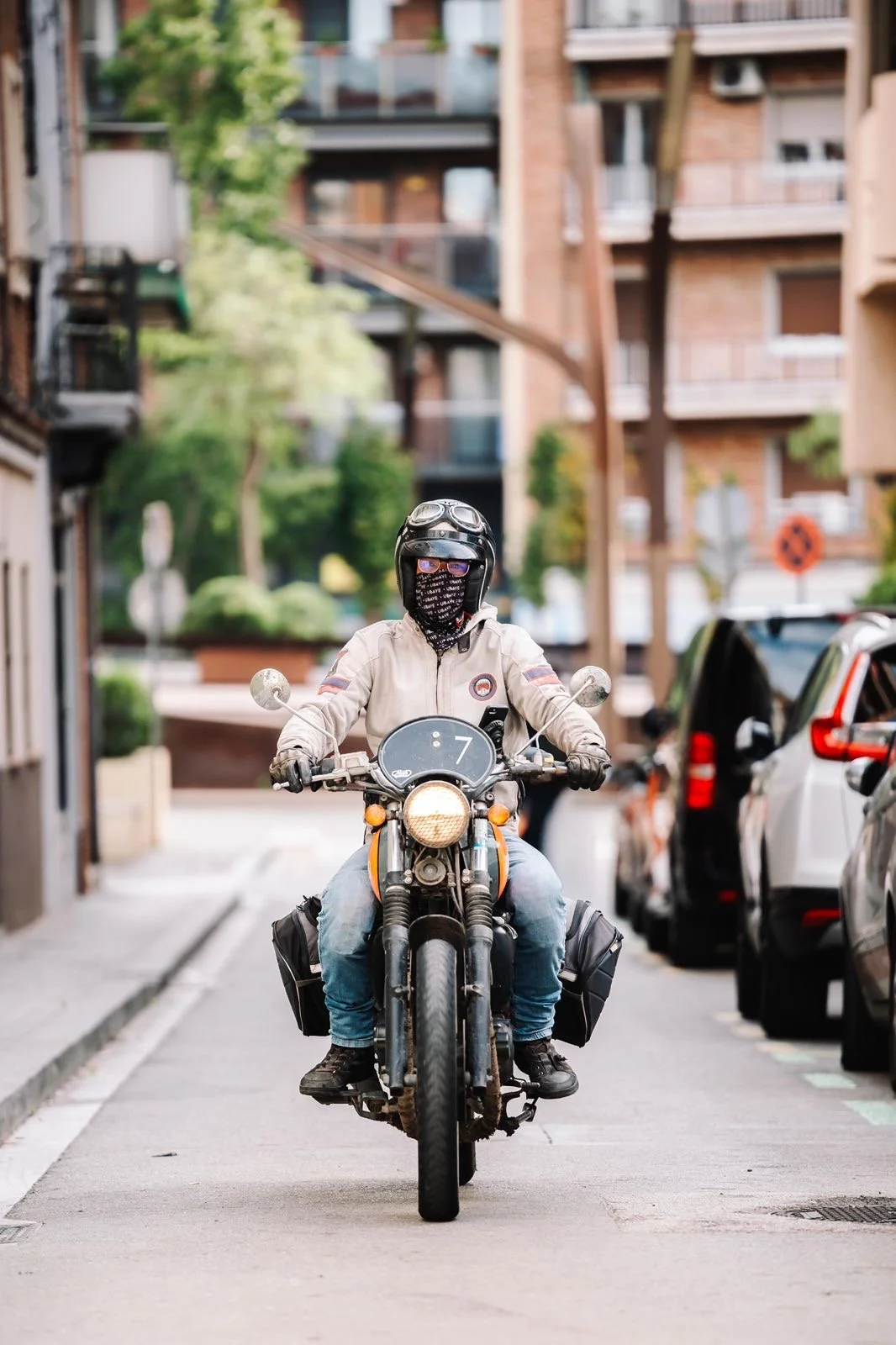
It’s not waves but artists, Salvador Dalí and Pablo Picasso, that made this place famous. To get there, you have to take the one and only winding road. Overtaking all the cars through its many bends isn’t easy, but after one last pass, the white houses appear below.
I then cross the border via Le Perthus to spend a night in the village of Thuir rather than the city of Perpignan. This allows me easy access to Força Réal the following morning. Meaning “royal force” in Catalan, a fortress once stood there to mark the boundary between the Kingdom of France and the Kingdom of Aragon. Easily accessible viewpoints offer a 360-degree panorama over the region.
I continue toward the Corbières-Fenouillèdes Regional Natural Park and then the Haut-Languedoc Park, arriving in Montpellier to meet my friends Honorine and Yoan. Rather than heading straight back to the Alpes-de-Haute-Provence, I decide to make one last stop with a night in La Garde, near Toulon.
From Montpellier, I follow part of the Camargue before heading up toward the Alpilles, then cross the Sainte-Baume Regional Natural Park. It’s the perfect opportunity to enjoy a brilliantly blue sky, just as Provence so often offers, while spending time with Chloé and then Rémy, friends I met during my studies in Aix-en-Provence over ten years ago. For more than two months, I may have traveled alone, but I was always in good company.
A Sweet Ending
After taking the iconic Route des Crêtes from La Ciotat to Cassis, I treat myself to one final gourmet stop at La Bastide des Magnans, a renowned French restaurant in Vidauban. My friend Théo Polledri was the head pastry chef there until April 2026. I had to end on a sweet note. After a delicious meal, I chose a deconstructed tart with pear and quince, homemade sorbet, and saffron mousse. A delight, a dessert that melts in your mouth.
The final kilometers to reach Digne-les-Bains are ridden at night, in the chill of an autumn evening. From Vidauban to the prefecture of the Alpes-de-Haute-Provence, I ride alongside Lake Sainte-Croix. Although I arrive a little too late to catch the sunset, I still get to admire the colors gradually shifting.
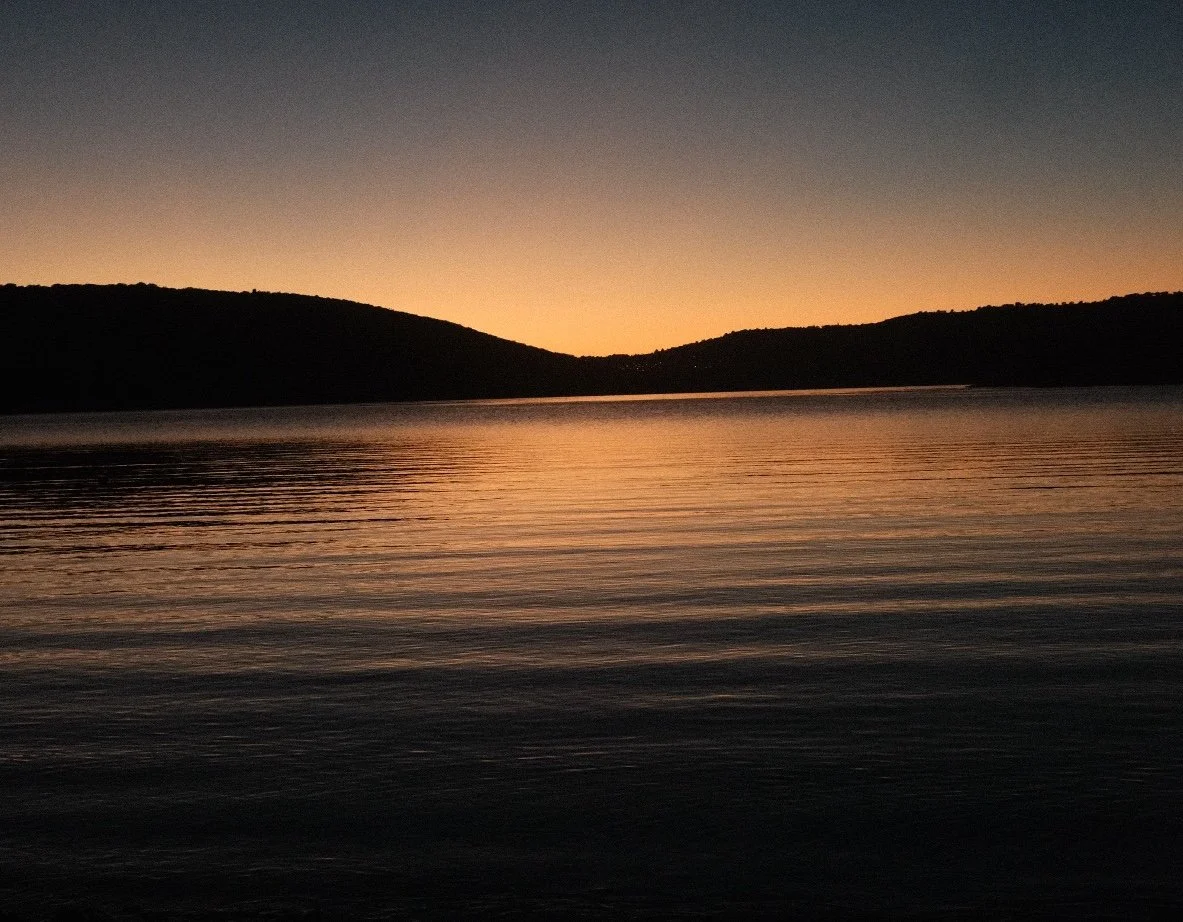
© Sébastien Roux
The full moon slowly rises into the sky, giving me extra light alongside my high beams as I ride along unlit country roads.
They say all good things must come to an end. This motorcycle journey was supposed to cover around 9,200 kilometers, but it ultimately exceeded 11,000, along with all my expectations.
The road of waves doesn’t end here. In a few days, I’ll return to live in the Dominican Republic to reconnect with the Caribbean waves as part of the Parallel Surf team. The water temperature won’t be the same, but the joy of riding will remain unchanged. I carve my own path, on the road as on the water.
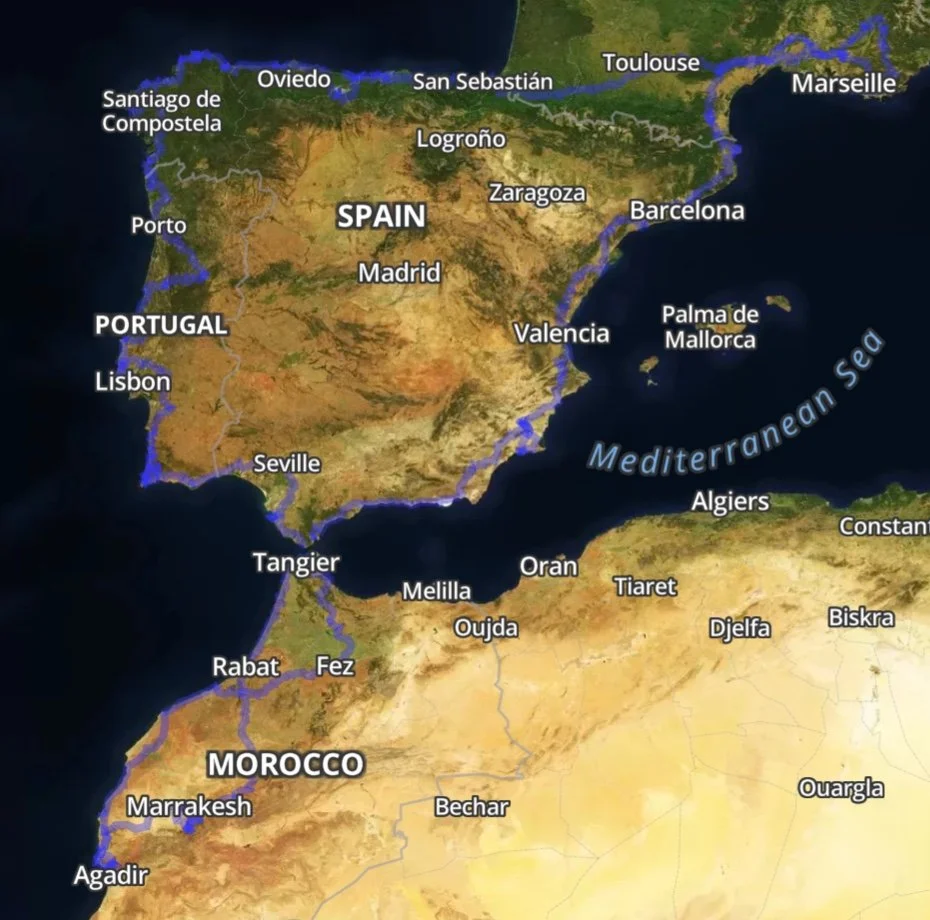
Click on this image or the following link to access my Polarsteps, retracing this adventure.
Sébastien Roux
Cover photo © Sébastien Roux
Bonus - Surf Camps & Glossary
Episode 1 - From the Alps to the Basque Country
Episode 2 - Spanish Waves & Peaks of Europe
Episode 3 - Portuguese Waves & Saudade
This travel journal was published in issues 90 and 91 of Road Trip