
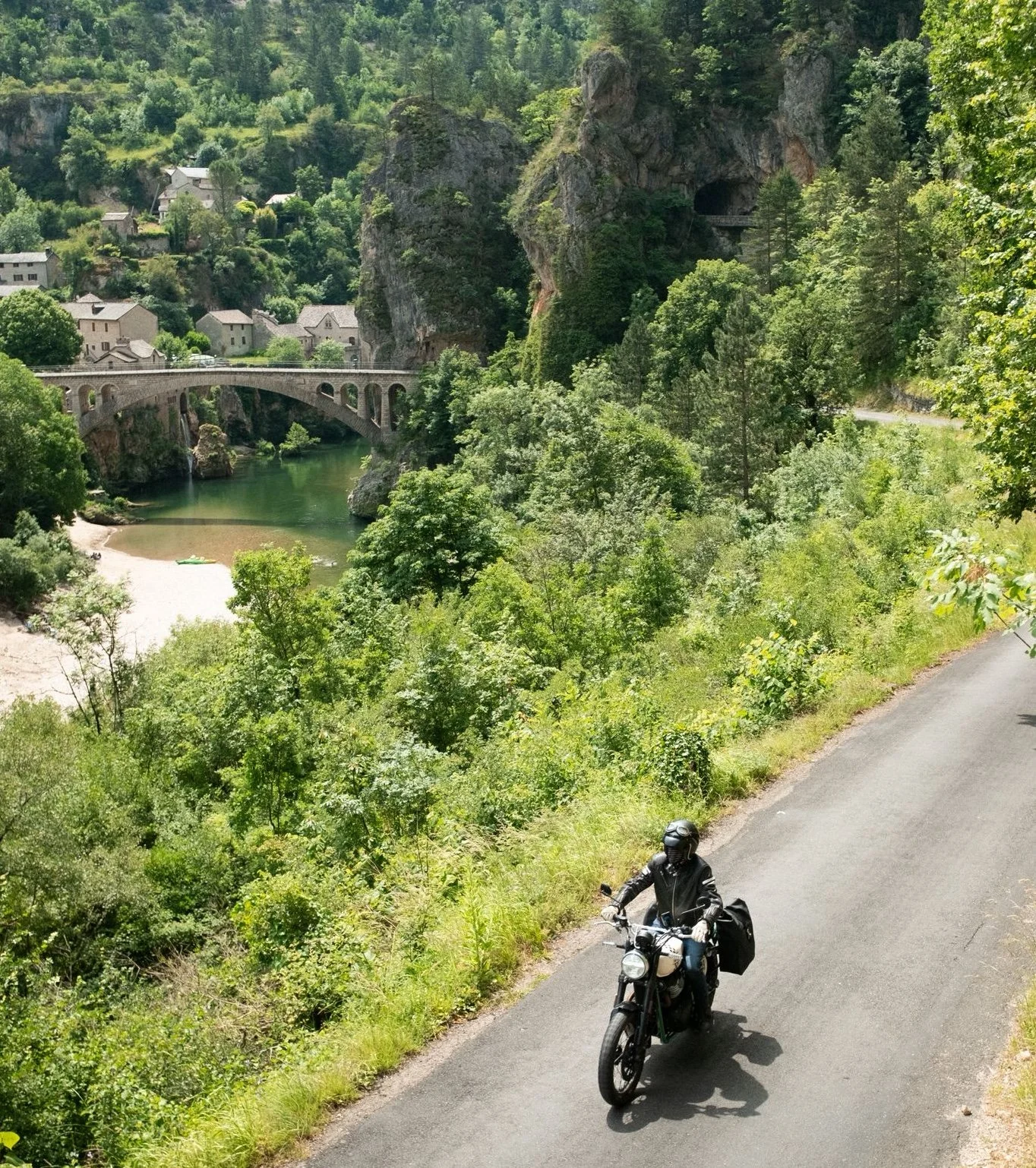
The French Great Escape
From Provence to the Limousin, from the Ardèche gorges to the volcanoes of the Auvergne, Sébastien Roux travelled 2,500 kilometres through eleven regional natural parks. A motorcycle journey punctuated by encounters, outdoor activities and the discovery of an authentic France, far from the main roads.
Moto : Royal Enfield Bear 650
Country : France
Period: Late May 2026
Sweet France, dear land of my childhood. I’m writing these few lines after riding through several of the regional natural parks that make up your network. Over the course of ten days, I left my hometown of Digne-les-Bains and made my way to Limoges before returning to my starting point to complete this 2,500-kilometre loop. Along this route, I wanted to showcase your quiet departmental roads, your charming, isolated villages and your winding mountain passes.
Sweet France, more than just a motorcycle journey, let me tell you about the wonderful people I met along the way. Let me tell you about the activities I enjoyed on solid ground, against rocky walls, along the water, in the air and deep beneath the earth. This account is a sincere testimony to the many faces you can reveal to those who take the time to (re)discover you.
Leaving to Return Better
Everything came together. After another winter season in the Dominican Republic, where I had the opportunity to write my first travel journal for Road Trip Magazine (Exploring the New World), I returned to France for the summer season.
I had barely had time to put my suitcase down before I had to start getting my things ready for this ten-day journey. The motorcycle? It hadn’t arrived yet. For my second travel journal (Road to the Waves), I had travelled along the Spanish, Portuguese and Moroccan coasts on my Mash 400 Scrambler. This time, I dreamed of riding a legendary brand whose name immediately makes me think of India: Royal Enfield.
© Sébastien Roux
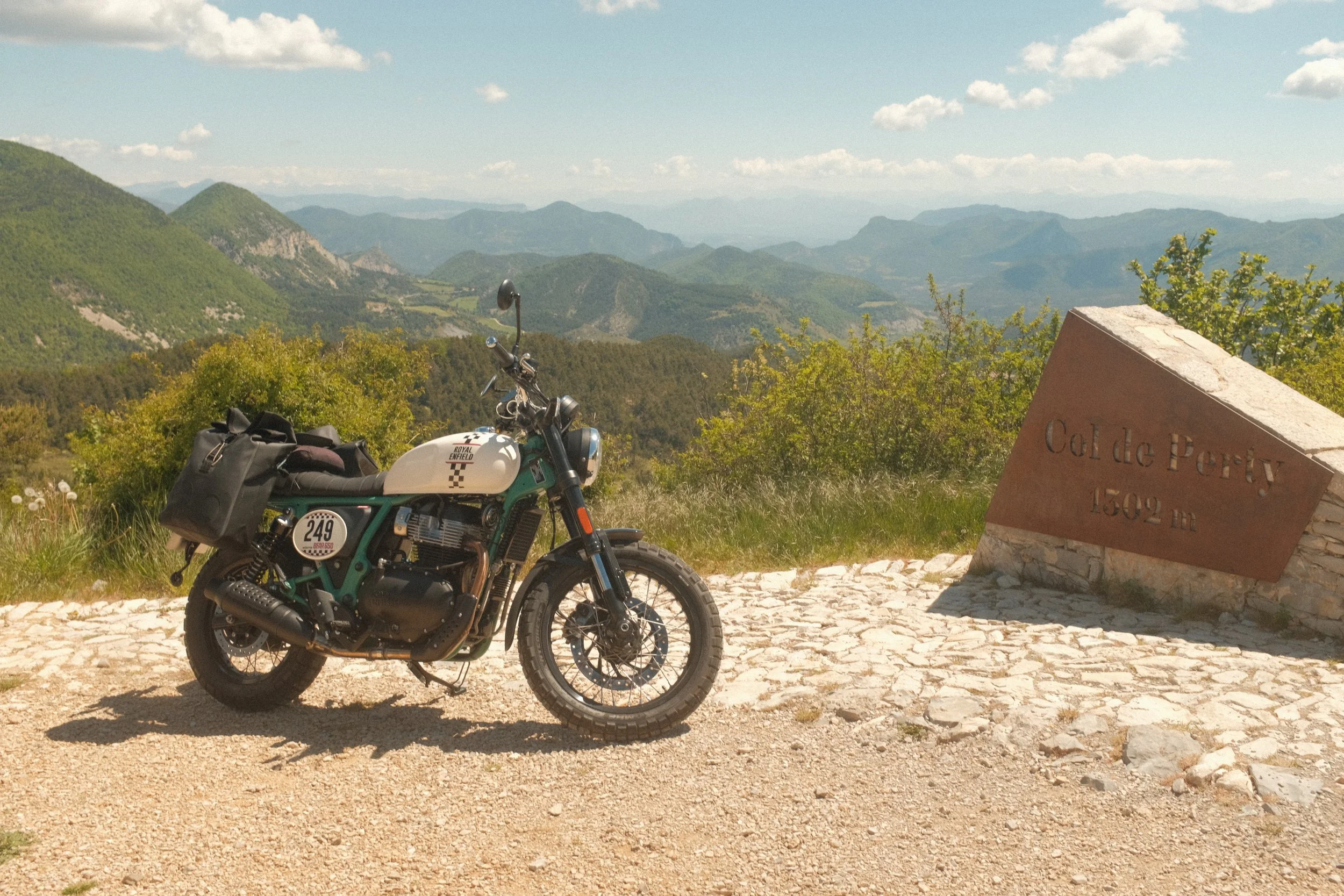
And it couldn’t have come at a better time, as in 2026 Royal Enfield celebrates 125 years in existence, making it the oldest motorcycle brand to have remained in continuous production. So I couldn’t resist the brand’s invitation to test one of its bikes. For this anniversary, I set my sights on the Bear 650, a road-going scrambler with a sixties spirit that had caught my eye, and I have no regrets about my choice.
The motorcycle is delivered to the dealership closest to my home: ADN Motos in Manosque. The timing is tight: I land on Wednesday, pick up the bike on Thursday, and leave on Friday. Right away, I appreciate this motorcycle’s retro looks, its twin-cylinder engine and its upside-down forks. For the occasion, this Royal Enfield is fitted with two waterproof panniers, perfectly sized for a trip of this length.
As I start the Bear 650 for the first time, I’m pleasantly surprised by its sound, which reminds me of a feline. A unique note produced by the 2-into-1 exhaust system specially designed by the brand. The first few kilometers to Digne-les-Bains along small departmental roads are a real pleasure. The bike is easy to get to grips with: the riding position is comfortable, the braking precise and the acceleration lively.
Cliffs and Local Specialities
Friday, May 22, 2026, the adventure begins. On this first day, I cross the Baronnies Provençales Regional Natural Park. To start things off, I decide to tackle the two passes near my home that I rode on my previous road trip on the Mash: the Col du Pas de Bonnet followed by the Col de Fontbelle. I can really feel the difference between moving up from a 400 to a 650. Apart from having to take the extra weight into account when stationary, the Royal Enfield Bear 650 delivers much smoother performance than the Mash Scrambler 400.
© Sébastien Roux
Sisteron, a gateway between the Dauphiné and Provence, is one of the seven gateway towns to the Baronnies Provençales Regional Natural Park. A few kilometres further on, the first orchards appear. As in the 59 regional natural parks, nature is preserved here and local know-how is celebrated. My first stop is Orpierre, nicknamed the climbing village.
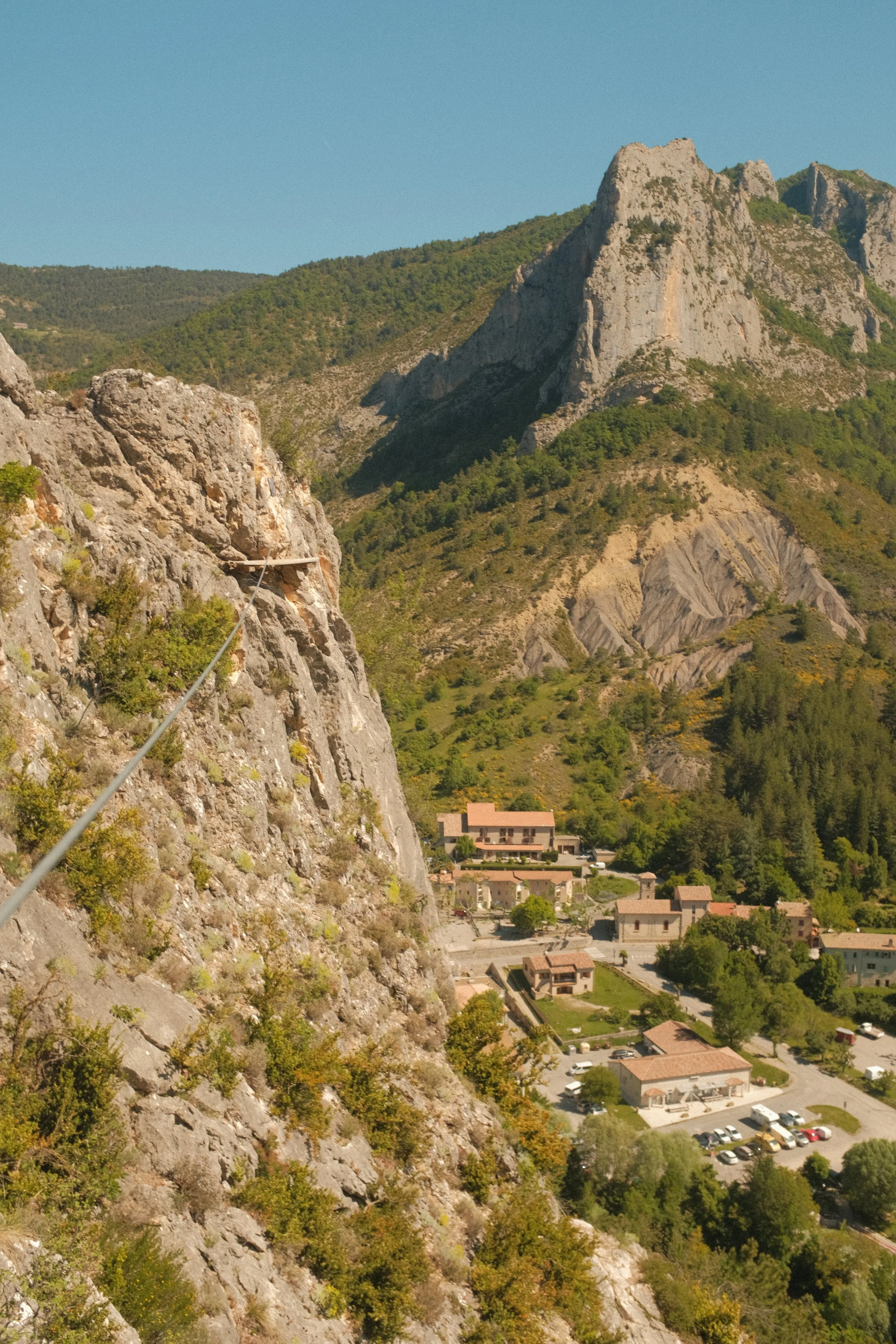
Nicolas is reading a book in the shade outside his shop, Vertige Sports. Since 1990, this mountain guide has opened numerous climbing routes in the area. He is also behind the creation of the Paturle via ferrata on the outskirts of the village. This will be my first activity of the trip. Properly secured with a harness, helmet, lanyards and a pulley, the approach walk is a quick one. Used to tackling via ferratas, I complete the sporting route in less than an hour. It remains accessible to all levels, provided you are not afraid of heights.
I get back on the road and climb to an altitude of 1,302 metres. At the top of Col de Perty, I take in the Alpine-Provençal panorama before beginning the descent towards Buis-les-Baronnies, negotiating a succession of tight bends. The Bear 650 leans easily, responding above all to instinct.
© Sébastien Roux
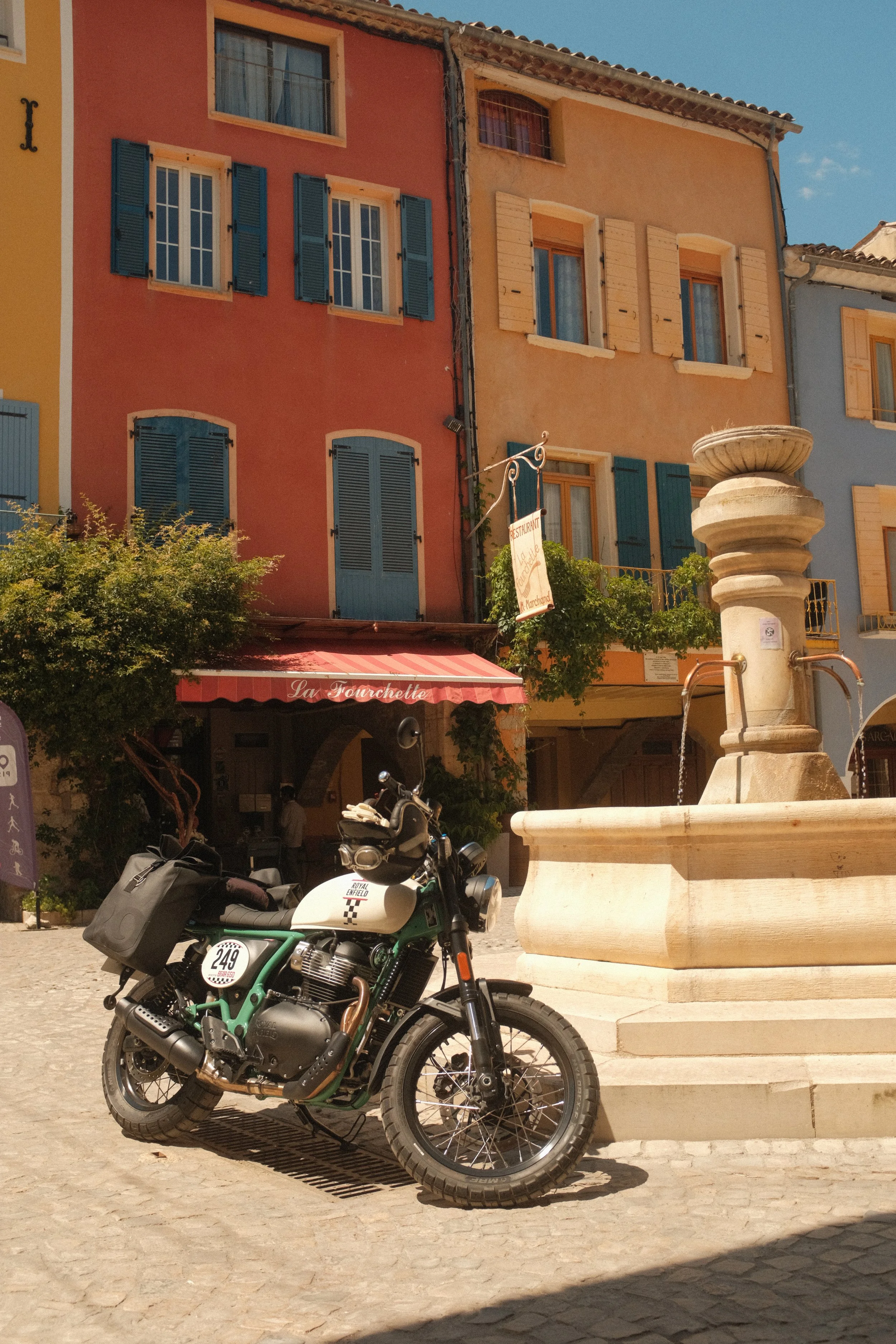
For my lunch break, I found a real gem: La Fourchette. Located right in the heart of Buis-les-Baronnies beneath beautiful arcades, the restaurant has been around for 50 years, making it the oldest restaurant in the village still in operation. Morgane took over the family business from her parents to keep the tradition alive: cooking delicious dishes using local produce. Her partner Francisco serves me Dauphiné ravioli with a Parmesan emulsion and asparagus. The motorcycle, meanwhile, is parked opposite the restaurant, beside a fountain.
After this gourmet stop, I head to the Baronnies Sport shop to pick up some rental equipment and tackle my second via ferrata of the day. Never one to get my fill of traversing rock faces, I’m delighted to return to the Saint-Julien rock to try a route I didn’t have time to do a few years ago. In her shop, Christine describes the approach walk and then the red route known as Tihousso (the Tough One). It is the most varied of the routes, notably featuring a fast zip line and suspended bridges. It is aimed at experienced climbers, with some exposed sections where there is plenty of “gas”, as climbers say. Once at the top, I take in the view of Mont Ventoux, which will be the setting for my final stage.
© Logis Hôtel Le Carnot
From Buis-les-Baronnies to Die, I cross the regional park from south to north. Some sections are fast-flowing, while others are more winding. Just as on my previous road trip, I used the Calimoto app to plan my overall route, using overnight stops, must-ride mountain passes and activities to try as my reference points.
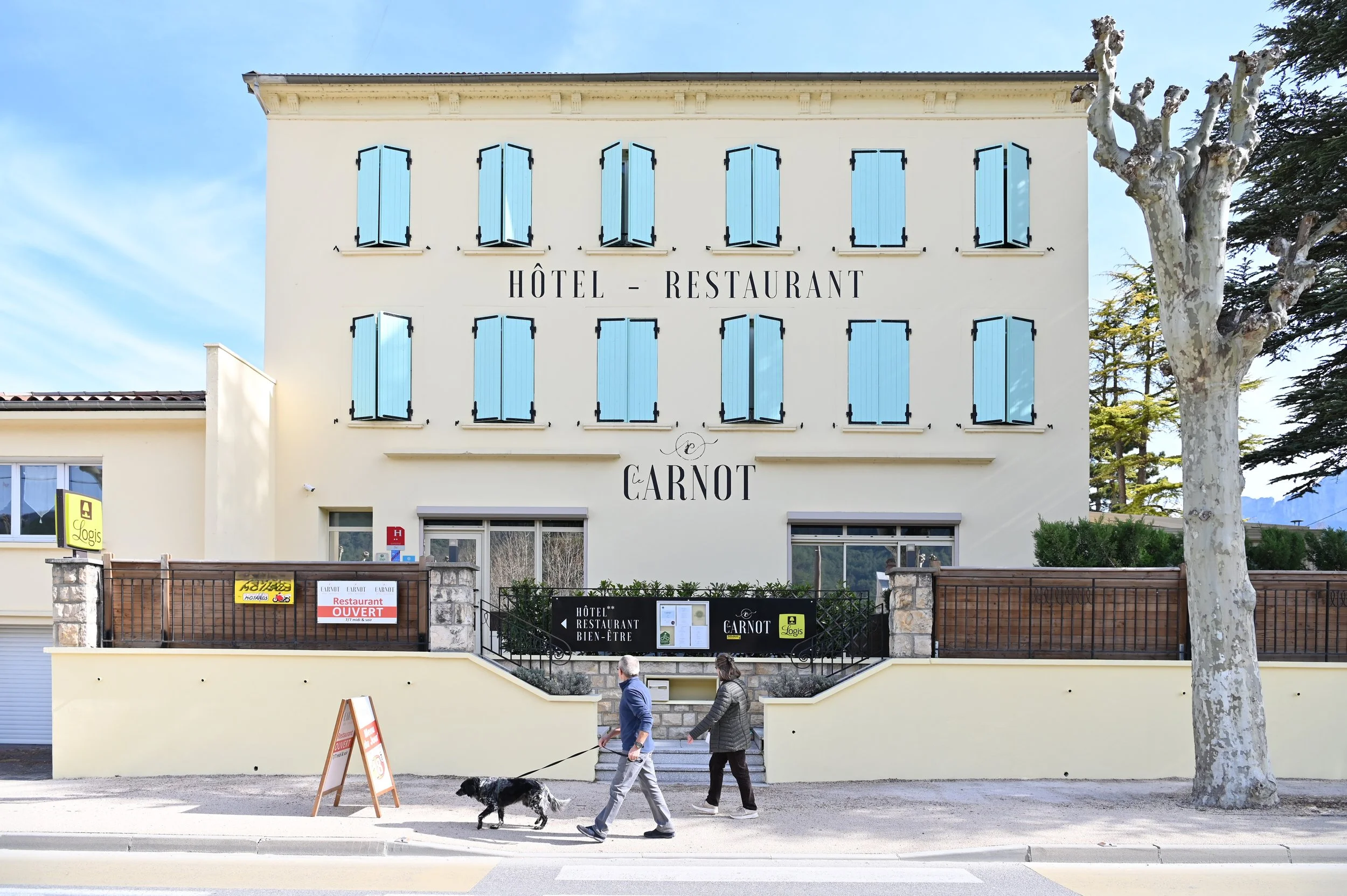
After treating myself at Col de la Chaudière, I arrive at the Logis Hôtel Le Carnot in Die for the night. Yannick, the hotel manager and a BMW K 100 GT rider, welcomes me in the middle of the evening service. I chose this place because it carries the Hôtel Bikers label. A private, secure garage is available, along with a compressor, a pressure washer and a repair kit should the need arise.
I have dinner on the terrace, opting for the full menu, which showcases local produce, including a generous and tender lamb shank. I pair the meal with a Clairette de Die, the sparkling wine that contributes to the reputation of this small town. A restorative night in a recently renovated room and a hearty breakfast leave me ready to set off towards the Vercors the following morning in great shape.
Two Parks for the Price of One
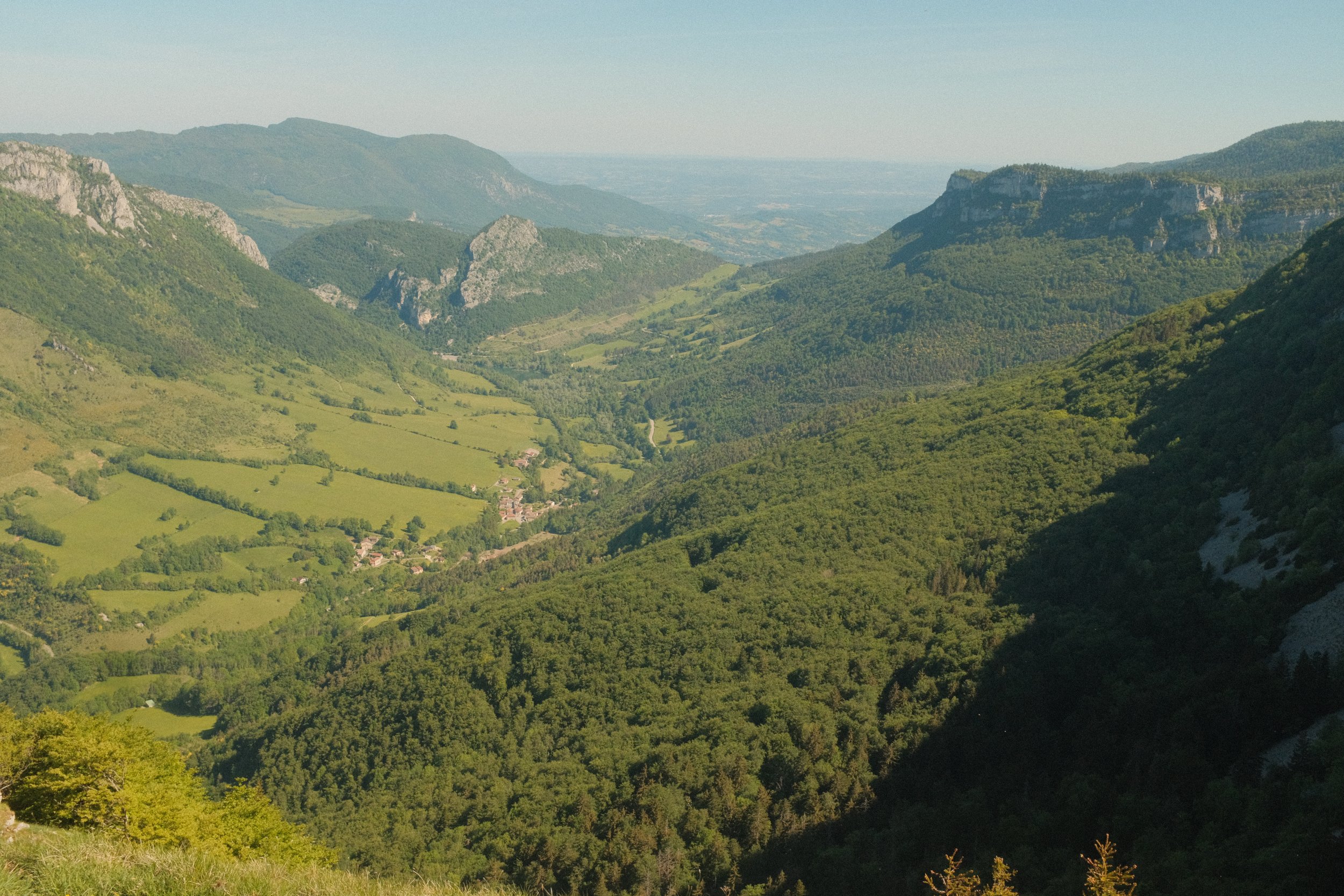
Die is twenty kilometres from Col de Rousset in the Vercors Regional Natural Park. Motorcyclists will appreciate this spectacular climb, which ends with a long tunnel carved through the rock. I then cross the village of Vassieux-en-Vercors, with the Resistance necropolis just outside it.
A few kilometres further on, at Col de la Chau, I pass close to the Resistance Memorial. During the Second World War, the Vercors karst massif was a major stronghold of the Resistance, where young resistance fighters, heavily outnumbered, fought the Nazi army to the death. I finish my quick crossing of the Vercors via Col de la Bataille before descending towards Valence late in the morning.
© Sébastien Roux
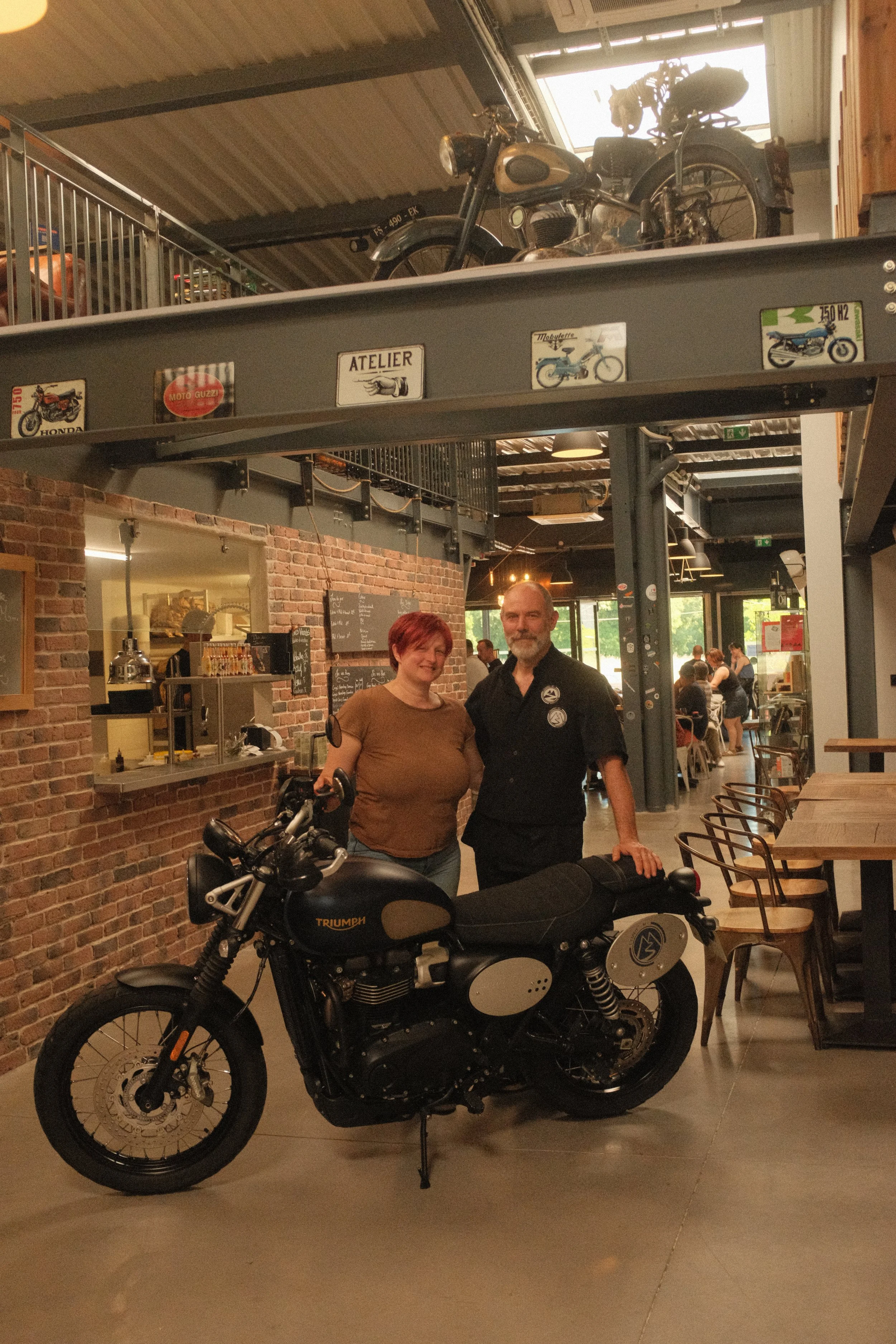
I head to L’Esprit M, a place centred around several different M’s: Motorcycles, Music, Mountains, and more. I meet Pierre-Christophe, the creator of the place, who is tending to a brazier. With a few minutes to spare before the lunchtime service, this qualified mechanic and guide gives me a complete tour of the space, which brings together a bar, a restaurant, a shop and a motorcycle travel agency offering 100% local excursions, all under one roof.
Marjolaine, the agency’s director, then takes over while we enjoy some delicious local meats. Enthusiastically, she tells me about the overall project and the various excursions they offer in the Drôme, the Vercors and the Ardèche. For them, as for me, motorcycling is above all a way of sharing and meeting people.
As I get ready to leave, Pierre-Christophe takes a look at my route towards the Monts d’Ardèche, my second regional park of the day. I’m about to cross the area known as the “Green Ardèche”. Lush landscapes and typical villages follow one another.
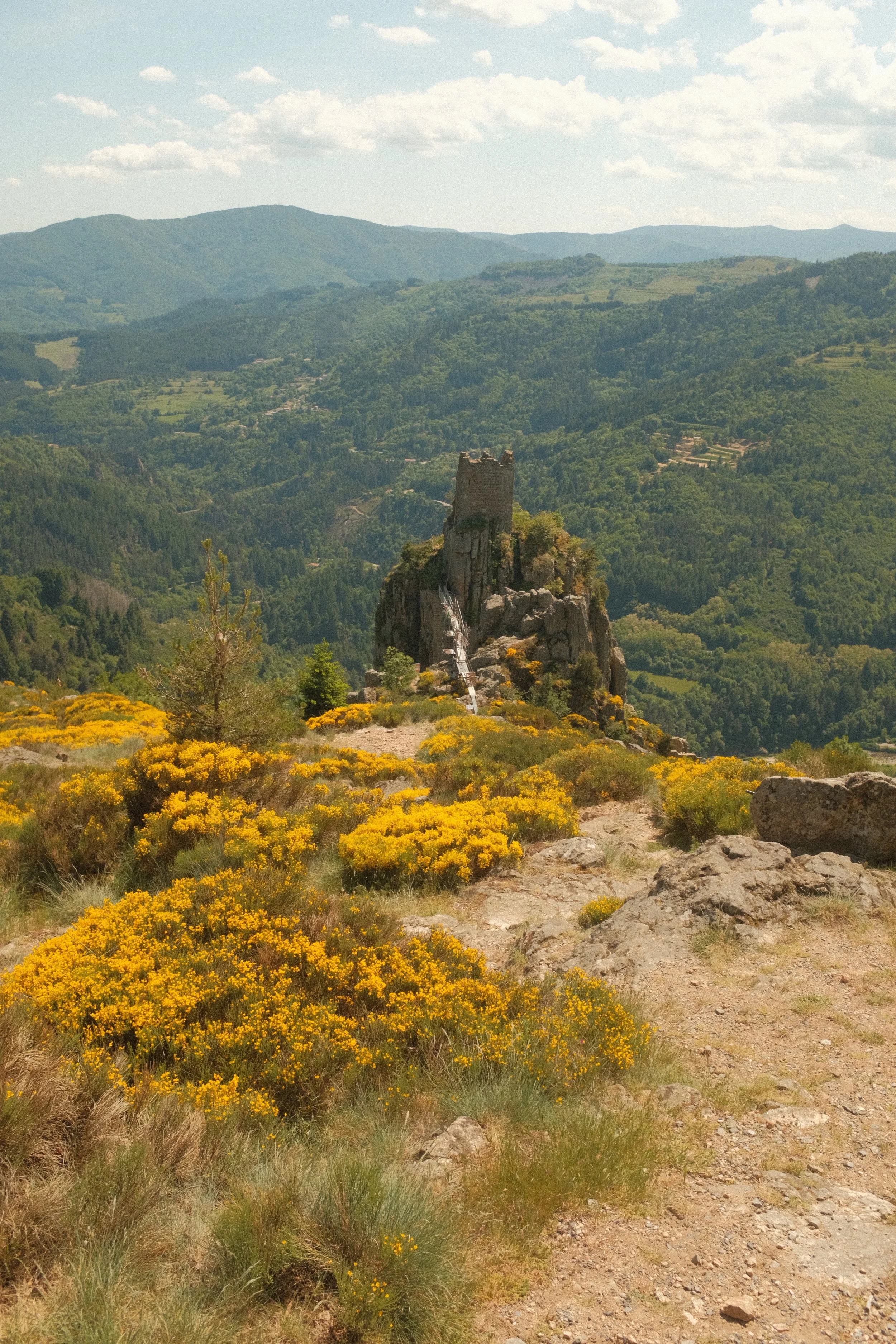
On the way, I stop for a moment at the viewpoint overlooking the ruins of Château de Rochebonne before heading towards the Ray-Pic waterfall. Unfortunately, the six kilometres of road leading to the waterfall are covered in loose gravel, the nightmare of motorcyclists and cyclists alike. Descending through a bend, the rear wheel of the Royal Enfield threatens to lose grip. I stay alert before continuing on to Vogüé for my second night.
Considered one of the most beautiful villages in France, Vogüé has all the attributes of a “postcard village”. Located on the banks of the Ardèche, backed by a cliff with its château and medieval houses, it is a lovely place to live all year round.
It is here, on the heights above the village, that Christine and François built their home before gradually turning it into a guest house. They named it Les Carriers, a reference to the street of the same name, which was once used to transport stone from the quarry. This magnificent place took 17 years to complete, with François carrying out all the work whenever he had some free time. After a quick dip in the pool, I follow François’s recommendation and head to a restaurant where he has reserved a table for me to enjoy some Ardèche trout. Before that, I take in a magnificent sunset along the path leading down to the village.
On the Water’s Edge
My third day on the road is the shortest stage of the trip, covering just 111 kilometres. The reason is simple: I’ve set aside the morning and early afternoon to kayak through the Ardèche gorges. The Vogüé–Balazuc section is closed during my visit, so the departure will be directly from Balazuc Loisirs for a 14-kilometre route leading to Ruoms. Once again, it was François who recommended this place to me. Céline welcomes me with a smile. She has been running Balazuc Loisirs for 30 years and also offers bicycle rentals for those who don’t want to take to the water.
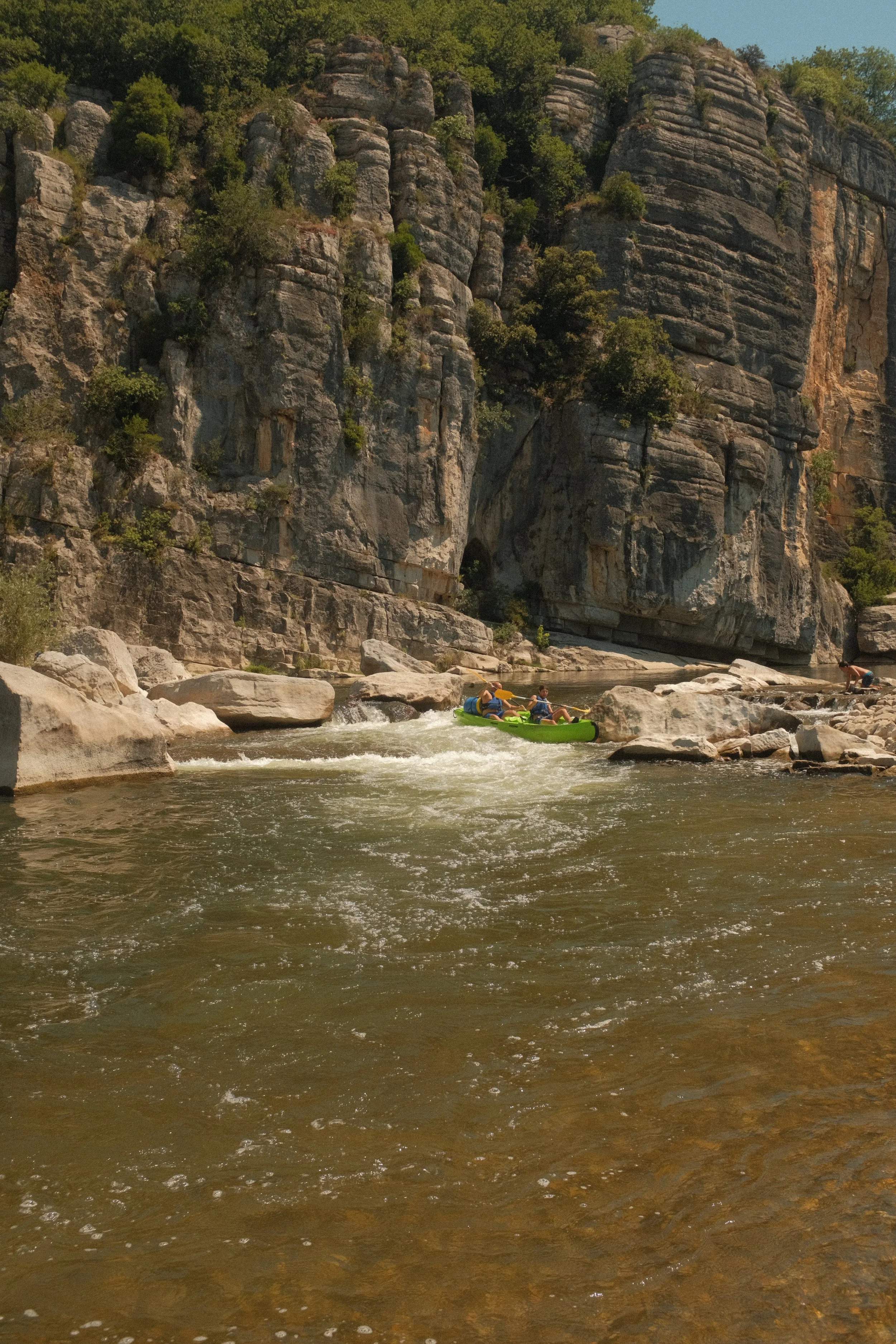
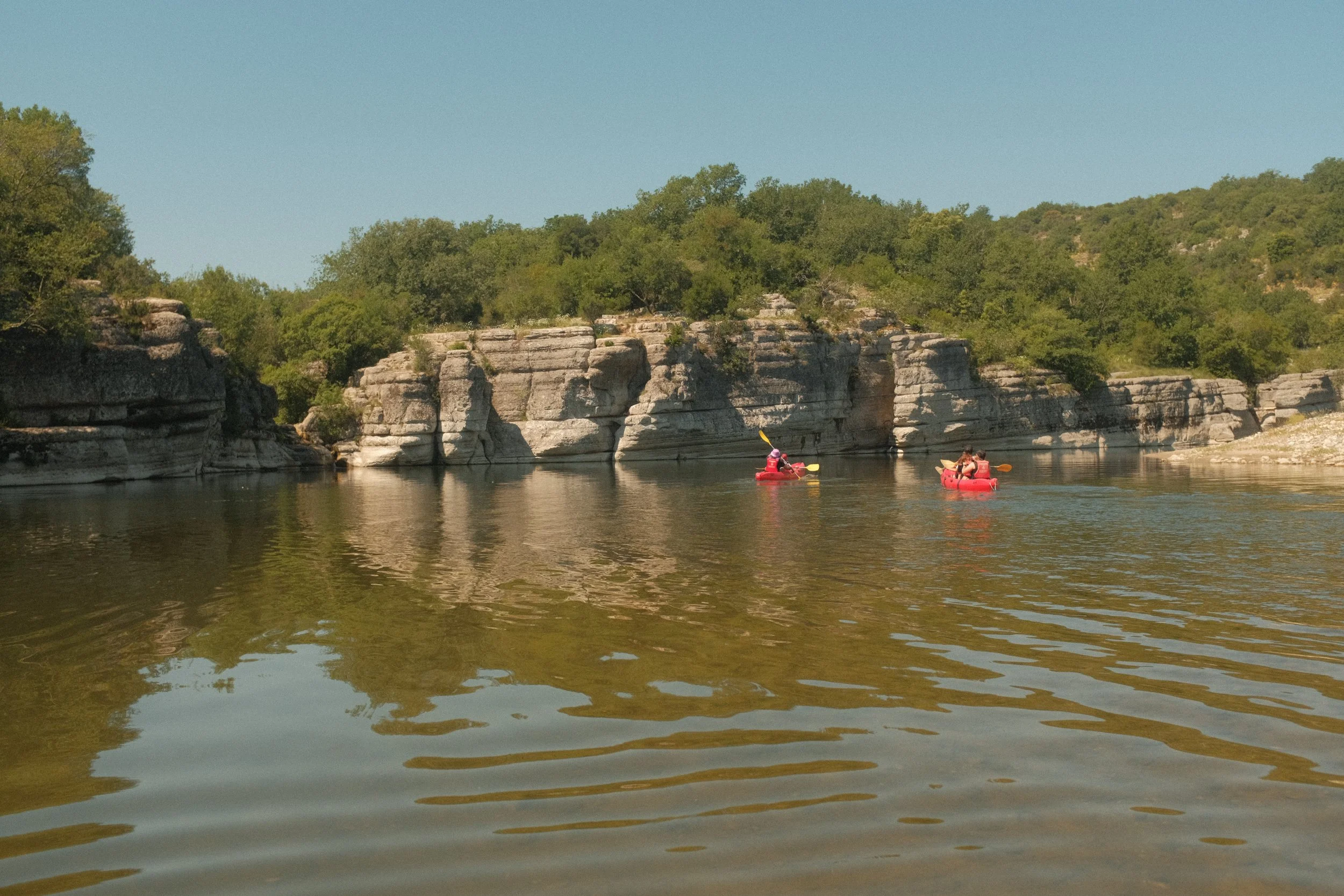
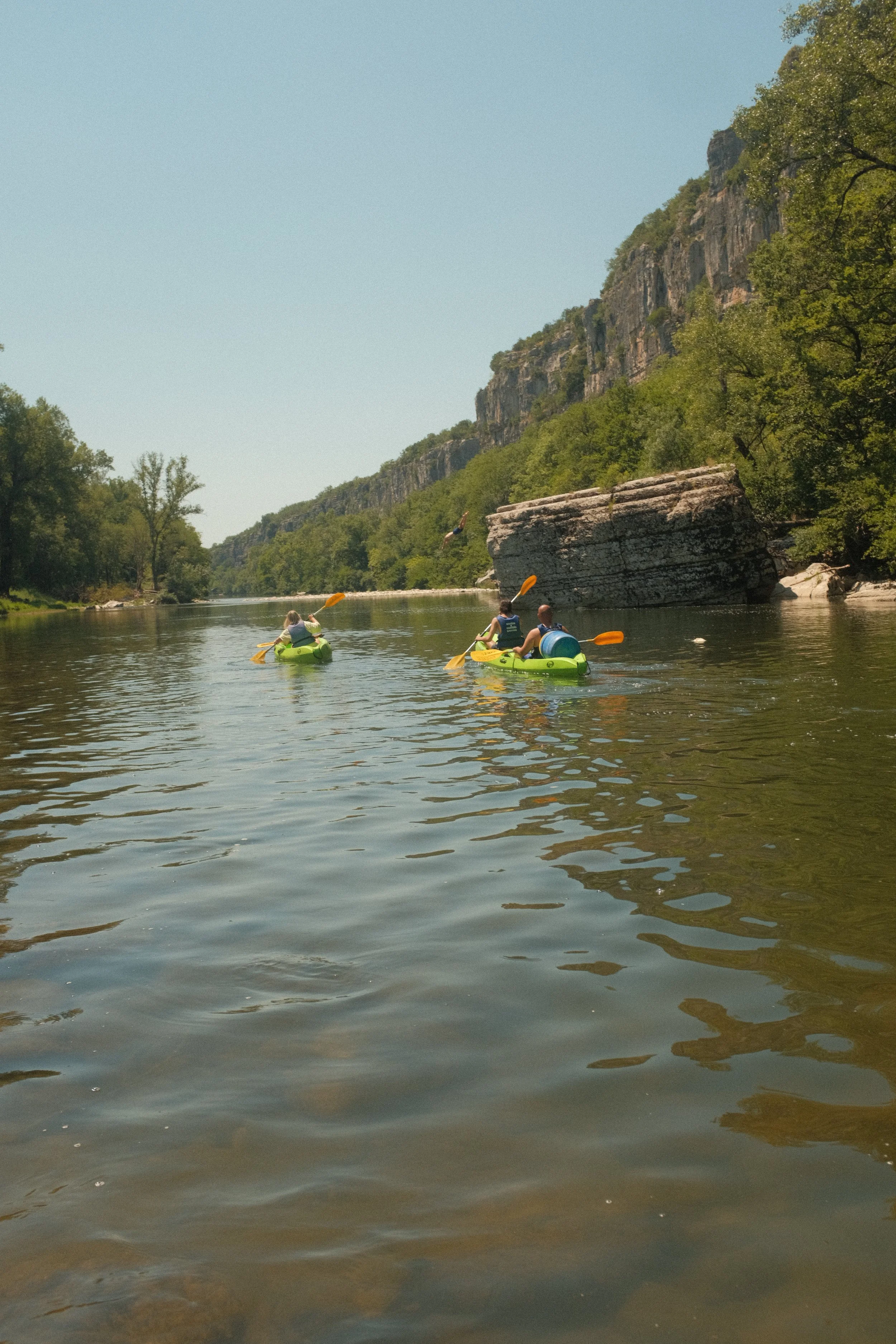
Around thirty kilometres long, the Ardèche gorges have been classified as a national nature reserve since 1980. As I kayak down the gorges, I quickly understand why. Time seems to stand still, nature remains untouched, and the scenery is breathtaking. Also working for Balazuc Loisirs, Fabien explains the route to me and points out a few sections that require some skill to avoid capsizing. At a sporty pace, I tackle a few rapids, occasionally getting stuck among the pebbles.
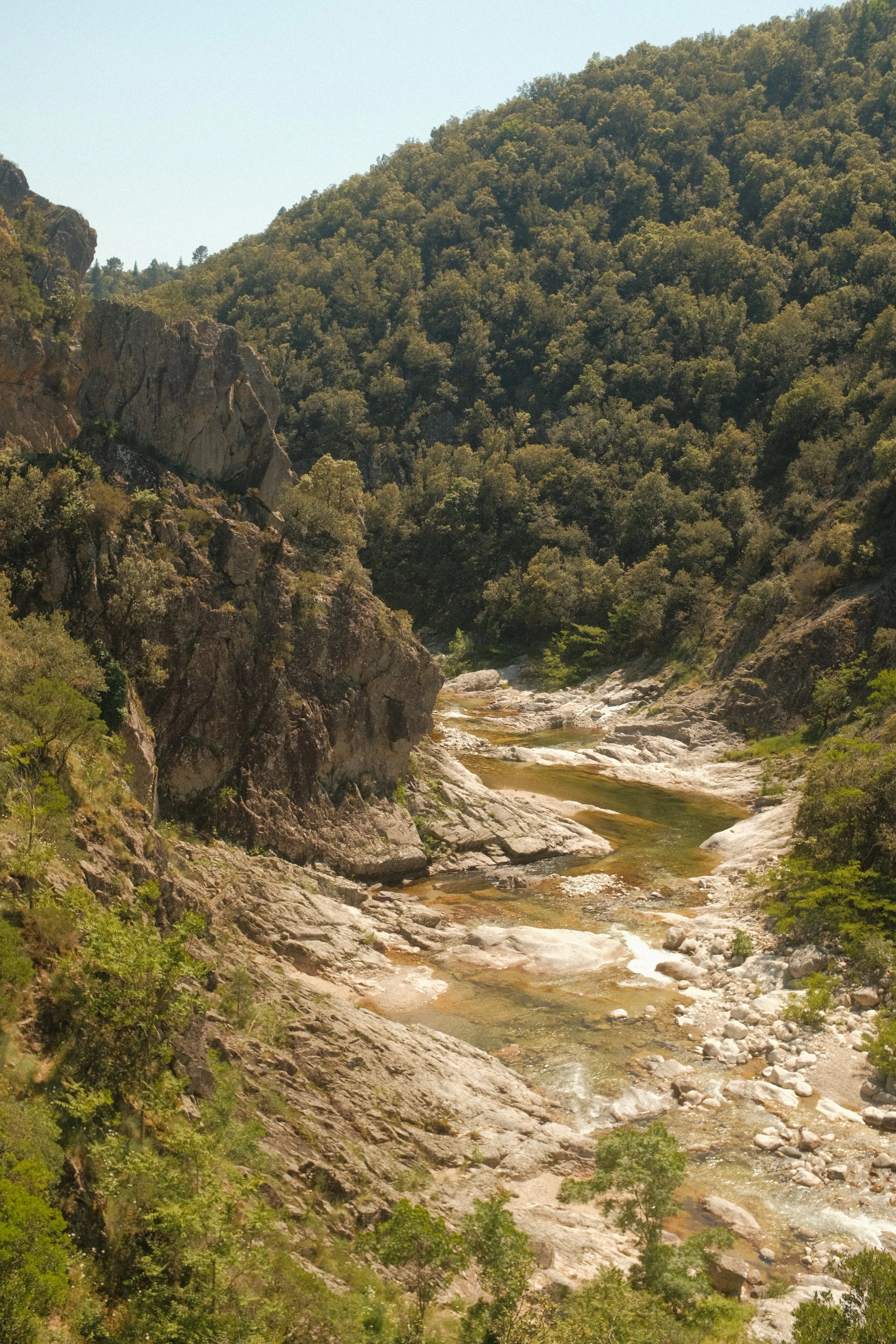
Once I reach Ruoms, he comes to pick me up so I can return to the base and get back on the road. After kayaking through the Ardèche gorges until 2 p.m., I ride through the Baume gorges. A route made up of a beautiful little road punctuated by an incredible viewpoint.
© Sébastien Roux
I then stop at La Croix de Bauzon, the only ski resort in the Ardèche, which has recently begun a transition towards becoming a four-season resort, moving away from the “all-snow” model, now obsolete due to climate change.
Located in Gévaudan, Aurélie welcomes me to her Les Crémades guest house. Her stone house lies along the route of three GR long-distance hiking trails, including the GR 70, the famous Stevenson Trail. That evening, she welcomes four cyclists, three female hikers and one motorcyclist. Her mother has prepared a delicious communal meal for the guests, while her father will take care of breakfast the following morning. Some wonderful moments of sharing before setting off on a new day.
On the Road and Then in the Air
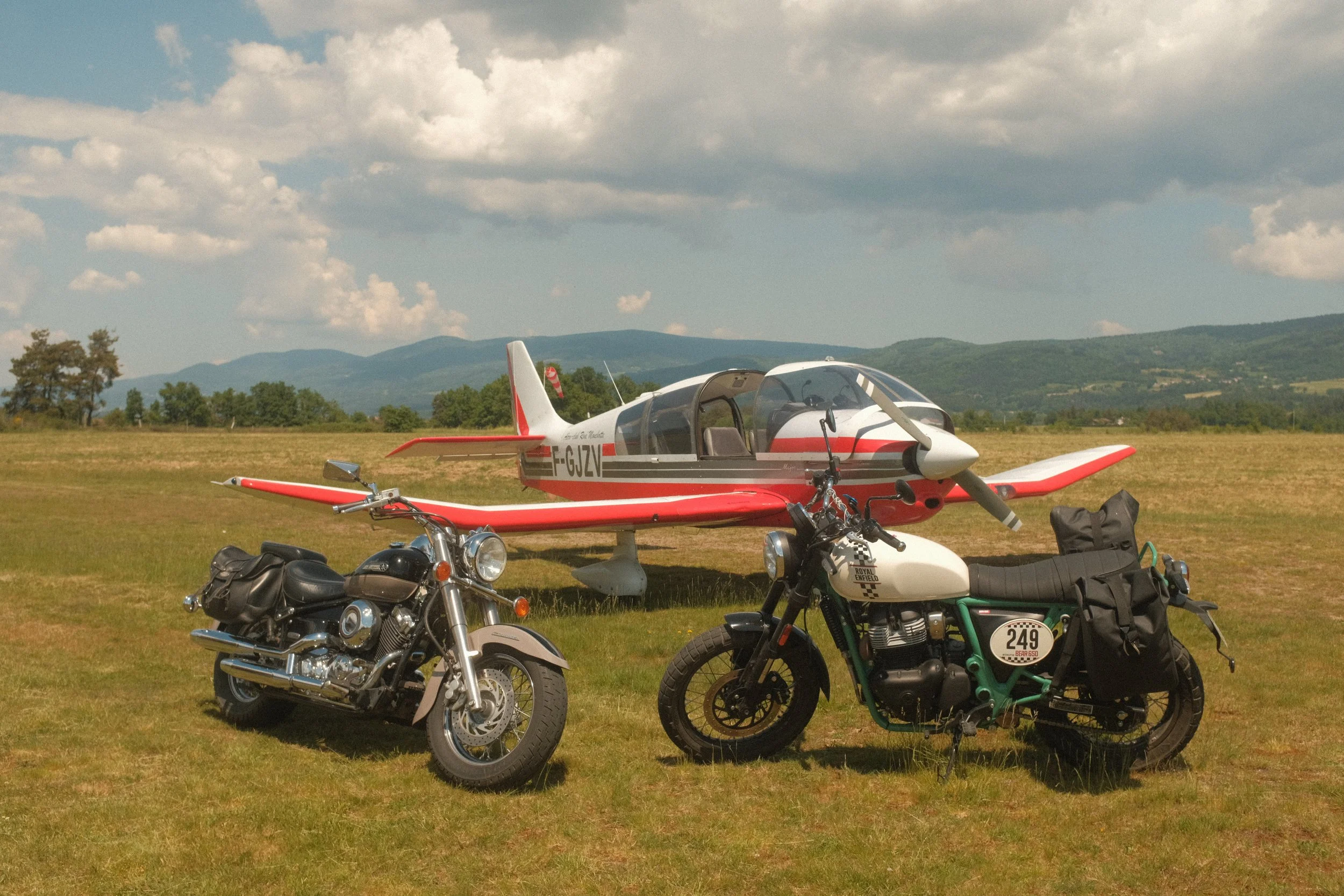
I’ll be honest: I had never heard of the Livradois-Forez Regional Natural Park before planning this motorcycle route. What a wonderful surprise it turned out to be, riding back up the Allier gorges in the shade along a beautiful little road leading to La Chaise-Dieu, famous for the Occitan Gothic architecture of its abbey. It’s Monday, and the market is being held around this imposing building, changing the flow of traffic throughout the area. I divert towards Dore-l’Église before heading to the Livradois-Forez flying club. A Yamaha Dragstar Classic 650 is parked outside. It belongs to Jean-Pierre, who has been the flying club’s president since 1992.
© Sébastien Roux
Alongside him, I leave the tarmac behind and take to the skies. An incredible flight that first takes us to Thiers, a town considered the capital of cutlery. We then turn around to fly over the Livradois mountains as far as Mont Bar, a volcano unique in Europe because it contains a peat bog in its crater. We fly over La Chaise-Dieu before heading across the Forez mountains. Cruising at 180 km/h, Jean-Pierre proves to be an outstanding pilot as well as an excellent guide for explaining the particular features of this regional park.
Since I set off, France has been under a heat dome. With temperatures more typical of summer, the mercury is easily climbing above 30 degrees. There is a risk of thunderstorms towards the end of the day. I nevertheless decide not to change my route and continue discovering new mountain passes: Col des Pradeaux and Col des Supeyres.
I decided to play with fire, and ended up soaked. A few kilometres further on, the colour and smell of the road change. A thunderstorm has just passed through. I quickly realise that I’m heading straight into it. The fine drops grow larger and larger until I find myself caught in a downpour shortly before the village of Le Grun Batailler. I manage to find a makeshift shelter to put on my rain suit. Mischievously, the rain decides to stop as soon as I’ve got it on.
© Sébastien Roux
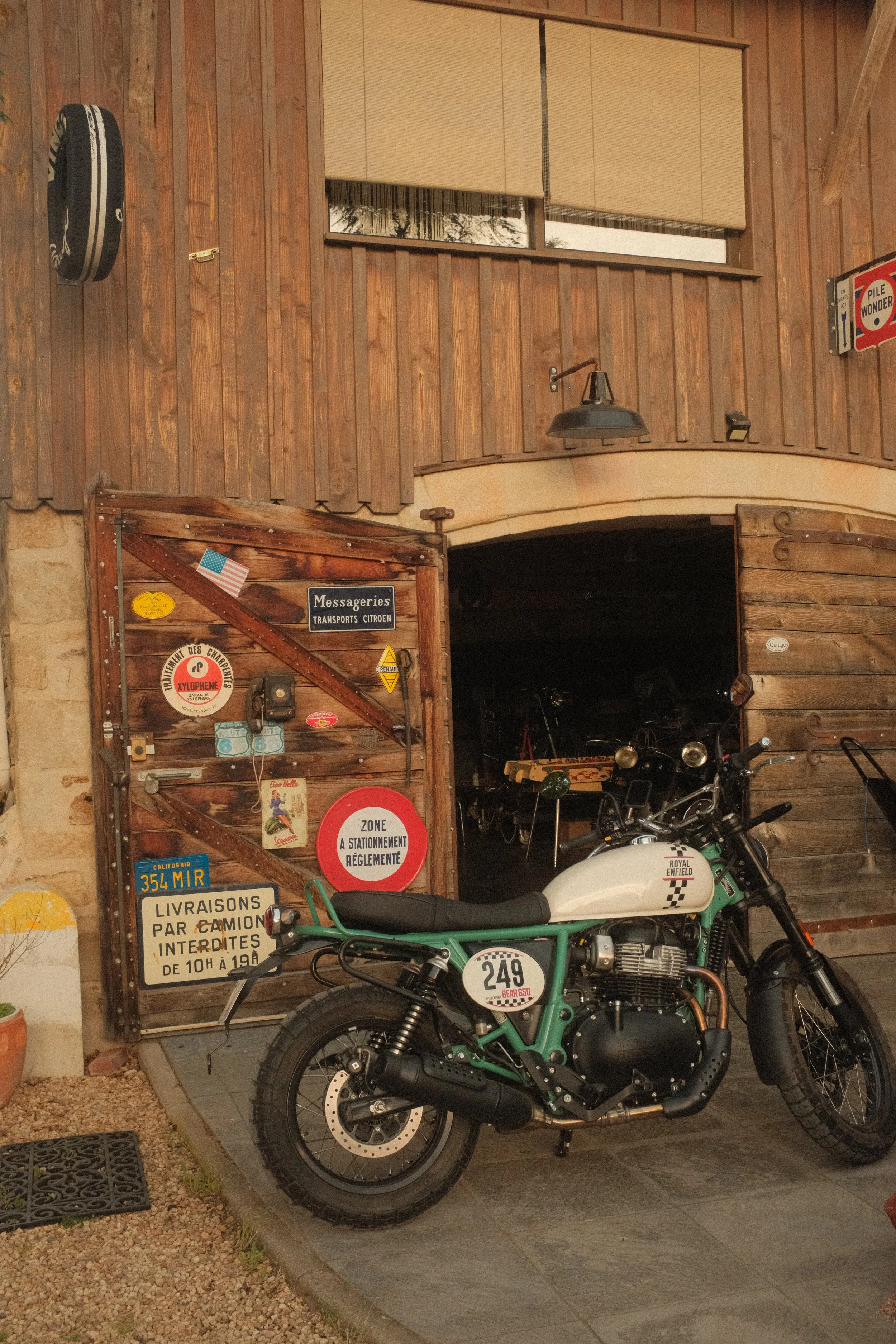
After a quick stop in Thiers, I head to the village of Moissat, home to Le Clos Goëlle, Valérie and Vincent’s guest house. During my research, I prioritized accommodation offering a motorcycle-friendly welcome. Tonight, the Royal Enfield Bear 650 will be sheltered alongside its almost identical sister, the Royal Enfield Interceptor 650.
Vincent has an impressive collection of two-wheelers, including a Triumph, an old BMW, as well as numerous Vespas and Lambrettas. Valérie has reserved the loft above the garage for me. A vintage atmosphere that suits me perfectly. I then have dinner with them and two of their friends in their garden. Ideally located between the Livradois-Forez Regional Natural Park and the Auvergne Volcanoes Regional Natural Park, their guest house has everything to attract passing motorcyclists. They have even designed a one-day route on the saddle of a moped. An unusual experience that I may have the chance to try on a future trip.
Walking on a Volcano
On this fifth day, I plan to put my feet to work to reach the summit of the legendary Puy de Dôme. I plan to park my motorcycle at Col de Ceyssat and ask the inn next door if they can look after my panniers while I’m out hiking. Unfortunately, they are closed today. I decide to hide my panniers, jacket and helmet behind a wooden barrier two metres from my motorcycle. After playing with fire the previous day, I still have enough faith in humanity to believe that no one is going to steal them.
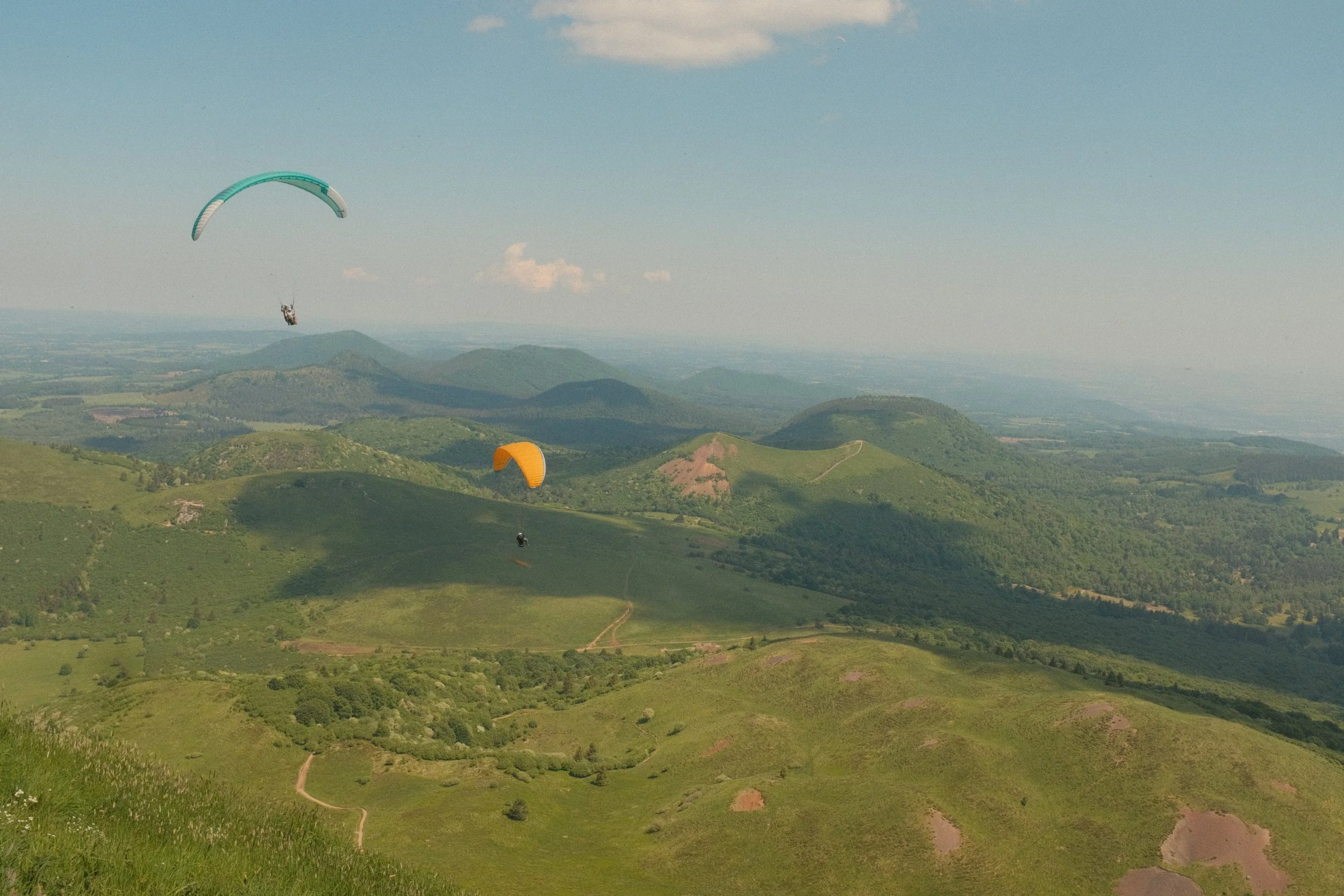
At 1.9 kilometres long with 350 metres of elevation gain, the Chemin des Muletiers is short, but the climb is steep. Fifteen bends and 45 minutes of effort. Relieved of my cumbersome belongings, I decide to walk at a brisk pace. After 30 minutes, I reach the summit. Numerous paragliders are waiting at various take-off points. The wind is light but strong enough to take to the air. They will be able to fly around the 80 dormant volcanoes.
© Sébastien Roux
I feel a slight sense of apprehension as I make my way back to my motorcycle. My belongings are still exactly where I left them. Humanity is saved, and I can set off again. It’s nearly 1 p.m. when I arrive just seconds before a village bakery closes, just enough time to order a sandwich. I’ll eat it at the Saliens waterfall, with my feet in the cool water. When I get back on the road, the weather starts to turn again.
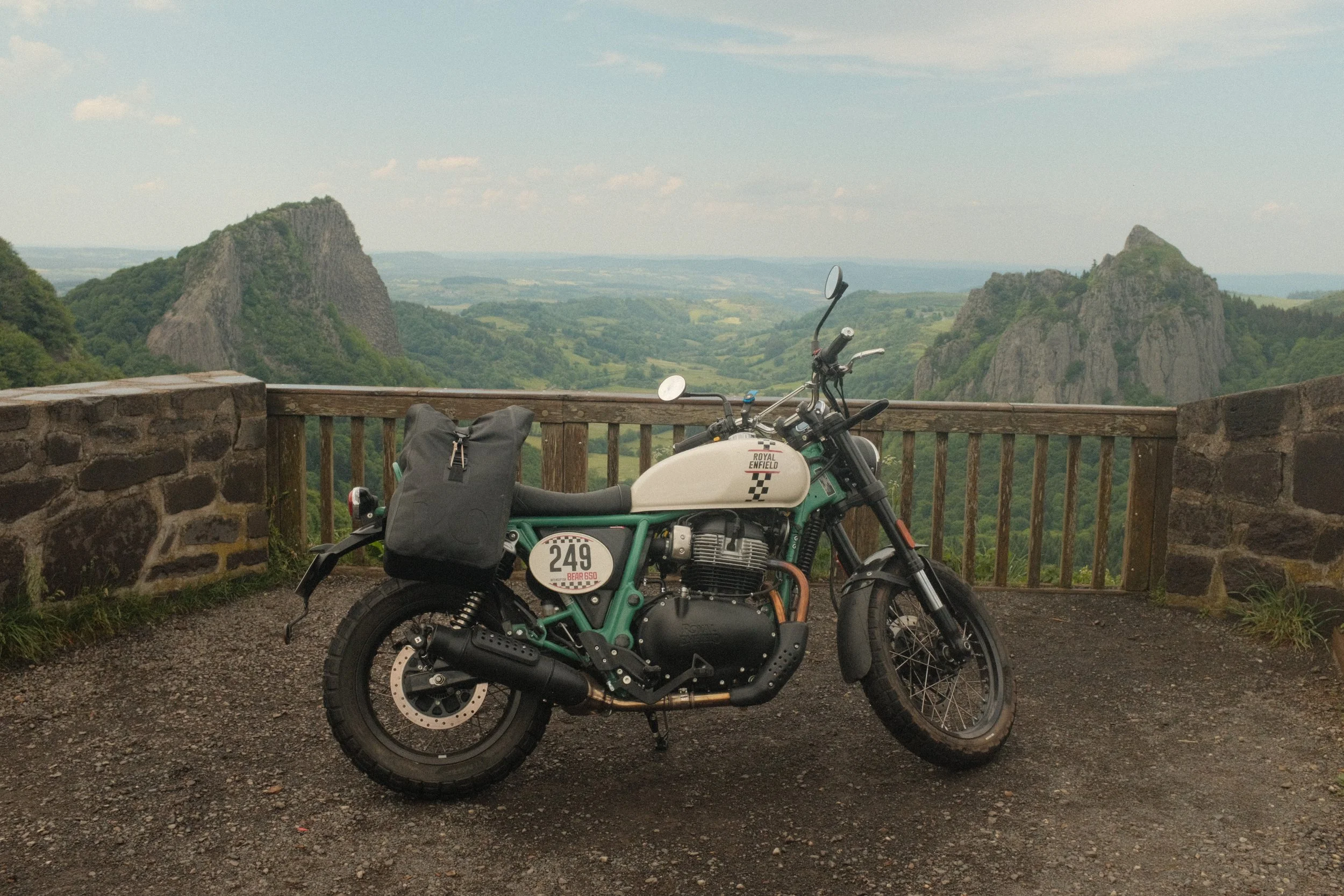
Shortly after Orcival, the rain begins to fall. I take shelter in a place called… Le Refuge, near the superb Roches Tuilière and Sanadoire viewpoint. Just like the inn at Col de Ceyssat, the gîte is closed. I take shelter with my motorcycle under a covered area and wait alongside hikers before heading back down towards Le Mont-Dore, a town surrounded by volcanoes, including Puy de Sancy.
© Sébastien Roux
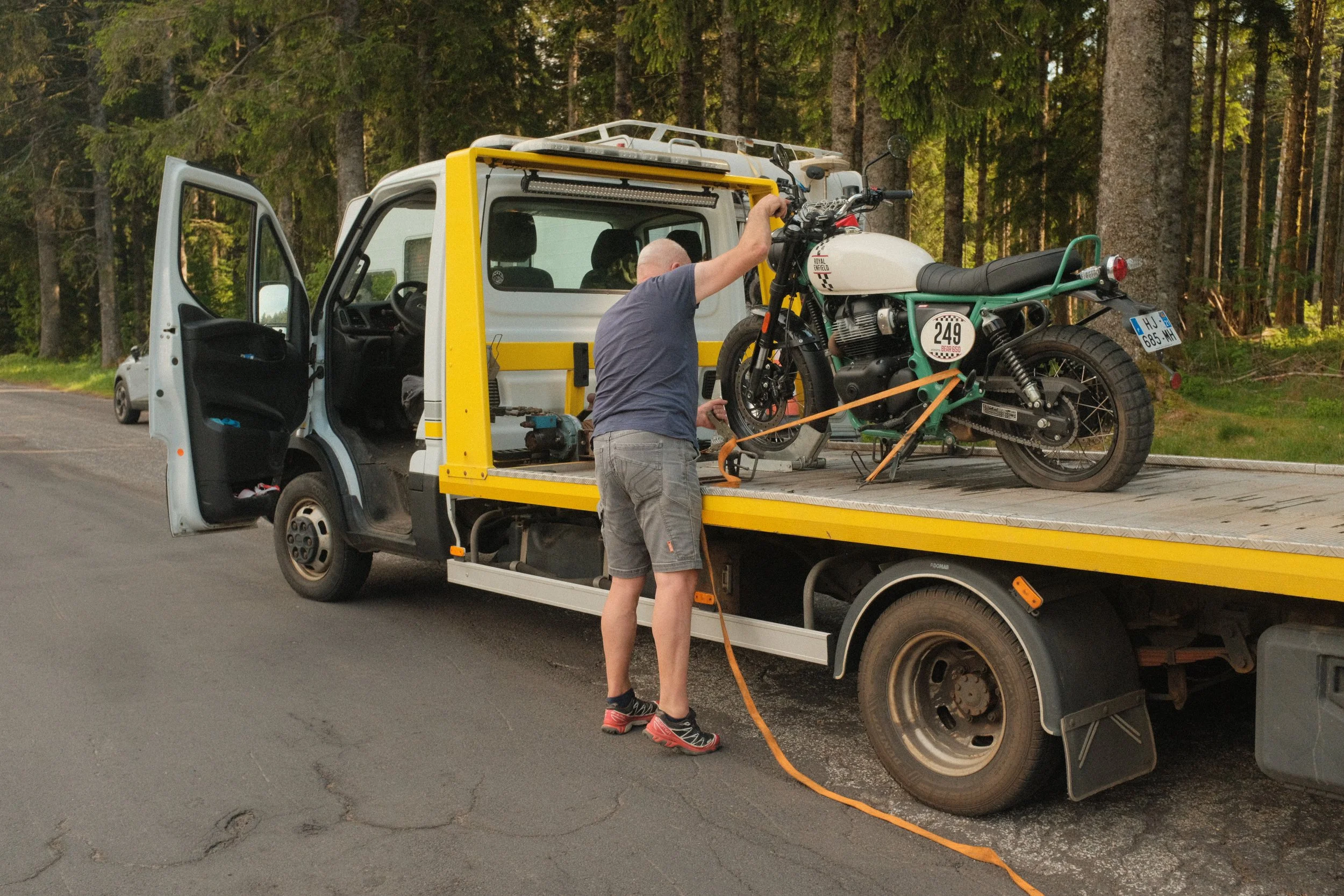
In this mountain setting, I begin climbing along the D645. In a bend, I suddenly realise that my rear tyre has very little grip. I stop at La Stèle to assess the damage. Flat tyre. Déjà vu…
After my road trip in Corsica five years ago and the previous one last autumn, another puncture comes along to disrupt my route. Unlike on my previous trip, I didn’t think to bring a tyre sealant canister. I have no choice but to call Royal Enfield assistance. Less than an hour later, a recovery truck from Garage Roulet in La Bourboule comes to pick me up.
© Sébastien Roux
Rather than taking the bike to a Royal Enfield dealer near Clermont-Ferrand, I figure we’ll manage to repair the tyre with a plug. No such luck: the Royal Enfield doesn’t have tubeless tyres but inner tubes. The only solution is to wait until the following morning for the recovery truck to take the motorcycle to a garage in Ussel, a town close to my guest house, so they can remove the small piece of metal responsible for the puncture and fit a new inner tube.
The assistance service arranges for a taxi to take me to Le Manoir du Rigouneix, where I’m due to spend the night. I get chatting with Yohan, the driver, who is also a motorcyclist. He recently completed the 2026 Challenge Tour, a 1,600-kilometre motorcycle road rally over four days.
After a 45-minute drive, much of it on the motorway, Yohan drops me off at Le Manoir du Rigouneix, run by Violaine and Pierre. This young couple also manages a château in the area. I warned them about my mishap on the road. They won’t be there to welcome me at 8 p.m., but Pierre has prepared an excellent meal and left it in the fridge so I can regain my strength.
Part of this building dates back to the 18th century. The rooms retain traces of the past while having been modernised to provide all the necessary comforts. All around, a lush green setting is home to horses, a donkey, does and roe deer. It feels strange to have left the Royal Enfield on the recovery truck, and strange to arrive at an empty manor. I enter a code and the door opens automatically. Inside, there are lights on and even music playing in the living room, but no one around. Fortunately, a couple arrive about an hour later to spend the night. I won’t be alone in this grand manor.
Served on a Platter
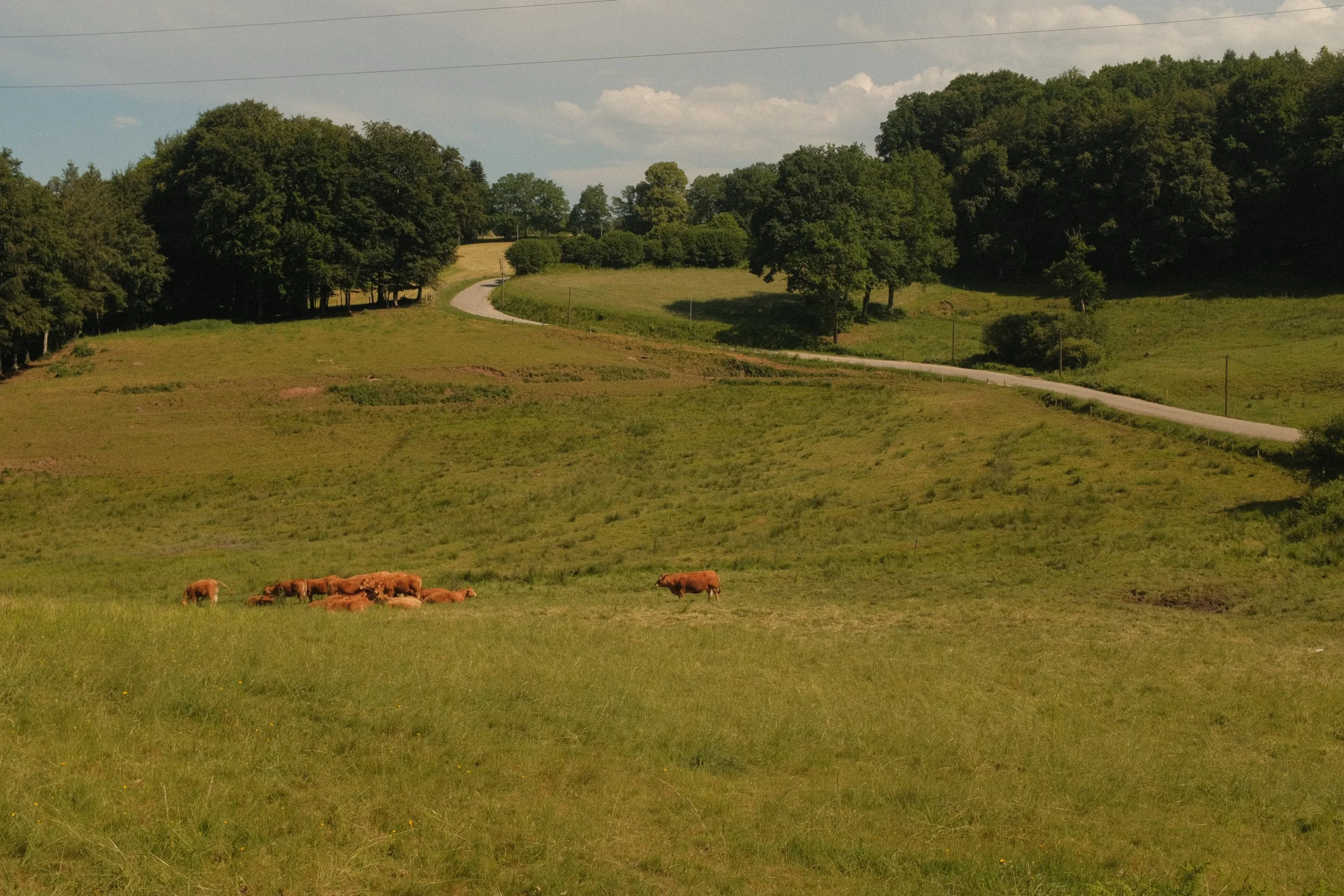
Royal Enfield assistance handled my mishap the previous day perfectly. I find the motorcycle, fitted with a new inner tube, at Ussel Moto Accessoires. I take the opportunity to buy a can of tyre sealant — better late than never, as they say. On this sixth day, I’ll cross the Millevaches en Limousin Regional Natural Park, a mid-altitude area featuring a mosaic of landscapes: forests, peat bogs and lakes.
© Sébastien Roux
I stop for lunch at Lake Vassivière. Before getting back on the road towards Limoges, I’ve booked a paddleboarding trip with Mille Nautique. Séverine and Tony welcome me. They are busy preparing a licence-free boat for a couple heading out to spend two hours on the lake. With the paddleboard, I settle for a lap around Île aux Serpents, located close to the watersports centre. Back on the Royal Enfield, I finish circling Lake Vassivière before returning to the Millevaches plateau.
There is very little traffic on these departmental roads. Lying in the grass alongside the road, herds of cows follow me with their eyes as I ride past. This 189-kilometre stage continues along the Vienne River, which runs through the peaceful town of Eymoutiers. My destination is Limoges, a city known for its decorated porcelain.
There I meet up with Mikaël, a childhood friend, and Louise, his partner, who is originally from the area. Together, we head out to discover a new place: the Marché des Jacobins and its various food options. Limoges is the only stop on my journey where I didn’t look for motorcycle-friendly accommodation. The Royal Enfield will nevertheless spend the night in a secure garage.
A Leap Through Time
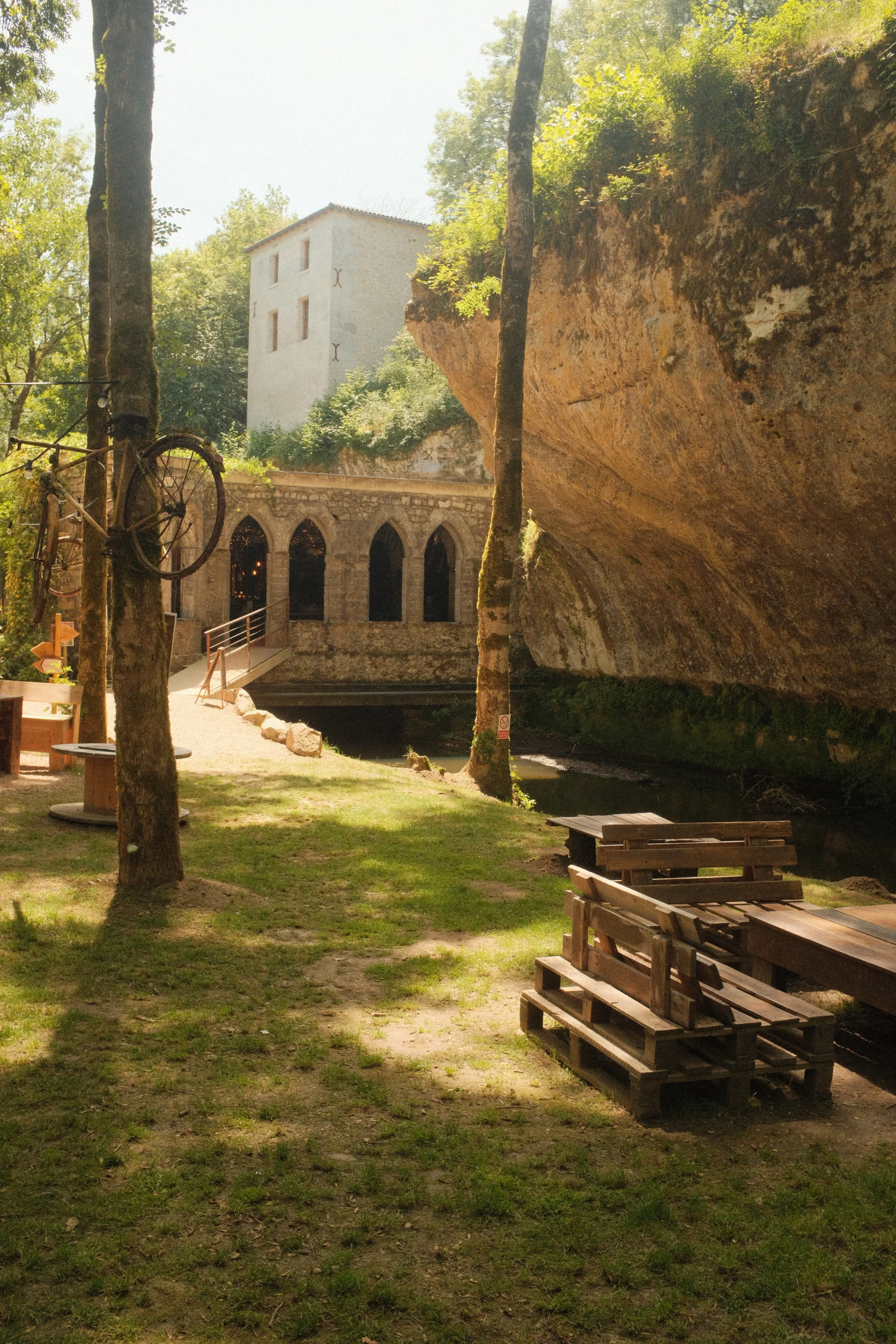
Now at the northernmost point of my journey, I cross the Périgord-Limousin Regional Natural Park, heading south. In the morning, I make a quick stop in front of Château de Jumilhac, take a detour through the small hilltop town of Nontron, then arrive in Brantôme and its abbey built into the cliff. Not far from there, I set off to discover Parc Bimbilou, an Occitan word meaning “everywhere and nowhere”.
© Sébastien Roux
On the banks of the Dordogne, this place opened its doors in June 2023. The park’s story dates back to the late 20th century, when Claude Martinot began collecting thousands of old objects as well as tools once used in traditional trades. In 2014, he bought the ruined site of the Moulin du Couvent and spent the following nine years carrying out extensive restoration and development work.
From 2021 onwards, his grandchildren Tom and Théo helped him arrange exhibition spaces inside the mill and in an adjoining cave. An unfinished stone hotel was turned into a reception area as well as an ideal watering hole. In the space of an hour, I explore this charming place before ending my visit with an excellent burger by the river.
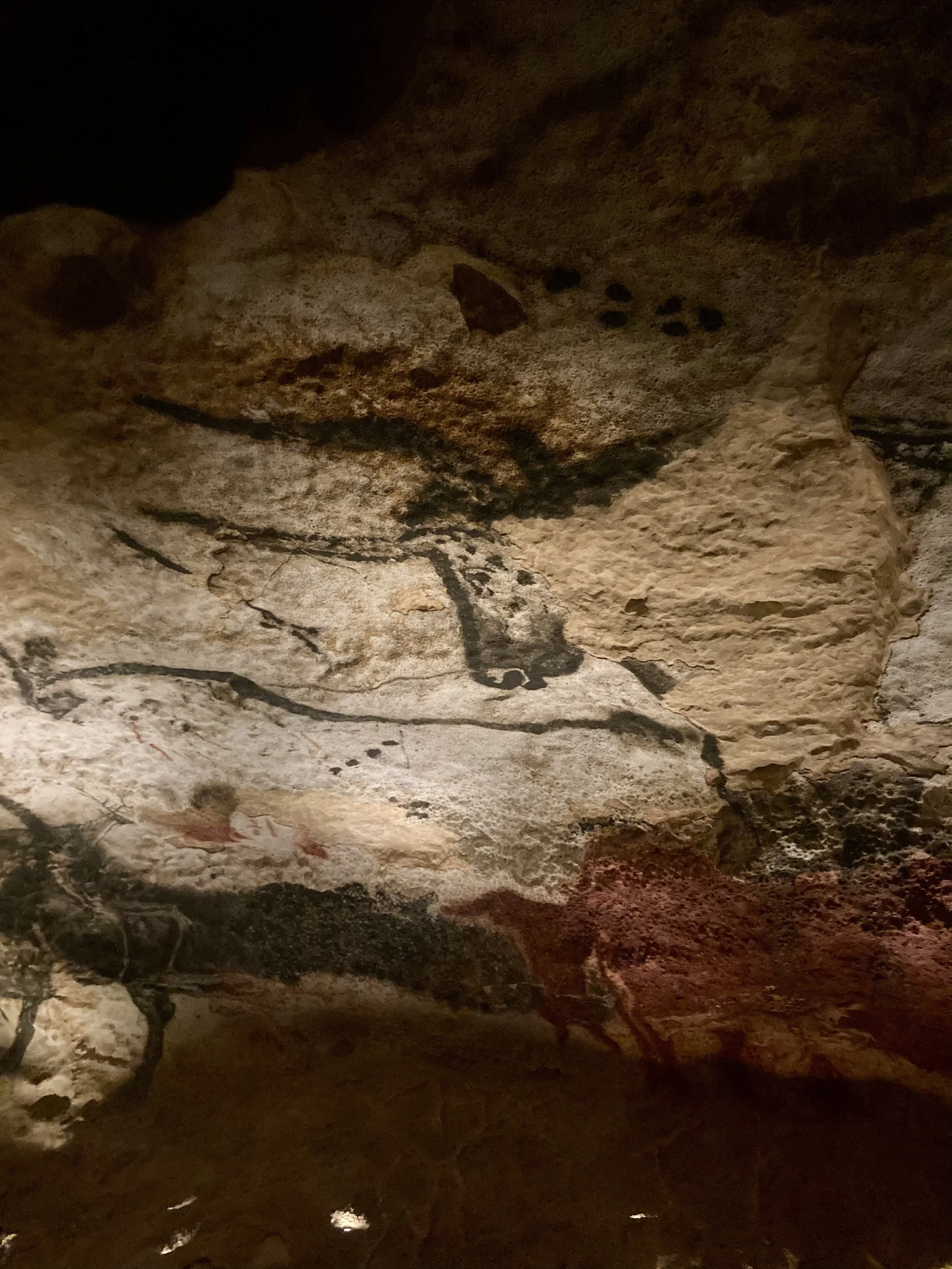
My journey through time doesn’t end there: after retracing a century of evolution, I speed up to travel back to prehistoric times. My guide for the day, Clément, is waiting for me at the replica of the Lascaux cave. At this International Centre for Cave Art, known as Lascaux IV, I witness a scientific feat.
© Sébastien Roux
The original cave has been reproduced identically, allowing visitors to travel approximately 21,000 years back in time in the footsteps of our ancestors. Clément shares numerous anecdotes about the discovery of the cave in September 1940 by four teenagers and a dog. He then introduces me to the different chambers of this unique cave, home to around 2,400 paintings, engravings and abstract signs.
My day ends at Camping Moto Dordogne. This former municipal campsite has been run by Hans, originally from the Netherlands, for more than 10 years. As its name suggests, the site is reserved for motorcyclists, right in the heart of the Dordogne. After a hotel, guest houses and a friend’s apartment, I change things up with a night in a cabin. A few metres away, a Belgian motorcyclist has pitched his tent. I take a dip in the pool before sharing a cheerful meal and chatting in the language of Shakespeare.
Deep Beneath the Earth
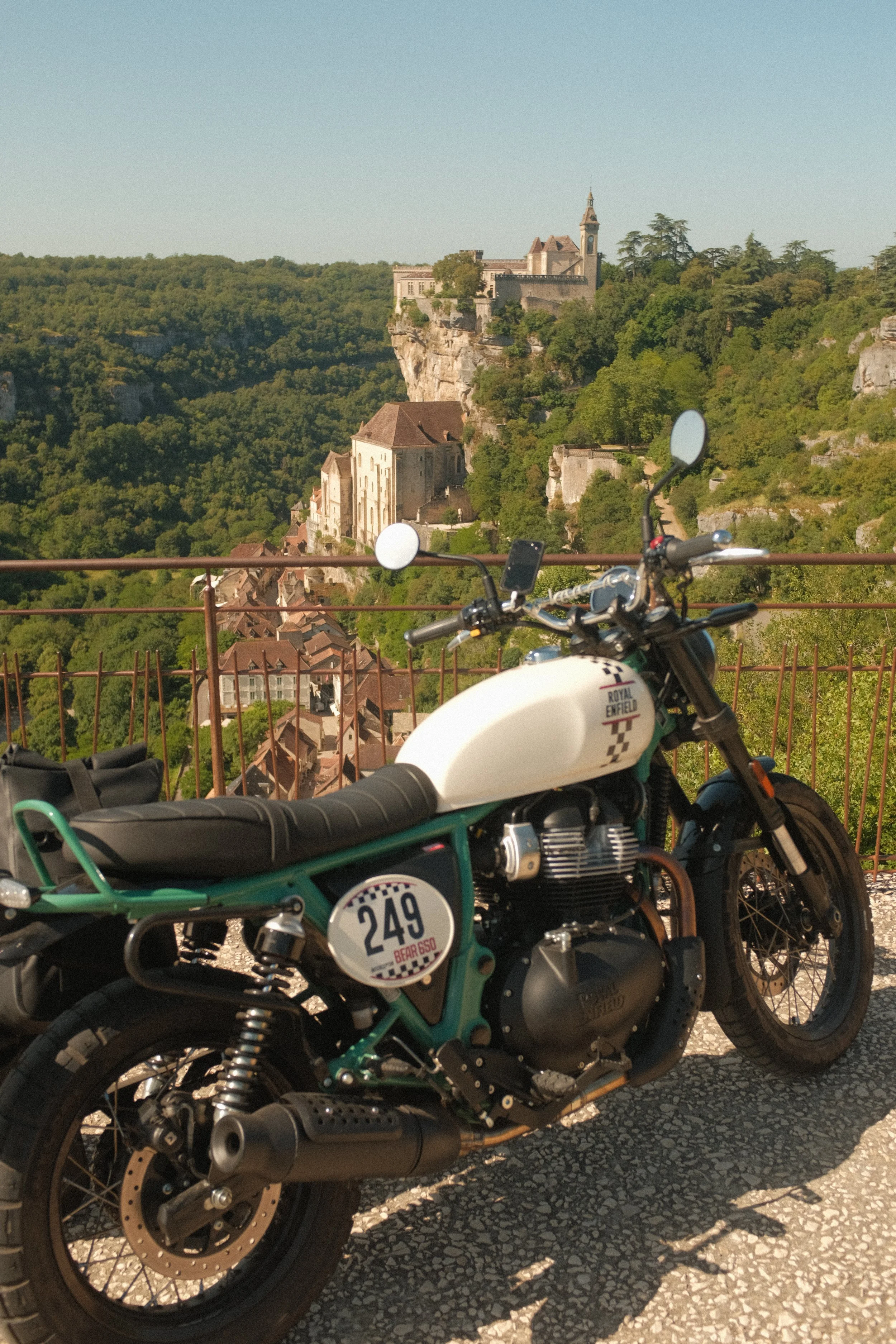
As if travelling through time wasn’t enough, I now plan to venture 103 metres underground. For this, there is only one place to go: the Gouffre de Padirac. I head to this must-see destination in the Dordogne after stopping at the Coin du Photographe, a viewpoint overlooking the vertical village of Rocamadour. As I descend into the chasm, the temperature suddenly drops from 30 to 13 degrees. I imagine explorer Edouard-Alfred Martel using nothing more than a simple rope in 1889 to descend into this gaping natural cavity and explore the galleries polished by thousands of years of erosion.
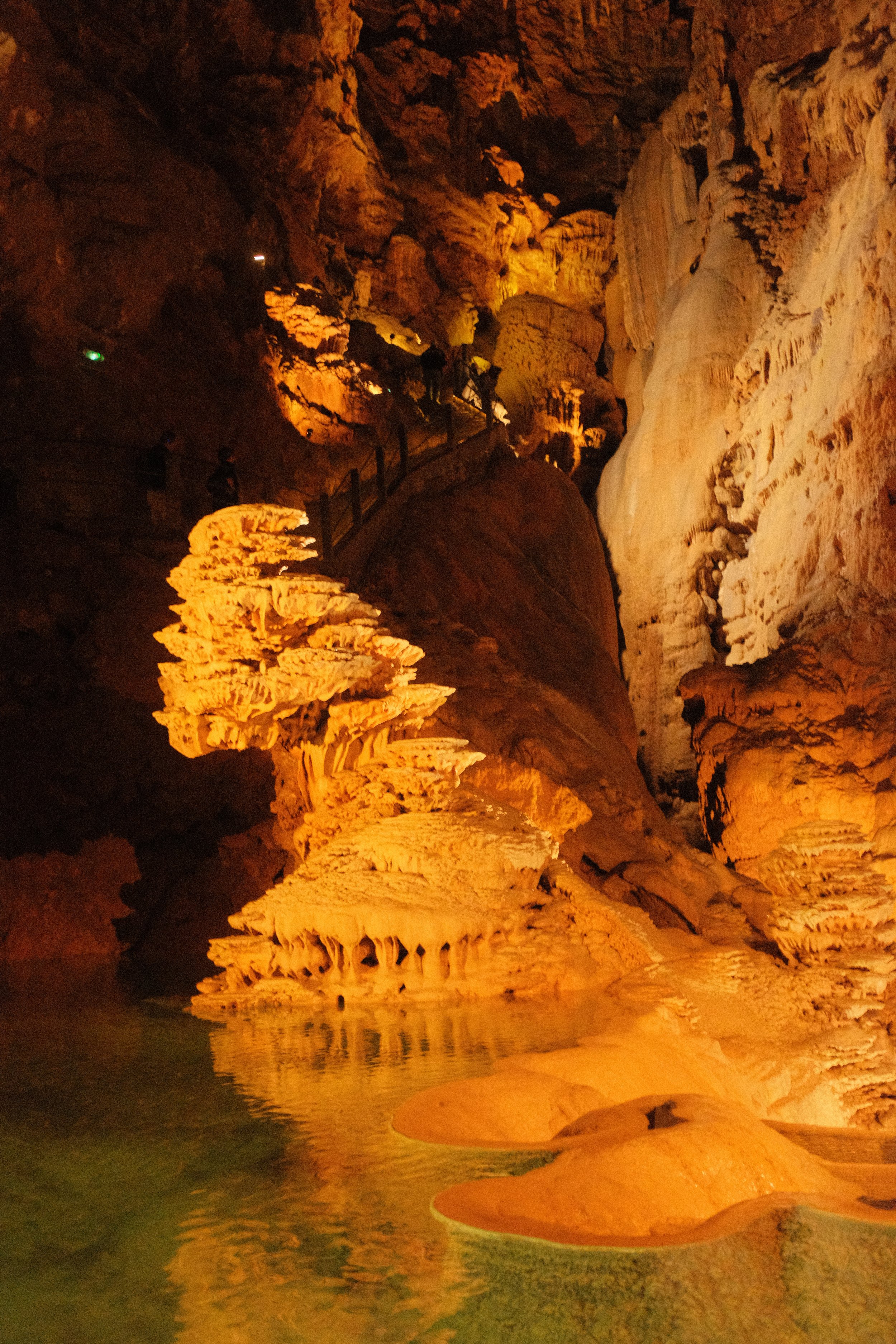
From the Source Gallery, I board a small boat and glide for more than 500 metres along the Rivière Plane before reaching the Lake of Rain, characterised by a majestic 60-metre-high stalactite. The exploration continues to the Grand Dome chamber and its 94-metre ceiling. I take the time to admire the Pile of Plates, an impressive stalagmite formed by falling drops of water. As I leave this place, I understand why more than 500,000 people visited it in 2024.
Back on the surface, I find myself under a blazing sun and in the unusual heat of a May day. It feels as though I’m making this trip in the middle of summer, although there are fewer people during the activities and on the roads. Before tackling the remaining 200 kilometres to Camping La Romiguière, I take a lunch break in the charming village of Autoire. Finishing the stage will take some time. I stop several times to quench my thirst and even slightly alter my route to favour shaded roads running alongside waterways. The final kilometres through the forest, with no traffic whatsoever, are a blessing.
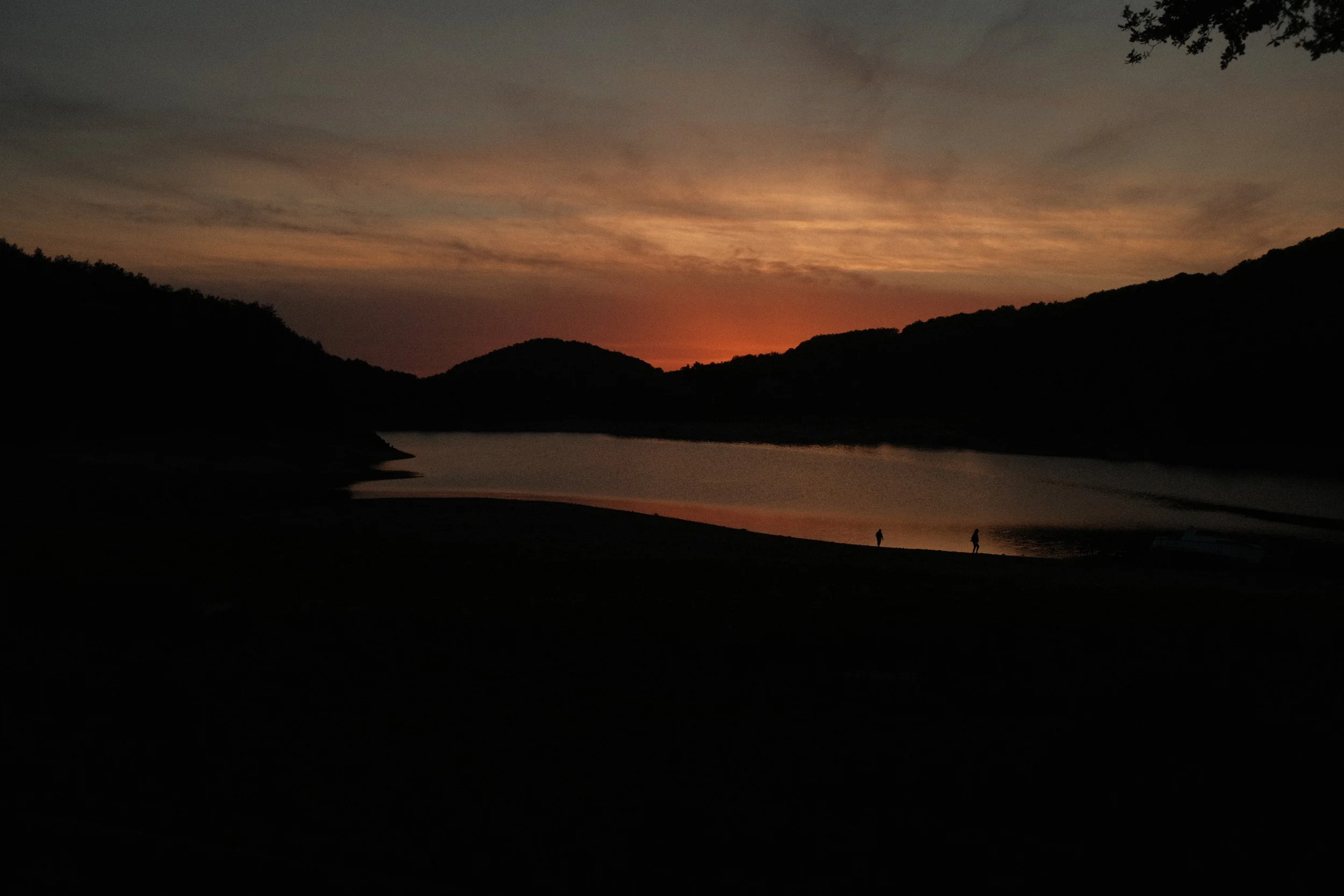
Camping La Romiguière is nestled in the heart of Aubrac, another regional natural park on my route. Set beside a peaceful lake, the surroundings are idyllic. I can fully understand Véronique and David’s decision to change careers and become the new owners of the place. David, a motorcyclist who rides a Kawasaki Versys 650, gives me a quick tour of the site while showing me the mobile home where I’ll spend the night. As the day before, I take a quick dip in the campsite pool to cool off before admiring the last rays of sunlight illuminating the lake.
© Sébastien Roux
Ahoy! Ahoy! Boatman
From northern Aveyron, I cross the Aubrac and its endless pastures. The landscapes evolve with every kilometre until I reach the magnificent Tarn Gorges. How could I not fall under the spell of the road from Sainte-Enimie to La Malène? Once again, I’m going to let myself be guided by the rhythm of the water. This time, thanks to the Bateliers des Gorges du Tarn.
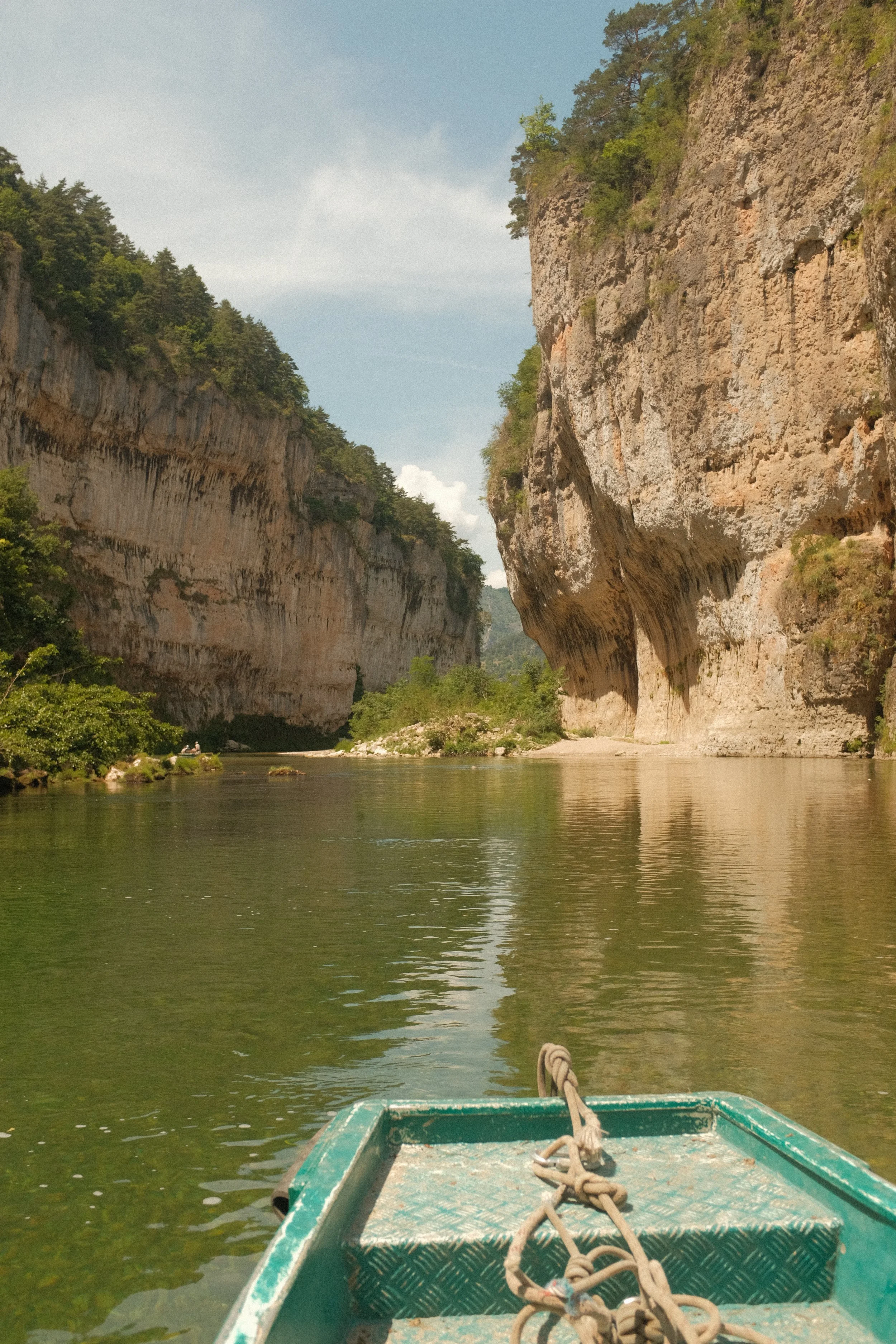
From the village of La Malène, I opt for a one-hour, eight-kilometre excursion. Fantine, my boatwoman guide, takes care of navigating while explaining the specific features of the area, including the flooding episodes that can raise the water level by more than six metres. The crystal-clear water allows me to spot the fish, while vultures soar around the cliffs. To round things off, Fantine recommends that I ride to the Roc des Hourtous for an aerial view of the Tarn Gorges.
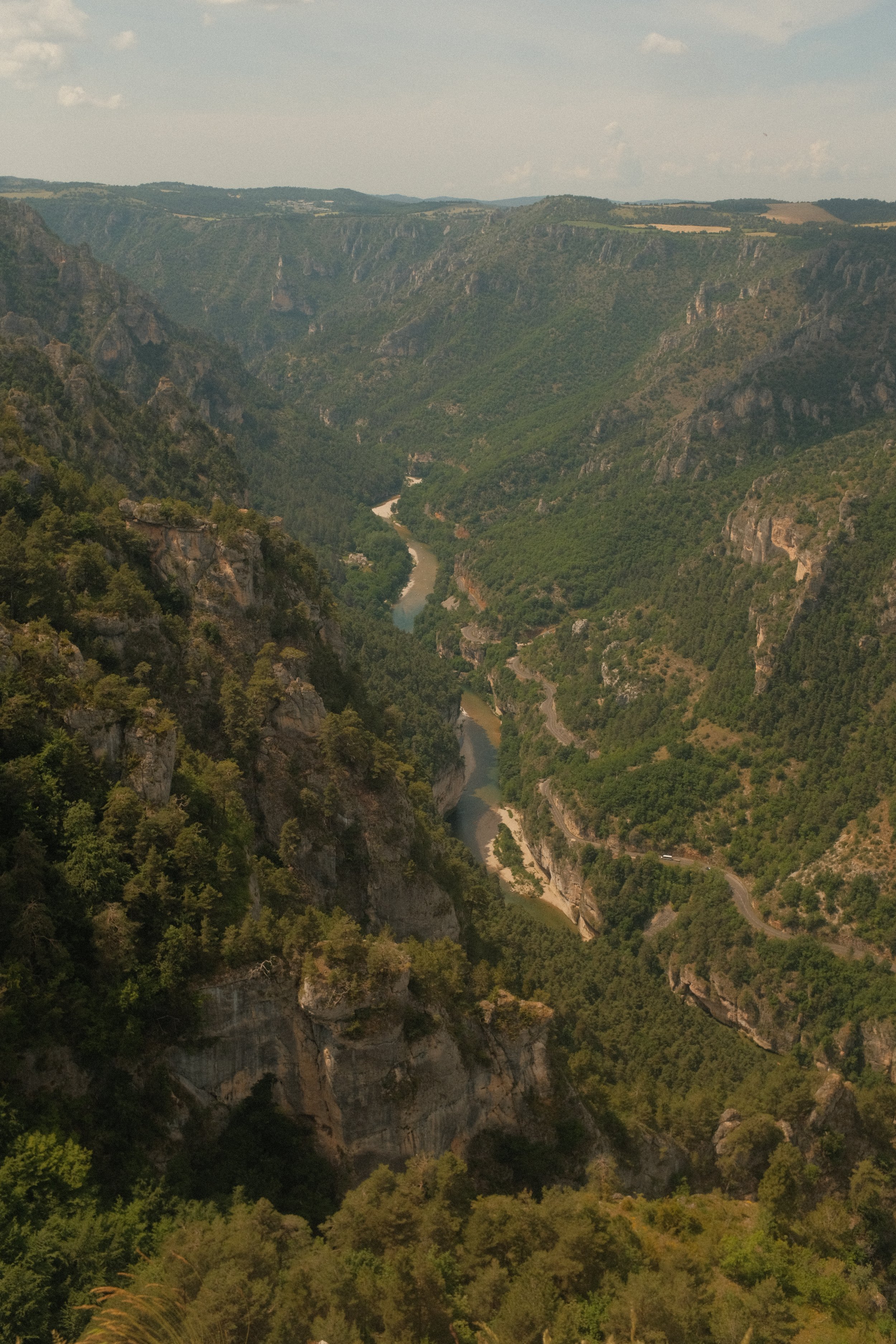
I keep to the high ground as I make my way towards one of the Cévennes’ rooftops: Mont Aigoual. Known for its weather observatory, the roads leading up to it are popular with motorcyclists. The only disappointment is that Col de la Pierre Plantée is closed when I pass through. I have to settle for enjoying the flowing descent from L’Espérou to Valleraugue, with some great sensations of speed and lean angle.
Col de l’Asclier offers a completely different experience, with a narrow departmental road that leaves little room for error. I arrive in Alès at the end of the day at the Maison du Bonheur, a guest house run by Sandrine and Denis. Denis is also a motorcyclist and rides a Ducati Multistrada V2. For the past five years, this couple has been renting out the upper part of their house. They can accommodate up to six people, with three double beds. For a group of motorcyclists looking to take day trips through the neighbouring regional parks as well as the Cévennes National Park, Alès is a central base.
Powered by My Legs
For the final day of my journey, I’ve decided to finish in style. From Alès, I make my way to my parents’ home in Malaucène, one of the starting points for climbing Mont Ventoux, known as the Giant of Provence and also part of the regional natural parks network.
I leave the Royal Enfield Bear 650 behind in favour of an electric bike lent to me for the occasion. A physical challenge awaits me: 21 kilometres of climbing, with some sections at a 10% gradient, taking me from an altitude of 350 to 1,910 metres. It takes us just under two hours to reach the summit, crowded with cyclists and motorcyclists on the last day of May. As it happens, it is also Mother’s Day. Sharing this experience with my family is the icing on the cake.
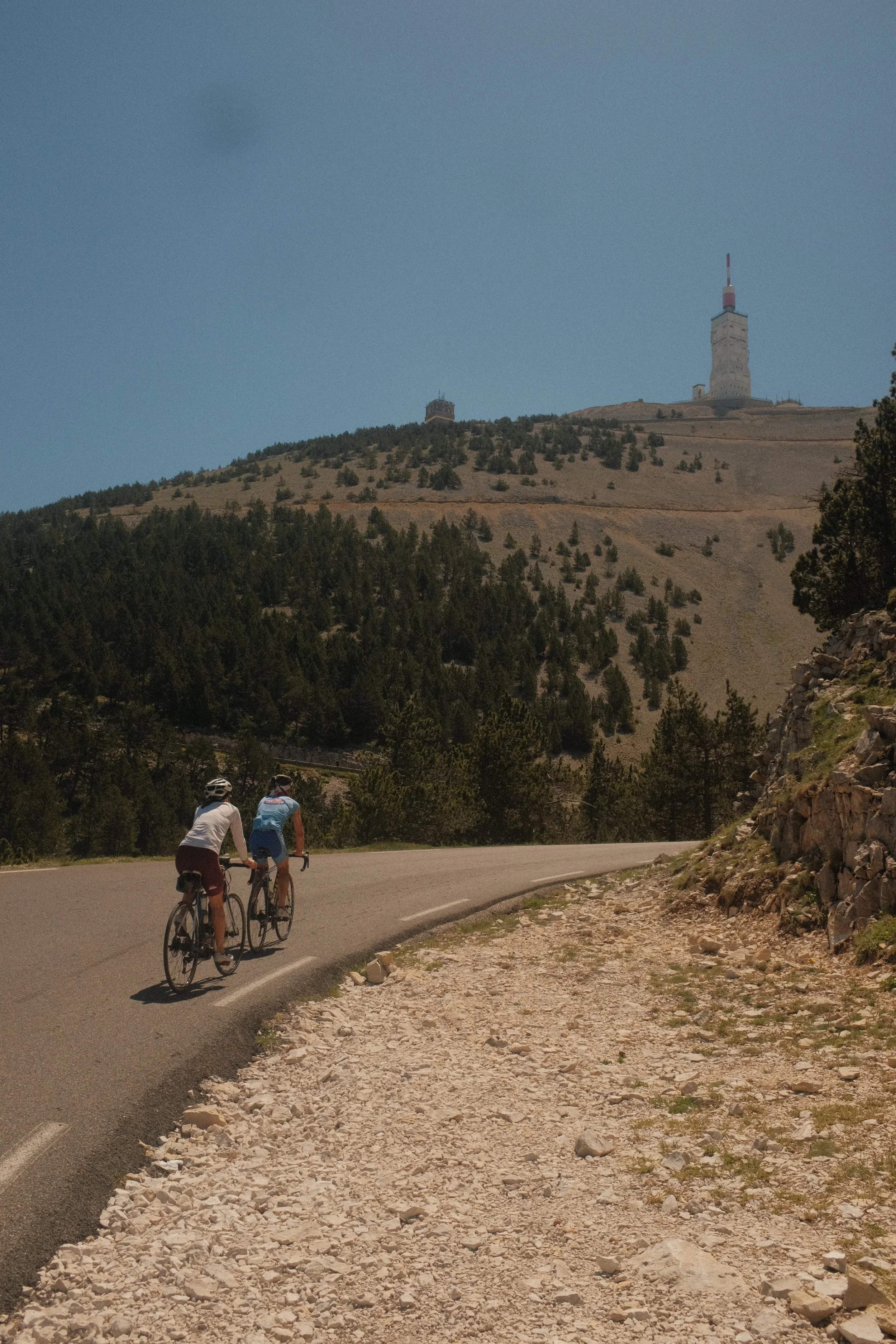
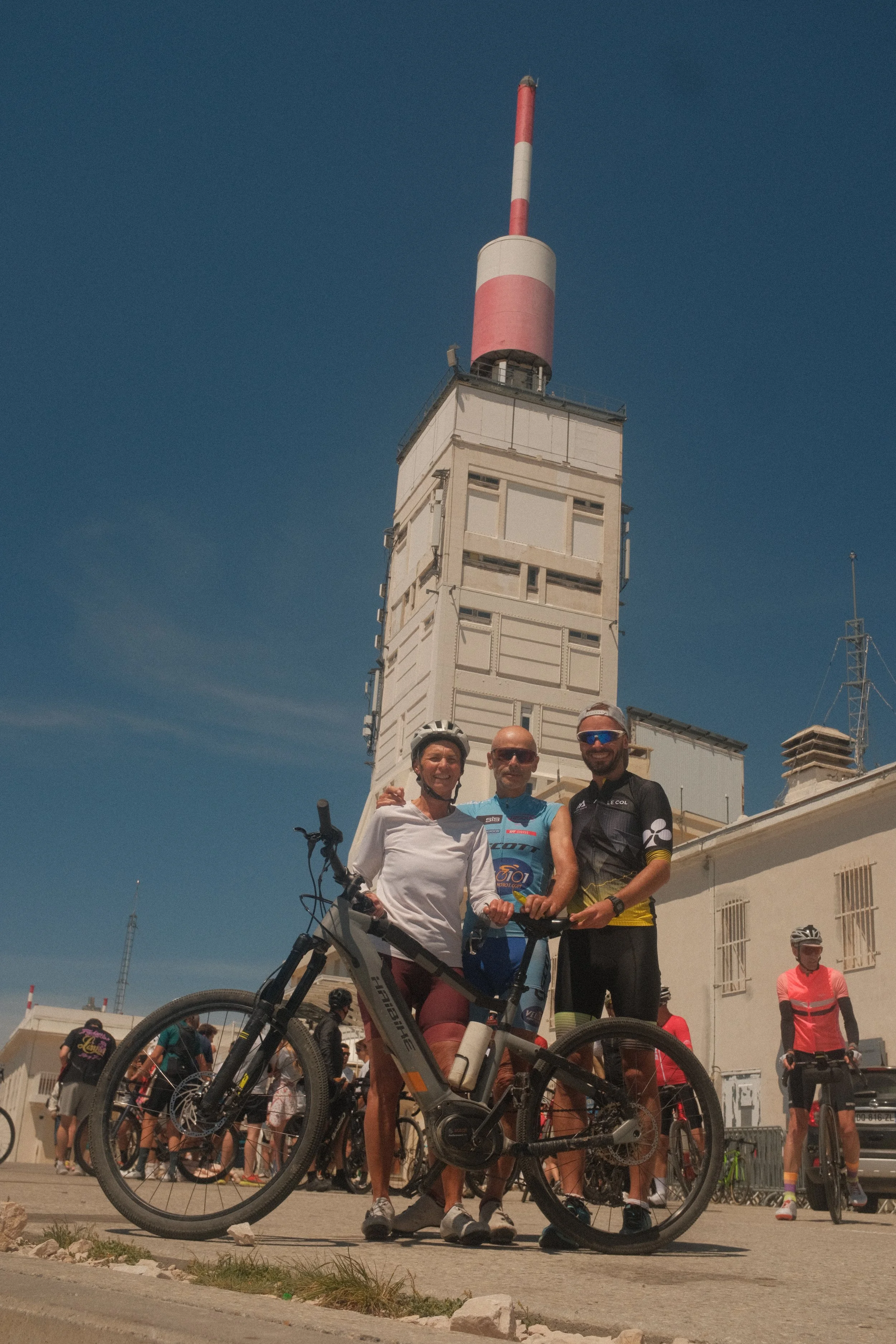
Back in Malaucène, my backside is sore but I’m happy to have completed the challenge. Back on the Royal Enfield’s saddle, I take the same road again. With the help of its engine, it takes me less than 20 minutes to make this second ascent.
Then it’s time to cross the final regional park of this two-wheeled journey: the Luberon, a crossroads of climatic influences from the Alps and the Mediterranean. I had hoped to take to the skies in Banon with a paragliding flight, but unfortunately a northerly wind had other ideas. No matter, I have no regrets, as this journey has fulfilled me in every way, whether on the roads I travelled, during the activities I tried or throughout the nights when I was able to get some proper rest.
Sweet France, dear land of my childhood, I have kept that touch of carefree spirit with me throughout the journey. Other motorcyclists may follow this 2,500-kilometre route, while some will adapt it according to their own desires. One thing is certain: as long as the engines keep running, we will continue to explore your roads in search of escape.
Sébastien Roux
Cover photo © Sébastien Roux
This travel diary was published in issue 93 of Road Trip