
Back to summary

Ep 1 - First Breath in Mexico
Faced with a bad-tempered customs officer, this journey could have gotten off to a rough start… Mexico City Airport, Monday, February 11, 2020. I’m about to travel through southern Mexico for two months, a ten-kilo backpack on my shoulders. After meeting up with my friend Alex, I devote my first day to exploring the Centro Histórico of this sprawling capital.
I. A Delicate Passage Through Customs
I move slowly forward in a line reserved for foreigners. A quick glance at my watch: noon, exactly. Outside, it’s hard to make out the planes parked on the tarmac through the glass walls—only the runway lights and the flashing beacons of service vehicles shimmer in a starless night. On the horizon, a faint glow advances, light gradually pushing back the darkness. Noon? No—just five in the morning with the time difference. Time to reset my watch.

© Ignacio Velez
Having departed from Madrid with Aeromexico, I’ve just crossed the Atlantic Ocean, setting foot on Mexican soil for the first time. My sleep was irregular—I’m not used to dreaming suspended in midair. Now with my feet on the ground, I feel energized, excited by this encounter with unfamiliar territory. Around me, hundreds of other travelers, eyes half-closed, stifle yawns and grumbles in an airport completely saturated by the (still) frantic flow of globalization.
We are all waiting for the final formality, the proof of an exotic journey: a stamp firmly pressed into a passport already dotted with similar marks. It’s my turn. The customs officer examines my passport. He takes his time flipping through the pages—slowly, very slowly, too slowly… My months-long stays in the Dominican Republic catch his attention, as do my previous trips to Cuba, Haiti, and Benin.
The officer asks me questions about the terms of my stay in Mexico: my reasons for being here, where I’ll be staying, my budget. I offer brief explanations in Spanish—not entirely fluent, but understandable. Clearly unconvinced, the man in uniform asks to see the cash and the bank card I’m carrying.
With everything that’s said about corruption in Mexico, will he discreetly help himself in exchange for letting me through without trouble? He hesitates, then, without looking at me, says in a sing-song accent: “Bueno, bienvenido a México.”
© Alexis Tostado
II. Crossing the Capital by Uber
Next stop: downtown, one of the most populous capitals in the world. With a simple click on my phone—this modern-day compass—I choose an Uber Pool. Practical and affordable: the price is shown in advance, along with the driver’s identity. Taxis still (for now) cater mostly to older generations. While stories of kidnappings in fake taxis are no longer really current, scams—or rather outrageously high fares—are still common. The choice is yours. At the cost of what many call unfair competition, Uber has reshuffled the deck of urban mobility.
On the road, a conversation starts with the driver, barely thirty, originally from Venezuela. Like many of his fellow countrymen, he chose to leave, seeing Mexico as an accessible promised land. “The situation back home is complicated, you know. Here there’s work. I drive every day—this city never stops,” he tells me enthusiastically as we sit stuck in traffic.
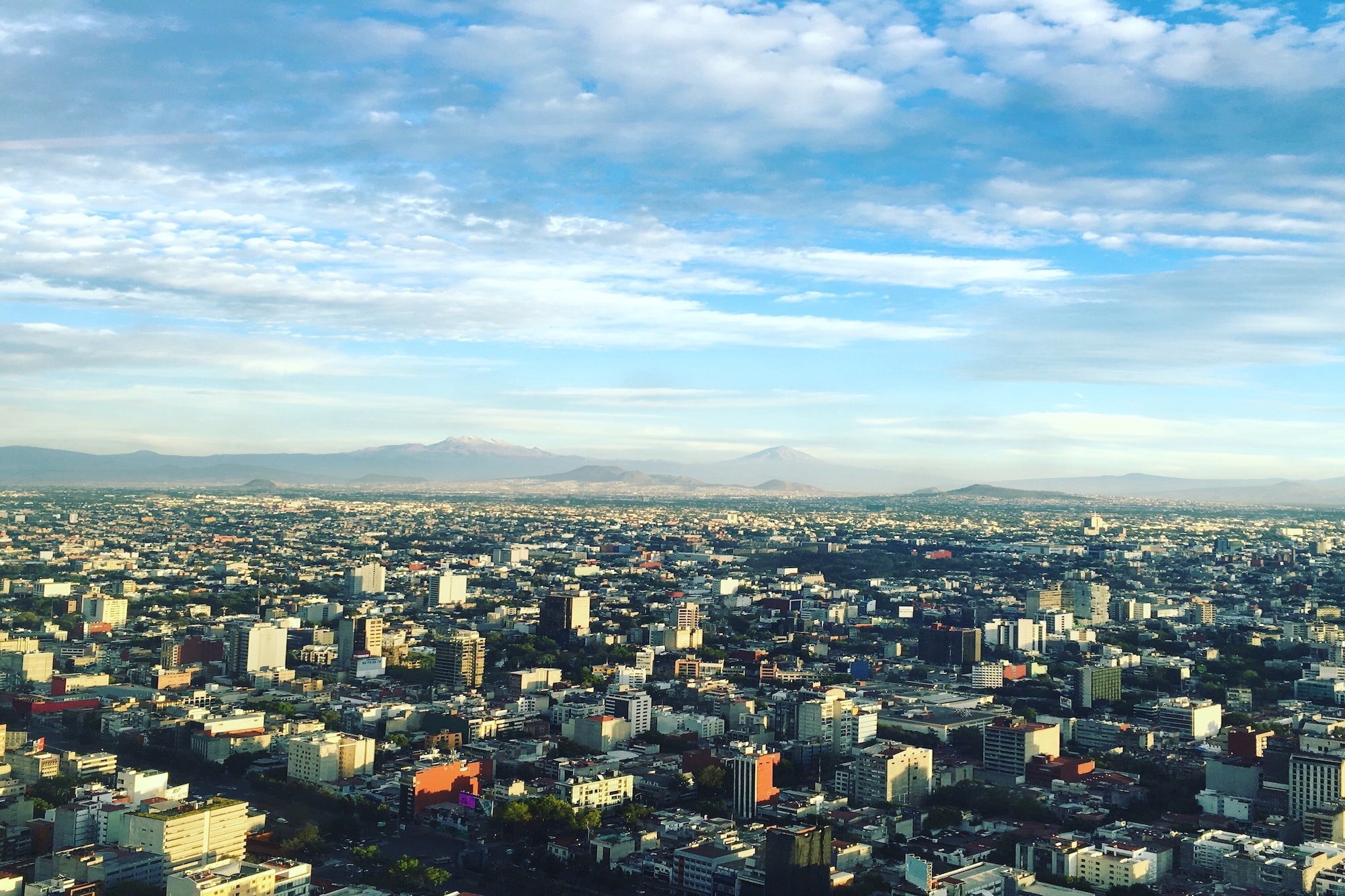
It’s nearly seven o’clock, the engine idling. In the back seat, open windows let in a gentle breeze brushing my face. The day starts well: the sun is shining under a brilliant blue sky. You could almost close your eyes and be lulled by birdsong.
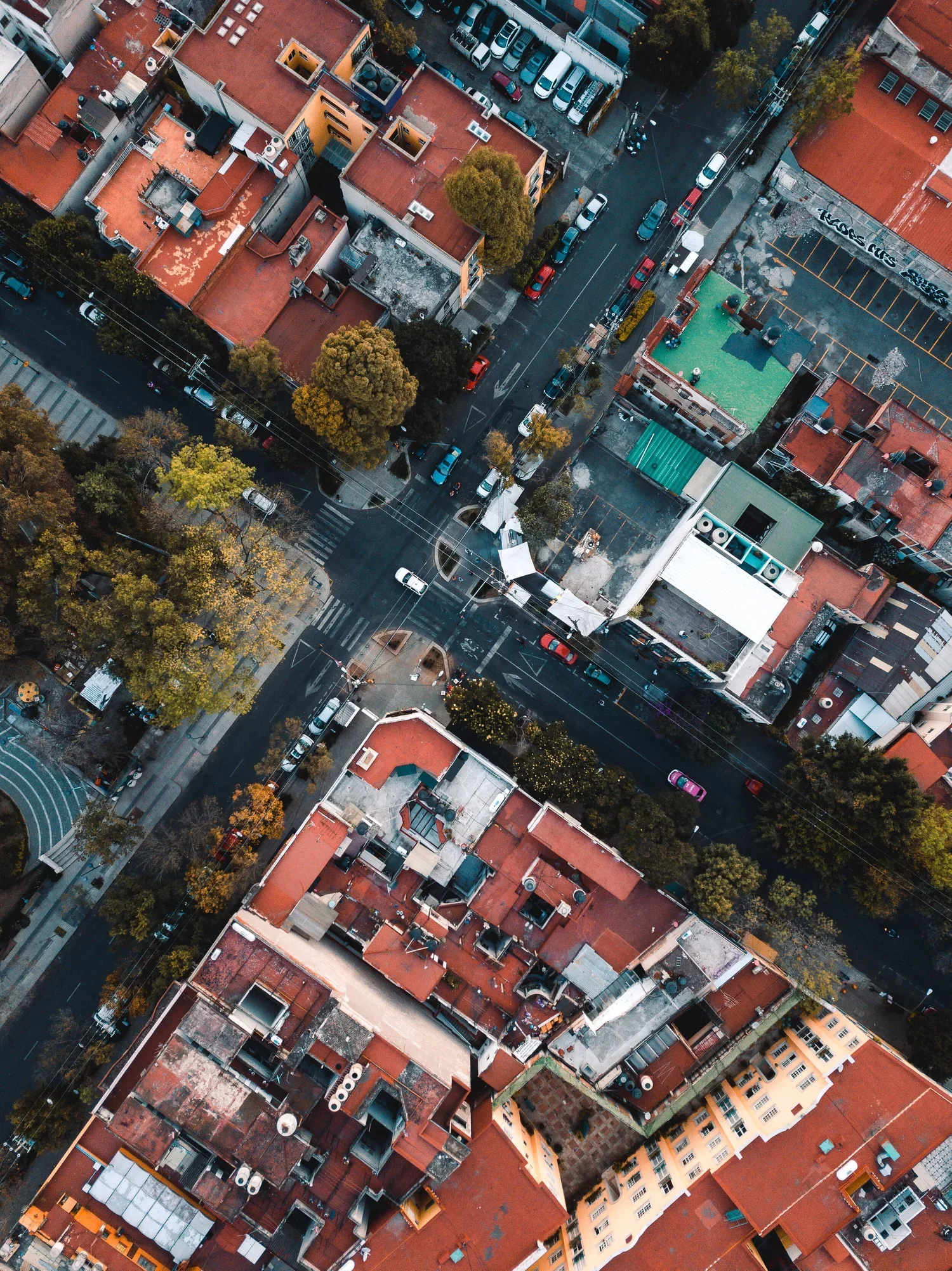
Dream on. In Mexico City, it’s horns that echo from midnight to noon, and from noon to midnight. An open-air choir where everyone performs their own score without really listening to their neighbor’s. I jot down a note in my notebook: “To find peace, get away from the asphalt.” Traffic is saturated, streets laid out in grids, vegetation scattered. Roundabouts? Nonexistent. The landscape scrolls past my eyes, meter by meter. I’m observing just a tiny fragment of this city perched more than 2,200 meters above sea level, surrounded by mountains and volcanoes in a valley called Anahuac.
Built on a lake that has since dried up, the megalopolis is home to 22 million people and 5 million vehicles during rush hour. In 2019, Mexico City ranked as the 13th most congested city in the world. As a direct consequence, its residents—nicknamed Chilangos—lose an average of eight days and three hours each year stuck in traffic.
© Postandfly
Colonia Del Valle, first stop
Alex, a French-Mexican interior architect, welcomes me with open arms. I haven’t seen him in years. It doesn’t matter—time can’t erode a true friendship. I met him in 2015 in Aix-en-Provence during my first year of my Master’s degree. We were living in the same student residence back then. His simplicity immediately appealed to me.
As a welcome gift, he prepares a local specialty: the Mexican omelet. Take eggs, add tomatoes, cilantro, onions, and of course chilies. To complete the plate, place a purée of red beans and nopales—pieces of green cactus—next to the omelet. With a bit of imagination, you get the colors of the Mexican flag and a subtle blend of flavors. Mexican cuisine: simple, yet remarkably effective at restoring energy and filling your stomach.
My choice of Mexico is partly due to Alex’s presence in the capital. With experience, I’ve come to understand the importance of having a home base when arriving in an unfamiliar country. For a week, he hosted me in his apartment. Beyond sharing good moments together, I was able to calmly prepare the next stage of my journey.

© Frederik Trovatten
III. Visiting the Historic Center
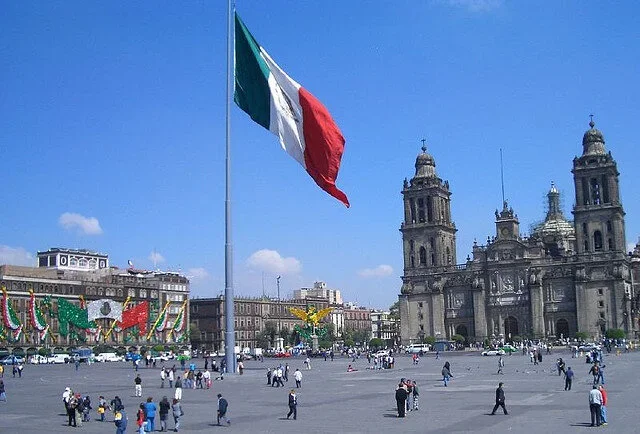
Everything has flowed seamlessly since clearing customs. It’s nine in the morning, and I finish enjoying the Mexican omelet Alex cooked before he heads off to work. I decide to go to the Centro Histórico, best known for its Zócalo—Constitution Square. A vast concrete expanse (240 by 195 meters) listed as a UNESCO World Heritage site. In a city that stretches endlessly, emptiness fascinates—but fills quickly. A symbolic place, the Zócalo is a point of convergence for onlookers, tourists, and protesters ready to take to the streets. During my stay, a major demonstration will take place to denounce the wave of femicides in Mexico. For Brut, reporter Charles Villa covered the event.
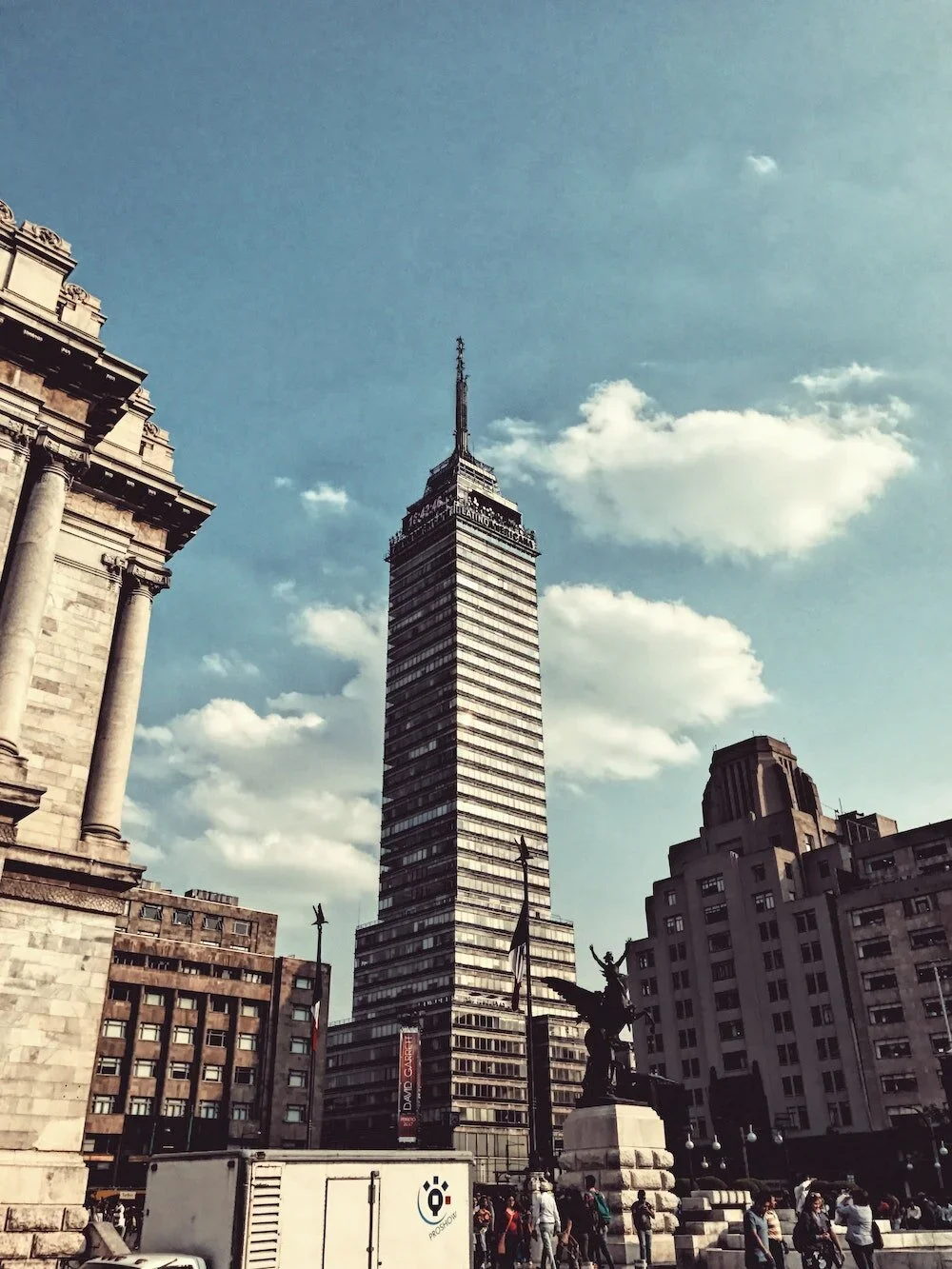
I decide to gain some altitude to see the Zócalo from another perspective. Heading to the Torre Latinoamericana and its 44 floors. Near the top, at 183 meters high, I’m rewarded with a 360-degree view of the city. What I see is a sprawling monster, stretching endlessly in every direction.
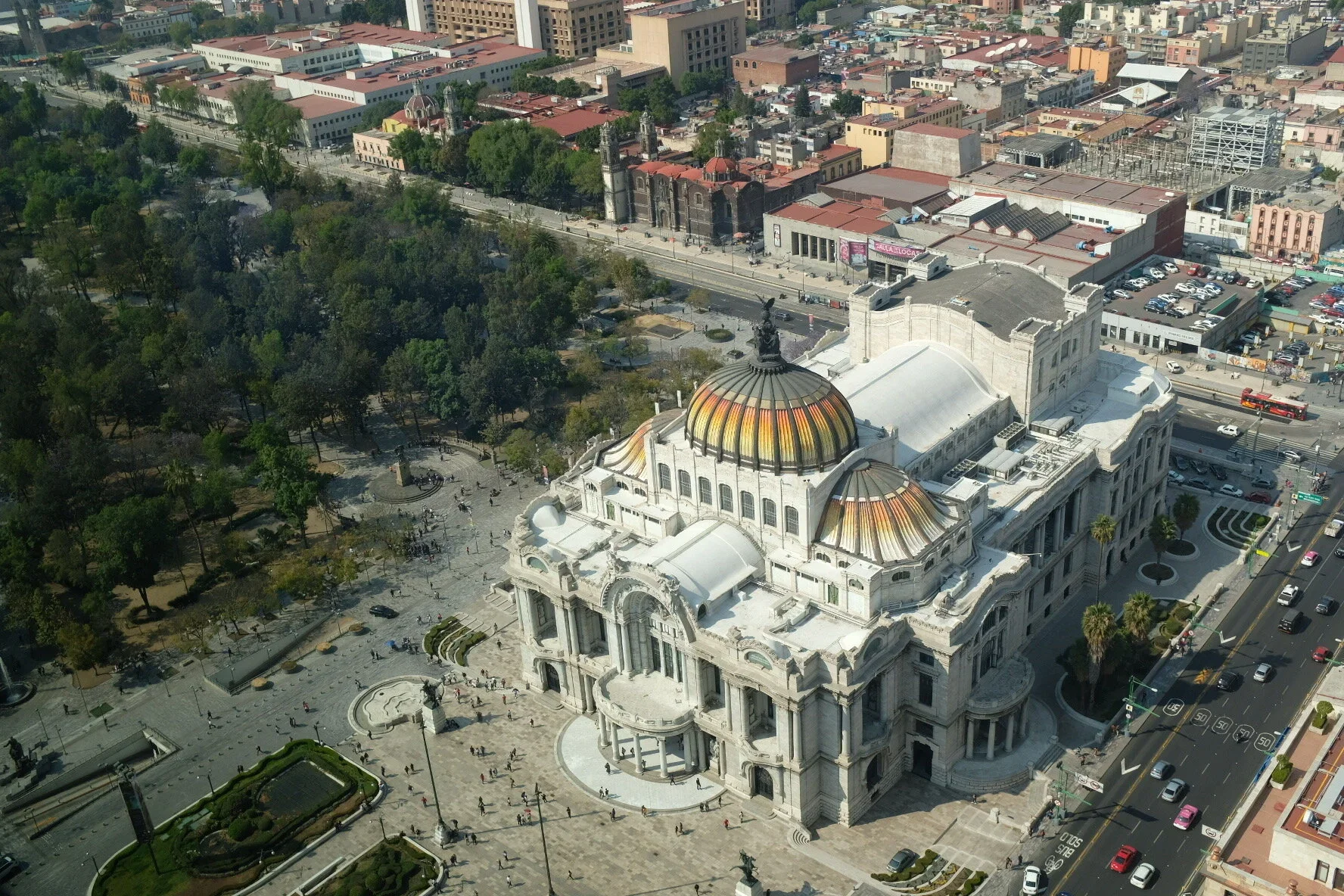
At the foot of the tower lies Alameda Park. Its diamond-shaped gardens and countless fountains soothe me, as does the Palacio de Bellas Artes, an architectural gem.
At the other end of the park, a less aesthetic building catches my curiosity. At the José Martí Cultural Center—named after the founder of the Cuban Revolutionary Party—an exhibition glorifying Fidel Castro is on display. No need for introductions, right? Several paintings perpetuate the romantic image left by 82 guerrillas, including the Castro brothers and Che Guevara, who departed from Mexico in November 1956 aboard the Granma to conquer, through sheer determination, the pearl of the Caribbean. The rest belongs to History—complex and ever-shifting.
Sébastien Roux
Cover photo © Jorge Aguilar