
Back to summary

Ep 4 - Gaining Altitude in Puebla
In the state of Puebla, I plan to gain altitude and immerse myself in nature. First stop: Cholula, a small artistic, trendy, and colorful town. Then I begin the ascent to the summit of La Malinche at 4,420 meters above sea level. Finally, I explore Cuetzalan, a colonial village where I attend the danza de los voladores.
I. Detonations Echo
The kilometers separating Mexico City from Puebla are swallowed up by shattered roads. It must be said that the bus driver doesn’t really try to avoid the potholes. Instead, he relies on the flexibility of his shock absorbers and the firmness of our buttocks. An arid landscape rushes past the windows. The engine’s roar reverberates inside the vehicle while the smell of gasoline fills my nostrils. I savor the pleasures of second class for what they are.
As soon as I arrive, I head to Cholula, a city adjoining Puebla, to meet Efrain. This 24-year-old Mexican student generously offers me a room in a huge shared house mixing several nationalities. Couchsurfing truly holds many surprises. The concept of this platform is simple: you fill out a profile like on Facebook, then ask to stay with locals or simply meet them. Unlike Airbnb, there is no monetary exchange. Everything is based on trust. The idea is to share a good moment and create travel anecdotes.

© Carlos Aranda
Night has fallen; it’s time for dinner. In the kitchen, the television is on. National news scrolls by: drug cartel score-settling, a new wave of femicides, corruption problems… nothing very uplifting, to say the least.
In the distance, out on the street, I hear a detonation, followed by another. I look at Efrain questioningly. “Gunshots outside? Ahhhhh, it must be the narcos shooting at each other again,” he says, looking at me before flashing a mischievous smile. That smile gives it away—Efrain is messing with me. The “gunshots” are actually a local custom in this city famous for its countless churches. Daily detonations in honor of the saints. No bells ringing in the sky, just firecrackers.
Cholula, or how to put a church on a pyramid
What can be said about Cholula? A small, artistic, trendy, and colorful city. I wander through its streets from top to bottom, using the central square—the famous Zócalo found all over Mexico—as my reference point. I lose myself among the thousand and one flavors of the markets, whether outdoors or inside gigantic warehouses. There’s something for everyone: fresh fish (at least, I think so), grilled meat, assorted vegetables, and unlimited sweets. I notice that in Cholula, buildings do not exceed two stories. Everything is designed so that the main monument remains visible to all: the Great Pyramid of Cholula, topped by the church of Nuestra Señora de los Remedios.
This pyramid truly lives up to its name. Before me stands the largest monument in the world built by humans. A glance at its dimensions: a base of 16,000 square meters, the equivalent of nine Olympic swimming pools. By comparison, the Pyramid of Giza in Egypt is four times smaller than the one in Cholula.
This “artificial mountain” is embedded in the plain, making it hard to grasp its true size without looking at a scale model of the site. The builders would have taken roughly a thousand years to complete the structure. Five centuries later, Catholic conquistadors arrived, saying: “Nice! What if we put a church on top to assert our authority?” Moral of the story: humans always want to rise toward the heavens—most of the time by erasing whatever casts a shadow over them.
© Victor Moran
II. Eyes Turned Toward La Malinche
Three days after my arrival, I start feeling restless. Climbing a summit over 4,000 meters high? Why not. With three Mexicans my age? Even better. A French woman who studied in Puebla gave me the contact of one of her friends, Omar. We exchanged a few messages, and the connection was immediate. We set a date, and that was that.
My first 4,000-meter peak. I do some research to avoid unpleasant surprises. Altitude sickness? Take a few days to acclimatize, drink water regularly, walk at your own pace, and get a good night’s sleep the night before. I check the first three boxes—not the last one.
A problem with the room Efrain is lending me? Yes and no. I decide to change places the day before the hike. The reason? The room is next to the living room, where a Scandinavian student’s birthday party is planned to last all night. I fear a sleepless night.
Without hesitation, I contact another person on Couchsurfing who can host me in Puebla. Bingo. I thank Efrain for his hospitality and explain the situation. He even offers me another room, farther from the living room. But my decision is made. I politely decline—I want to move forward and discover a new place.
So I arrive in Puebla and meet Arturo and Pepe. The first is a biologist; the second is an entrepreneur aiming to reduce water pollution. I don’t know it yet, but this meeting will be the starting point of a report.
A quick tour of the apartment reveals there’s no bed for guests. Yes, that’s also part of Couchsurfing’s charm—sometimes you sleep on the floor, on a more or less thick mattress. But their welcome is so warm that I quickly forget this detail. We spend part of the evening eating homemade tacos, fixing the world, and trading jokes. Even though the night is short and we wake up at dawn, I’m fired up, excited to climb a symbolic summit: La Malinche.
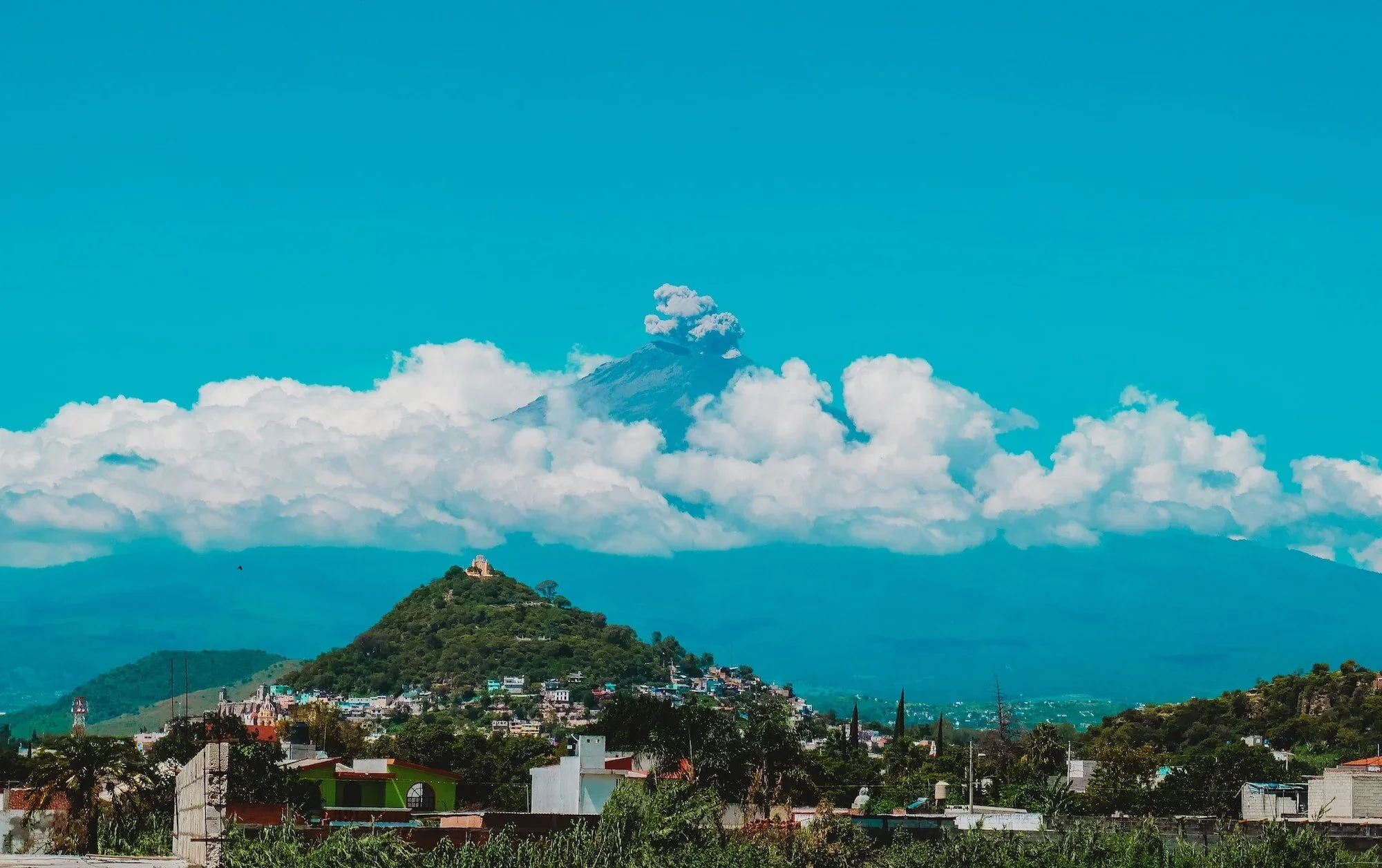
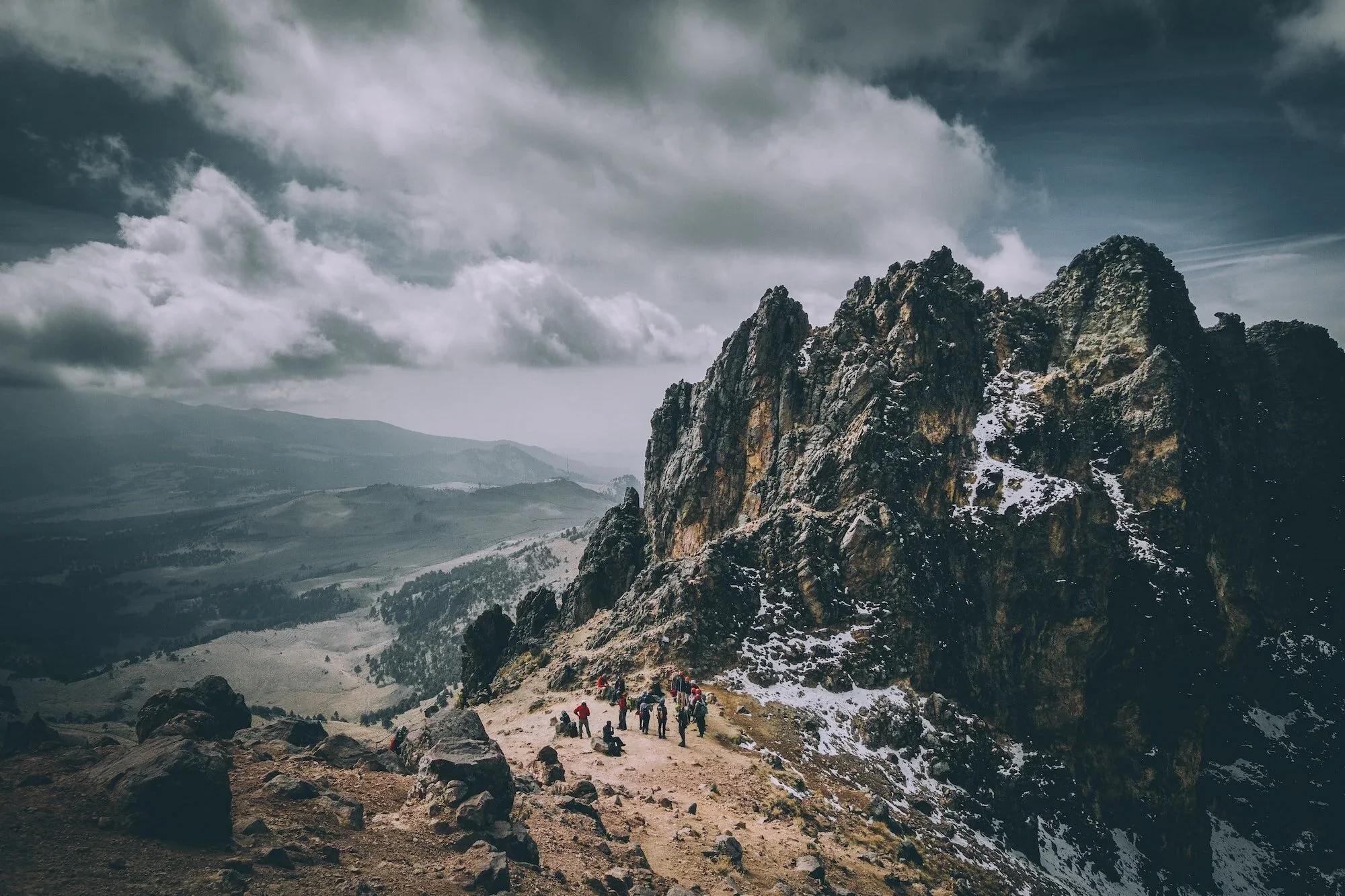
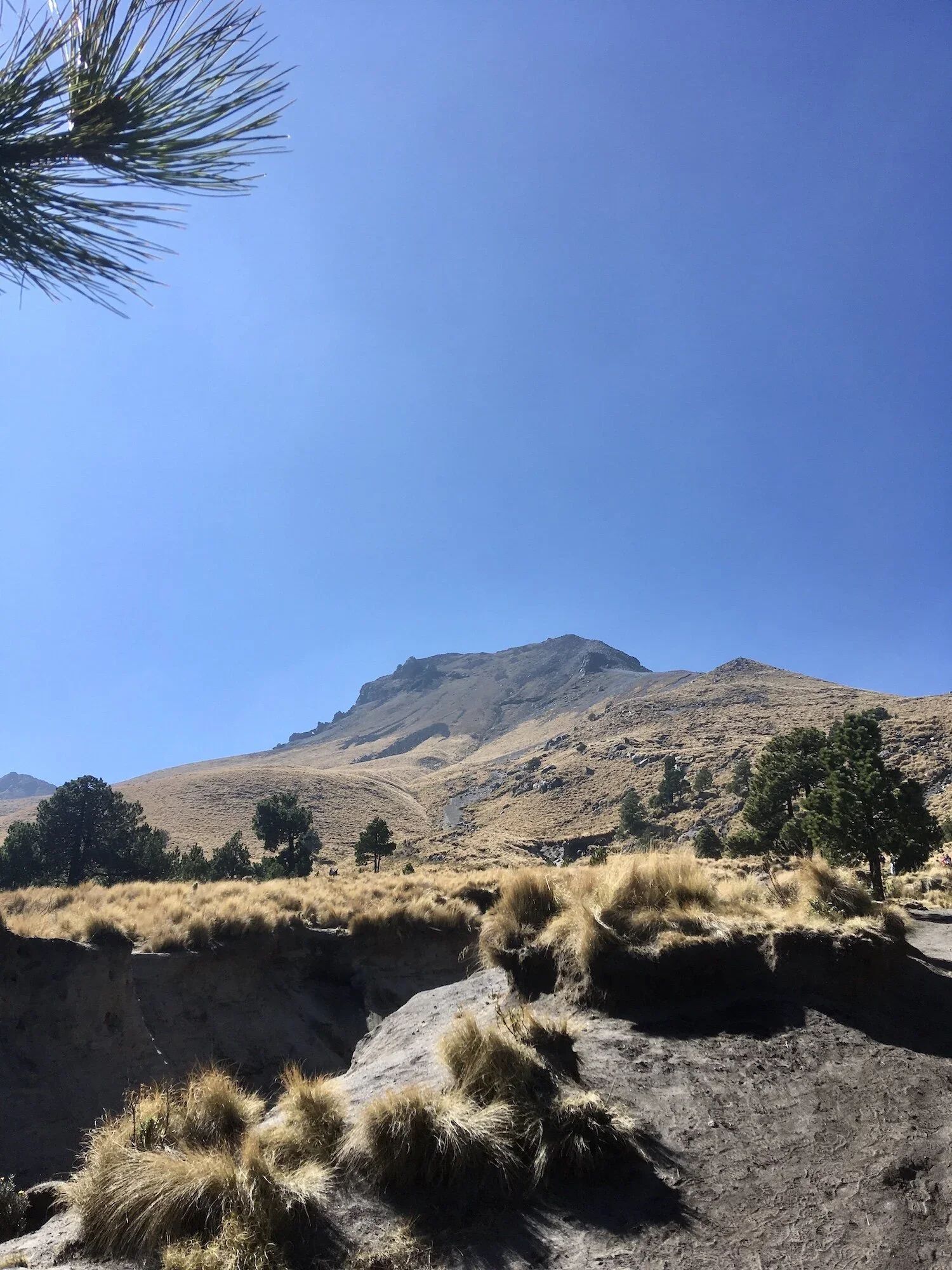
You should know that Puebla sits at 2,160 meters above sea level. The city is surrounded by three volcanoes: Popocatépetl (still active, 5,426 m), Iztaccíhuatl (5,215 m), and La Malinche (4,420 m). The first is strongly discouraged—or even forbidden—due to eruptions and the white smoke rising from its crater. Reassuring. The second is possible but requires mountaineering equipment, including a helmet and crampons. So naturally, we choose to climb La Malinche.
Its history is also unusual. Originally, La Malinche was an Indigenous woman, enslaved by the Maya before being offered to the Spanish conquistadors at the beginning of the 16th century. She became the mistress of Hernán Cortés, leader of the first expedition to Mexico—but also his interpreter and advisor in conquering this vast land. Best not to anger her.
Today, she is seen by some as a symbol of betrayal, by others as a willing victim, or as the symbolic mother of the modern Mexican people alongside the Virgin of Guadalupe. In any case, a mountain bears her name—and that is no small thing.
Toward the summit of La Malinche
After about an hour’s drive, the hike begins at 3,100 meters above sea level. While Omar is used to walking, his two friends struggle more. Reaching the summit will take us about three and a half hours. On my side, the ascent goes smoothly. My lean body and physical condition allow me to lead the way. We avoid talking too much to manage our breathing—we’ll have time during breaks, at the summit, or on the way down.
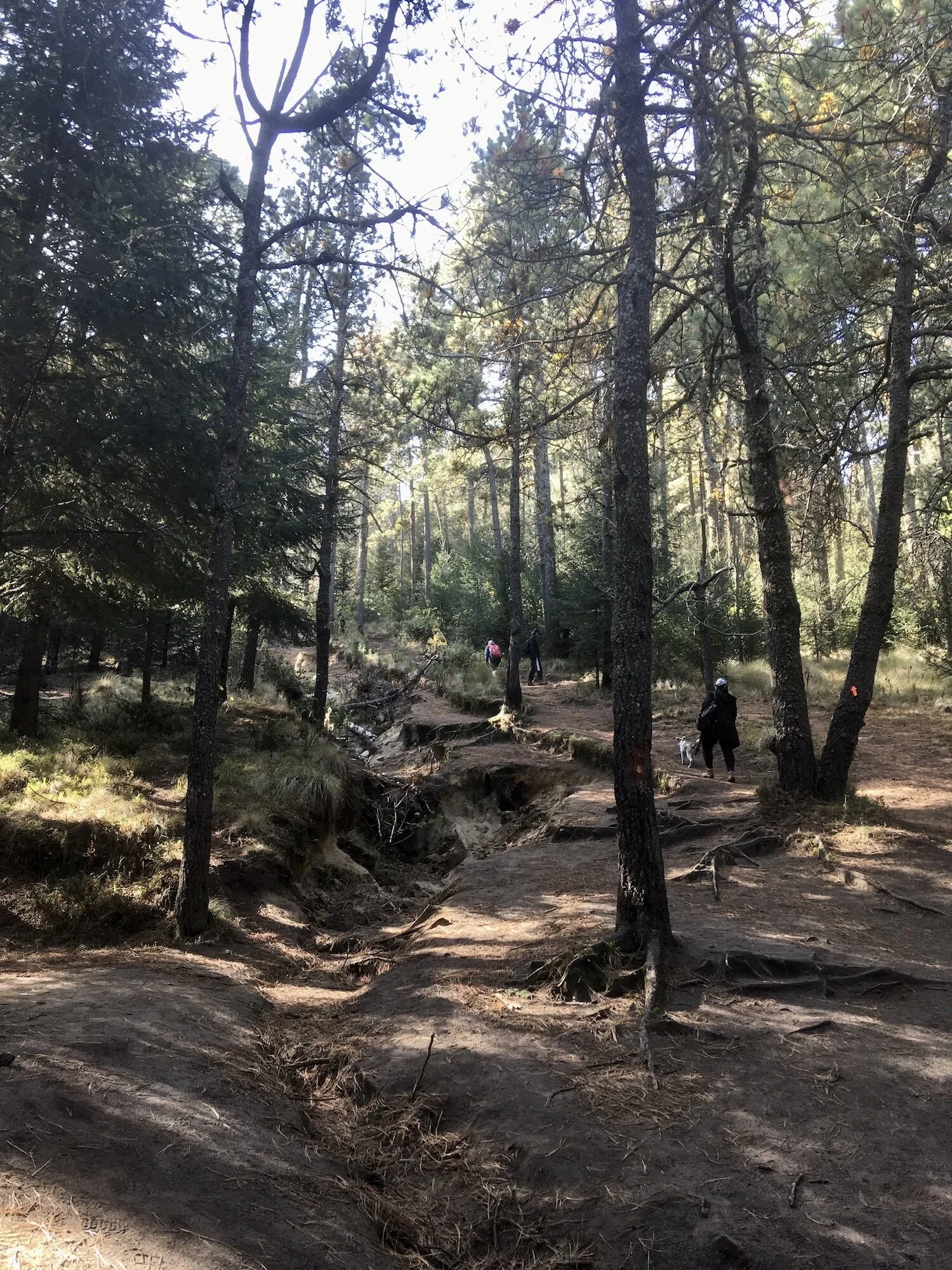
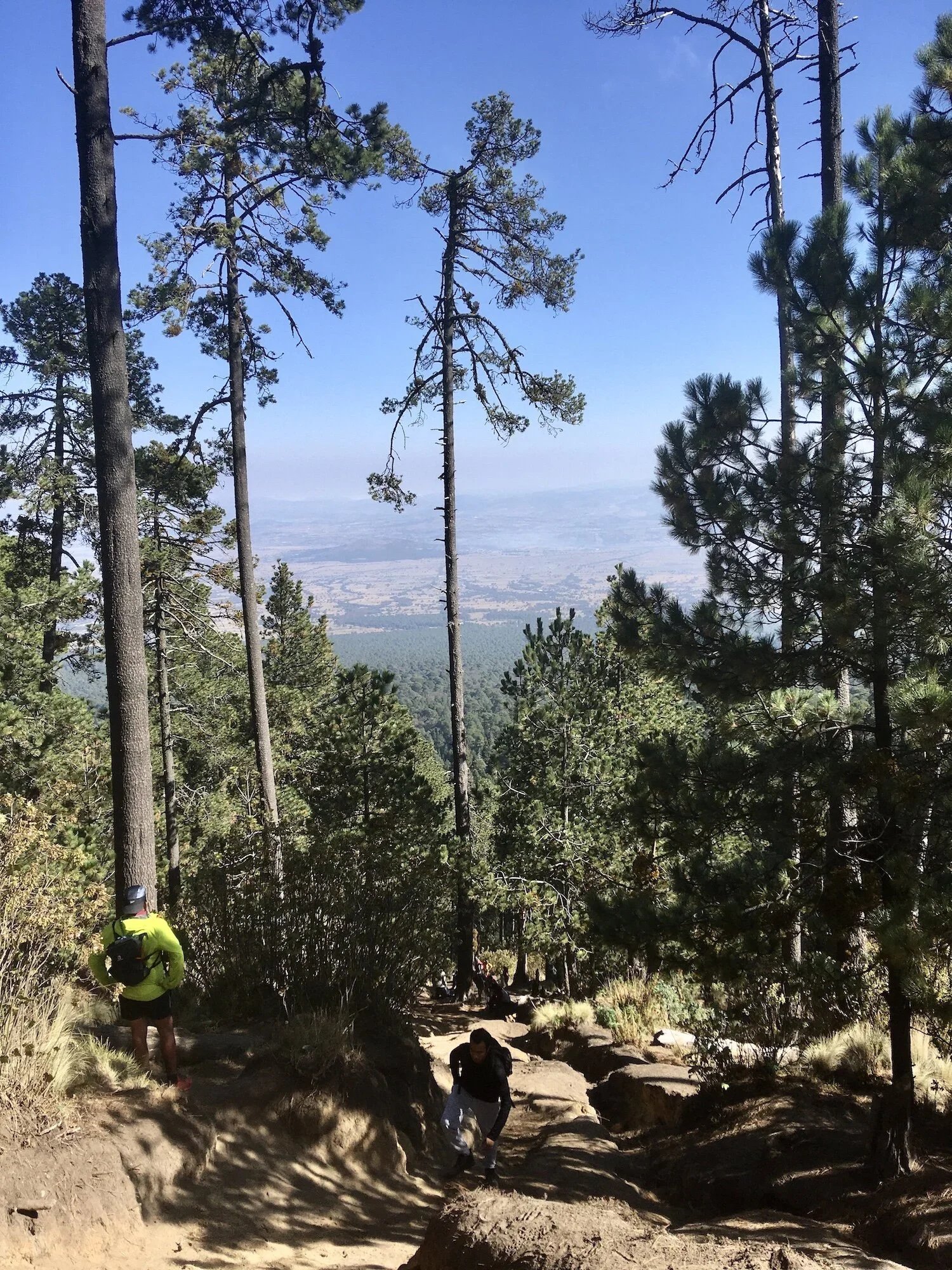
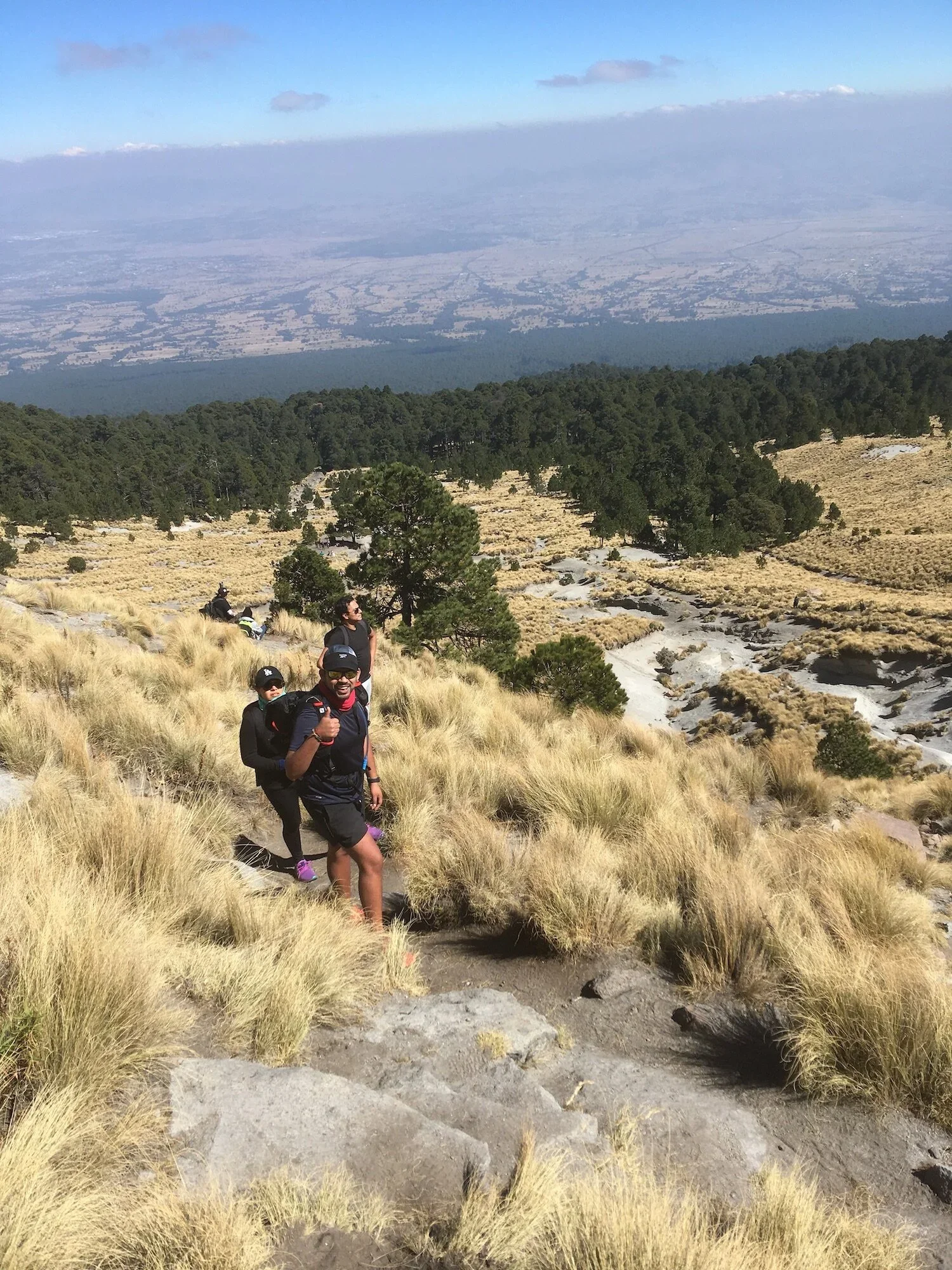
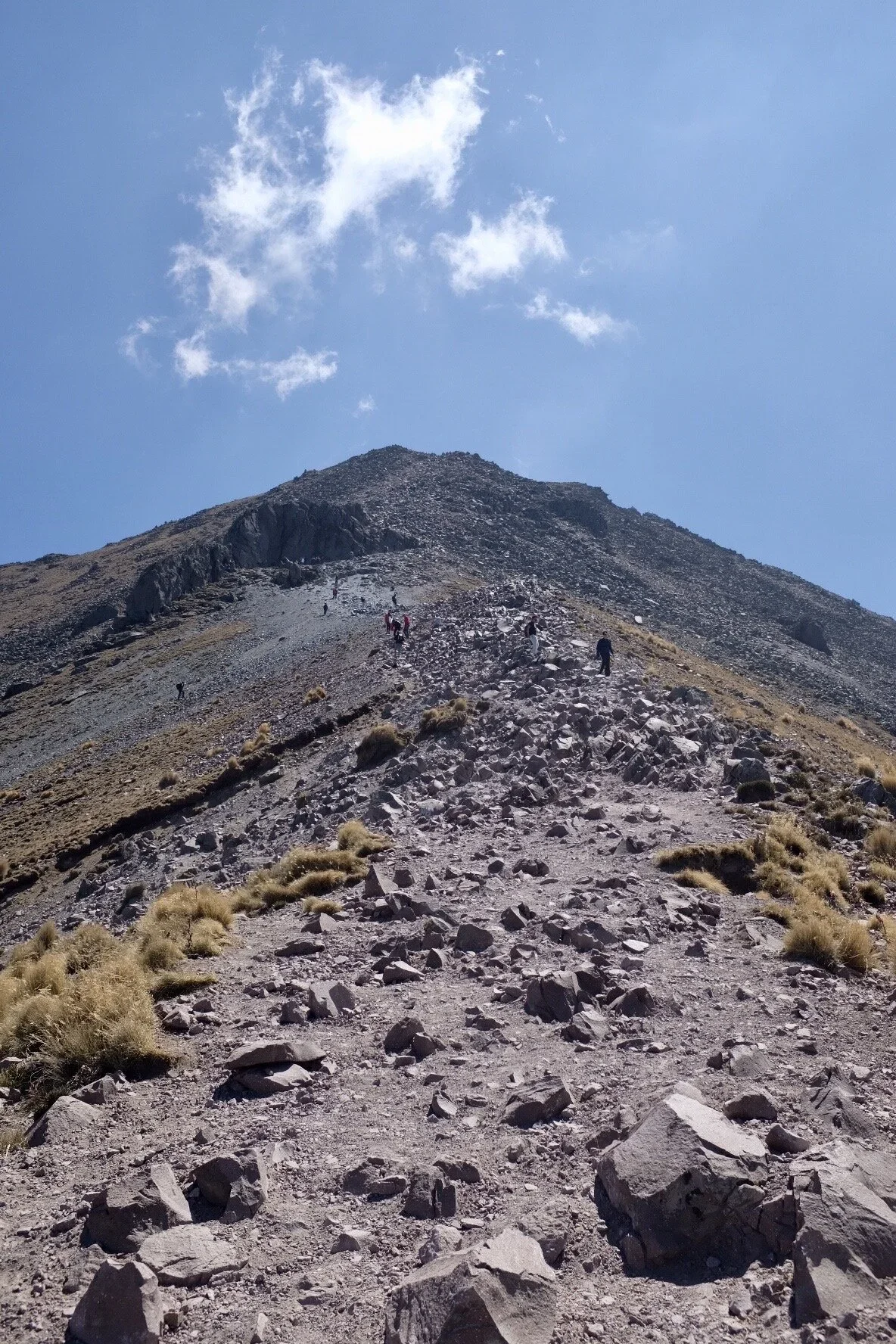
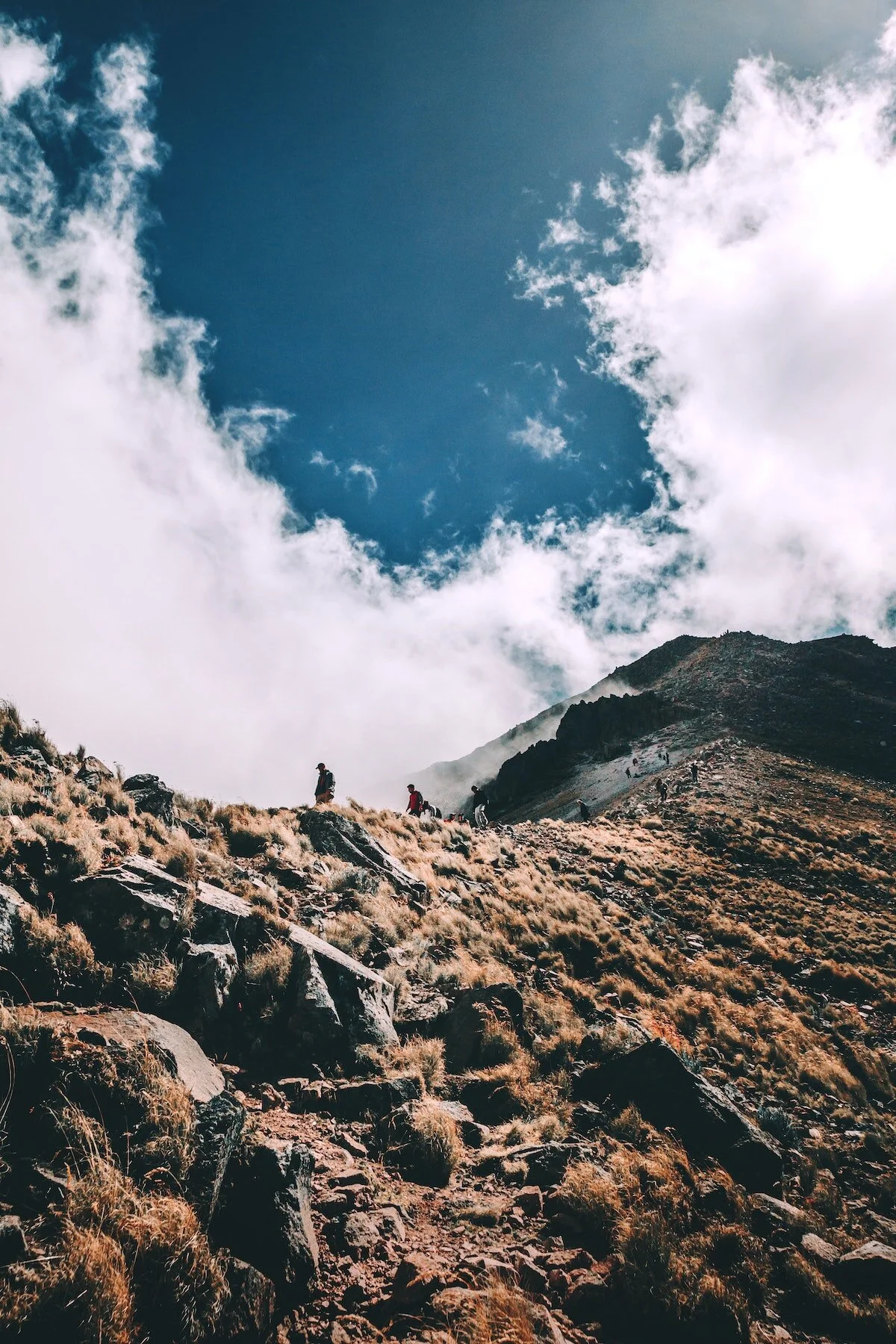
The approach passes through a forest of tall trees stretching several meters high. The air is cool; pants and a jacket are welcome at the start of the climb. The trail is steep and doesn’t bother with switchbacks. The warm-up is ideal. Once the trees’ shade disappears, the summit comes into view. We cross fields of tall grass. I change clothes—a pair of shorts gives me more freedom of movement. Then comes the final stretch: unstable rocks leading to the summit.
This hike reminds me of one in the Alpes-de-Haute-Provence: L’Estrop. Although the summit is lower (2,961 m), the elevation gain and the terrain are similar. In any case, the hike does me good—better yet, it clears my mind. Once all four of us reach the top, there’s that shared joy: “No mames, güey, aquí llegamos!”
which can roughly be translated as: “Don’t suck me, dude—we made it!” Ahhhh, the sweet poetry of local expressions.
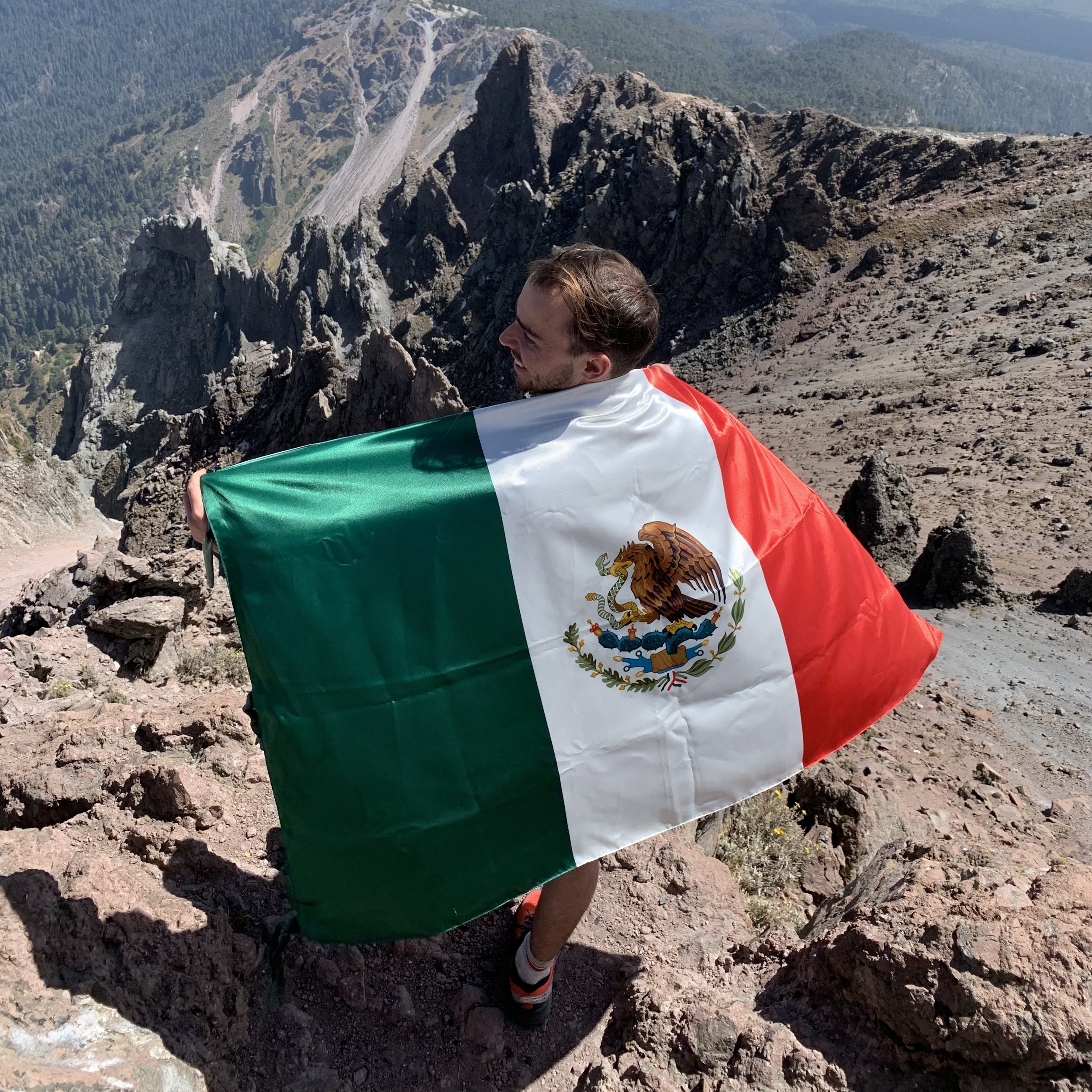
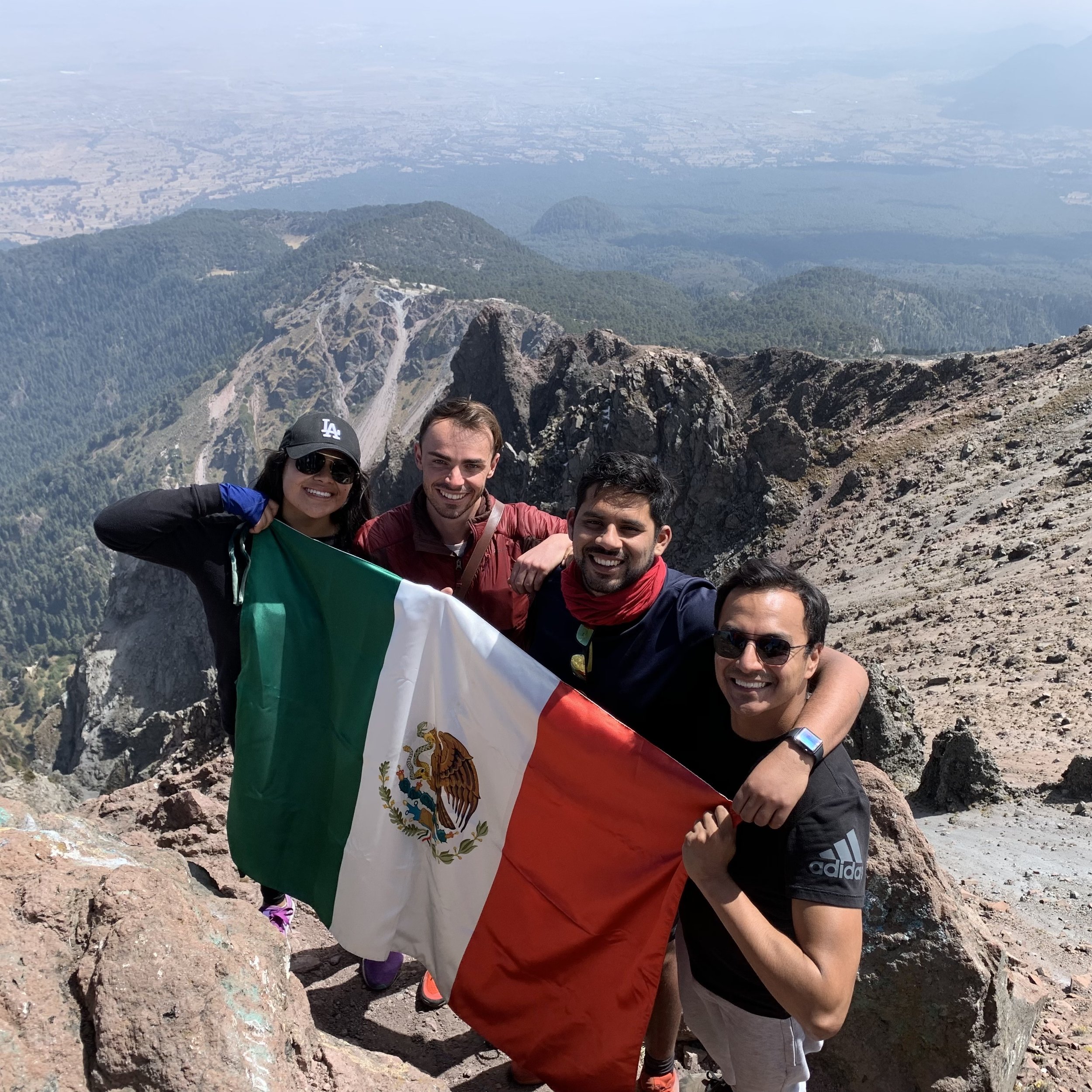
We immortalize the moment with a photo of the four of us holding the Mexican flag. Magical. Before heading toward Cuetzalan, we still have to descend the slippery rocks of La Malinche. Not everyone adopts the same strategy: sliding on your butt, sprinting, or rolling? Note that the second option will probably lead to the third.
III. Cuetzalan, Suspended from a Tree Trunk
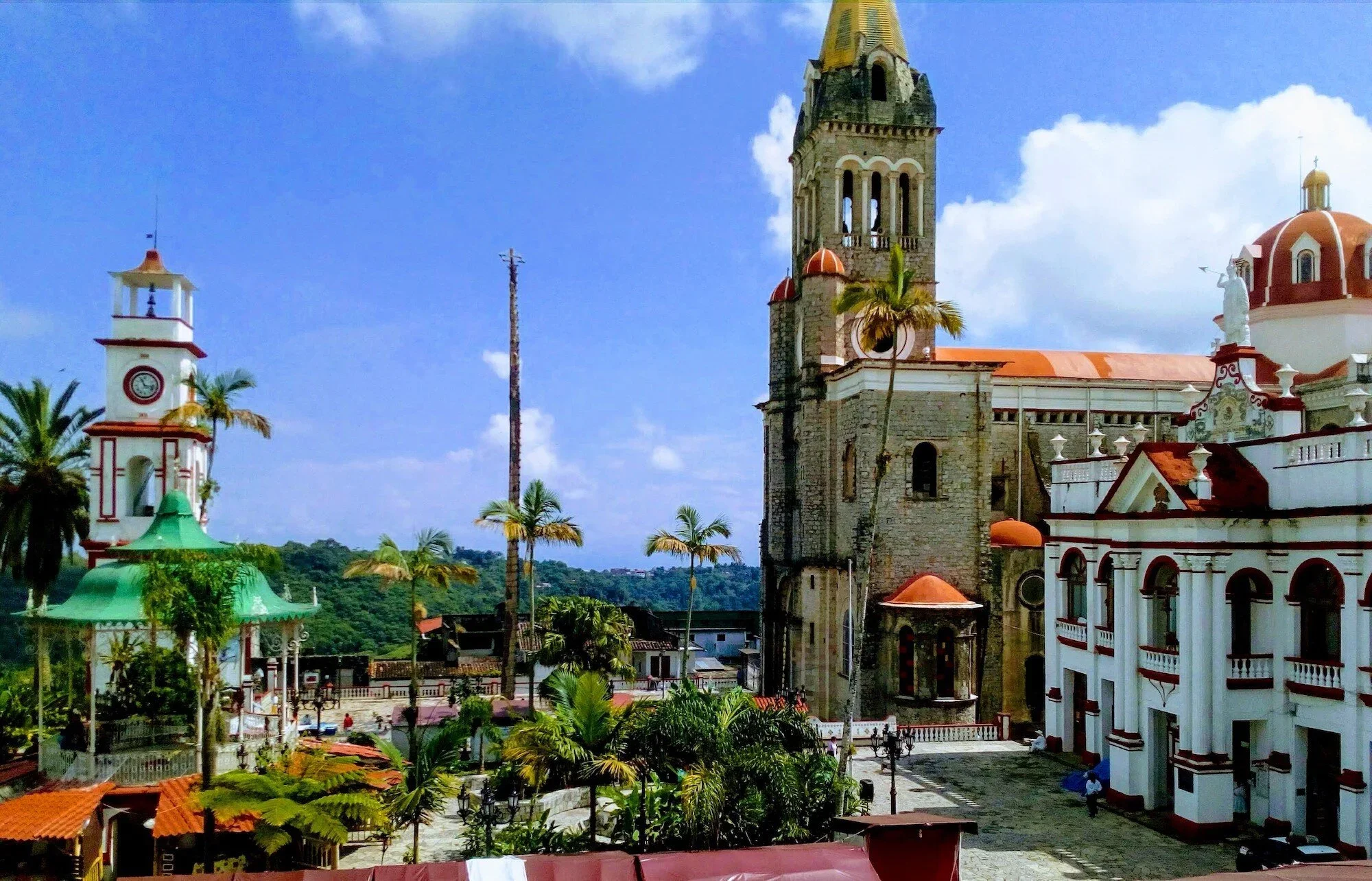
Back from La Malinche, I decide to spend two days in Cuetzalan, a small colonial town lost in nature, three hours from Puebla. I have complete trust in Arturo and Pepe, my two Couchsurfing hosts.
I leave my backpack with them, taking only the essentials for 48 hours. On the road, a thick fog appears. Impossible to see the horizon—I let my imagination take over. Cuetzalan is a pearl lost in the countryside. It doesn’t shine immediately, but you quickly grow attached to it.
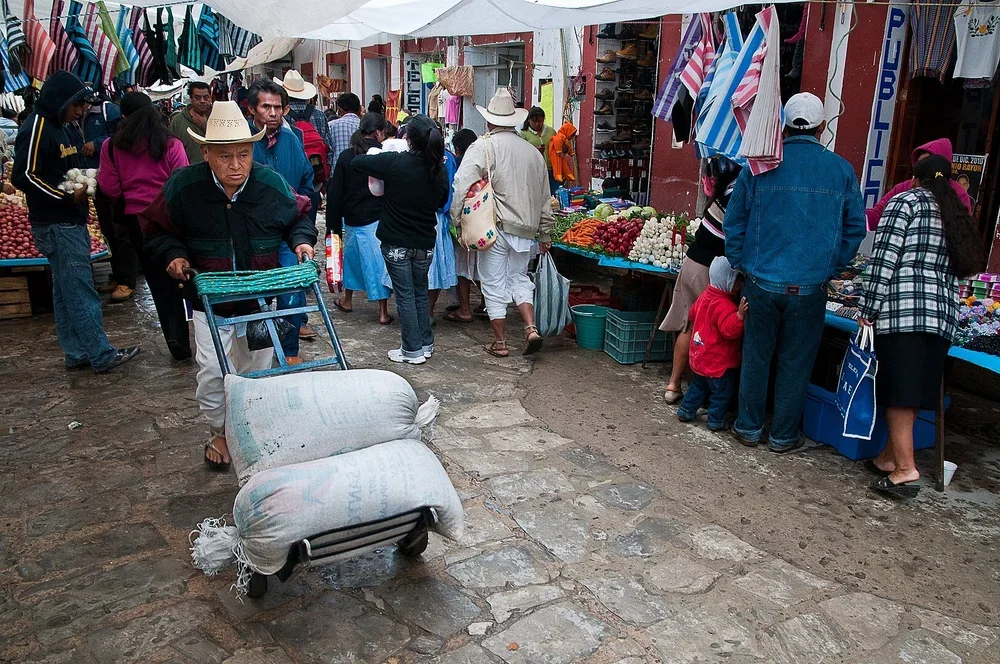
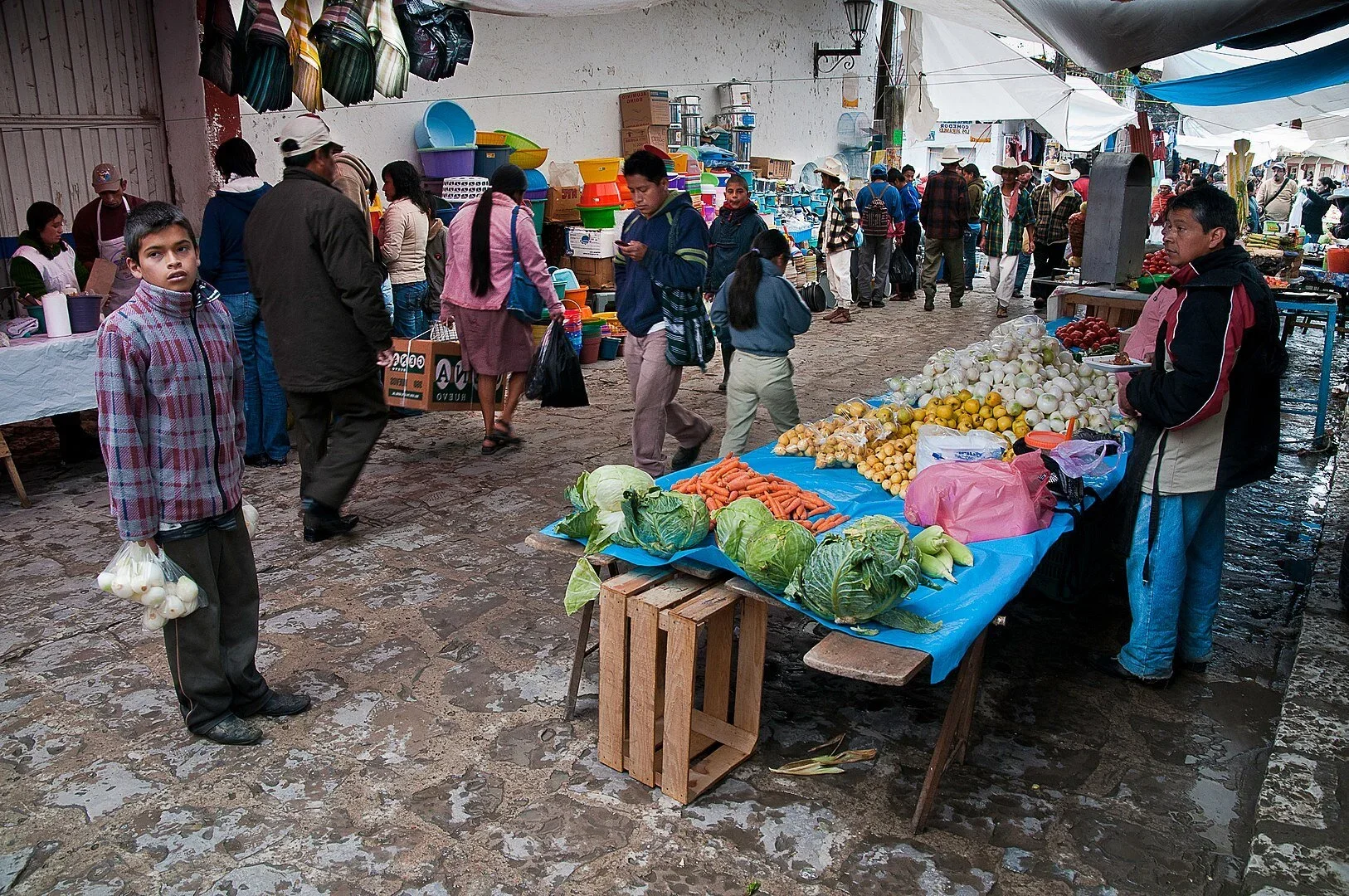
I choose to come on a Sunday, when the town fills up, especially along Carlos García Street, where countless stalls cluster together. Welcome to the Indigenous market.
You’ll find handicrafts, fruits, vegetables, freshly ground coffee, chocolate, and traditional dresses. Pastries are sold for the equivalent of five cents. You can also taste corn soaked in mayonnaise and spices. Just talking about it makes my mouth water.
Here, smells spread and mingle. The street is packed, and we walk slowly. I feel like the only Westerner around. Not once do I hear English or French. While the place is well known among Mexicans, it barely appears in travel catalogs. All the better—the immersion is complete.
Waterfalls and indigenous communities
I have a place to stay for the night. I contacted Erica on Couchsurfing. Several months pregnant, she can’t host me in her home, but she offers me a cabin just steps from the town center. She normally rents it out, but it’s unused at the moment. She only asks me to cover cleaning costs—I save the equivalent of about fifteen euros, which I’ll spend on a gift. Clever.
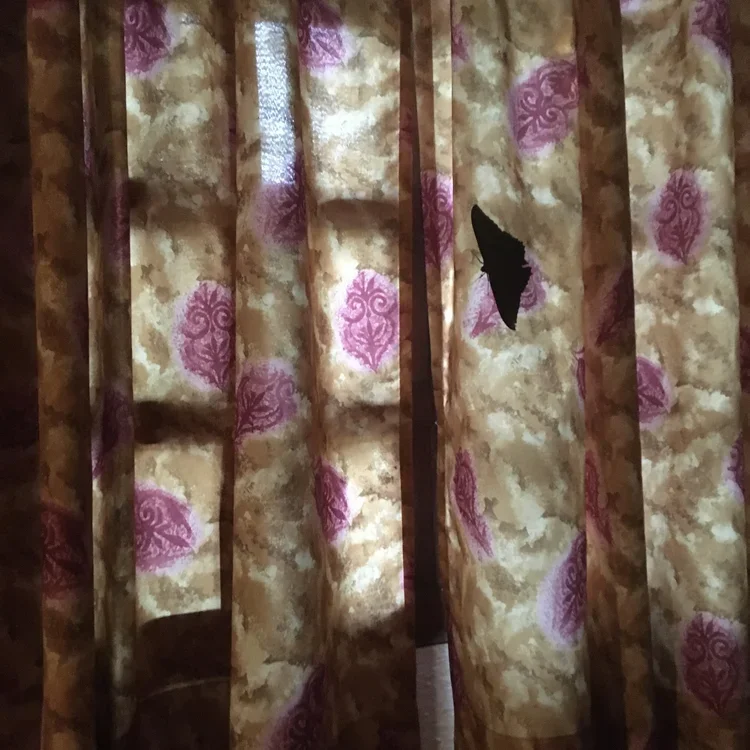
I savor the comfort of sleeping in a real bed. The next morning, I realize I spent the night with a huge black butterfly. It probably needed some rest too.
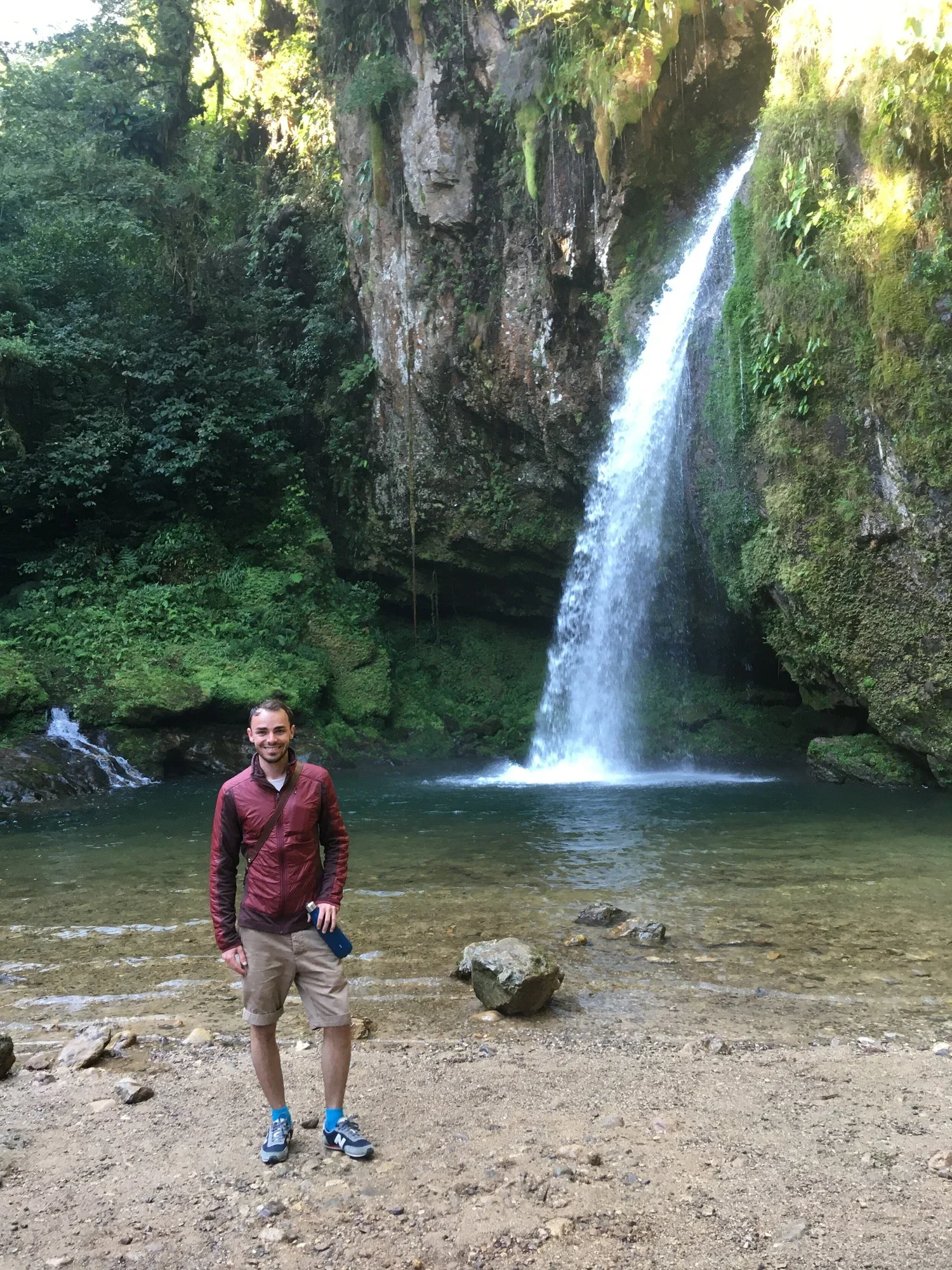
Erica suggests a short walk with her and her dog to a nearby waterfall. She tells me she’s originally from the capital and decided to move to Cuetzalan with her partner to become a tour guide. The region overflows with beauty—several days are needed to discover all its hidden treasures. I take her word for it as we reach the foot of the waterfall. She explains that Cuetzalan is known for its many Indigenous communities—more than 300, according to her. That means just as many languages, customs, and styles of dress. Here, wealth isn’t necessarily monetary; it’s deeply symbolic.
The danza de los voladores, an unforgettable spectacle
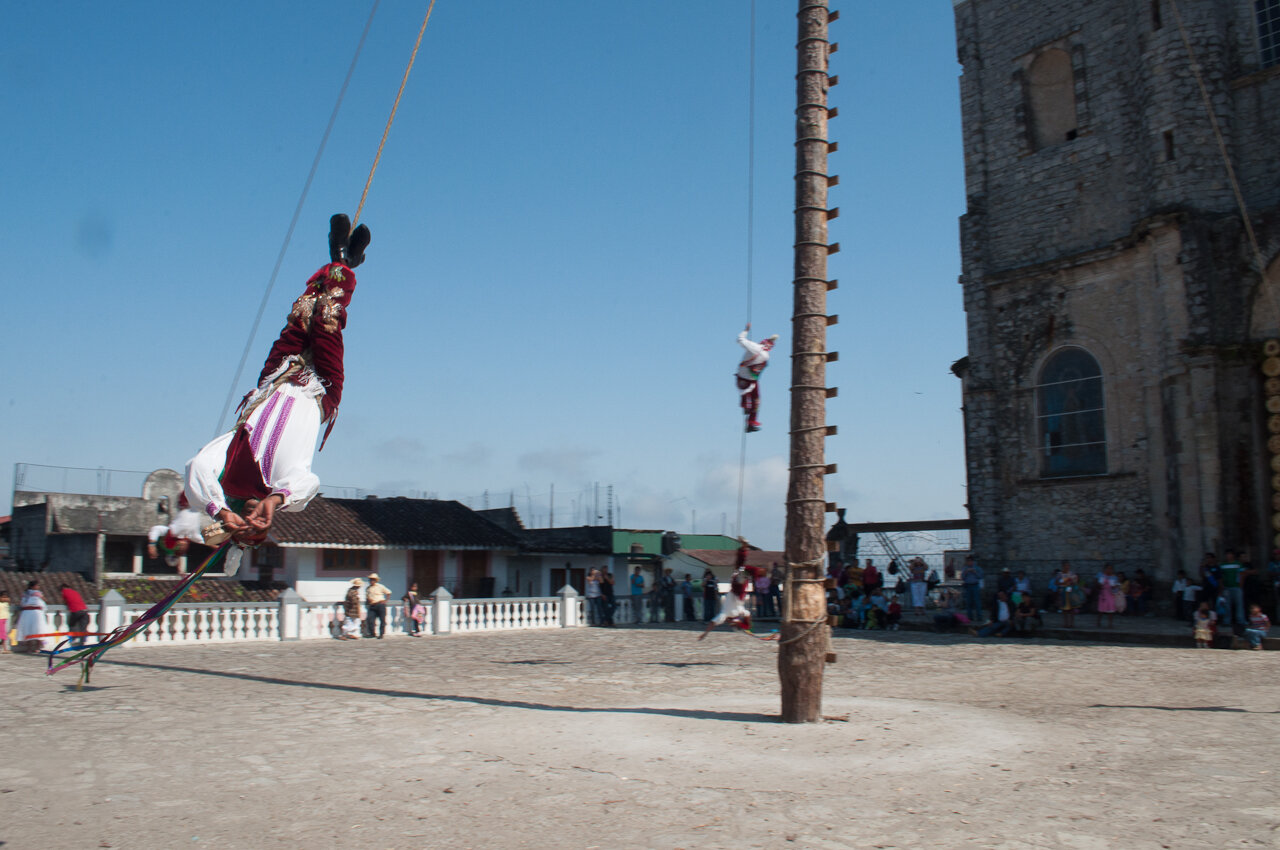
In Cuetzalan’s main square, next to the church, stands a tall tree trunk fitted with planks leading to the top, where four wooden beams form a square.
After visiting the Indigenous market, I sense growing excitement around the square. I sit near the church wall, watching five men in traditional clothing, ropes slung over their shoulders. Without looking down, they climb—no safety gear yet. I hold my breath; at that height, a fall would be fatal.
Once at the top, the five men wrap the ropes around their waists or feet. Each takes a corner of the square, while one stands in the center. I hear him recite words in a language I don’t understand, then play instruments—including a flute—to create a theatrical rhythm. The show can begin.
Four men leap into the void. They don’t fall—they spin, heads down, arms outstretched like Christ. It’s hard to see their faces, but they don’t seem unhappy, suspended in midair. The square above rotates with them. Each man completes thirteen rotations.
This number is no coincidence. Added together, they make 52—a sacred number in this tradition. Fifty-two, the number of years before the start of a new cycle on Earth according to their beliefs. Faced with the fear of the world’s end, this ritual ensures a successful transition into the unknown.
Erica explains that several similar tree trunks stand in nearby villages’ squares, varying in size. Each year, around September, locals replace them by selecting successors from the forest—preferably taller and more majestic each time.
Rituals, songs, and prayers are organized around the chosen tree. Then it must be carried to the village square by hand alone, using only human strength and willpower. Erica tells me that some people lose their lives, exhausted by the effort. I don’t know if the story is deliberately exaggerated, but she found the right words to captivate me. I dream of returning to Cuetzalan to produce a full report on this ancestral tradition.
Sébastien Roux
Cover photo © Sergio Saúl Bonilla Luna