
Back to summary
Ep 2 - Spanish Waves & Peaks of Europe
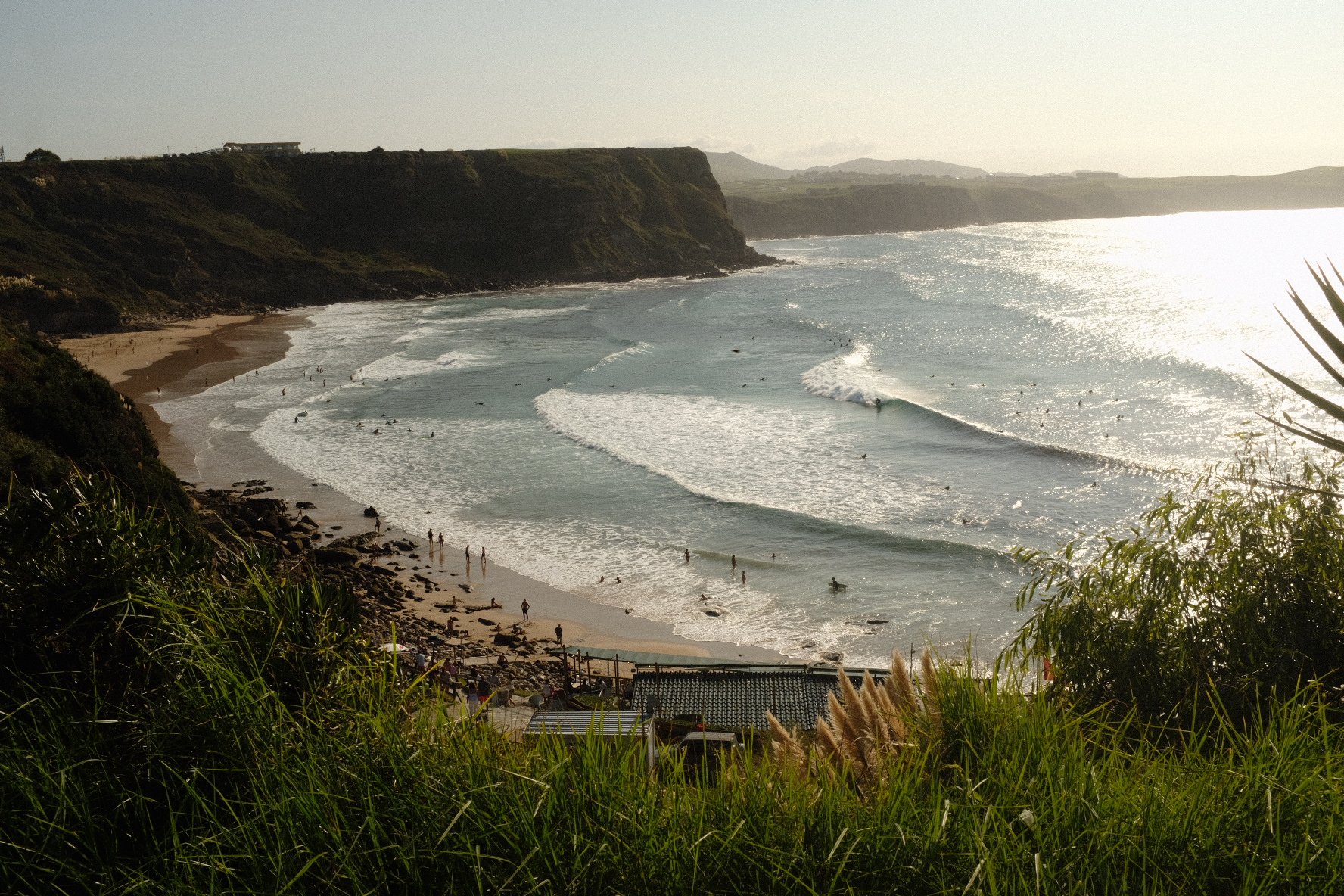
As I ride along the Spanish coast, I stop in Zarautz to watch the many surfers in the water. Staying at surf camps, I’ll be surfing at three spots: Laga, Los Locos, and San Antolin. Crossing a national park, I head up into the hills before heading to Galicia to ride along the Costa da Morte.
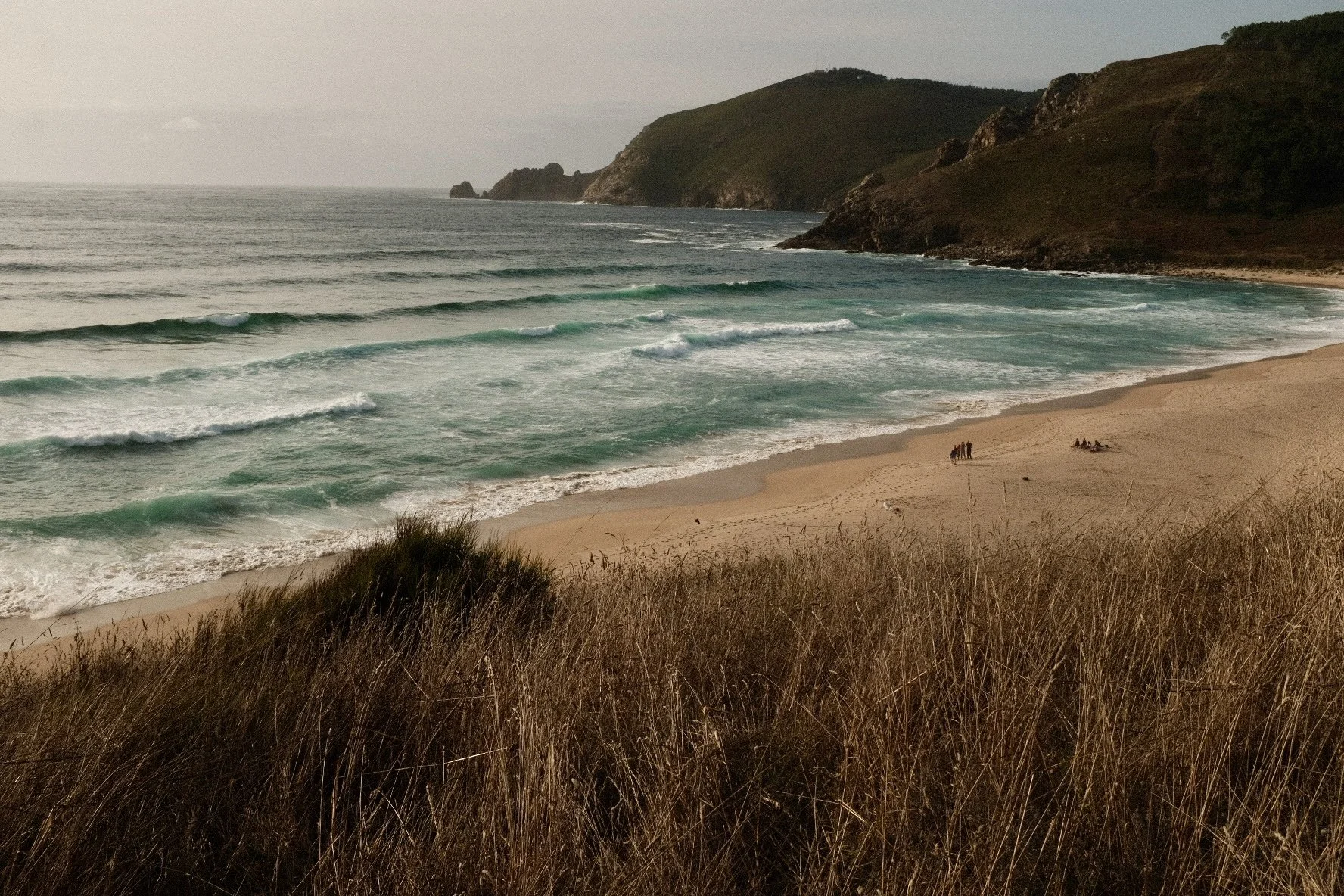
In late August, Hurricane Erin caused massive waves to form along this stretch of the Atlantic coast. Access to the beaches was temporarily closed in several coastal towns. As the days went by, the swell subsided. More and more surfers took to the water to test their skills against the powerful waves.
On Wednesday, September 3rd, I arrived a bit too late to take advantage of the best conditions. Doesn’t matter—I’ll take the time to stop in the Basque seaside villages before settling into the first surf camp of my trip (see “Surf Camp: A Guide”) to plan a session for the next day.
Getaria, Zumaia, Deba, Mutriku, Lekeitio, or even Ea: the 30 kilometers of coastline in Guipúzcoa offer numerous charming fishing ports as well as magnificent natural sites. At low tide, you can admire the flysch, the famous folded cliffs—the longest stretch in Europe—between Zumaia and Deba. I end my day’s hike at the Laga Surf Camp, which offers two types of accommodations: a hostel with single beds in dormitories and a farmstay with double and triple rooms. Since I’m traveling alone, I opt for the first option.
Over the course of my life, I’ve had the good fortune to spend several months in the Dominican Republic. On that Caribbean island, I learned to surf when I was 15.
Localism, a right and a left
As I go to pick up a surfboard, the instructor knows I’m not taking lessons, but still recommends that I stay on the left side of the beach, near the surf camp students. He explains that the right side of the beach is “reserved” for the locals and that they don’t necessarily appreciate sharing waves with a stranger. While I regret this absurd localism, I decide to follow his advice.
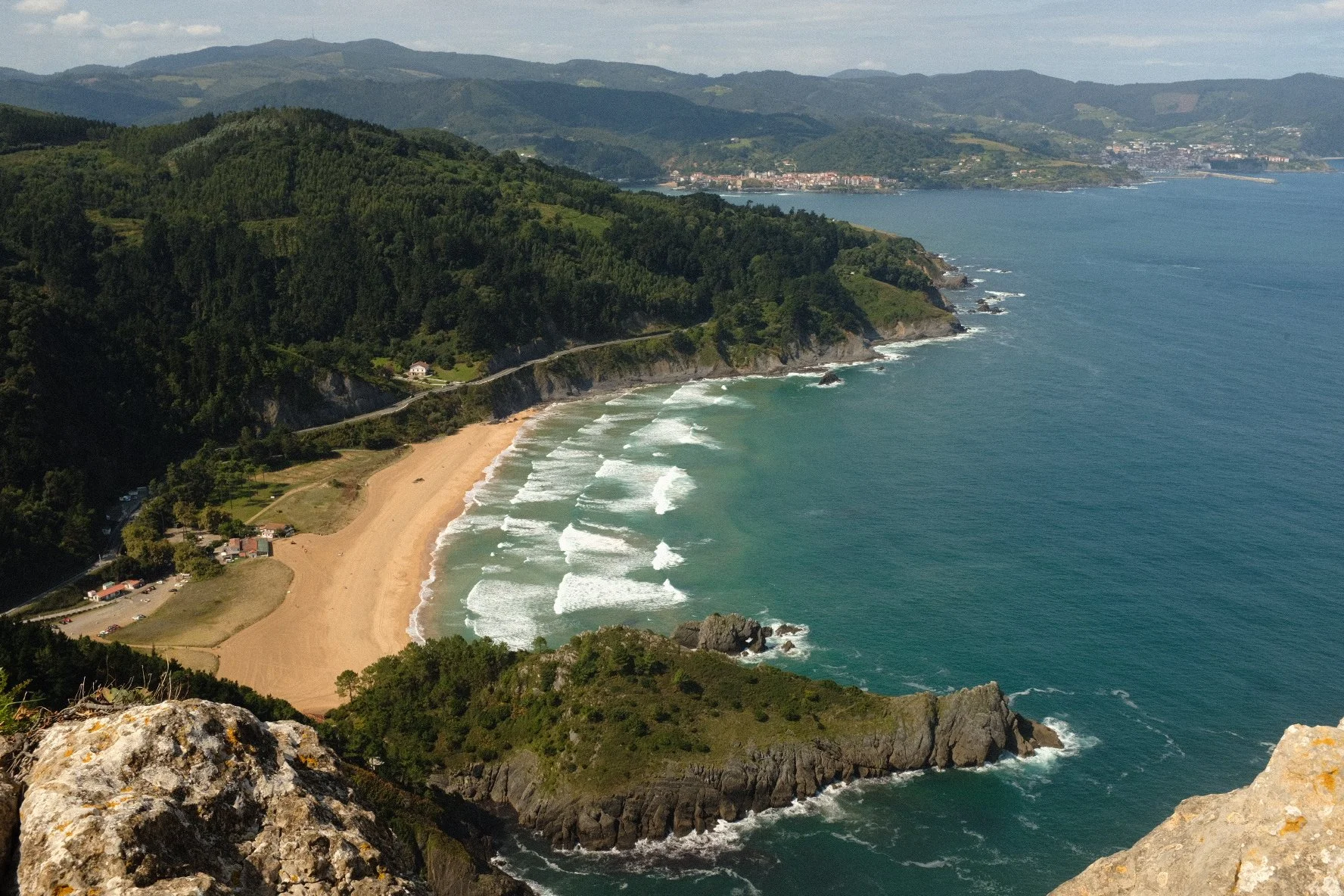
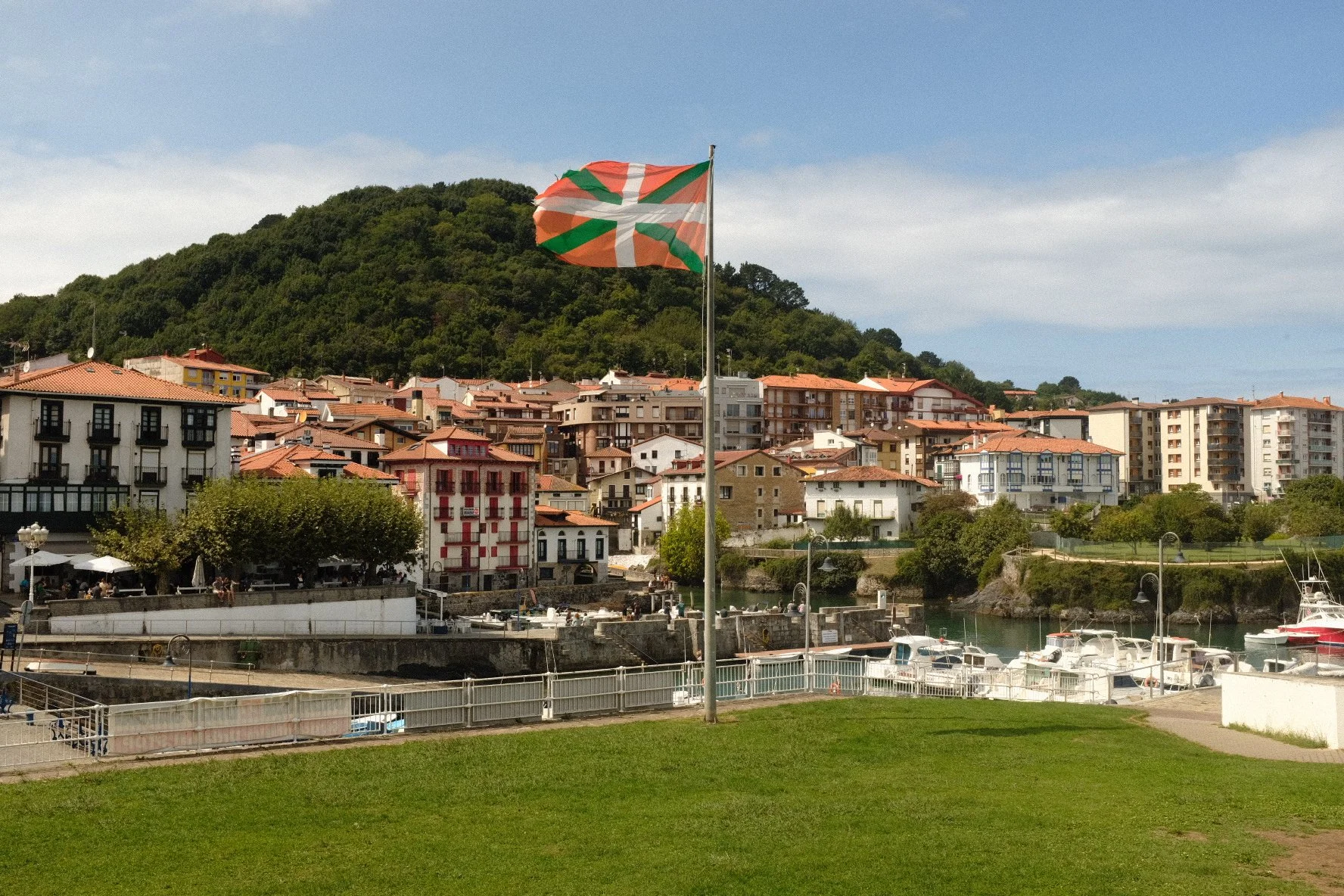
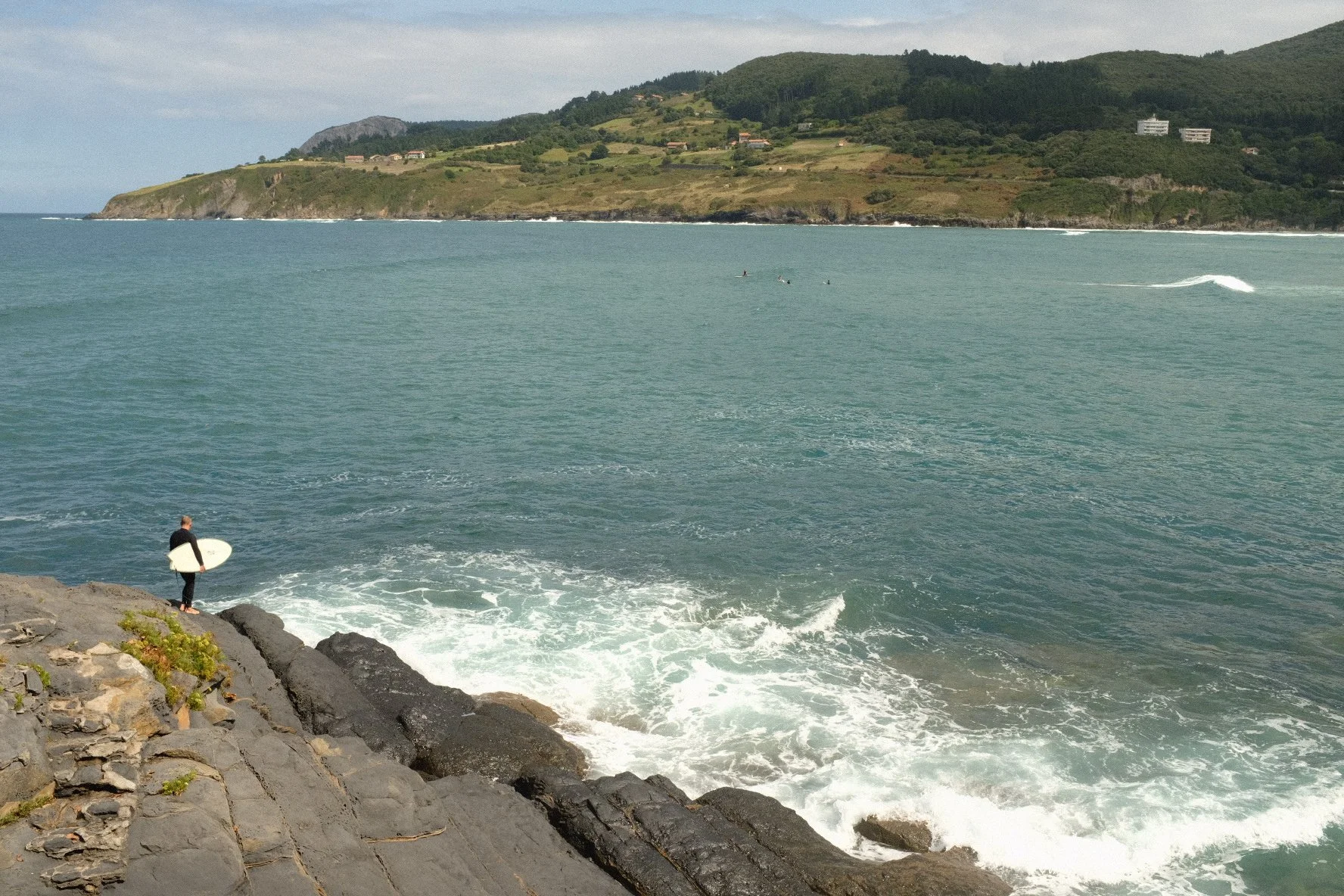
This first session is frustrating: in two hours, I only manage to catch two good waves, a right and a left (see “The Basics of Surfing”). I console myself by going on a hike to Mount Ogoño to enjoy a superb view of Laga Beach and the village of Mundaka in the distance. Considered the best left-hand wave in Europe, the Mundaka wave can reach a height of 4 meters and a length of 400 meters. During my visit, however, the conditions aren’t right for me to try my luck at this renowned spot.
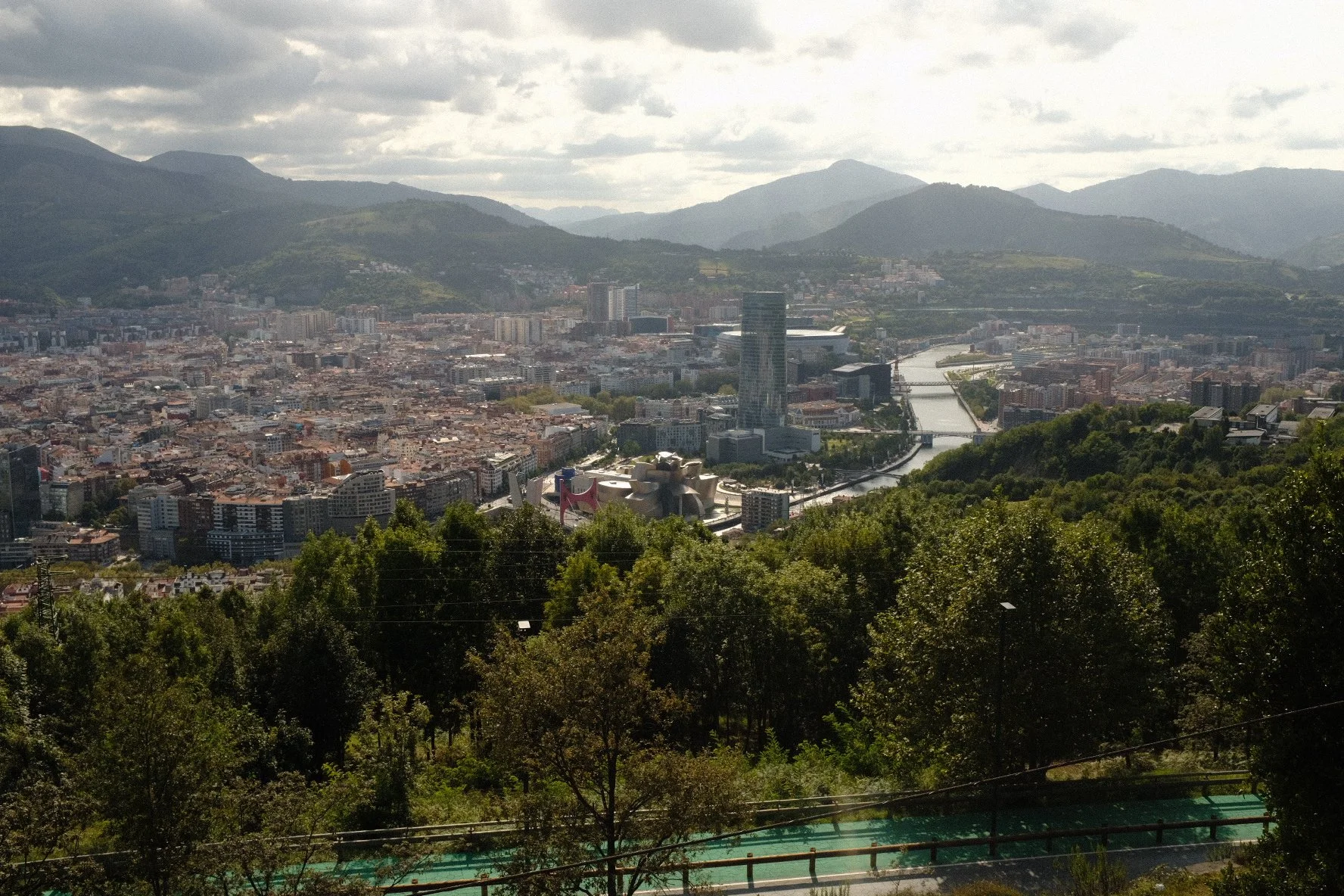
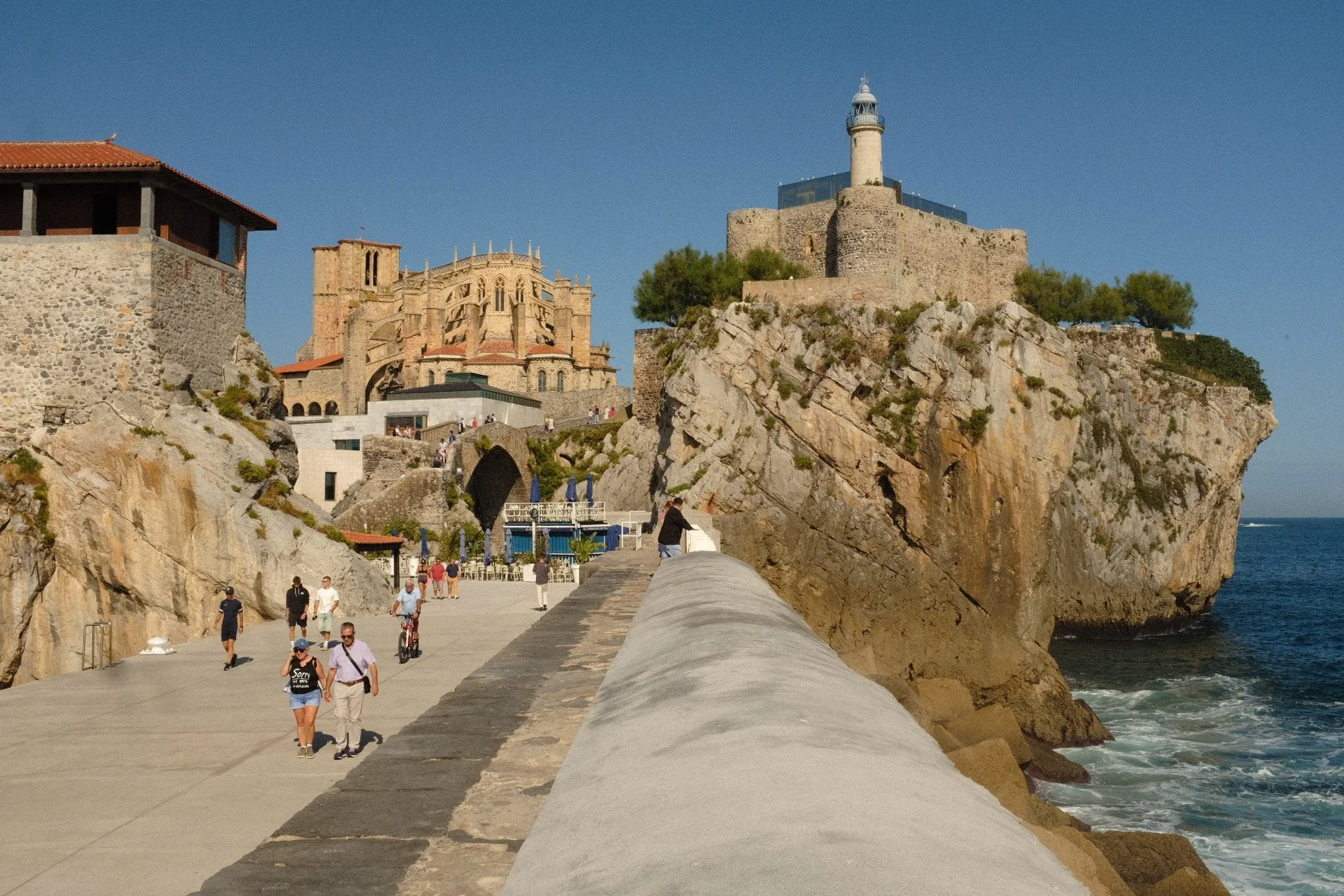
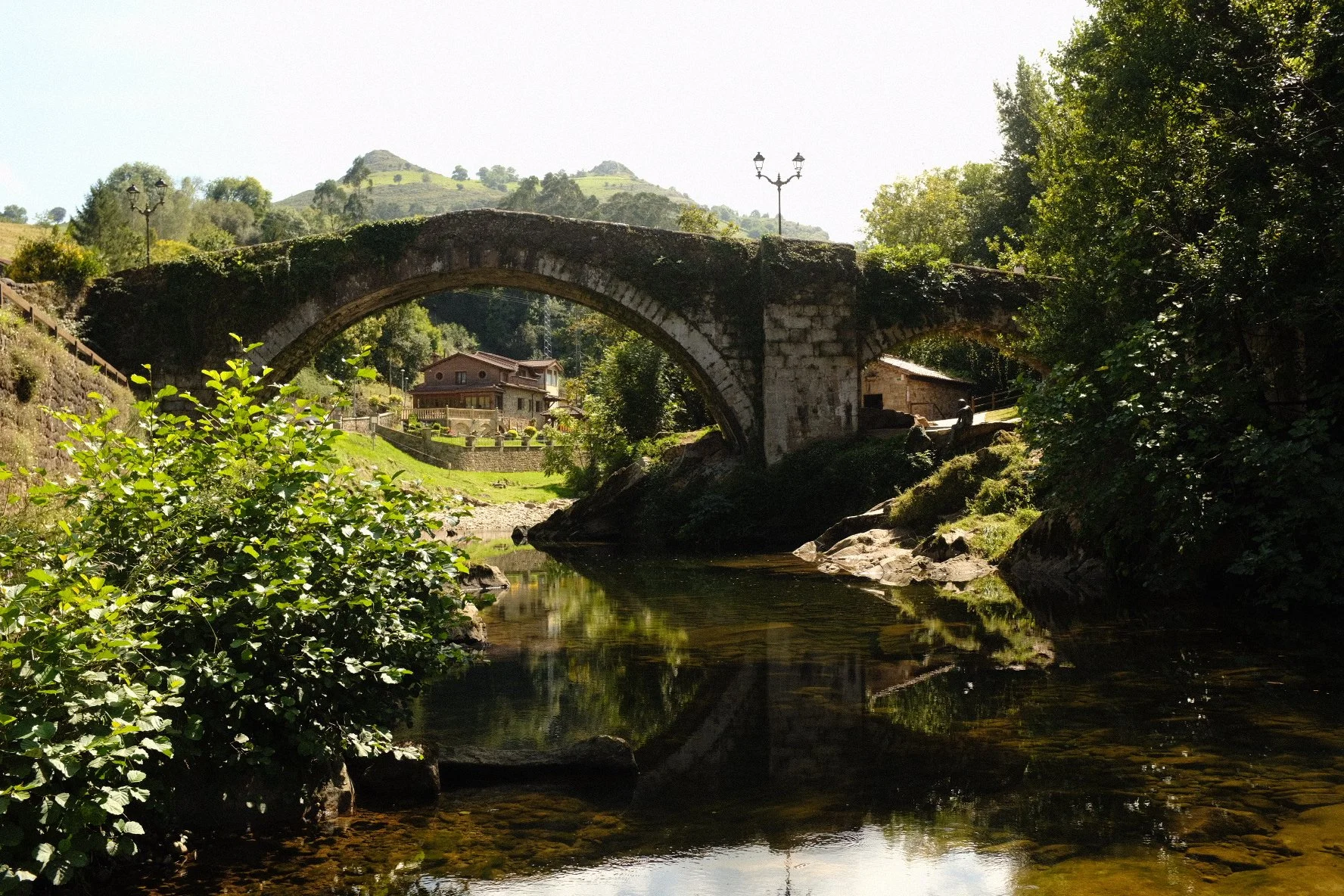
I decided to continue on my way to Cantabria, making a quick stop in Bilbao. From that point on, I’ve never ridden my motorcycle this far. After doing some research on the must-see spots in Cantabria, I mapped out my route on Calimoto, including stops in Castro-Urdiales and Liérganes.
A legend—that of the fish-man—piqued my curiosity. A certain Francisco, originally from the village of Liérganes, is said to have disappeared while swimming in Bilbao in 1674. He reportedly reappeared years later in Cádiz, in southern Spain, transformed into a creature that was part human and part fish. No doubt he would have been an excellent surfer had he lived a few centuries later.
A Natural Haven
My final stop for the day is in Suances, at Pablo’s Bio Surf Camp. He welcomes me with a smile and takes the time to show me around his surf camp. Here, the word “Bio” wasn’t chosen at random—nature is truly everywhere. You can stay in bungalows, yurts, or tents. Another highlight is that the Bio Surf Camp remains on a human scale and encourages interaction with other guests from all walks of life.
The next morning, I head out for a completely wild surfing session at Los Locos Beach. The swell coming from the northwest brings waves over a meter high. The full moon affects the tidal range as well as the strength of the current, which tends to pull surfers out to sea. You have to paddle constantly, keeping a landmark on the beach in sight to stay in the right spot. I catch about ten waves, some of which let me glide for several meters while picking up speed by pumping the wave—that is, by applying pressure to the board.
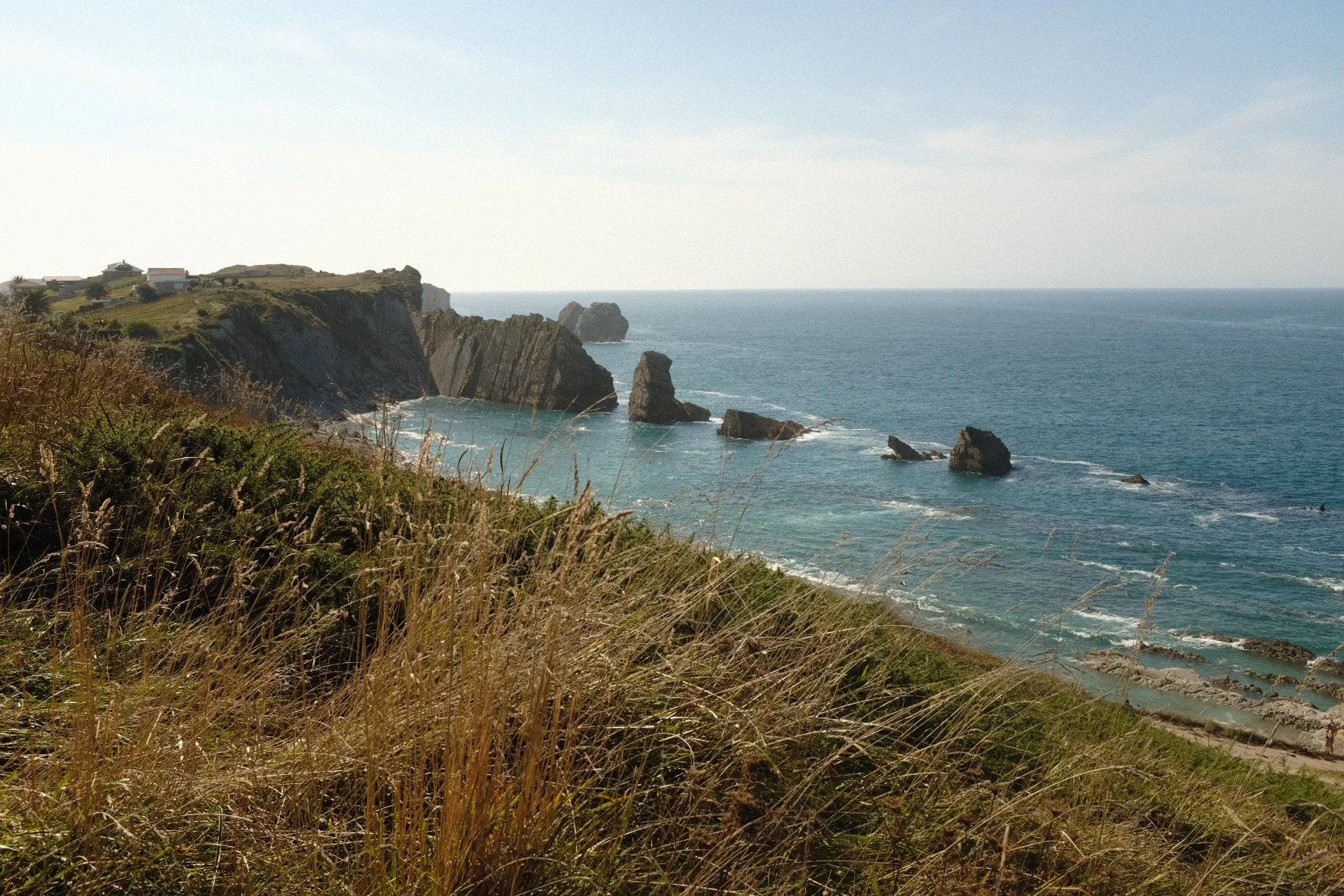
After a session like that, I share a delicious meal of fresh fish at Bio Surf Camp with two French women, including Élise, who lives in Bilbao and often comes here to feel recharged. She recommends a motorcycle route that takes me from Arnía Beach all the way to the city of Santander. In the evening, we’ll go dancing at a lively street party by the sea. It’s a chance to listen to nothing but Spanish songs, including a catchy cover of “Voyage, Voyage.”
@ Sébastien Roux
A Journey Through Time
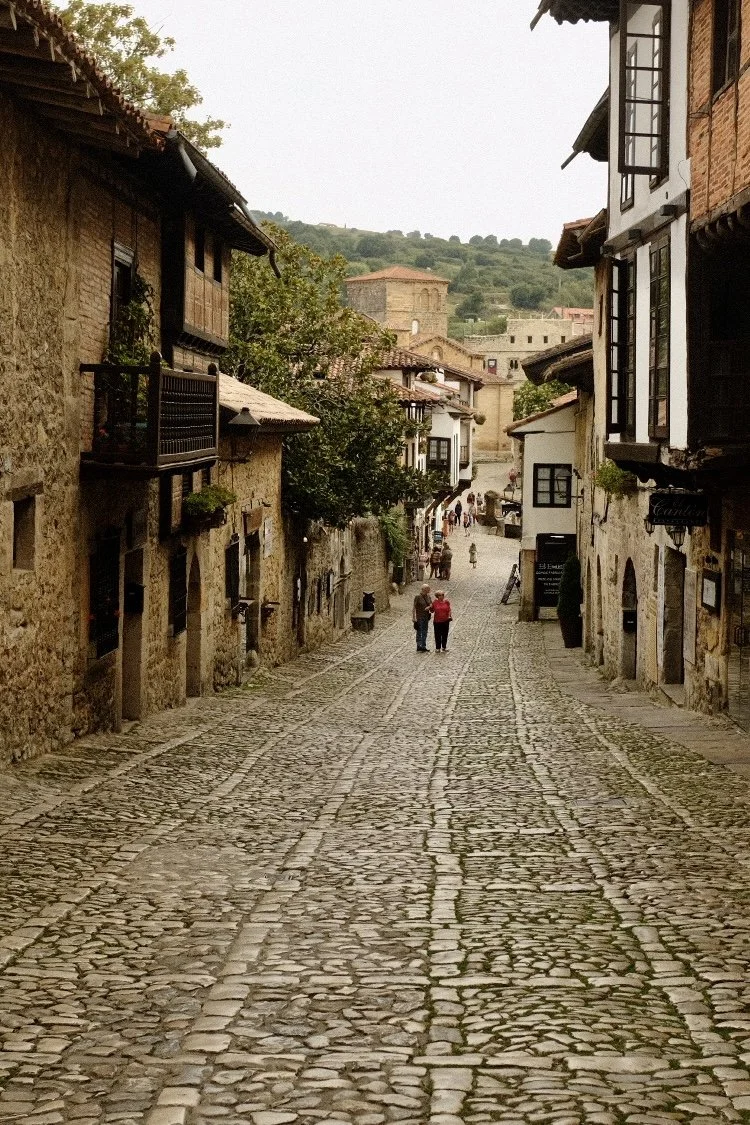
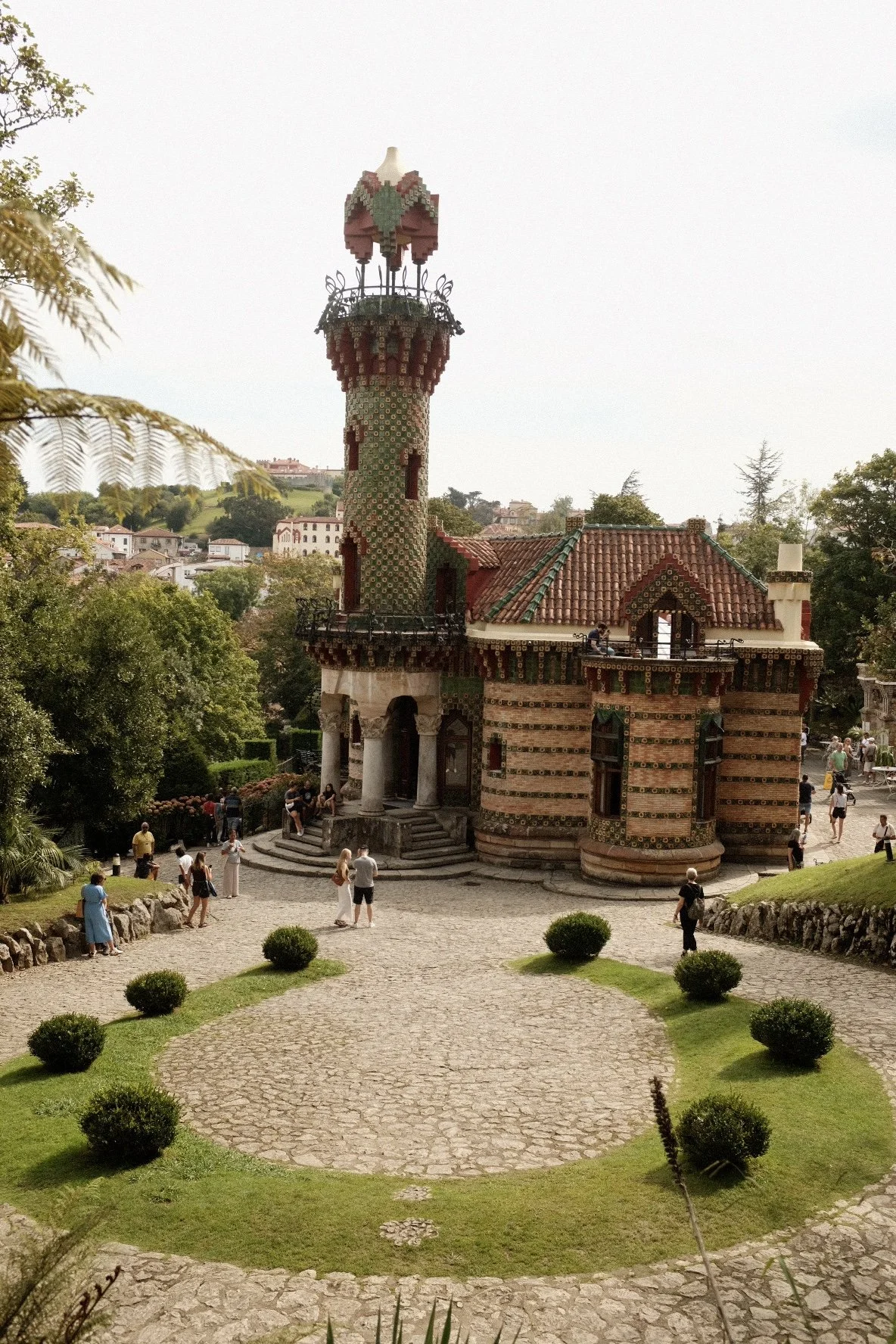
From Cantabria to Asturias, you can immerse yourself in different periods of human history: prehistory at the Altamira National Museum, the Middle Ages as you stroll through the cobblestone streets of Santillana del Mar, or more recent times as you pass through Comillas, home to one of Antoni Gaudí’s first major works. Simply named Gaudí’s Caprice, this bright Modernist-style villa was designed between 1883 and 1885 for a wealthy patron who had made his fortune in America. The colorful building is adorned with sunflower-patterned ceramics and features a slender tower reminiscent of a minaret.
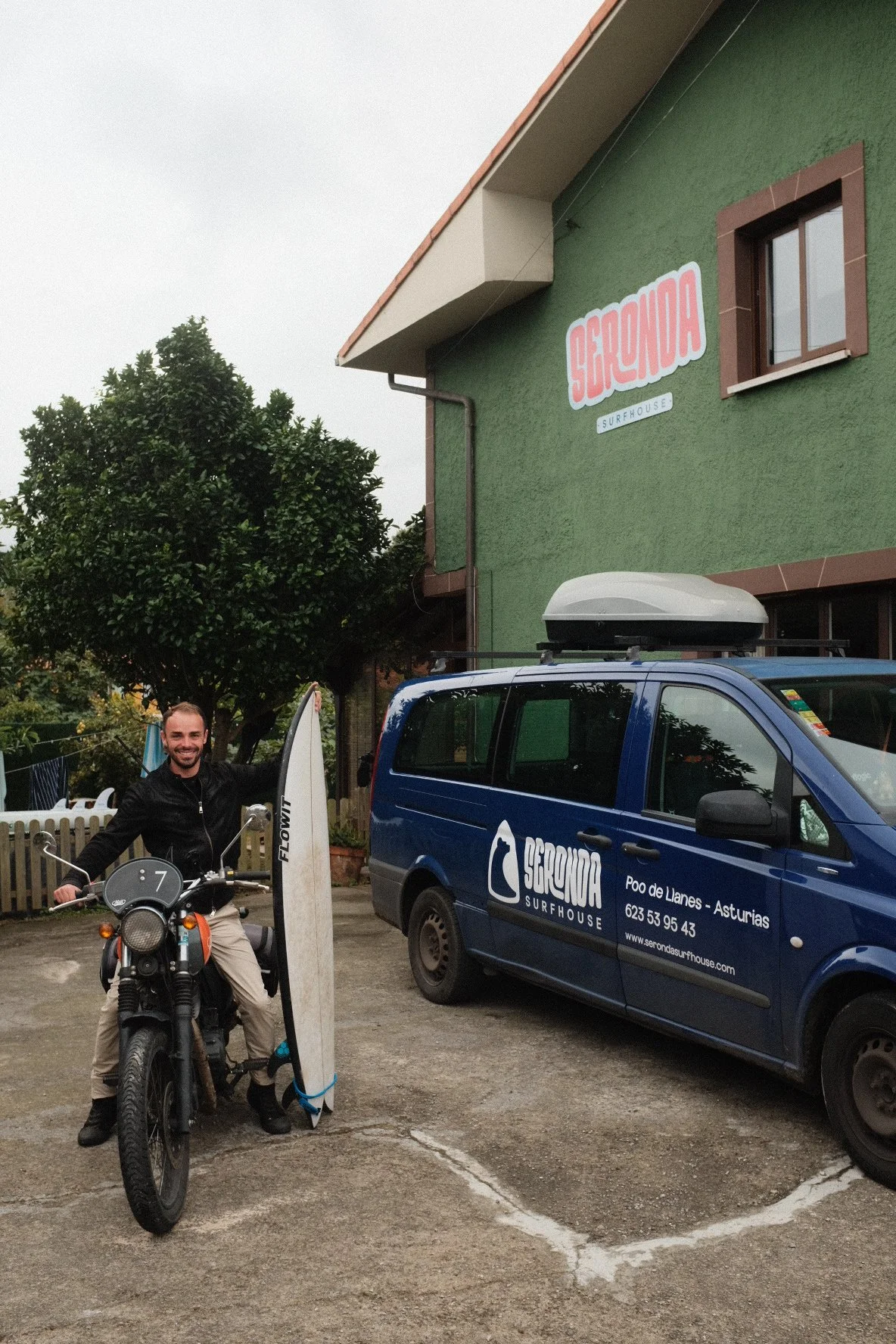
I don’t know it yet, but it’s a former history teacher who will be hosting me tonight. David is the owner of Seronda Surf, my third and final surf camp in Spain. Located near the town of Llanes, close to Poo Beach, it opened a few weeks ago. This house was once a place for pilgrims on the Camino de Santiago. David was keen to offer something different by including surfing and other nature-based activities.
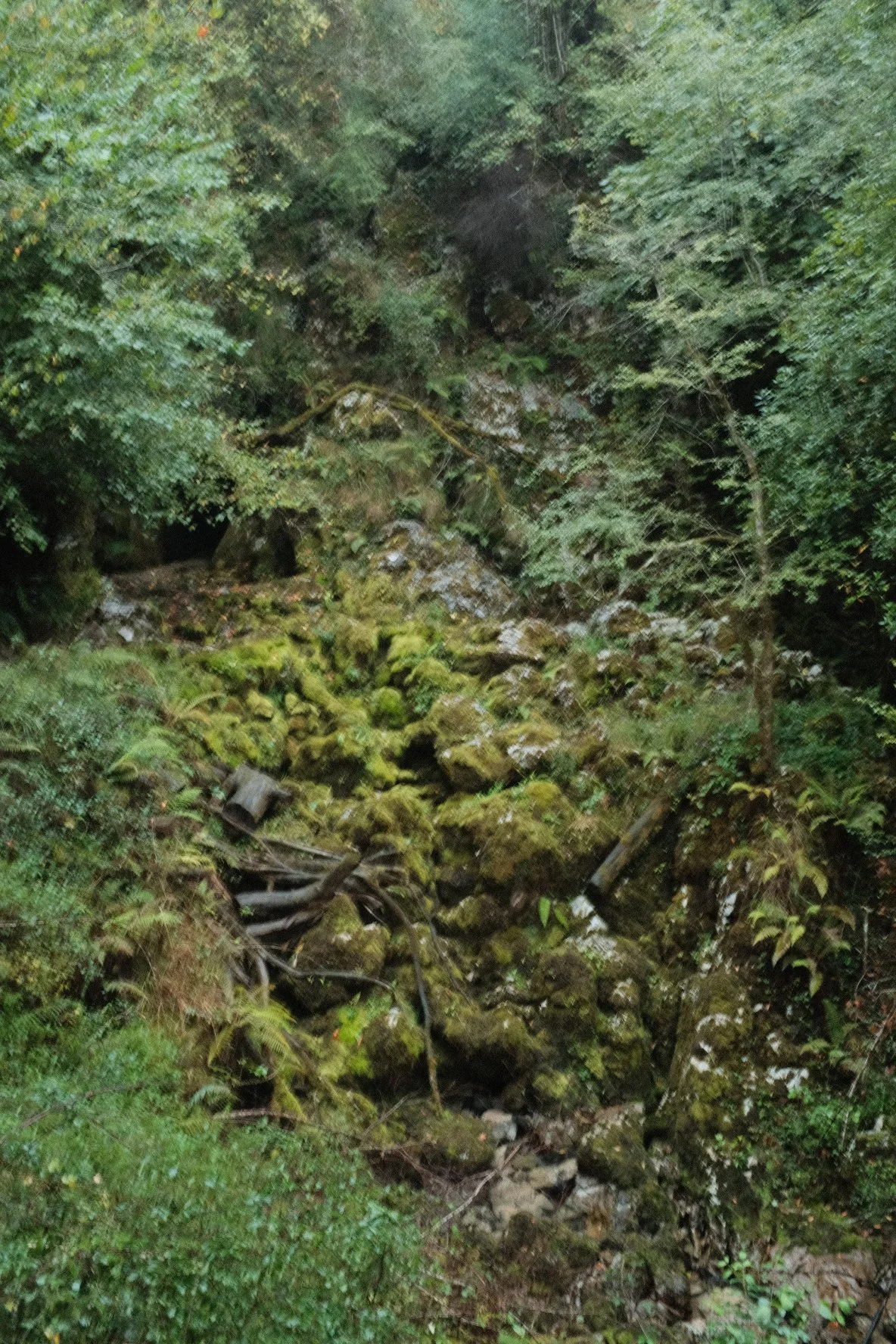
At the end of the day, with rain threatening to fall any moment, he suggests that we join him and Fernando, another guest, for a short hike into the countryside, heading up to the source of the Cabra River. It’s a damp walk through the great outdoors, filled with fascinating conversations. David grew up in the area; he knows the region like the back of his hand and has no shortage of historical anecdotes about the evolution of Asturias over the centuries.
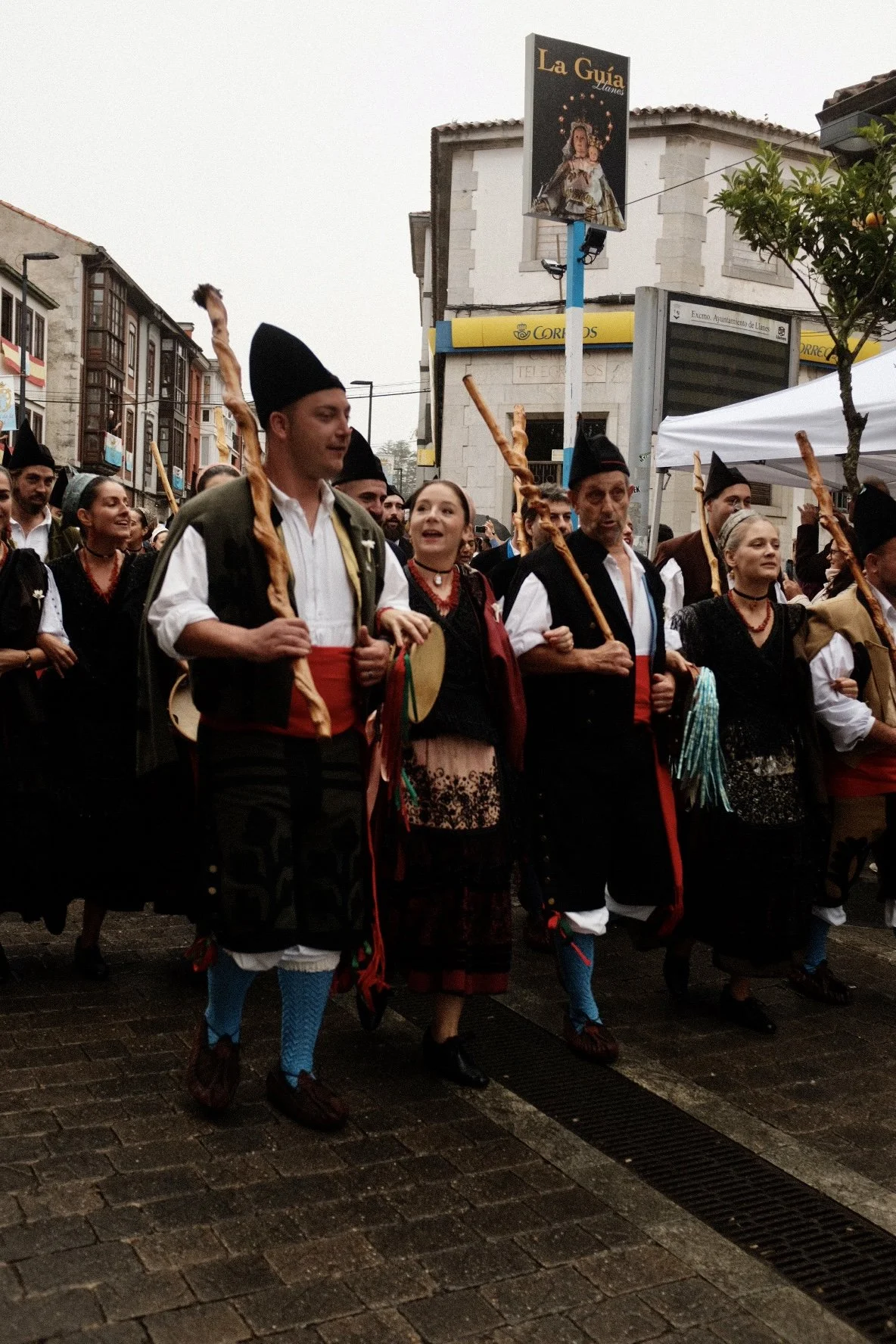
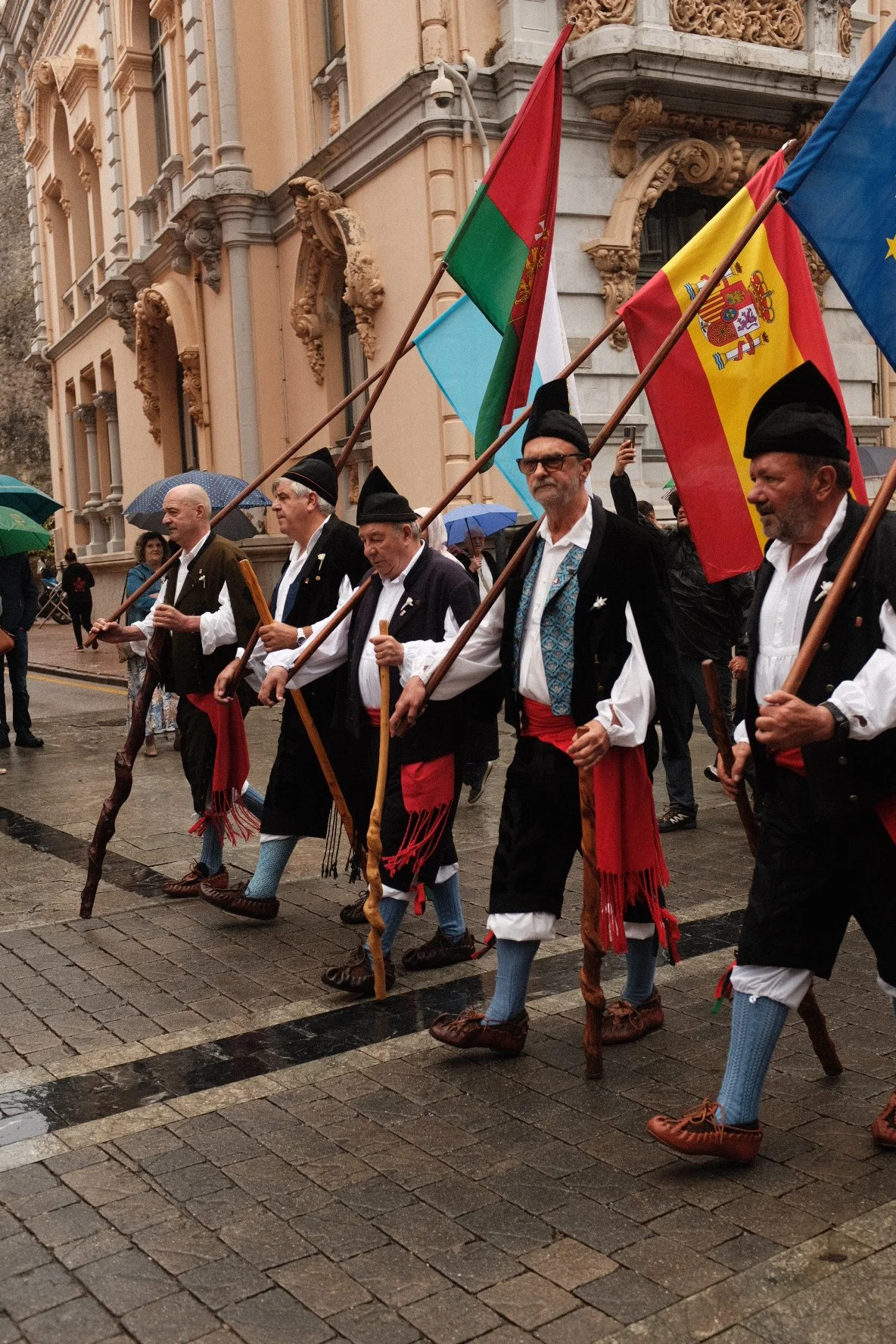
He tells us that Llanes is getting ready to celebrate its patron saint: the Virgin of La Guía. Folkloric events will take place the next morning in the town center. That works out perfectly, as the surf conditions will start to get interesting around noon. After watching locals parade in period costumes and listening to bands showcasing Asturian culture, Pablo takes me to the San Antolin spot for a session alongside a local surfer.
Powerful waves break close to the shore. This is called a shorebreak, and it’s usually the most likely situation for a board to snap in two. If you miss your takeoff—that is, the moment when you go from a lying position to a standing one—the nose of the board sinks a little into the sand due to lack of depth, and with the wave’s power, the board is split in two. Fortunately, that’s not what will happen to me during my third session. I’ll settle for a few waves and a few washers—those moments when the waves flip you over so hard you can’t tell which way is up anymore.
No Room for Error
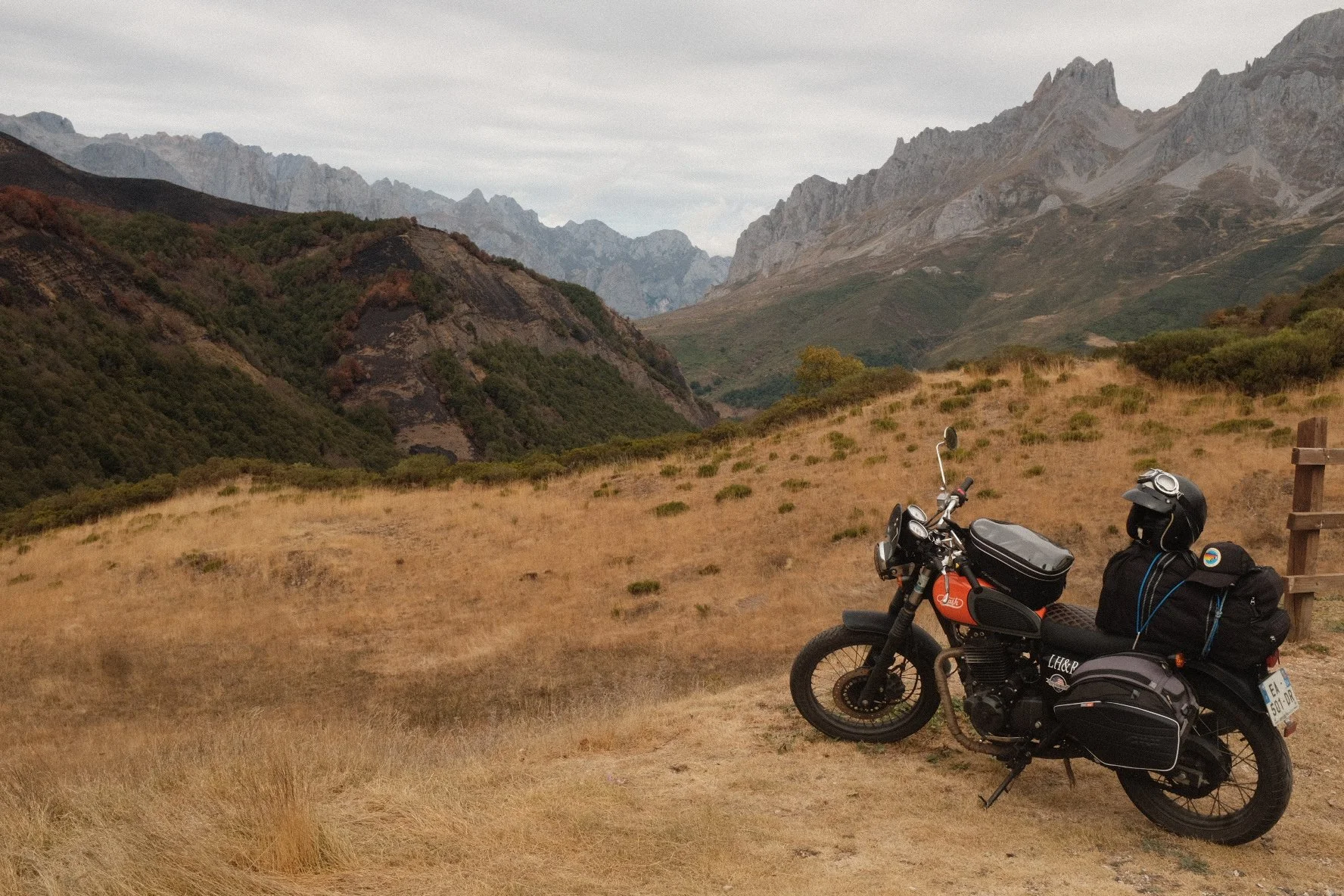
After these first three surfing sessions, it’s time to head a little inland to test out an iconic mountain road. I’m about to ride through part of the Peaks of Europe National Park. Spanning the provinces of Asturias, Cantabria, and León, these roads are highly prized by motorcyclists.
From Llanes, I’ve planned a 280-kilometer route to Gijón, taking the N-621 through the village of Potes, then turning right at the village of Portilla de la Reina to take a more winding road whose surrounding forest was scorched by massive wildfires in the summer of 2025. A total elevation gain and loss of over 4,400 meters for a ride lasting more than six hours.
© Sébastien Roux
Staying with a Local
After staying with friends, at two hostels, and then at surf camps, I’m going to use the Couchsurfing app for the next few days. Noelia, who lives in Gijón, is hosting me for one night. After I told her about my travel plans via message, she recommended that I stop at the Mirador del Fitu to admire the view of Asturias.
I’ve been using this app since 2017 and have had the chance to stay for free in several countries and, in turn, host travelers myself. Couchsurfing has allowed me to meet some wonderful people who often share the same passion for travel.
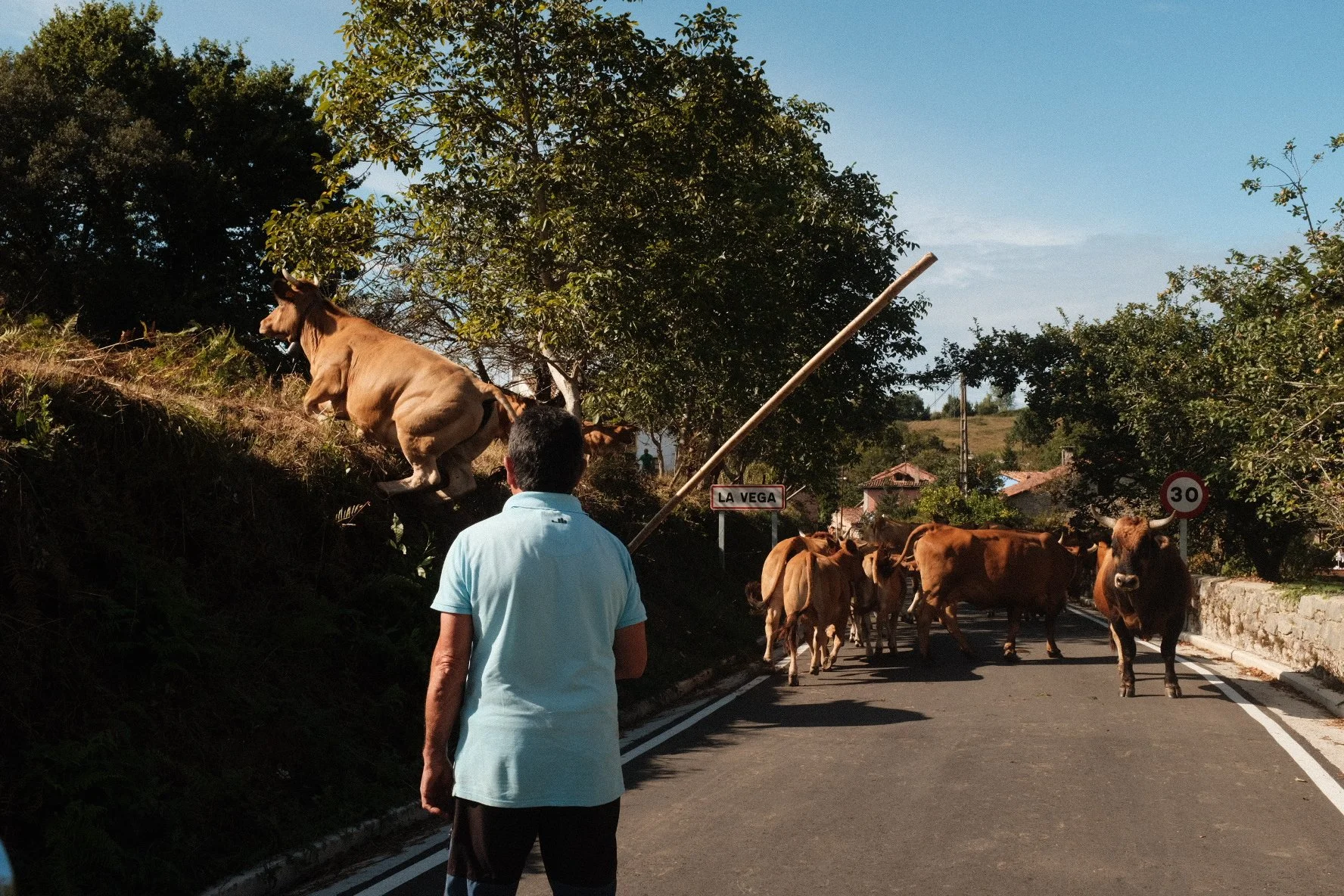
Since I’m in no hurry, I trust the winding roads suggested by Calimoto. They hold a few surprises for me, including a scene of commotion at the entrance to the hamlet of La Vega. Three shepherds have lost control of their flocks. With their sticks, they try to restore order, without much success. I turn off my engine, wait patiently, and finally manage to creep past. The youngest of the shepherds, a teenager, loses his temper and hurls insults at me, as if I were the cause of this chaos.
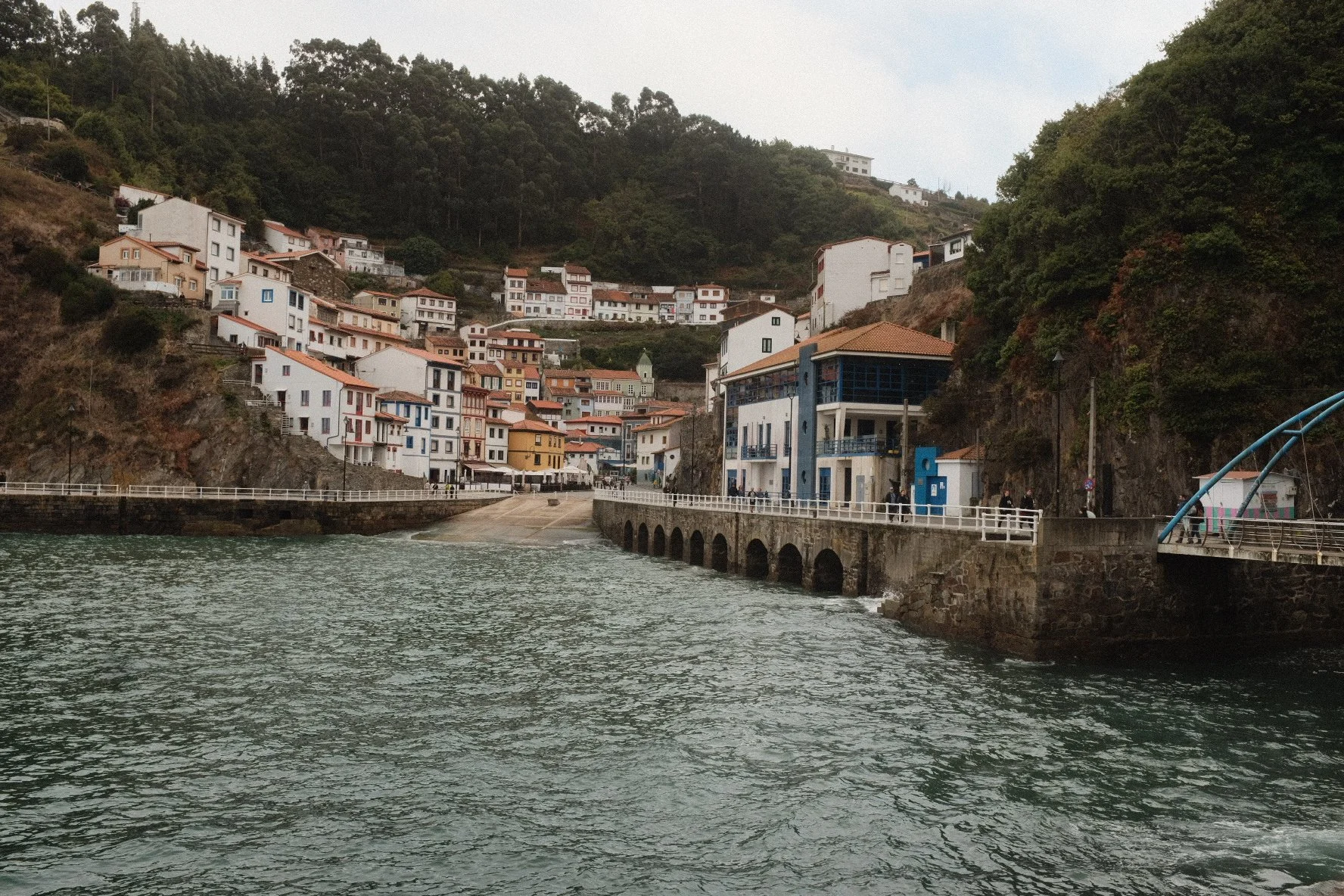
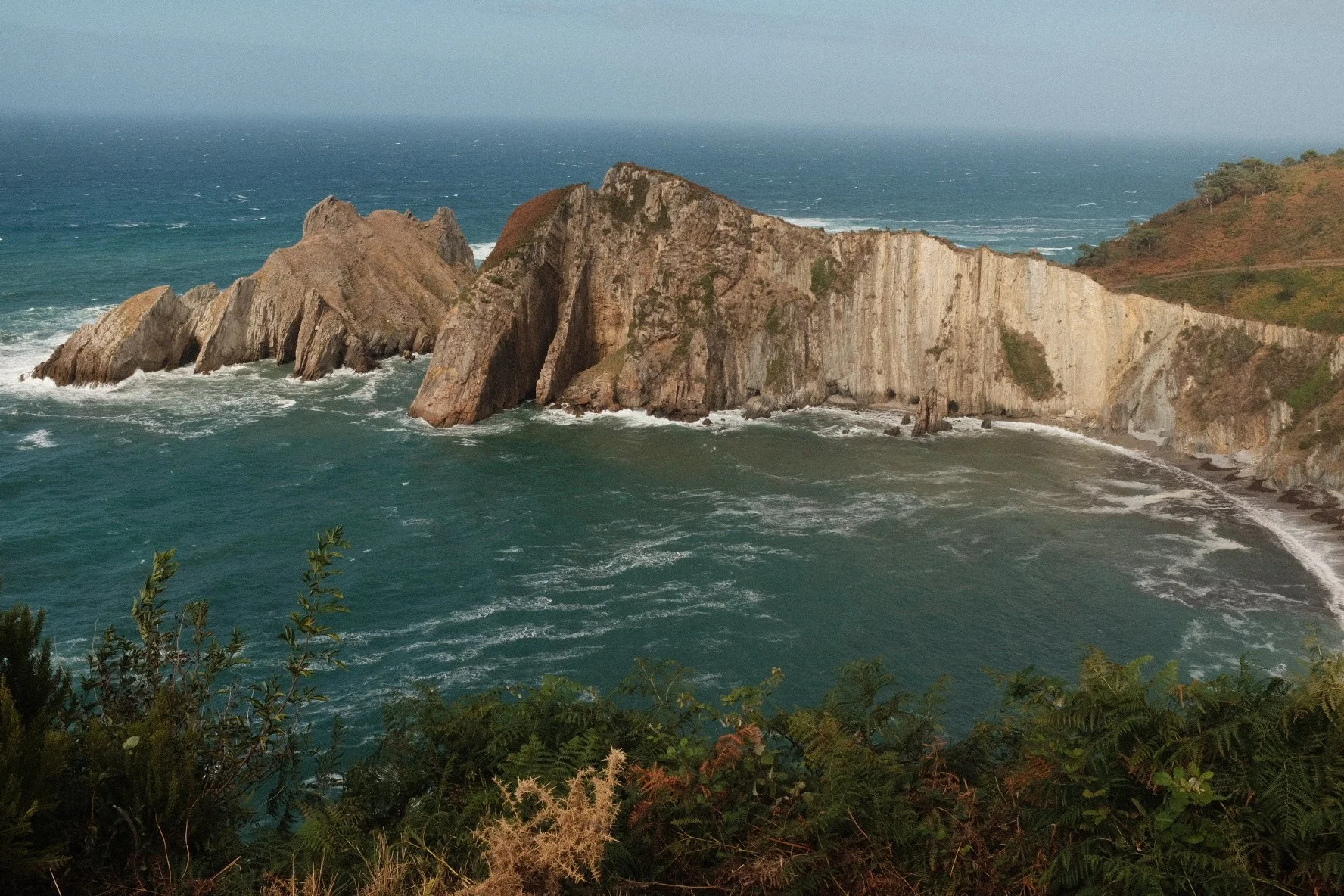
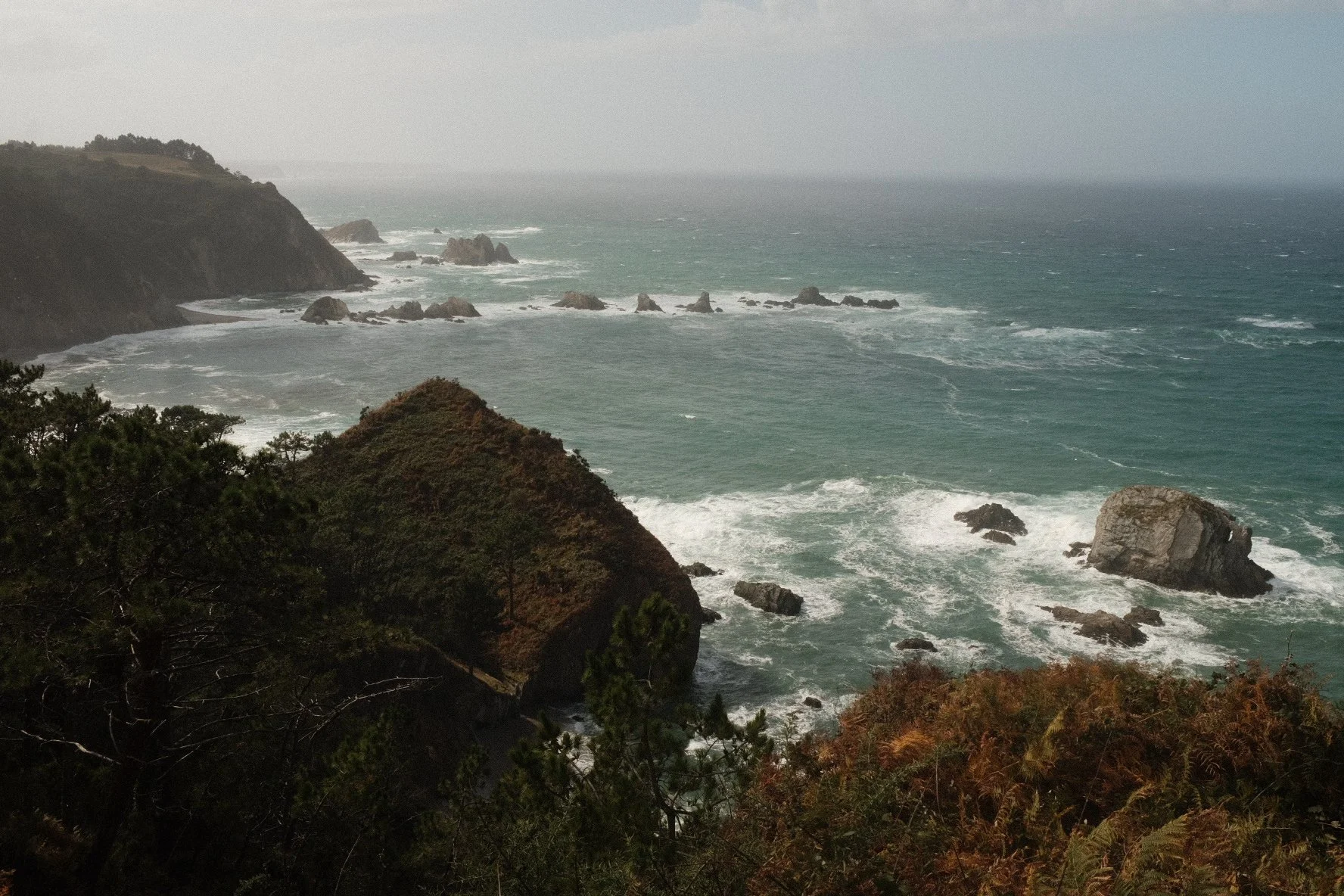
A little further on, I stop in Cudillero, a picturesque little fishing port nestled on the mountainside. On my motorcycle, I once again avoid the rain, but I still have to contend with a strong wind blowing in from the west. The northern coast of Spain is full of magnificent views. With its multiform rocks jutting out of the water, Silence Beach is worth a look. I hit the road again to spend the night in Foz at Carlos’s place, a Colombian doctor active on Couchsurfing.
Twenty Minutes of Rain
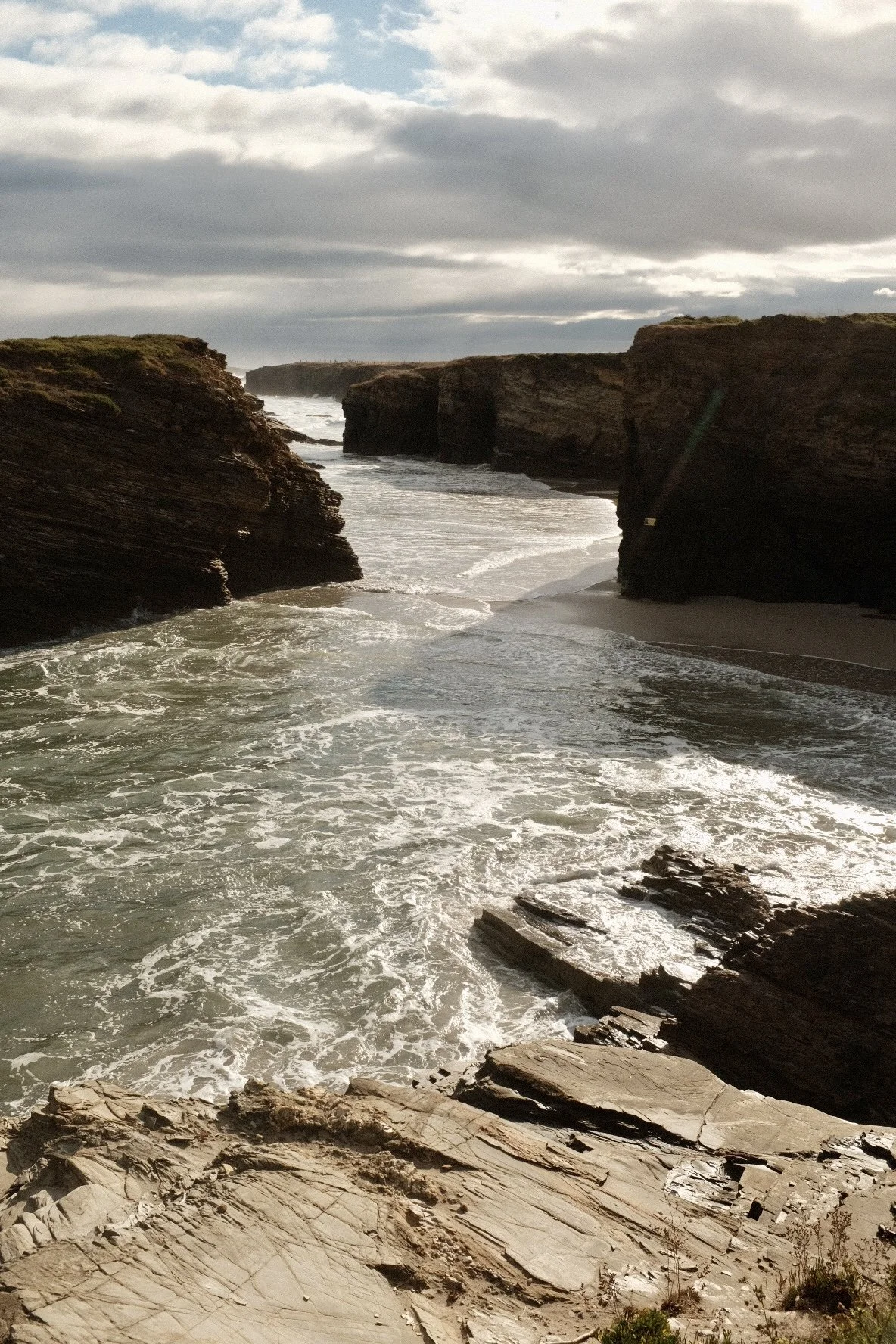
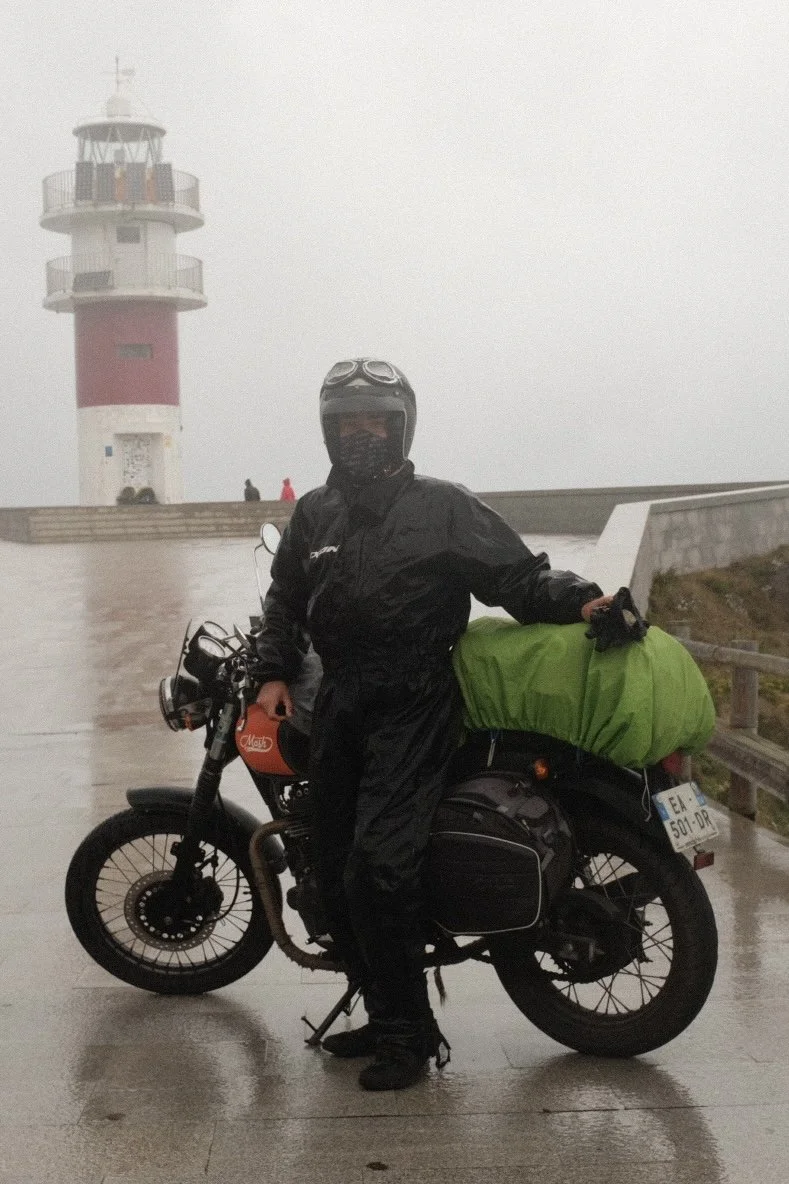
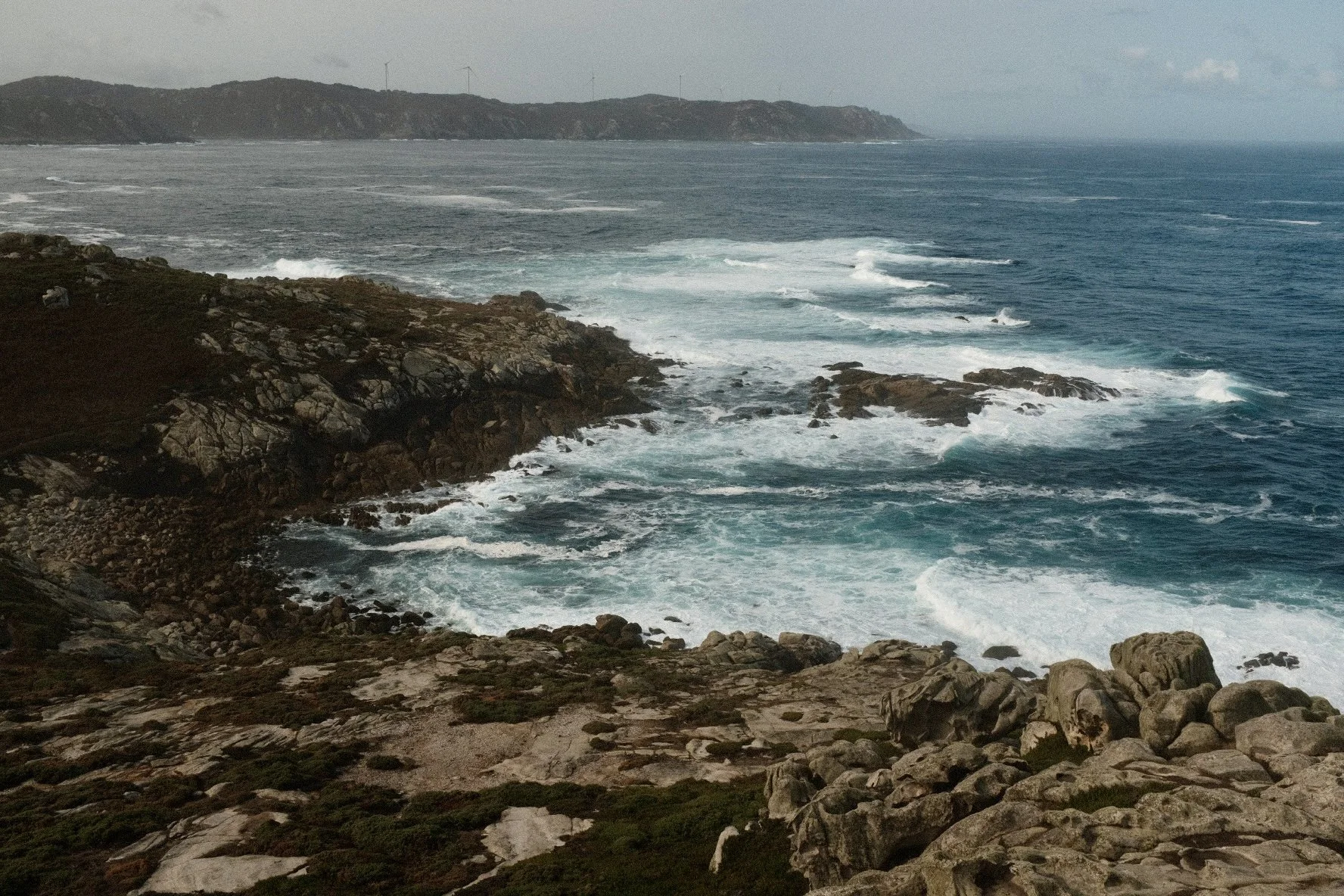
Near this coastal town, Playa de las Catedrales is considered one of the most beautiful beaches in the world. Unfortunately for me, I arrived at high tide, which prevented me from accessing the beach to walk among the cliffs and sea caves formed by marine erosion. I satisfy myself with admiring a rainbow and hitting the road again to reach the Cabo Ortega lighthouse, the place between the Cantabrian Sea and the Atlantic Ocean.
At that point, there was no escaping the rain. I prepared for the downpour by putting on my rain coat and protecting my belongings. As incredible as it may seem, those twenty minutes of rain around the lighthouse would be the only time I got wet on my motorcycle during the entire road trip. Galicia lived up to its reputation as the Brittany of Spain. I took refuge in a bar-restaurant for lunch. My goal was to surf in every region along the Spanish north coast, but I had to face the facts: conditions were going to be bad for the next few days.
I decide to change my plans and visit the city of La Coruña. On Couchsurfing, Sydney holds the status of ambassador. This means that this former DJ in his sixties has hosted hundreds of people and organized events to bring travelers together. He welcomes me into his small apartment on the 10th floor and then suggests we walk through the city to its iconic landmark: the Tower of Hercules. We then meet up with one of his friends in town to enjoy some tapas at Plaza María Pita. It’s a chance to discover the city’s architecture and its many small windows, which withstand the winds while letting light into the buildings. Simple, authentic moments.
Driving along the Coast of Death
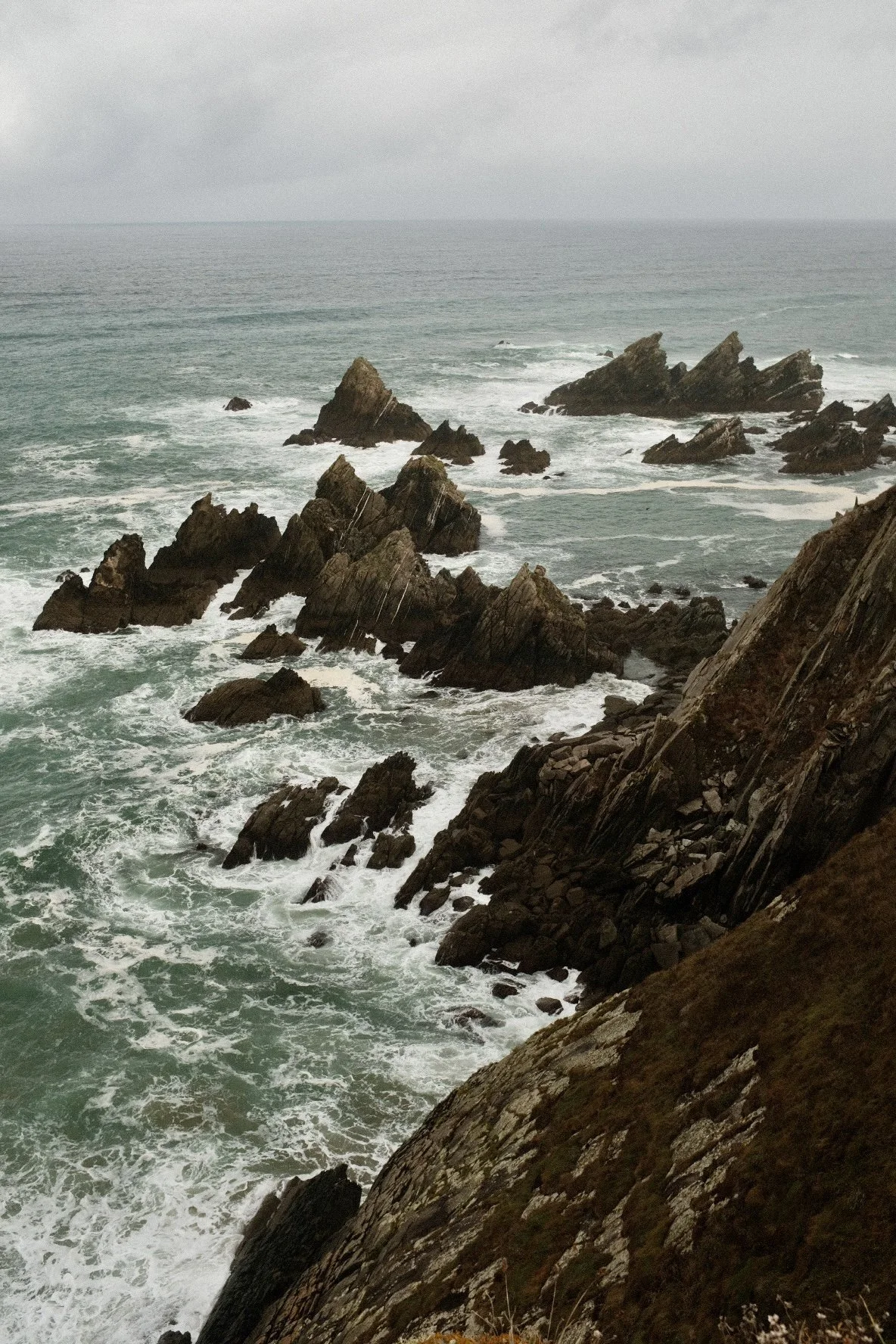
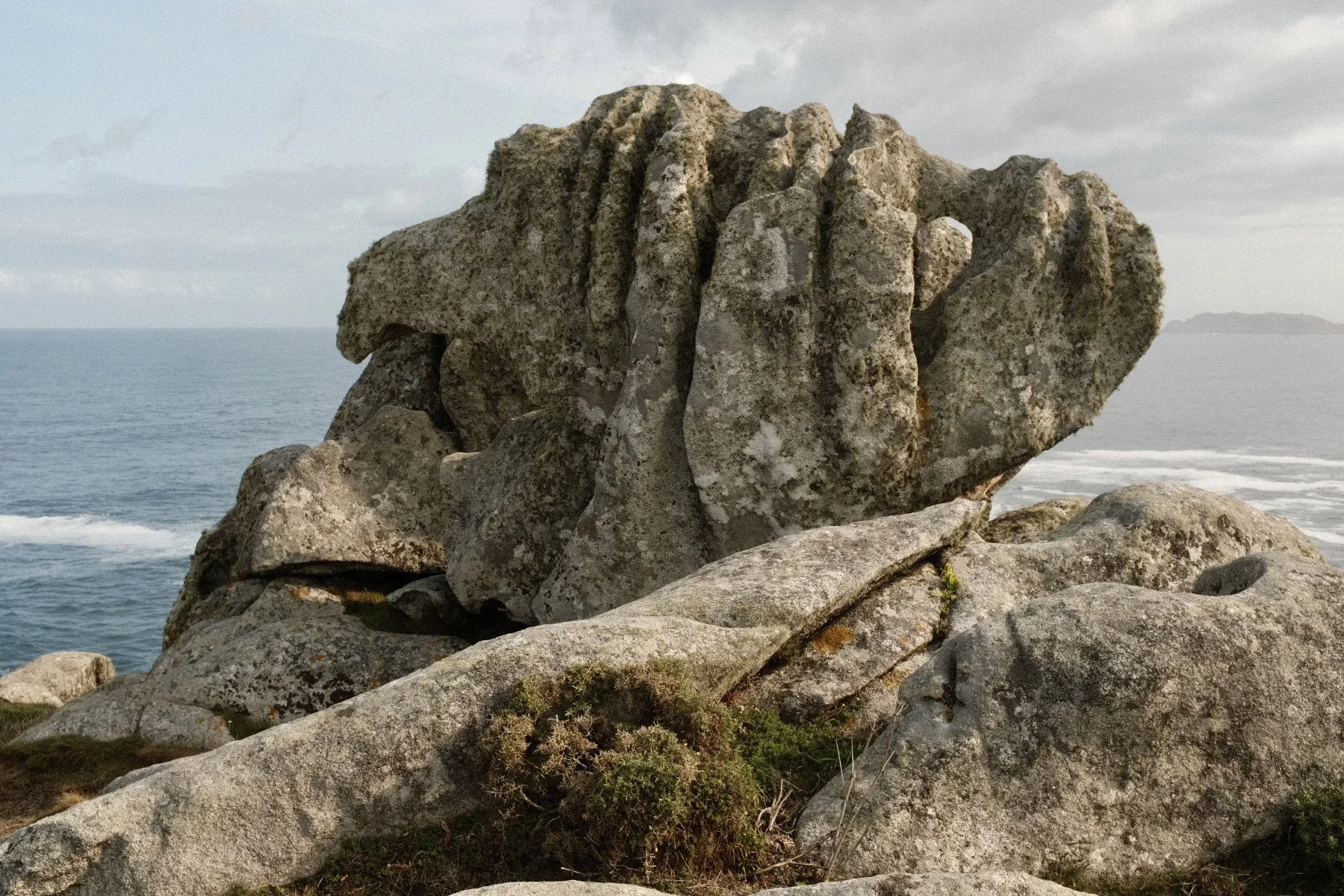
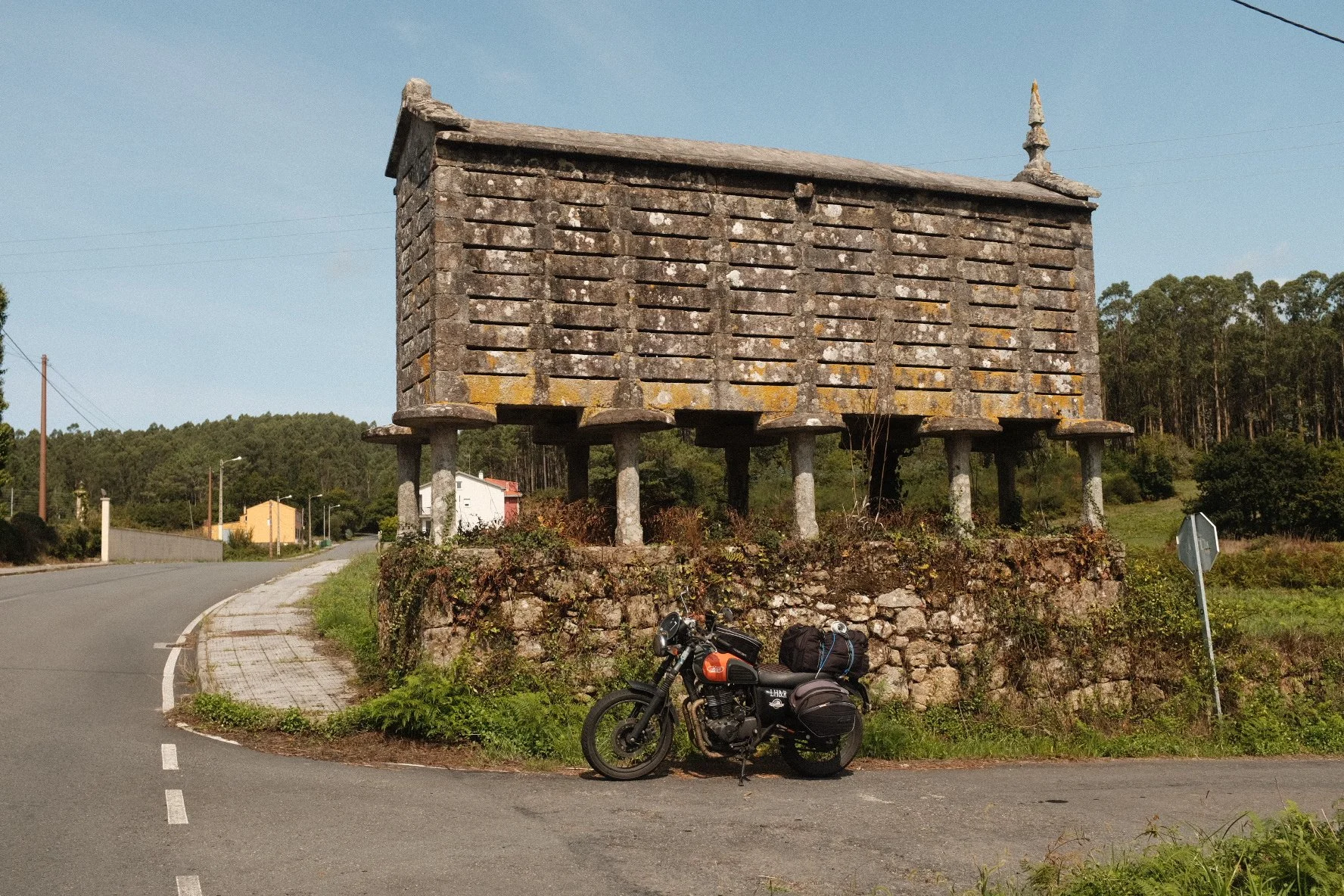
Named for its tragic history of shipwrecks, the Costa da Morte is a wild landscape dotted with oddly shaped rocks sculpted by the wind and waves. Along small roads and in villages, I spot a strange building several times: a hórreo. This traditional Galician structure serves as an elevated granary, designed to store corn, grains, or other foodstuffs away from moisture and rodents.
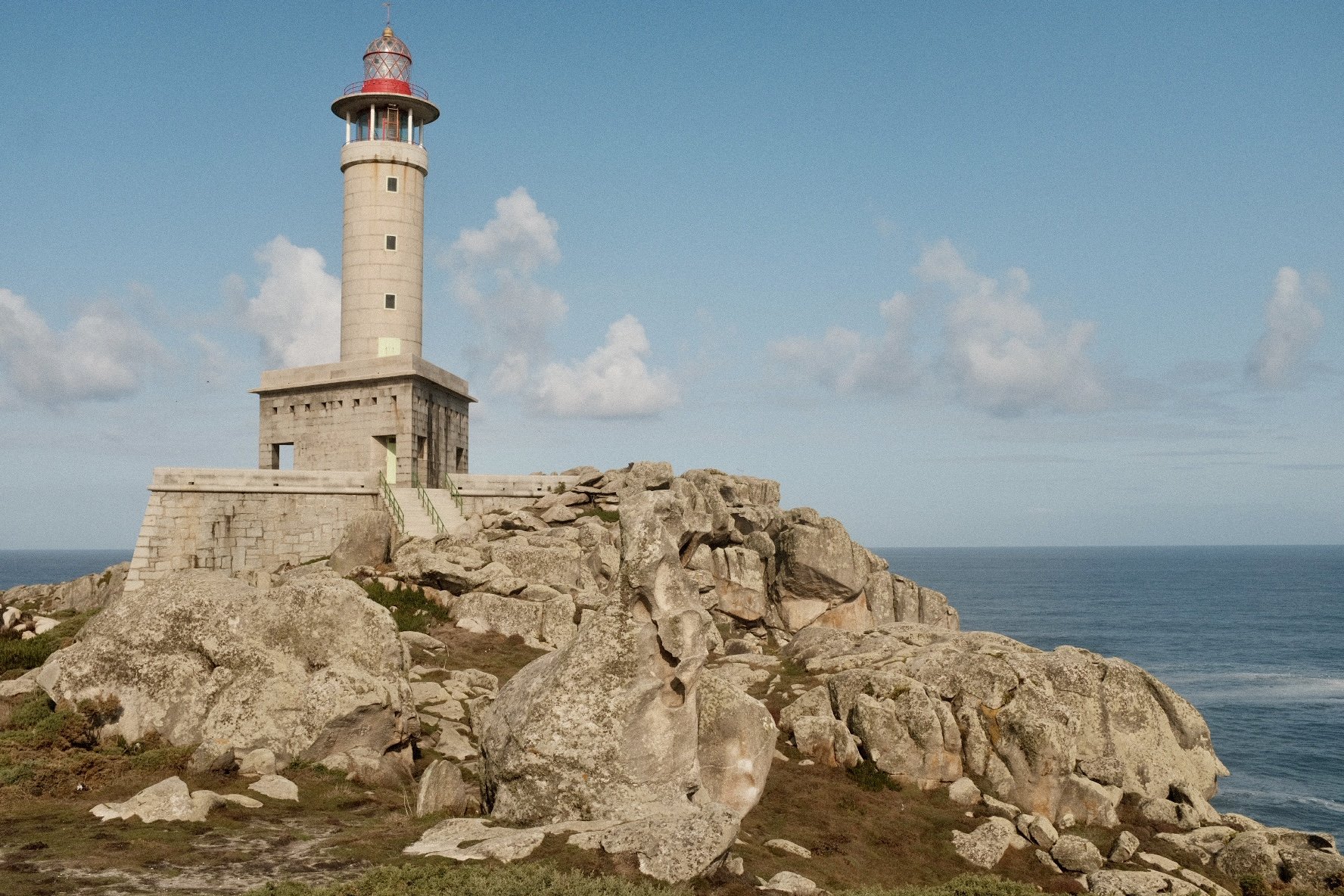
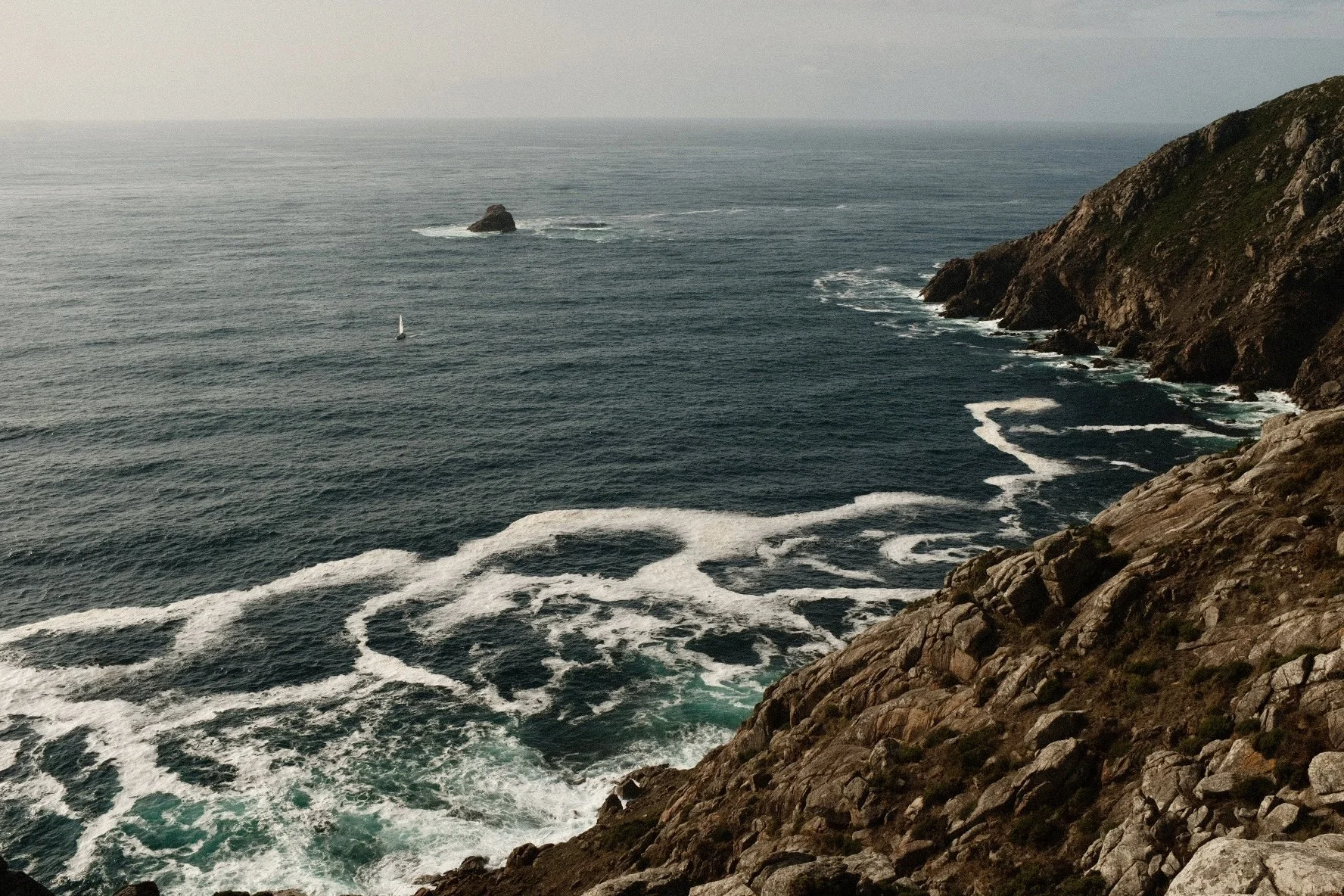
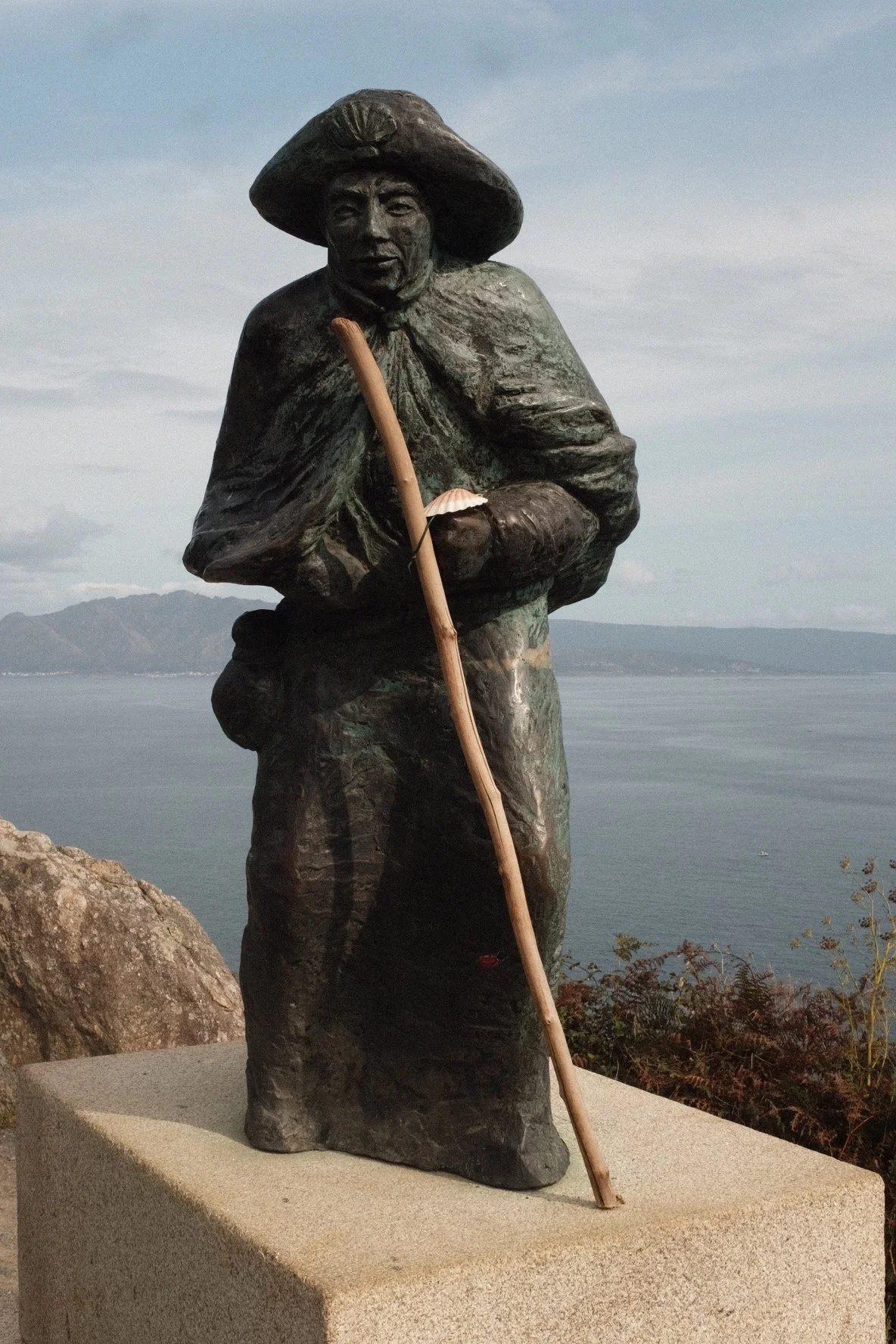
After a day of traveling along this coast, I arrive at a legendary destination: Finisterre (Fisterra in Spanish). This village was once considered by the Romans to be “the end of the earth” (finis terræ in Latin). For pilgrims on the Camino de Santiago, Finisterre represents the final stage, beyond Santiago de Compostela. Having reached the westernmost point of Spain, I’ll be able to rest at the Hotel do Banco Azul, located right in the heart of this peaceful village, before walking to the lighthouse.
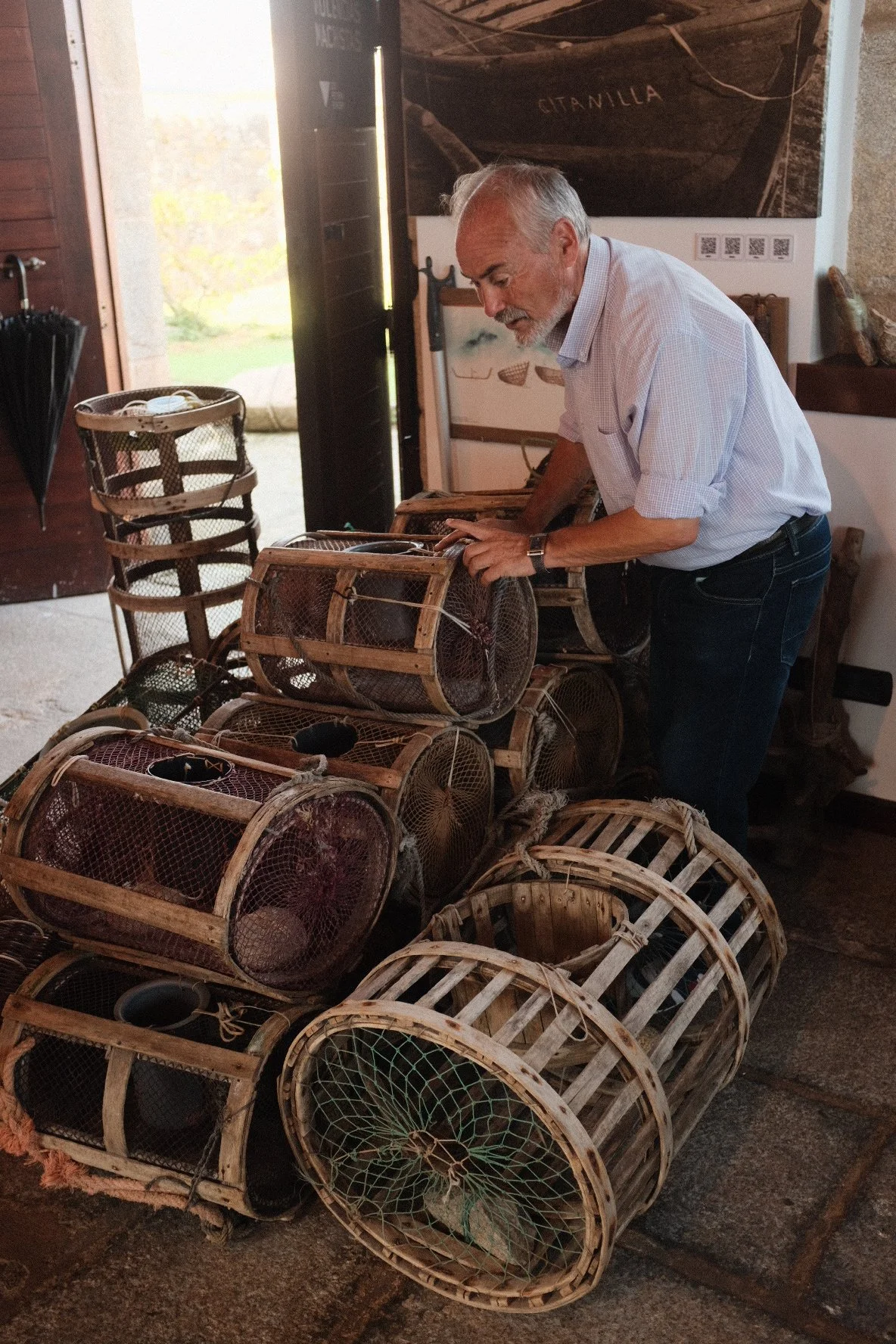
By chance, I meet the Galician writer Alexandre Nerium, nicknamed Manolo. He’s a charming, theatrical character. He gives me a tour of the small fishing museum while sharing lots of stories. Tonight, I’ll go to bed a little wiser.
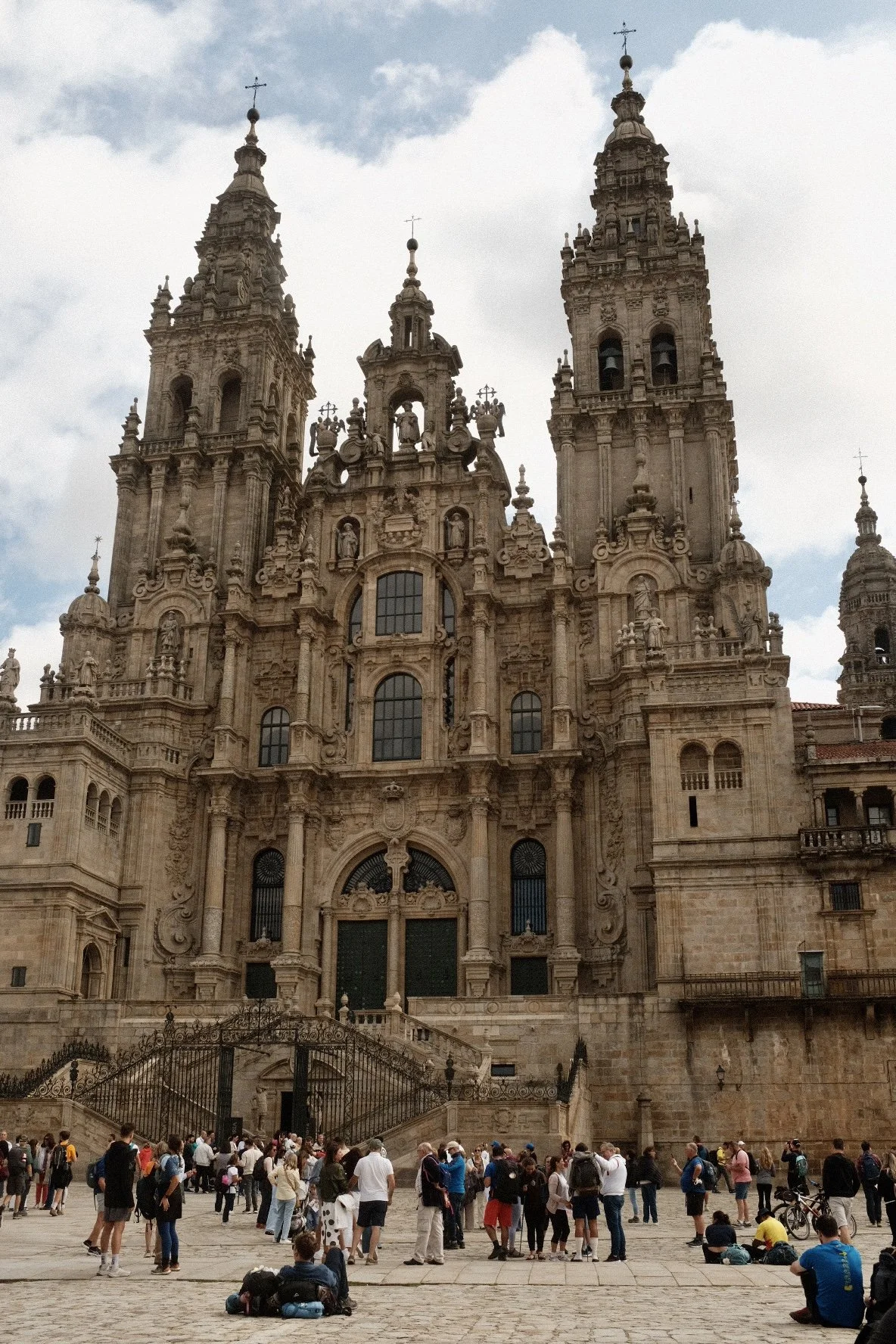
They say all roads lead to Rome. Many roads also lead to Santiago de Compostela! After Finisterre, I decide to stop in this historic center to walk around the cathedral. I witness many joyful scenes. Most of the pilgrims have been walking for weeks. After so much effort, they’ve finally reached their goal. As for me, I’m getting ready to cross the border between Spain and Portugal.
Sébastien Roux
Cover photo © Sébastien Roux
Episode 3 - Portuguese Waves & Saudade
Read this episode
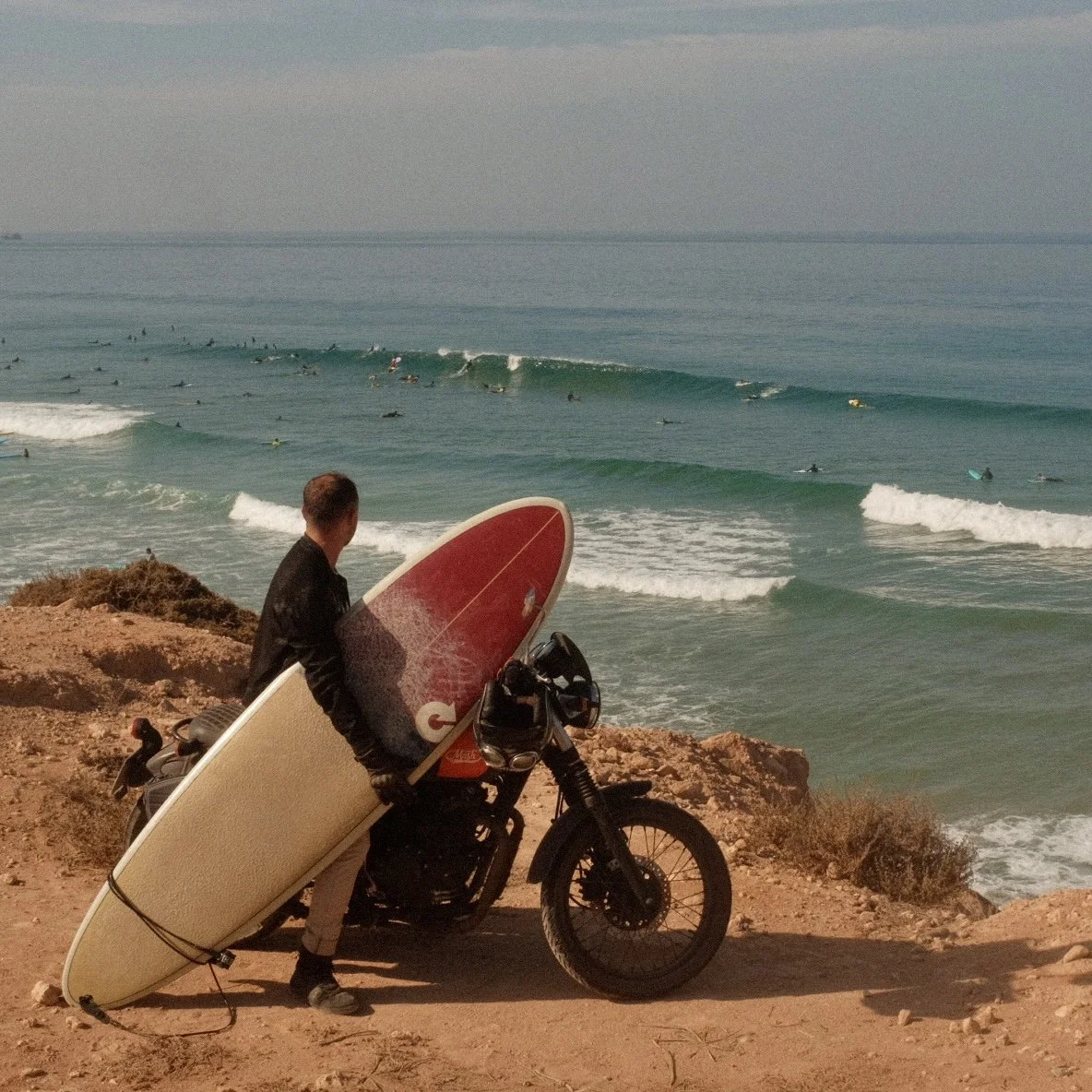
Episode 4 - Moroccan Waves & Mount Toubkal
Read this episode
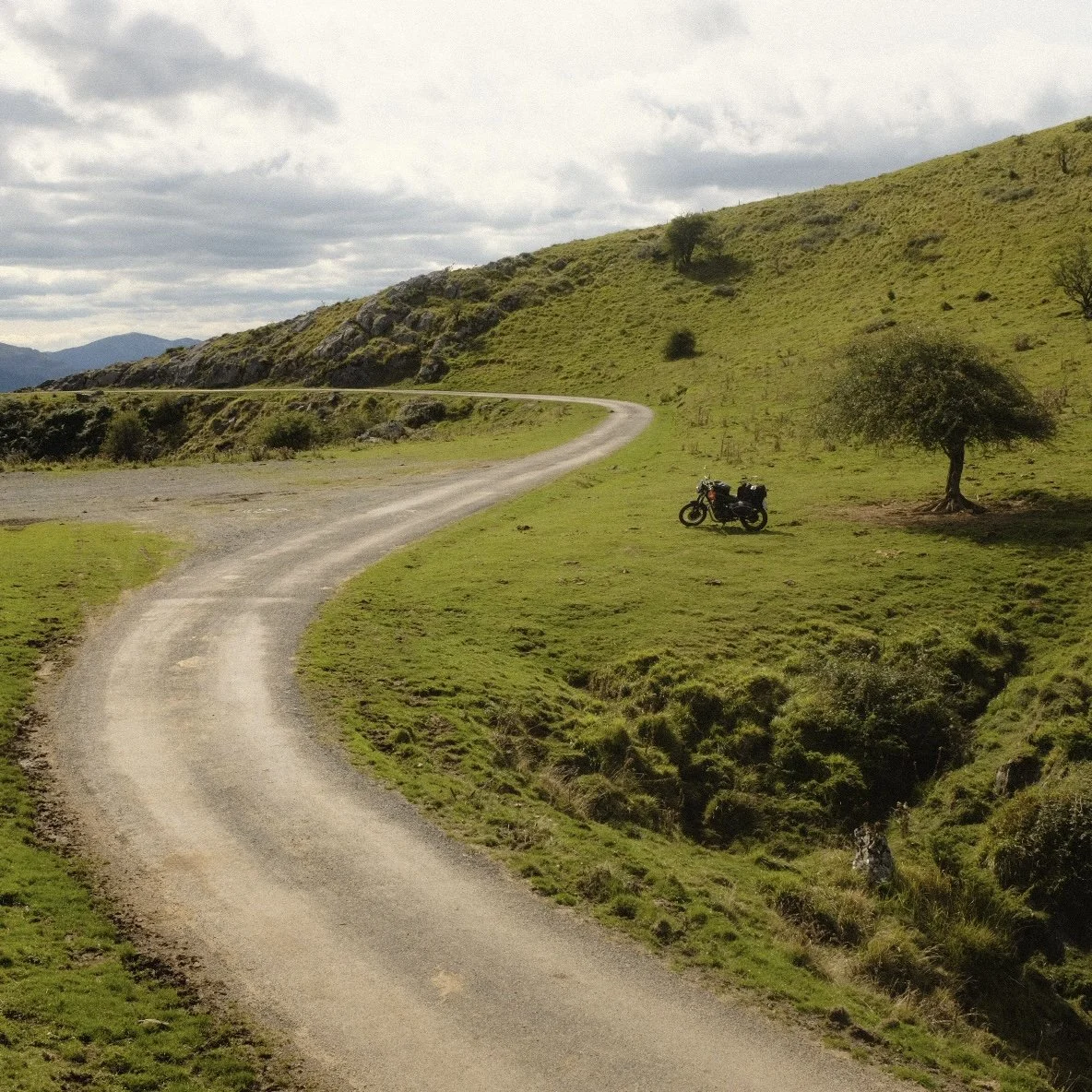
Episode 1 - From the Alps to the Basque Country
Read this episode

This travel journal was published in issues 90 and 91 of Road Trip